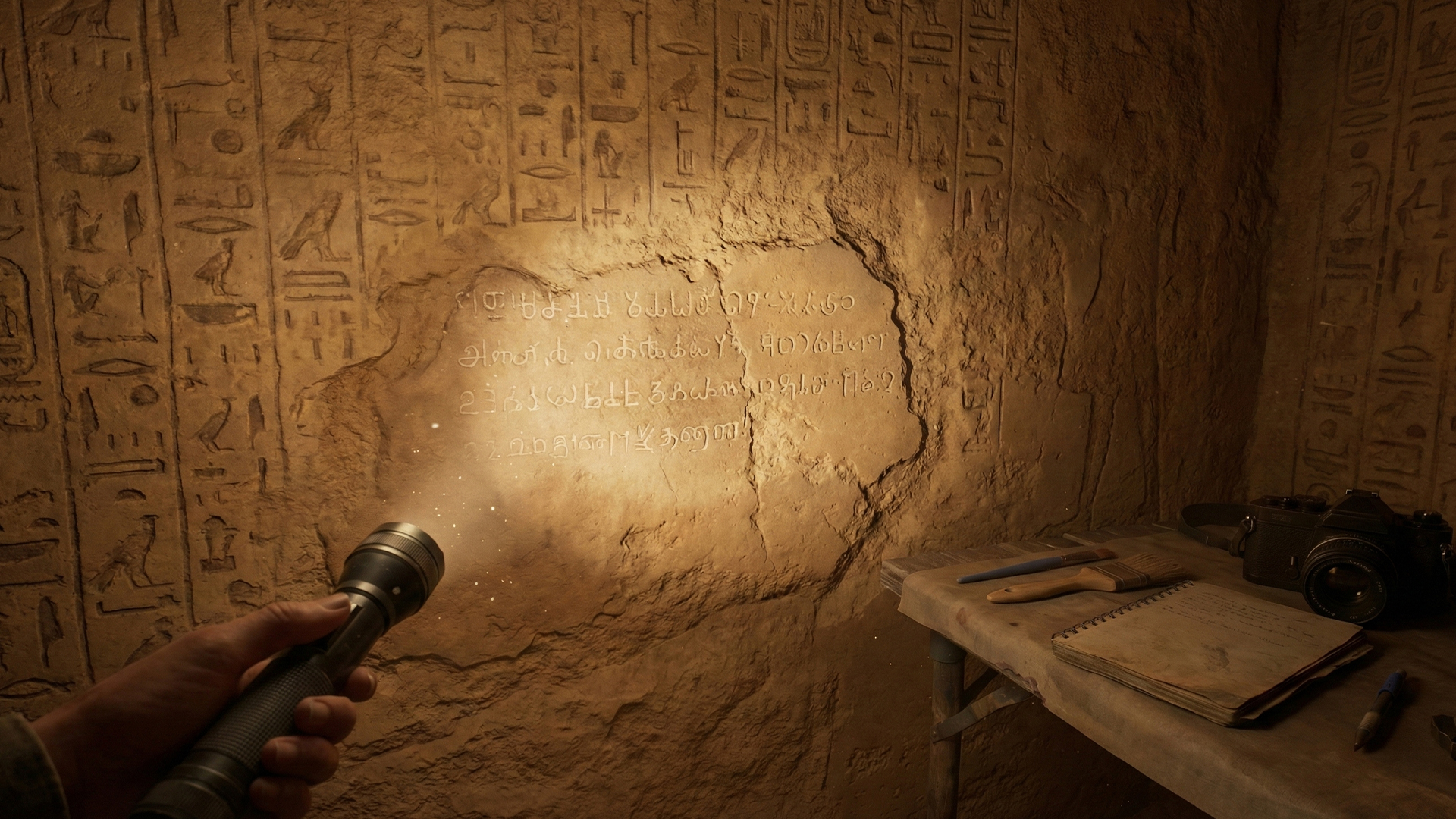
Step into the heart of Egypt’s Valley of the Kings, and you might imagine only hieroglyphs and Pharaohs’ stories etched into stone. But researchers have uncovered something completely unexpected—messages in ancient Tamil, left nearly 2,000 years ago by adventurous South Indian travelers.
Archaeologists discovered almost 30 inscriptions across six tombs near modern-day Luxor. Most are in Tamil-Brahmi, with a few in Sanskrit and Prakrit, showing that traders and travelers from India were exploring far beyond their shores. Among the carvings, one name, “Cikai Korran”, appears repeatedly with phrases like “Cikai Korran came and saw”, echoes of the universal human desire to leave a mark.
Until now, historians believed Indians mainly visited Egypt’s Red Sea ports such as Berenike. These new findings change that picture entirely. Tamil travelers didn’t just dock—they ventured inland, exploring tombs and leaving personal traces inside the heart of Egyptian civilization.
Dated to the 1st–3rd centuries CE, these inscriptions appear during a golden era of maritime trade linking the Indian Ocean with the Roman Empire. The variety of scripts and names suggests a diverse community of traders and travelers, highlighting just how interconnected the ancient world truly was.
The discovery was unveiled at the International Conference on Tamil Epigraphy in Chennai. The mystic story of curiosity, courage, and connection across continents shows the reach of human footprints, miles and mountains beyond their place of origin.
Also Read: SC grants interim bail to Vikram Bhatt’s wife