rotating globe
3 Apr 2026


SEBI Clears Adani of Hindenburg Allegations After Lengthy Probe


The Securities and Exchange Board of India (SEBI) has dismissed allegations of stock manipulation and corporate misconduct against the Adani Group, bringing a dramatic turn in a saga that has gripped both financial markets and political debates since early 2023. The ruling, delivered in two separate orders, concluded that the accusations made by U.S.-based short-seller Hindenburg Research were not supported by evidence under Indian securities law.

The controversy began in January 2023 when Hindenburg released a report accusing the Adani conglomerate of using offshore tax havens, manipulating stock prices, and concealing related-party transactions.

The report sent shockwaves through India’s financial system, wiping nearly $150 billion off the group’s market value and sparking calls for stronger oversight of powerful conglomerates. For months, the Adani story dominated not only economic pages but also public debate about corporate governance and the links between business and politics.

SEBI’s findings mark the end of a two-year probe. The regulator examined whether Adani firms had used offshore shell companies to artificially boost share prices, whether concentrated holdings by opaque investors distorted market activity, and whether the group had failed to disclose transactions with related parties.

After reviewing trading data, beneficial ownership records, and corporate filings, SEBI concluded that the evidence did not establish manipulation, concealment, or breaches of disclosure norms. In other words, while the regulator acknowledged that Adani’s structures and relationships were complex, it found no proof that they amounted to illegal activity.

For the Adani Group, the decision is a vindication. Gautam Adani, the group’s chairman, described the outcome as a “resounding victory” and said the Hindenburg report was “baseless” and damaging to investors.

The company repeated its long-held position that it had complied with both the letter and the spirit of disclosure requirements.

The market responded swiftly to the ruling, with Adani Group stocks soaring across the board. Adani Power, Adani Enterprises, and Adani Total Gas were among the biggest gainers, reflecting renewed investor confidence now that one of the biggest clouds over the group has lifted.

But SEBI’s decision does not close the book entirely. Separate legal and civil cases that grew out of the Hindenburg allegations continue in other forums, and international regulators may still pursue their own inquiries.

Market analysts caution that while the ruling removes the immediate overhang of alleged fraud, questions about corporate governance, debt levels, and transparency in India’s largest business groups remain as pressing as ever.

A ‘Finance’ Case Portrayed as Political

The Adani case has been as much about politics as about finance. Opposition parties seized on the Hindenburg report to question the government’s relationship with the group, while supporters argued that the allegations were an attack on India’s economic rise.

SEBI’s findings will inevitably be read through this political lens, with defenders hailing it as proof of regulatory robustness and critics questioning whether deeper structural issues were left unaddressed.

At its core, the saga has highlighted the intersection of global financial scrutiny and domestic regulatory frameworks. Hindenburg, a small U.S. firm, managed to shake one of India’s most powerful corporate empires and trigger a regulatory process that lasted more than two years.

SEBI’s conclusion—that the group did not break securities law—will calm markets for now, but it also underscores the fragility of trust when financial giants face charges of opacity.

For the millions who followed the story outside the financial world, the takeaway is less about the technicalities of trading patterns or disclosure rules and more about the broader questions it raised. Who holds power to account when corporate groups grow too big to fail? How resilient are regulatory systems in the face of global capital and political influence? And what safeguards exist for ordinary investors caught in the fallout?

As SEBI’s probe comes to an end, those questions remain as relevant as they were when Hindenburg first published its explosive report. The answers may take shape not only in future rulings but also in how India chooses to regulate the balance between growth, transparency, and accountability in the years ahead.

Also Read: ECI Protecting Vote Thieves in Karnataka: Rahul Gandhi’s Explosive Claim

ECI Protecting Vote Thieves in Karnataka: Rahul Gandhi’s Explosive Claim


In a high-stakes press conference on September 18, 2025, Congress leader Rahul Gandhi intensified his allegations against the Election Commission of India (ECI) and its Chief Election Commissioner (CEC) Gyanesh Kumar, accusing them of shielding those responsible for manipulating voter rolls in Karnataka’s Aland constituency during the 2023 Assembly elections.

Rahul Gandhi presented what he described as “100% proof” of a coordinated effort to delete over 6,000 votes, predominantly from Congress strongholds, using centralized software and phone numbers registered outside the state.

He claimed that these deletions targeted marginalized communities, including Dalits, Adivasis, and minorities, who traditionally support opposition parties.

The Congress leader further alleged that the ECI had failed to cooperate with the Karnataka CID’s investigation, withholding crucial data such as OTP details and IP addresses despite multiple requests.

In his address, Gandhi stated, “I am going to show you black-and-white proof that the Chief Election Commissioner of India is protecting the people who have destroyed Indian democracy.” He also hinted at more explosive revelations to come, referring to them as a “Hydrogen bomb” of evidence.

He demanded that CEC Gyanesh Kumar release the withheld data within a week, warning that failure to do so would confirm suspicions of complicity in electoral manipulation.

The ECI swiftly dismissed Gandhi’s allegations as “incorrect and baseless,” asserting that no votes can be deleted online by the public. While acknowledging that certain unsuccessful attempts were made to delete electors in Aland, the ECI emphasized that an FIR was filed by the authority itself to investigate the matter.

The Commission also pointed out that the Aland Assembly seat was won by the BJP’s Subhadh Guttedar in 2018 and the Congress’s BR Patil in 2023, suggesting that the allegations lacked merit.

This confrontation marks a significant escalation in the ongoing tensions between the Congress party and the Election Commission. The opposition has accused the ECI of bias and partisanship, alleging that the Commission’s actions have undermined the democratic process.

Rahul Gandhi’s allegations have sparked widespread debate about electoral integrity and the role of the ECI in ensuring free and fair elections.

As the political standoff continues, all eyes remain on the Election Commission’s response to the mounting pressure and the veracity of the claims made by Rahul Gandhi.

The coming days may reveal whether the “Hydrogen bomb” of evidence he alluded to will substantiate his accusations or further complicate the already contentious political landscape.

Also Read: US Fed’s First Rate Cut of 2025 Sparks IT-Led Rally on Dalal Street

The New Meta Ray-Ban Collab Will Change How You Think About Smart Glasses


Meta has introduced its latest wearable technology: the Ray-Ban Display smart glasses. Unveiled at the company’s Connect 2025 event, these glasses combine style, artificial intelligence (AI), and augmented reality (AR) in a sleek, high-tech design. Meta CEO Mark Zuckerberg described the accompanying neural wristband as a step toward creating a new platform that could one day replace smartphones. Priced at $799, the glasses are set to launch on September 30, 2025.

Smart Glasses with an Augmented Reality Display

The Ray-Ban Display glasses feature a built-in AR display on the right lens. This allows users to see notifications, navigation directions, live translations, and other digital content directly in their line of sight. The display is designed to be discreet, with minimal light leakage, so users can access information without distractions. The glasses are powered by Meta’s Snapdragon AR1 Gen 1 processor, allowing seamless integration with popular apps like WhatsApp, Instagram, and Facebook. Users can make video calls, share photos, and view AI-generated content right on the glasses, bringing a futuristic touch to everyday interactions.

In addition to the display, the glasses offer enhanced audio and visual features. They include a 12-megapixel camera, five microphones, and dual off-ear speakers, making it easy to capture photos and videos, enjoy media, or participate in hands-free calls. A collapsible charging case boosts the battery life to up to 30 hours, ensuring the glasses can keep up with users throughout the day.

Neural Wristband for Gesture Control

Alongside the glasses, Meta introduced the Neural Band, a wrist-worn device that translates subtle muscle movements into commands. With simple gestures like pinches, swipes, or wrist turns, users can control the glasses without touching them or using voice commands. The wristband has an 18-hour battery life and is water-resistant, offering a comfortable and intuitive way to interact with the device.

Bringing AI into Everyday Life

Meta’s Ray-Ban Display glasses are part of the company’s broader vision to make AI a part of everyday life. By combining wearable technology with advanced AI and AR, Meta hopes to create a new kind of personal device that can handle many functions traditionally done on smartphones. The company is also developing the “Orion” smart glasses prototype, which promises even more advanced AR experiences in the future.

These smart glasses aim to blend fashion with technology, offering a stylish way to access digital content hands-free. They are designed for users who want to stay connected, capture moments, and interact with AI seamlessly throughout the day. By introducing gesture-based controls and real-time AR features, Meta is giving people a glimpse into the future of personal technology.

With the Ray-Ban Display glasses and Neural Band, Meta takes a significant step toward wearable devices that are not just accessories but practical, everyday tools for communication, entertainment, and productivity. These innovations could redefine how people interact with technology in their daily lives, making digital experiences more natural, immersive, and convenient.

OpenAI Rolls Out Age Verification and Teen Safety Features in ChatGPT


OpenAI has announced a new age verification system and safety features in ChatGPT designed specifically to protect teenage users. The initiative comes amid growing concerns about the risks AI tools may pose to minors, particularly around mental health and exposure to inappropriate content.

The company is developing an age prediction tool that estimates a user’s age based on their behavior. If the system is uncertain, it will default to a stricter, teen-friendly version of ChatGPT. In some regions, users may also be asked to verify their age through official ID, depending on local regulations.

“We’re prioritizing safety for teens, even if it means reducing some freedoms or collecting minimal personal information,” said OpenAI CEO Sam Altman. “When privacy, freedom, and safety conflict, we believe protecting teens must come first.”

Teen-Specific Experience

For users identified as between 13 and 17, ChatGPT will offer a modified experience with tighter content controls. This includes blocking sexually suggestive or flirtatious interactions, restricting fictional content involving self-harm or suicide, and limiting exposure to other potentially harmful topics—even in creative or roleplay settings.

These changes aim to reduce emotional risks for younger users while maintaining helpful, educational, and age-appropriate use of the AI tool.

Emergency and Parental Safeguards

In situations where a teen expresses suicidal thoughts or extreme emotional distress, OpenAI may attempt to contact a parent or guardian. If there is an immediate safety risk and no guardian is reachable, authorities may be notified. The company acknowledges this step reduces privacy but says it is necessary to protect lives.

New parental control tools are also on the way. These will allow parents to link accounts with their teen’s, set time limits, disable memory or chat history, and receive alerts if the AI detects serious emotional issues.

Broader Impact

These changes follow increased public scrutiny after reports that ChatGPT may have contributed to emotional distress in young users, including a lawsuit involving the suicide of a 16-year-old. OpenAI said it has worked with child safety experts and mental health professionals to design the new features.

Altman emphasized that while the system isn’t perfect, the company is committed to ongoing improvement and transparency.

Also Read: CAG to Launch AI-Powered Audit System and Digital Tools

Gaza Death Toll Surpasses 65,000 Amid Israeli Ground Offensive


The Palestinian death toll in the ongoing Israel-Hamas conflict has surpassed 65,000, according to Gaza’s Health Ministry, as Israeli forces intensify their ground offensive in Gaza City and civilians continue to flee the embattled enclave. The Ministry reported 165,697 injured since the conflict escalated following Hamas’ October 7, 2023, attack on southern Israel.

Israel’s military has carried out over 150 air and artillery strikes in recent days ahead of its ground advance, toppling high-rise buildings in densely populated areas. The military claims these towers were used by Hamas to monitor troop movements.

Overnight strikes killed at least 16 people, including women and children, with fatalities reported across famine-stricken Gaza City, particularly in refugee camps such as Shati, Nuseirat, and Muwasi.

Hospitals are under severe strain. Multiple Israeli strikes hit Gaza City’s Rantisi Hospital for children, forcing roughly half of the 80 patients to evacuate. About 40 patients, including four children in intensive care and eight premature babies, remain under the care of 30 medical staff.

Aid groups condemned the strikes, warning that no location, including hospitals, is safe in the escalating offensive.

Amid the destruction, Israel has opened temporary evacuation corridors south of Gaza City. While an estimated 350,000 residents have reportedly left the area, northern Gaza remains largely cut off. Israeli strikes on key telecommunications infrastructure have collapsed internet and phone services, leaving many unable to communicate or access information.

The UN estimates that over 238,000 Palestinians have fled northern Gaza, while hundreds of thousands remain behind.

Humanitarian agencies have called the situation in Gaza a catastrophe. Over 20 aid organizations, including the Norwegian Refugee Council, Anera, and Save the Children, urged the international community to take decisive action to halt Israel’s offensive.

“What we are witnessing in Gaza is not only an unprecedented humanitarian catastrophe, but what the UN Commission of Inquiry has now concluded is genocide,” the coalition said in a statement.

Qatar’s Ministry of Foreign Affairs also condemned the Israeli operation, describing it as an “extension of the war of genocide” against Palestinians, and criticized an Israeli strike last week that killed five Hamas members and a local security official.

Israel aims to take full control of Gaza City, with military officials estimating 2,000 to 3,000 Hamas fighters remain in the area, along with tunnels used for guerrilla operations.

Despite repeated raids, militants continue small-scale attacks, planting explosives or targeting military outposts before dispersing.

The humanitarian crisis is compounded by widespread famine. Gaza City, in particular, is experiencing severe food shortages, with large areas of the city destroyed. Displacement, destruction of infrastructure, and limited access to medical care have left the population vulnerable, particularly children and the elderly.

The war, which began on October 7, 2023, following a Hamas-led incursion into southern Israel that killed around 1,200 people and abducted 251 others, has now entered a critical phase. Israel has pledged to regain control over Gaza City, with repeated ground incursions aimed at neutralizing remaining militants.

Forty-eight hostages, fewer than half believed to be alive, remain in Gaza, adding to the conflict’s human toll.

As the offensive continues, the international community faces mounting pressure to respond to both the humanitarian crisis and the allegations of war crimes. Aid groups stress the need for political, economic, and legal measures to protect civilians, prevent further displacement, and ensure access to essential services.

With Gaza’s infrastructure collapsing and the civilian population under siege, the region faces one of the most severe humanitarian emergencies in recent history, raising urgent calls for intervention as the conflict shows no signs of abating


CAG to Launch AI-Powered Audit System and Digital Tools


The Comptroller and Auditor General of India (CAG) is set to revolutionize government auditing with the development of its own Large Language Model (LLM), aimed at harnessing decades of institutional knowledge to enhance audit efficiency, consistency, and analytical precision.

The AI-powered system, expected to be operational by November 2025, will be trained on historical inspection reports, enabling auditors to identify patterns, assess risks more accurately, and generate comprehensive reports with greater speed and reliability.

According to the CAG, the initiative is part of a broader move to strengthen institutional capabilities in handling large datasets, facilitating automated document generation, and improving the quality of audit outcomes. The system is also expected to support auditors in making more informed, evidence-based decisions.

Digitisation and Remote Audits: A Paradigm Shift

The push for digital adoption across central and state government departments will soon allow auditors to conduct remote or hybrid audits on a wide scale. Anchored in risk-based planning, secure access to government platforms, and the integration of geospatial tools such as PM GatiShakti, this transition aims to ensure evidence-backed and consistent audits across sectors.

Pilot studies of remote audits have already been conducted in several domains, with promising results. For instance, remote audits in receipt verification are progressing faster due to higher levels of automation and standardised datasets. The CAG cited a concurrent data-led GST audit executed across central and state offices using a uniform audit design matrix and centrally validated SQL queries as an example of this efficiency. Similarly, the remote compliance audit of Telangana’s Stamps and Registration Department by the Principal Accountant General (PAG) demonstrated effective office-based scrutiny with real-time coordination.

On the expenditure side, hybrid audits—which combine manual records with data-driven analysis—are being successfully piloted. The Public Works audit in Haryana, led by PAG (Audit), showcased this approach, while West Bengal’s Virtual Audit System integrated with AuditOnline is enabling paperless certification of Panchayati Raj Institutions (PRIs). Madhya Pradesh is also developing a roadmap for remote certification under the CAG’s Technical Guidance and Support, reflecting a growing trend of office-based, digitally supported audit processes.

Connect Portal: Transparent and Efficient Communication

The CAG has introduced the ‘Connect Portal’, scheduled for launch at the Annual Conference of State Finance Secretaries on September 19. This digital platform will provide nearly 10 lakh auditee entities with a unified interface to respond directly to audit queries, observations, and inspection reports. By enabling seamless communication and proper tracking of audit observations, the portal aims to make the audit process more transparent, accountable, and efficient for both the CAG and audited entities.

Strengthening Governance through Data and Collaboration

The conference will also focus on key issues such as enhancing reporting frameworks for centrally sponsored schemes, disseminating best practices in public finance management, leveraging IT systems for improved governance, and strengthening accounting and auditing of state public sector entities and autonomous bodies. Senior officials from the Union Finance Ministry, Reserve Bank of India, Controller General of Accounts, state finance secretaries, and heads of accounting services from railways, telecommunications, and defence are expected to participate, alongside the CAG’s audit and accounts office representatives.

In a first-of-its-kind initiative, the CAG will also unveil the “Publication on State Finances for Financial Year 2022-23.” Unlike annual state financial reports, this publication provides a comprehensive, inter-temporal, and inter-state analysis of fiscal information over a ten-year period, offering policymakers and auditors a richer understanding of fiscal trends and performance.

With these innovations—ranging from AI-powered audits and hybrid audit processes to digital communication platforms—the CAG is poised to usher in a new era of efficiency, transparency, and accountability in government oversight, reinforcing its mandate to strengthen public financial management across India.

Centre Announces New GST Rates from Sept 22, Boosts Economy by ₹2 Lakh Crore


The Indian government has officially notified revised Goods and Services Tax (GST) rates that will come into effect on September 22, 2025, marking a significant step toward simplifying the tax structure and injecting fresh momentum into the economy.

The revamped GST framework reduces tax slabs considerably, with the majority of goods previously taxed at 12% now shifted to a 5% rate, and many items in the 28% slab brought down to 18%. This rationalization is expected to ease compliance for businesses and lower the overall tax burden for consumers.

Finance Minister Nirmala Sitharaman highlighted the positive impact of the changes, stating that the GST cuts will help middle-class households by increasing their disposable income and are estimated to inject approximately ₹2 lakh crore into the economy. She emphasized that the reforms are designed to stimulate consumption, thereby fostering broader economic growth. She stated, “With the new generation tax regime, which will have only two slabs (5% and 18%), people will have ‘more cash in hand.’ This two-slab rate structure will reduce the burden on people and benefit the poor and middle class.”

Several sectors stand to benefit from the new norms. In Odisha, for instance, the reduction of GST on kendu leaves from 18% to 5% is anticipated to provide relief to over 15 lakh workers, especially those from tribal communities dependent on the leaf collection industry. Industry leaders like the Utkal Chamber of Commerce and Industry Ltd (UCCI) have welcomed the changes, citing improved prospects for MSMEs and urging businesses to prepare proactively for the transition.

Automobile manufacturers have already started passing on benefits to customers, with companies such as Toyota reducing prices of popular models like the Fortuner by up to ₹3.49 lakh following the GST revision.

Additionally, the government is simplifying registration processes for small and low-risk businesses, reducing compliance hurdles, and promoting formalization of the economy.

As the September 22 implementation date approaches, authorities have urged businesses to ensure smooth compliance and timely adjustment of prices, aiming to translate the tax benefits directly to consumers.

This overhaul of the GST system aligns with the government’s broader objectives of tax rationalization, boosting consumption, and fostering a more inclusive economic environment.

Also Read: No General Travel Booking Without Aadhaar From October 1: See Details Here

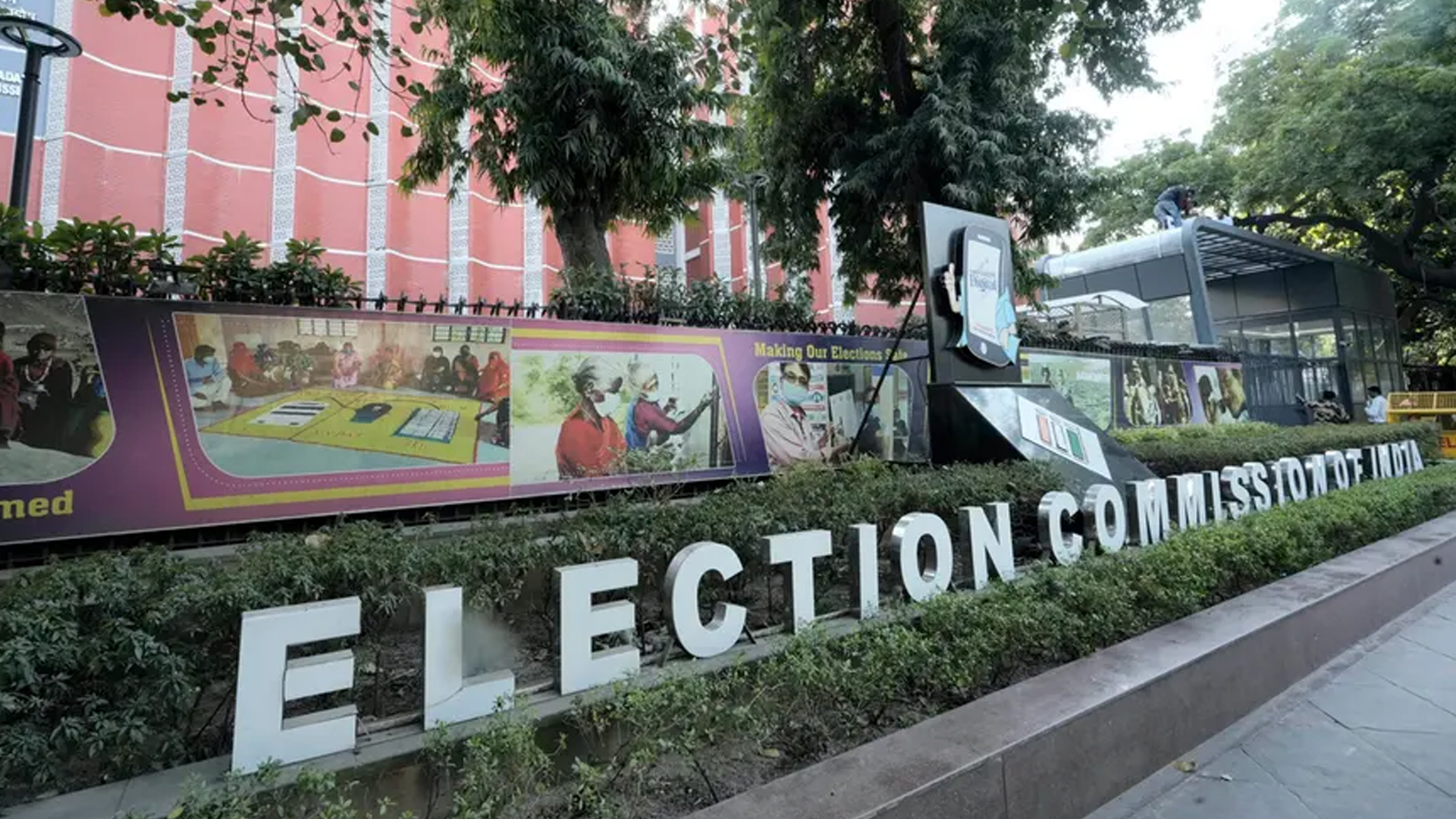
Election Commission rolls out coloured candidate photos on EVMs for Bihar polls


The Election Commission of India (ECI) has unveiled new changes to Electronic Voting Machines (EVMs) ahead of the Bihar Assembly elections, introducing coloured photographs of candidates on ballot papers for the first time. This move aims to simplify voter identification and enhance clarity at polling stations.

One of the key changes includes the introduction of coloured photographs of candidates on the EVM ballot papers. Unlike the previous black-and-white images or their absence, the new photos will cover about three-quarters of the allocated photo space, making it easier for voters to identify their preferred candidates.

In addition to coloured photos, the ECI has decided to display candidate serial numbers and the ‘None of the Above’ (NOTA) option in bold and larger fonts for better visibility. All candidate names and NOTA will be printed in uniform font style and size, printed on pink paper of 70 GSM quality, as per specified guidelines.

These revisions are being made under Rule 49B of the Conduct of Elections Rules, 1961, reflecting the ECI’s continuous efforts to improve election transparency and voter convenience. The Bihar Assembly elections will be the first to see the implementation of these changes, which are part of a larger set of 28 election-related reforms introduced by the commission over the past six months.

With these enhancements, the ECI aims to make the voting process more voter-friendly and reduce errors and confusion at polling booths, ensuring a smoother democratic exercise.

Also Read: ECI Eases Voter Verification, Majority May Skip Document Submission

US Fed’s First Rate Cut of 2025 Sparks IT-Led Rally on Dalal Street


Mumbai: The U.S. Federal Reserve on Wednesday announced its first interest rate cut of the year, lowering its benchmark rate by 25 basis points to a range of 4.00%–4.25%. The decision, aimed at cushioning the American economy against weakening job growth and slowing demand, sent a wave of optimism through global markets. Indian equities reacted strongly, with benchmark indices rising sharply in early trade.

The Sensex advanced over 300 points while the Nifty 50 climbed past the 25,400 mark, with information technology counters leading the charge. The Nifty IT index surged nearly 1.7 per cent, powered by buying in heavyweights such as Infosys, Wipro and LTIMindtree. Broader indices in the mid- and small-cap space also moved higher, underscoring the positive sentiment.

Gains and Caution

The Federal Reserve described the rate cut as a “risk-management” step, citing greater downside risks to employment even as inflationary pressures remain elevated. It also signalled the likelihood of two additional cuts this year if economic conditions warrant. For India, the development has important implications.

Lower U.S. interest rates are expected to draw more foreign portfolio investment into emerging markets, including India, as global investors search for higher returns. A softer dollar, which often follows Fed easing, could also help stabilise the rupee, ease imported inflation, and provide a boost to exporters. Banking and financial services are seen as beneficiaries alongside IT, as liquidity conditions improve globally.

Market participants, however, urged caution. Much of the Fed’s action had already been factored into valuations, with investors widely anticipating a 25 basis point cut. Analysts also pointed to structural challenges facing the Indian IT sector, such as muted discretionary spending in overseas markets, contract delays and pressure on operating margins. The sector may therefore see only limited fundamental improvement despite the immediate lift in sentiment.

The Fed itself struck a guarded tone. While it opened the door to more cuts, it stressed that inflation risks have not been fully tamed. This stance suggests that further policy easing will depend heavily on upcoming economic data. Indian investors will be closely watching not only the Fed’s next moves but also the Reserve Bank of India’s own approach. With domestic inflation still a concern, the RBI is unlikely to mirror the Fed immediately, creating the possibility of a divergence in interest rate trajectories.

For now, the Fed’s decision has provided Indian markets with a welcome boost, pushing indices to fresh highs and reviving risk appetite. Traders and fund managers believe sustained gains will hinge on a combination of supportive global liquidity, steady domestic growth and policy measures that bolster consumption and investment.

The rally in IT and banking shares reflects optimism about capital inflows and demand conditions, but market watchers remain mindful of underlying vulnerabilities. As global monetary policy enters a new phase of easing, Dalal Street appears well placed to benefit, provided the broader economic environment turns more favourable.

Also Read: ECI Eases Voter Verification, Majority May Skip Document Submission

19 Dead as Brain-Eating Amoeba Spikes in Kerala; Health Authorities on Alert


Kerala is grappling with a deadly microscopic threat that has claimed 19 lives across the state this year. A sharp increase in cases of the rare but fatal brain infection caused by the so-called brain-eating amoeba has sparked widespread public concern and prompted urgent action by health authorities to contain its spread.

The infection, known medically as Primary Amoebic Meningoencephalitis (PAM), is caused by Naegleria fowleri, an amoeba that thrives in warm, stagnant freshwater sources such as ponds, lakes, and untreated wells. The parasite enters the body through the nose, usually while swimming or bathing, then travels to the brain, rapidly destroying tissue and causing severe inflammation that is often fatal.

Widening Outbreak Across Kerala

In 2025 alone, Kerala has reported 69 confirmed PAM cases, with 19 fatalities recorded across multiple districts. Unlike in previous years, where infections were confined to specific areas, cases are now appearing across a broader range of regions and affecting individuals from children to older adults.

“This is no longer an isolated health issue; it has become a state-wide concern,” said Dr. Sreedevi Nair, an infectious disease specialist. “Early diagnosis is critical but challenging, as the initial symptoms closely resemble those of more common infections.”

A Ray of Hope: Miltefosine Treatment

While PAM carries a global fatality rate exceeding 95%, Kerala has seen a notable improvement, with survival rates nearing 24% this year. This progress is attributed largely to the introduction of miltefosine, an anti-parasitic drug originally developed to treat leishmaniasis. It is now being used in combination with amphotericin B and other antifungal medications.

Kerala hospitals follow treatment protocols similar to those recommended by the US Centers for Disease Control and Prevention (CDC), administering miltefosine based on the patient’s weight and age, often for 28 days or longer in severe cases. However, success hinges heavily on how quickly treatment is initiated.

“Even with the best medications available, time is the critical factor,” explained Dr. Anil Kumar, a neurologist in Ernakulam. “The infection progresses so rapidly that even a delay of 24 hours can be deadly.”

Symptoms and How It Spreads

Symptoms of PAM usually emerge within one to nine days following exposure to contaminated water. Initial signs include severe headache, fever, and vomiting, followed by neck stiffness, confusion, and sometimes hallucinations. As the infection advances swiftly, it may cause seizures and coma. Due to its aggressive nature, PAM is often fatal within five to seven days after symptom onset.

The amoeba is not contagious from person to person and does not infect through drinking contaminated water. Infection occurs only when water carrying the amoeba enters the nasal passages.

Preventive Measures

To minimize risk, the Kerala Health Department advises the public to avoid swimming or diving in warm, stagnant freshwater bodies where the amoeba is likely to thrive. If such exposure is unavoidable, using nose clips can help prevent contaminated water from entering the nasal passages. Additionally, regular cleaning and chlorination of water tanks, wells, and other domestic water sources are essential.

Residents are urged to remain vigilant for symptoms after any freshwater exposure and to seek immediate medical attention if symptoms develop.

Government Response and Public Awareness

The state government has launched awareness campaigns at the district level, targeting schools and rural communities. Hospitals have been instructed to stock miltefosine and enhance emergency protocols for suspected PAM cases. Water quality monitoring has intensified, with local authorities stepping up chlorination efforts in affected areas.

Experts warn that as climate change continues to increase temperatures, creating more favorable conditions for organisms like Naegleria fowleri, such outbreaks may become more frequent. Kerala’s ongoing battle with this deadly amoeba highlights the urgent need for improved water safety regulations, early disease surveillance, and increased community awareness to prevent this rare but devastating infection from becoming a recurring public health crisis.

Also Read: Kerala Facing Alarming Surge in Brain-Eating Amoeba Cases?