rotating globe
3 Apr 2026


Anandkumar Velkumar Wins India’s First Speed Skating Gold


As a young boy racing through the narrow lanes of Chennai on rollerblades, Anandkumar Velkumar likely dreamed of winning big. Few, however, could have imagined that he would one day carve his name into history as the first Indian ever to win gold at the Speed Skating World Championships.

That dream turned into a dazzling reality in Beidaihe, China, where the 22-year-old surged to victory in the senior men’s 1,000 m sprint, crossing the finish line with a time of 1:24.924. The gold medal wasn’t just a personal triumph; it marked a watershed moment for Indian roller sports.

Velkumar’s golden run came just a day after he clinched India’s first-ever senior-level medal at the championships,  a bronze in the 500 m sprint, which he completed in 43.072 seconds. His back-to-back podium finishes signal a breakthrough for a sport that has long remained on the fringes of India’s athletic spotlight.

Adding to the celebration, Krish Sharma, representing India in the junior category, also claimed a gold medal in the 1,000 m sprint, showcasing the growing depth of India’s talent in the sport.

The championships, which began on September 13 and continue until September 21, have already become a defining moment in the country’s sporting narrative.

India’s leadership was quick to acknowledge Velkumar’s feat. Prime Minister Narendra Modi praised the young champion on social media, calling him “India’s first-ever World Champion in skating,” and lauding his “grit, speed, and spirit.” He also expressed hope that Velkumar’s success would inspire future generations to aim higher in sport.

Union Minister Kiren Rijiju echoed the sentiment, calling the victory a “glorious moment for Indian sports” and applauding the athlete’s dedication and performance on the world stage.

Velkumar’s historic win has not only elevated his own career but also placed Indian speed skating firmly on the global map, powered by the dreams, discipline, and determination of a young skater from Chennai.

Also Read: Alphabet Joins $3 Trillion Club on AI Optimism & Antitrust Win

Alphabet Joins $3 Trillion Club on AI Optimism & Antitrust Win


Alphabet Inc., the parent company of Google, crossed the $3 trillion market capitalisation mark for the first time on Monday, becoming the fourth U.S. company to achieve the milestone after Apple, Microsoft, and Nvidia.

Shares of Alphabet rose more than 3% in intraday trading, following renewed investor optimism around the company’s artificial intelligence (AI) strategy and a favourable outcome in a key U.S. antitrust case.

The company’s Class A shares closed at a record high of $250.31, while Class C shares also saw similar gains. Alphabet’s stock is now up over 30% year-to-date, outperforming the S&P 500, which has risen approximately 12% in the same period.

Investor sentiment has been buoyed by Alphabet’s growing presence in AI. Its flagship large language model, Gemini, has been integrated into key consumer-facing products such as Google Search, Gmail, Docs, and YouTube. The company is also expanding Gemini’s enterprise offerings through Google Cloud, which continues to report double-digit revenue growth. The cloud division, once seen as a laggard behind Amazon Web Services and Microsoft Azure, has gained ground thanks to increasing enterprise adoption of AI tools and infrastructure.

The rally was further supported by a recent legal win in the United States, where a federal court ruled against calls to break up core Google services such as the Chrome browser and Android operating system. The decision was seen as a significant relief for Alphabet, which has faced escalating regulatory scrutiny globally, particularly in the European Union.

Analysts say the ruling reduces near-term legal risks and allows the company to focus on product development and market expansion without the threat of major structural reforms.

While the $3 trillion valuation marks a major milestone for the tech giant, market analysts remain cautious about future challenges. These include intensifying competition in the AI sector from rivals such as OpenAI, Amazon, and Meta, as well as regulatory headwinds in international markets.

“Alphabet’s leadership in AI and cloud is undeniable, but the market is still watching how effectively the company can monetise its AI investments at scale,” said a senior tech analyst at Bernstein.

Alphabet was founded in 2015 as part of a corporate restructuring of Google. It now oversees a portfolio of companies spanning digital advertising, cloud services, autonomous vehicles (Waymo), life sciences (Verily), and advanced AI research (DeepMind).

Also Read: SpaceX launches upgraded Cygnus XL with ISS cargo and treats

ED Summons Yuvraj Singh, Robin Uthappa, and Sonu Sood in 1xBet Betting App Probe


The Enforcement Directorate (ED) has summoned former Indian cricketers Yuvraj Singh and Robin Uthappa, along with Bollywood actor Sonu Sood, for questioning in connection with its ongoing investigation into the alleged illegal online betting platform 1xBet. The agency is examining potential violations under the Prevention of Money Laundering Act (PMLA) related to the platform’s operations in India.

Uthappa, who retired from professional cricket in 2022, has been asked to appear before the ED on September 22, while Singh is scheduled for questioning on September 23. Sood has been directed to depose on September 24. The ED is investigating the role of celebrities in promoting the betting platform, which is suspected of operating illegally in India. The agency is scrutinizing financial transactions and promotional activities linked to the platform to determine any involvement in money laundering schemes.

This development follows the ED’s earlier questioning of former cricketers Shikhar Dhawan and Suresh Raina, as well as actor Urvashi Rautela and former TMC MP Mimi Chakraborty, in connection with the same probe. The ED’s investigation is part of a broader crackdown on illegal betting operations and their associated financial activities in India.

The 1xBet platform has faced scrutiny from Indian authorities for allegedly violating gaming and financial regulations. The ED’s summons to these high-profile individuals indicate the agency’s commitment to investigating all aspects of the case, including the involvement of public figures in promoting such platforms.

As the investigation progresses, the ED is expected to continue its efforts to uncover any illegal financial activities linked to online betting platforms and hold accountable those involved in promoting or facilitating such operations.

Also Read: No General Travel Booking Without Aadhaar From October 1: See Details Here

SpaceX launches upgraded Cygnus XL with ISS cargo and treats


SpaceX successfully launched Northrop Grumman’s upgraded Cygnus XL cargo spacecraft to the International Space Station (ISS) on Sunday, 14 September, delivering over five tons of essential supplies. 

The spacecraft was launched atop a Falcon 9 rocket from Cape Canaveral, Florida, marking the debut flight of the extended Cygnus XL model. With its increased cargo capacity, this version can carry about 2,600 pounds more than its predecessor, significantly boosting resupply capabilities for the ISS.

Onboard the Cygnus are essential items such as oxygen, nitrogen, spare parts, and scientific research materials. But it’s not all business, this shipment also includes a range of gourmet holiday foods, like clams, oysters, smoked salmon, roast turkey, and even ice cream. NASA also included experimental meals developed by high school students, including a shakshuka-inspired scramble, aiming to bring some creativity and comfort to astronauts spending long months in space.

If all goes according to plan, the Cygnus XL will be captured by the space station’s robotic arm on Wednesday.

Meanwhile, back on Earth, the Falcon 9 rocket’s first stage returned safely to Cape Canaveral,  SpaceX’s 67th successful booster recovery in Florida and the 505th overall. The second stage completed its task smoothly, deploying the Cygnus into its intended orbit just 14 minutes after launch.

This mission is part of ongoing efforts to support long-duration spaceflight, ensuring crews not only have the tools and experiments they need, but also a few reminders of home.

Also Read: US Military Activity in Bangladesh Raises Regional Alarm in India, Myanmar

UN Commission Concludes Israel Committed Genocide in Gaza, Cites Netanyahu and Top Officials


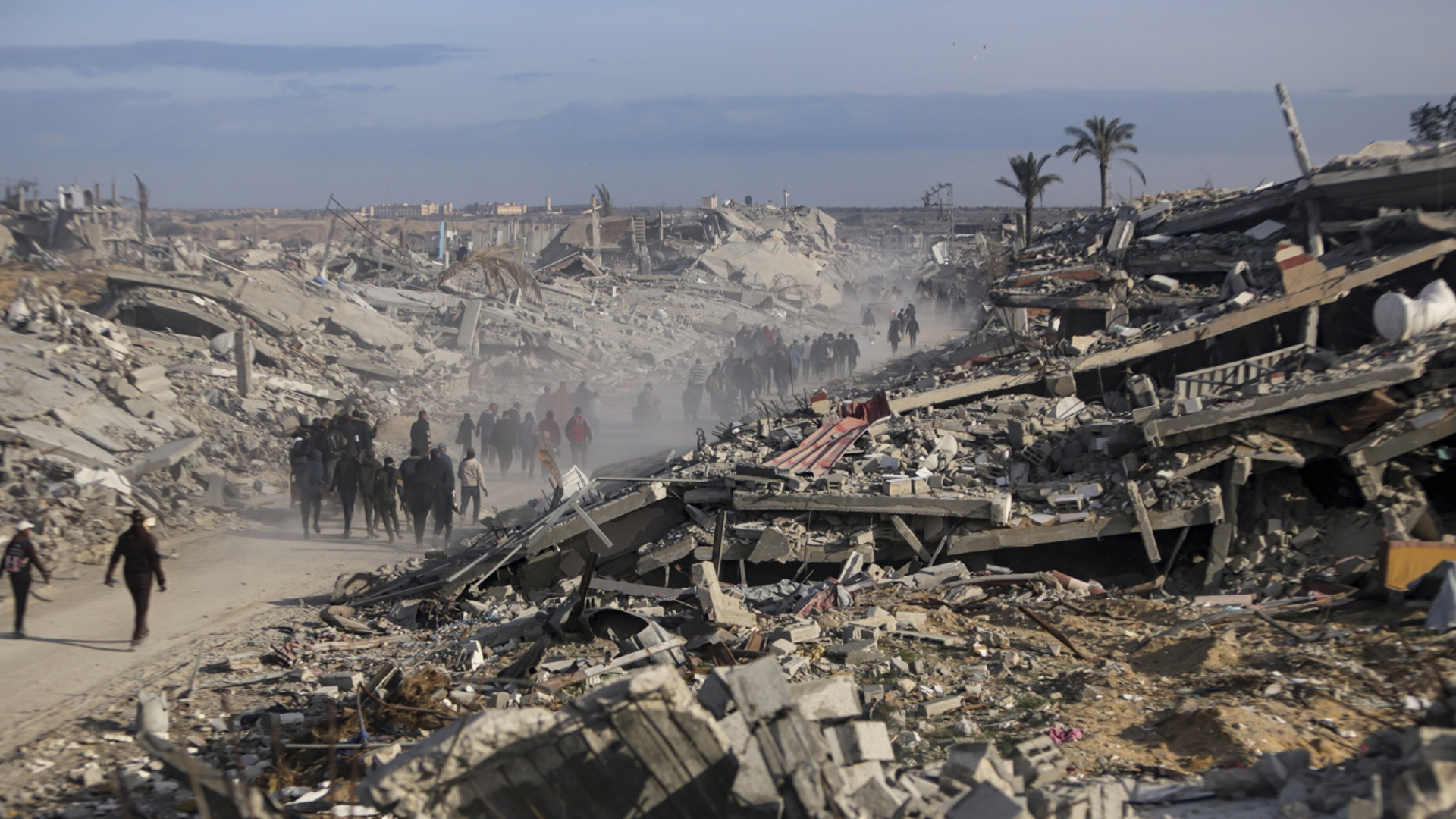
A United Nations Commission of Inquiry concluded on Tuesday, September 16, 2025, that Israel has committed genocide in Gaza, implicating top Israeli officials, including Prime Minister Benjamin Netanyahu, for inciting these acts. The commission cited mass killings, forced displacements, destruction of civilian infrastructure, and the targeting of healthcare facilities, including a fertility clinic, as evidence of genocidal intent.

“Genocide is occurring in Gaza,” said Navi Pillay, head of the Commission of Inquiry on the Occupied Palestinian Territory and a former International Criminal Court judge. “The responsibility for these atrocity crimes lies with Israeli authorities at the highest echelons, who have orchestrated a genocidal campaign for almost two years now with the specific intent to destroy the Palestinian group in Gaza.”

The commission’s findings are based on extensive evidence gathered since the outbreak of the conflict, including interviews with victims and witnesses, verified open-source documents, medical reports, and satellite imagery. According to the Gaza Health Ministry, more than 64,000 people have died in the conflict, and large parts of the population are facing famine conditions.

Under the 1948 UN Genocide Convention, genocide is defined as acts committed with the intent to destroy, in whole or in part, a national, ethnic, racial, or religious group. The commission determined that Israel had committed four of the five acts enumerated in the convention: killing members of the group, causing serious bodily or mental harm, deliberately inflicting conditions of life calculated to bring about the group’s destruction, and imposing measures intended to prevent births within the group.

The report specifically pointed to statements made by Netanyahu and other top officials as direct evidence of genocidal intent. One cited example was a letter written by Netanyahu to Israeli soldiers in November 2023, which compared the Gaza operation to a “holy war of total annihilation” described in the Hebrew Bible. President Isaac Herzog and former defence minister Yoav Gallant were also named in the report. Pillay drew comparisons with the Rwandan genocide, noting that dehumanization of victims is a key factor in enabling mass atrocities.

Israel has categorically rejected the commission’s findings, calling the report “distorted and false” and accusing the commission of having a political agenda. The Israeli government has refused to cooperate with the inquiry and demanded its immediate abolition. Israel maintains that its military actions in Gaza are part of a legitimate self-defence response to the October 7, 2023, Hamas attack, which killed 1,200 people and resulted in 251 hostages.

The commission’s findings carry significant weight, though the body is independent and does not officially speak for the UN. The report adds pressure on the United Nations and the international community to recognize the situation as genocide and to consider stronger measures to ensure accountability. The ongoing war in Gaza has caused catastrophic humanitarian suffering, and the commission urged urgent action to prevent further atrocities and protect civilians.

The inquiry comes amid ongoing legal proceedings at the International Court of Justice, where Israel faces a genocide case. While the commission cannot enforce legal measures, its conclusions may influence international judicial processes, including potential cases at the International Criminal Court. Navi Pillay, who retires in November 2025, expressed hope that the report would open the minds of states and encourage decisive action to address the crisis in Gaza.

Also Read: Donald Trump Files $15 Billion Defamation Lawsuit Against The New York Times

US Military Activity in Bangladesh Raises Regional Alarm in India, Myanmar


The recent arrival of US troops and increased military activity in Bangladesh’s Chittagong region have triggered growing concern in neighboring India and Myanmar, as Washington appears to be deepening its strategic footprint in the Bay of Bengal.

A US C‑130J Super Hercules aircraft, typically stationed at Yokota Air Base in Japan, recently landed at Shah Amanat International Airport in Chittagong. This visit aligns with a pattern of increased US military engagement in Bangladesh, including reconnaissance missions, humanitarian operations, and joint military exercises.

Under the leadership of Prime Minister Muhammad Yunus, the Bangladesh government has welcomed several US-led operations, such as “Pacific Angel-25” and “Tiger Lightning-2025.” Another joint drill is reportedly in the pipeline, following recent troop arrivals.

Strategic Sensitivities

Chittagong’s strategic location, close to India’s northeastern states and bordering Myanmar, has amplified regional anxiety. Both India and Myanmar view the expanding US presence near their frontiers as a potential disruption to the regional balance of power.

Additionally, intelligence reports suggest that both the US and China are increasingly involved in covert operations and outreach with rebel groups in Myanmar, raising the stakes for regional stability.

Internal Fallout in Bangladesh

Domestically, the growing US involvement has sparked political controversy. Some Bangladeshi political observers have linked Washington’s actions to the ousting of former Prime Minister Sheikh Hasina in August 2024, following street protests that were allegedly backed by foreign interests.

Hasina herself reportedly accused the US of pushing for access to St. Martin’s Island, a geostrategic location in the Bay of Bengal, and warned of broader interference in Bangladesh’s sovereignty.

With the Bay of Bengal emerging as a new theater for geopolitical rivalry between the US and China, Bangladesh appears to be navigating a delicate balance. However, its recent tilt toward the US has stirred unease among its neighbors, potentially ushering in a new phase of competition and realignment in South Asia.

Also Read: NATO Strengthens Eastern Defences After Russian Drones Shot Down Over Poland

Meghalaya Cabinet Set for Major Reshuffle as Eight Ministers Resign Ahead of Induction of New Faces


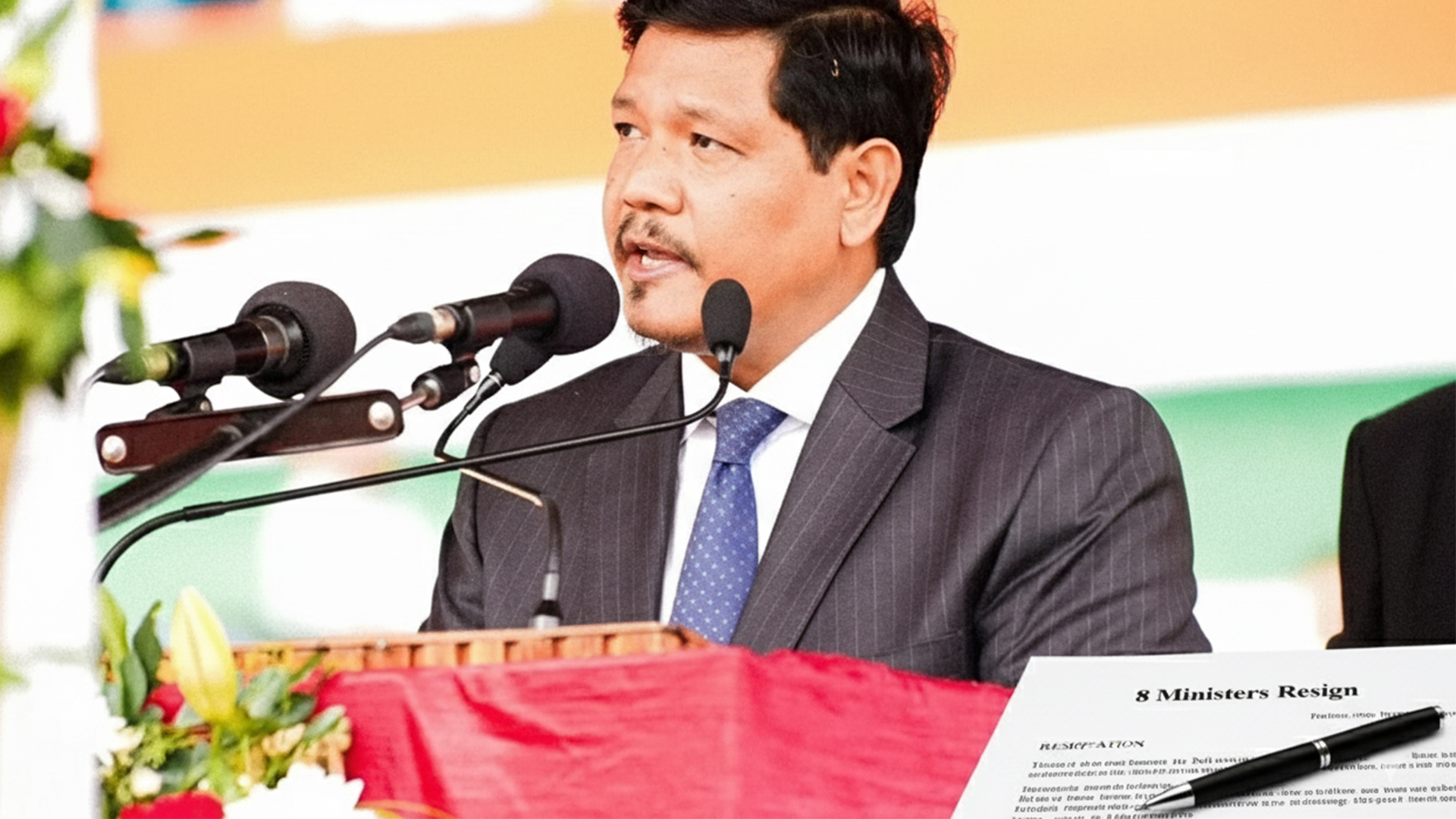
Ahead of a major reshuffle in the Meghalaya Cabinet scheduled for Tuesday, September 16, 2025, eight ministers from the ruling coalition have resigned, paving the way for new appointments. The resignations were submitted to Governor C H Vijayashankar by Chief Minister Conrad K Sangma, head of the National People’s Party (NPP)-led Meghalaya Democratic Alliance (MDA) government.

The ministers who stepped down include senior leaders Ampareen Lyngdoh, Comingone Ymbon, Rakkam A. Sangma and Abu Taher Mondal from the NPP; Paul Lyngdoh and Kyrmen Shylla from the United Democratic Party (UDP); Shakliar Warjri of the Hill State People’s Democratic Party (HSPDP); and AL Hek of the Bharatiya Janata Party (BJP). Their resignations open the door for a significant reconfiguration of the Cabinet.

The new ministers are expected to be sworn in at 5 p.m. on Tuesday at Raj Bhavan in Shillong.

Reports suggest that the reshuffle could see up to five ministers losing their positions. Among those likely to be replaced are Power Minister Abu Taher Mondal, Food and Civil Supplies Minister Comingone Ymbon, Education Minister Rakkam A. Sangma, and lone woman minister Ampareen Lyngdoh from the NPP. From the BJP and HSPDP, Animal Husbandry Minister AL Hek and Sports Minister Shakliar Warjri are also believed to be stepping down to allow their party colleagues to take over.

Timothy D. Shira, who recently resigned as Deputy Speaker, is expected to be considered for the education portfolio. Former Congress leader Brening Sangma, now representing Kherapara, may take over the power ministry. Ampareen Lyngdoh could be succeeded by Gavin Miguel Mylliem, while Comingone Ymbon’s replacement may be Jowai MLA Wailadmiki Shylla.

The Cabinet expansion is also aligned with an understanding between BJP and HSPDP to share ministries for two-and-a-half years each. Sanbor Shullai and Methodious Dkhar are tipped to replace Hek and Warjri, respectively.

Speculation is also swirling within the UDP, with Kyrmen Shylla’s seat possibly going to party president Metbah Lyngdoh or Mowkaiaw legislator Nujorki Sungoh.

When contacted by EastMojo, MLA Ampareen Lyngdoh declined to comment, while Methodious Dkhar confirmed that the reshuffle notification would be issued this week and expressed optimism about his forthcoming role.

With these changes, Meghalaya’s political landscape is poised for a significant transformation as the state government looks to reset its leadership ahead of future challenges.

Also Read: Donald Trump Files $15 Billion Defamation Lawsuit Against The New York Times

Kerala cannot afford to normalise police brutality: Here’s Why


By Arun M Nair

Of late, Kerala has been waking up to chillingly familiar headlines: yet another person assaulted inside a police station, yet another family left to fight for justice.

What should shock us has begun to feel like a grim routine. Custodial violence is no longer an aberration; it has become an encore.

This is deeply disturbing for a state that prides itself on high human development indicators and a progressive social fabric.

In theory, the police are the custodians of law and order, entrusted with protecting the rights and dignity of citizens. In practice, far too often, they are the very violators of those rights. Each instance of brutality chips away at public trust and leaves the democratic promise of justice weaker.

Ironically, the Congress-led Opposition has come out with Chief Minister Pinarayi Vijayan’s speech from the floor of the Assembly, recalling the police atrocities he endured during the dark days of the Emergency.

He spoke of the humiliation, pain, and trauma that the state machinery inflicted on political prisoners, including himself.

That acknowledgment should have been an opportunity for introspection—a reminder that unchecked police power corrodes democracy.

Yet, despite this lived memory at the highest level of leadership, Kerala today finds itself confronting the same brutalities, only in different uniforms and times.

The problem goes beyond a few “bad apples.” These repeated assaults suggest something systemic: a culture of impunity that shields errant officers. Departmental inquiries are perfunctory, suspensions temporary, and accountability rare. For the victims, meanwhile, the scars—physical and psychological—are permanent.

Government assurances of “zero tolerance” ring hollow when incidents keep surfacing with depressing regularity. Installing CCTV cameras in police stations, fast-tracking custodial violence cases, and mandatory human rights training for officers are not radical demands—they are basic necessities.

Kerala is entering a dangerous zone where brutality risks being normalised. If the state fails to act decisively, every new case will only confirm what people are already beginning to suspect—that police stations are places of fear, not safety.

A society that tolerates custodial violence, even passively, erodes its own moral core. For Kerala, the choice is stark: either confront this rot head-on with transparency, accountability, and reform, or watch the encore of brutality play on, louder each time, until silence becomes complicity.

Also Read: Donald Trump Files $15 Billion Defamation Lawsuit Against The New York Times

No General Travel Booking Without Aadhaar From October 1: See Details Here


Starting October 1, 2025, Indian Railways will require Aadhaar authentication for booking reserved general train tickets online during the first 15 minutes after the reservation window opens. The new rule is aimed at preventing misuse of the ticketing system and ensuring that genuine passengers have fair access to tickets during the high-demand initial booking period.

Currently, Aadhaar authentication is mandatory only for Tatkal bookings. With the new measure, passengers booking general reserved tickets through the IRCTC website or mobile app must authenticate their identity using Aadhaar during the first 15 minutes. After this period, authorized ticket agents will be allowed to book tickets as per the existing process.

The policy applies solely to online bookings and does not affect the timings or procedures at computerized Passenger Reservation System (PRS) counters. Furthermore, the existing rule restricting authorized ticket agents from booking opening-day tickets for the first 10 minutes will remain unchanged.

This initiative is part of Indian Railways’ broader effort to enhance transparency, curb fraudulent activities such as ticket hoarding and black marketing, and ensure that the benefits of the reservation system are available to genuine passengers. By making Aadhaar authentication compulsory during the initial booking window, the railway seeks to create a more secure and equitable ticketing system.

Passengers are advised to link their Aadhaar details to their IRCTC accounts before October 1 to avoid any inconvenience. This can be done through the IRCTC website or mobile app. With this step, Indian Railways aims to streamline bookings and protect users from exploitation while improving the integrity of its reservation system.

Also Read: Delhi Airport’s Revamped Terminal 2 to Resume Operations from October 26

Why Pope Leo is Worried About The Growing Wealth Gap


Pope Leo has voiced deep concern over the ever-widening income gap between the rich and the poor, warning that the trend poses a serious threat to global stability. In his first media interview since his election in May, the Pope criticised the growing disparity in executive compensation, citing Elon Musk’s potential to become the world’s first trillionaire as a worrying example.

Speaking to Elise Ann Allen, senior correspondent for the Catholic newspaper Crux, the Pope pointed to “the continuously wider gap between the income levels of the working class and the money that the wealthiest receive” as a key factor contributing to the world’s growing polarisation.

“CEOs that 60 years ago might have been making four to six times more than what the workers are receiving … 600 times more [now],” Pope Leo said. He expressed alarm over the news that Musk, the chief executive of Tesla, could be the world’s first trillionaire. “What does that mean and what’s that about? If that is the only thing that has value any more, then we’re in big trouble.”

The comments come days after Tesla’s board proposed a trillion-dollar compensation package for Musk, contingent on him achieving ambitious growth targets. In a stock market update, the company confirmed the proposal, stating, “Yes, you read that correctly.” The plan would require Tesla’s market valuation to rise from just over $1 trillion to $8.5 trillion over the next decade.

Pope Leo, formerly Cardinal Robert Prevost, also addressed the challenges he faces in his new role. “There’s still a huge learning curve ahead of me,” he told Crux.

The Pope’s remarks reflect concerns similar to those expressed by his predecessor, Pope Francis, who clashed with former US President Donald Trump over immigration and social policies. Leo, too, criticised Trump’s policies on his X account before assuming the papacy.

Despite differences, the Pope’s diplomatic approach was on display recently when Brian Burch, the new US ambassador to the Vatican and a critic of Francis, presented him with a chocolate birthday cake during a meeting, in an apparent effort to foster cordial relations.

Pope Leo’s intervention signals the Church’s ongoing engagement with issues of economic justice, warning that unchecked wealth accumulation threatens both human dignity and global harmony.

Also Read: Brazil’s Supreme Court Sentences Former President Jair Bolsonaro to 27 Years for Coup Attempt