rotating globe
3 Apr 2026


Knowing Sushila Karki: Nepal’s Interim Leader Chosen by Gen Z to Tackle Corruption


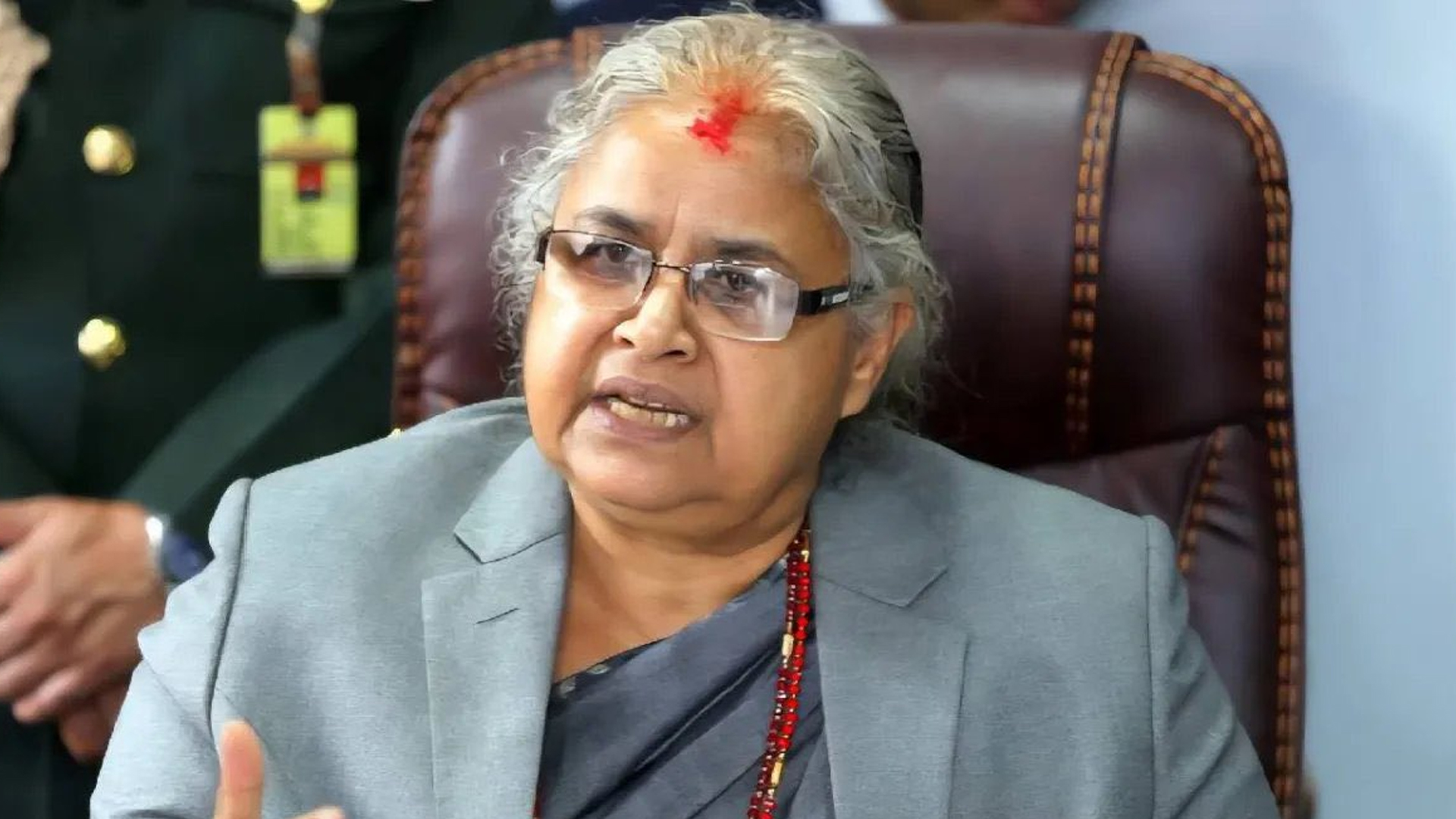
Sushila Karki, a former Chief Justice of Nepal, has been appointed as the country’s interim Prime Minister following unprecedented anti-corruption protests that led to the resignation of Prime Minister K.P. Sharma Oli. At 73, Karki becomes the first woman to hold Nepal’s top political office—a symbolic and historic move driven by youth-led unrest demanding systemic change.

The protests, which began on 8 September 2025, were initially triggered by a short-lived social media ban but quickly escalated into a full-blown political crisis. Long-standing economic woes, rampant corruption, and governance failures fueled public anger. Demonstrators, many from the Gen Z demographic, stormed government buildings, set parts of the Parliament complex ablaze, and clashed with security forces. In the two days of unrest, at least 72 people were killed and 191 injured, marking the worst violence in Nepal since the end of its civil war and the abolition of the monarchy in 2008.

Karki’s appointment was not a conventional political arrangement but the result of intense negotiations between President Ram Chandra Paudel, Army Chief General Ashok Raj Sigdel, and representatives of the youth movement. Thousands of young protesters had used the Discord app—a digital communication platform popular among Gen Z—to nominate Karki as their preferred candidate for interim leadership. Despite not seeking the post herself, Karki accepted the responsibility, remarking, “The situation that I have come into, I have not wished to come here. My name was brought from the streets.”

In her first public address as Prime Minister, Sushila Karki paid tribute to the deceased protesters by declaring them martyrs and pledged compensation of 1 million Nepali rupees for their families. She also promised financial support for those injured during the turmoil. Karki emphasized that her administration would focus on the demands voiced by the younger generation, saying, “We have to work according to the thinking of the Gen Z generation.” Their key demands, she noted, include ending corruption, ensuring good governance, and promoting economic equality.

Nepal’s youth, particularly those aged 15-24, face staggering challenges. According to the World Bank, one-fifth of young people in Nepal are unemployed, and the country’s GDP per capita is just $1,447. These harsh economic realities, combined with political frustration, made the youth movement a powerful force. Karki’s leadership is seen as a response to these underlying issues, as well as a rare instance where a grassroots campaign influenced national decision-making.

Sushila Karki has pledged to serve as interim Prime Minister for no more than six months. Elections are scheduled for 5 March 2026, and she has committed to overseeing the transition to a new, democratically elected government. “We will not stay here more than six months in any situation. We will complete our responsibilities and pledge to hand over to the next Parliament and Ministers,” she stated in a televised speech.

Her rise to power has garnered attention not only within Nepal but also from its regional neighbors. Prime Minister Narendra Modi of India expressed support for “peace, progress and prosperity” in Nepal, while China’s Foreign Ministry highlighted its desire to “push China-Nepal relations steadily forward.” Despite the geopolitical interest, Karki’s focus remains squarely on domestic reform.

The new Prime Minister’s appointment signals a shift in Nepal’s political landscape. Her reputation for independence and integrity, honed during her tenure as Chief Justice, makes her uniquely suited to address public concerns. By aligning her leadership with the aspirations of young citizens, Karki represents a new model of governance—one rooted in accountability, inclusiveness, and economic reform.

For many Nepalese, particularly young women and marginalized communities, Karki’s ascent is a powerful statement that political leadership is no longer confined to traditional elites. Her tenure may be brief, but its implications are profound, as it reflects a generational demand for transparency, justice, and a better future.

As Nepal grapples with reconstruction and reconciliation, all eyes will be on Sushila Karki’s ability to balance reform with stability, compassion with strength, and the hopes of a new generation with the entrenched challenges of governance. In a time of crisis, she stands at the helm—not out of ambition but out of obligation—a leader chosen from the streets to steer a nation toward integrity and renewal.

Also Read: Mizoram’s Rail Revolution: Bairabi–Sairang Line Links State to National Network
Divya Deshmukh — The New Dazzler on the Board


At just 19, she has rewritten the record-books in Indian and world chess. Her journey from just another Nagpur girl to becoming India’s first to win the FIDE Women’s World Cup is a story of talent, grit and discipline.

By Bhavya Narayan

Nagpur wakes before sunrise. The streets are quiet, the monsoon still hanging in the air drips from trees. In the modest home in Shankar Nagar, Divya Deshmukh, 19, is already awake, reviewing games on her laptop.

It is not unusual. Over recent months, her life has shifted from the simple routines of school and local tournaments to the roaring applause of world stages. But even as she becomes one of India’s brightest chess stars, there remains in her a humility that belies what she has already achieved.

Divya Deshmukh was born in December 2005 into a family of doctors. From an early age, her parents encouraged curiosity—whether in studies or strategy. Chess, with its 64 squares and 32 pieces, became the framework through which impatience was disciplined, risks were measured, and victories—both large and small—became the stepping stones of belief.

In September 2024, at the 45th Chess Olympiad in Budapest, she signalled her arrival. Playing on India’s third board, she scored 9½ out of 11, with a performance rating above 2600. India won the Women’s event gold for the first time. It was a defining moment—not only for the nation but also for Divya, who had begun to understand what it meant to bear expectations.

Then July 2025 arrived, and with it, Batumi. The FIDE Women’s World Cup in Georgia proved to be both theatre and trial. Divya, seeded only 15th, dispatched higher-rated adversaries, among them Zhu Jiner in the fourth round and Tan Zhongyi in the semi-finals. In the final, she faced veteran Koneru Humpy. Two classical games ended in quiet tension, draws. In the rapid tiebreaks, Divya exploited mistakes, held her composure—and, in doing so, not only won the tournament but earned the Grandmaster title, making her the fourth Indian woman ever to do so.

After that, the media labels came fast: “overnight sensation,” “India’s next big thing,” “golden era of Indian chess.” Yet she responded in interviews that what seems overnight is really years of study—of losing, analyzing losses, and making mind-games as important as the moves on the board. She admitted that the pre-game rituals—her “lucky kurta,” a specific playlist (“Mary Kom” songs, among others), and routines before stepping into the arena—are less superstition than anchors, stabilizers for nerves.

Her return to Nagpur after Batumi was nothing like returning home. Thousands thronged the streets, motors sounded, banners waved. There was a roadshow, gifts, a steady stream of felicitations. In conversation, she described the mix of surprise and joy that came with recognition—not just from the chess establishment but from neighbours, strangers, from young girls who approached her to say, “I want to do what you are doing.”

Since that World Cup victory, Divya has not slowed. At the FIDE Grand Swiss 2025 in Samarkand, she stunned Egypt’s top‐ranked grandmaster Amin Bassem, playing black, with an assertive, tactical game that many analysts have praised for its clarity under pressure. Shortly after, in a legendary endgame against fellow Indian and childhood buddy D. Gukesh, the reigning World Champion, she drew after 103 moves.

The richness of those games is not only in heralding her but also in cementing that she can match the best in the open field, not just among women.

What sets Divya apart is not simply her wins—it is how she wins. In an interview with India Today, she said she studies sports psychology and data analytics—to understand not just what move to make, but how other players react under time pressure and what nerves look like in a match. Her opening preparation is sharp, yes, but even more so her readiness for the emotional swings that come with knockout formats. She tries to remain calm, to let the board speak.

Yet even Divya acknowledges that the journey ahead will test different muscles. Qualifying for the Women’s Candidates Tournament in 2026 is now her next big goal. There will be more travel, more tournaments with higher stakes—and the pressure will be more continuous. She has spoken privately of fatigue—the strain on mind and body that comes with constant preparation. She plans to balance studies with chess more deliberately now. There’s talk of online courses and keeping academic options open.

Divya Deshmukh’s rise is more than personal glory—it is part of a larger narrative. Indian chess over the past few years has seen a surge. Young men like Gukesh Dommaraju, R. Praggnanandhaa and Arjun Erigaisi are regularly in the world’s top echelons. In a country where cricket has long been the unrivalled sport of mass following, chess is beginning to stake its claim to a similar space in the public imagination. Divya’s win, in this sense, is a crack in ceilings that once seemed thick—that women’s chess could win big, that players from outside the usual elite centres (Delhi, Mumbai, Bengaluru) could reach global heights, that young girls could expect to compete without apology.

In Nagpur, parents say her example shifts mindsets—their daughters can compete, their daughters can travel alone, their daughters can dream of Grandmaster titles. Chess academies in smaller cities are seeing pick-ups in enrolment—and tournaments outside the traditional metropolises are getting better sponsorship. Divya herself has become not just a symbol, but in some ways a catalyst.

When she spoke of dealing with “overnight fame,” she did not sound daunted. She laughed about social media tags, about people telling her she is “India’s chess future.” She said, yes, those are flattering—but her focus remains inward—each tournament, each move, each error to be corrected, each opponent to be studied.

For all the celebrity, the medals, the GM title, there is still the board. And for Divya, rising means understanding what appears next—maybe deep runs in mixed or open events, maybe breaking into the overall World Top 50 across both genders, perhaps someday challenging for the Women’s World Championship title. As the late nights studying, the travel, the sacrifice—all accumulate, one senses that what she is building is not just a career—but a legacy—both on and off the board.

Also Read: Sushila Karki Appointed Nepal’s First Woman Prime Minister Amid Political Crisis


Mizoram’s Rail Revolution: Bairabi–Sairang Line Links State to National Network


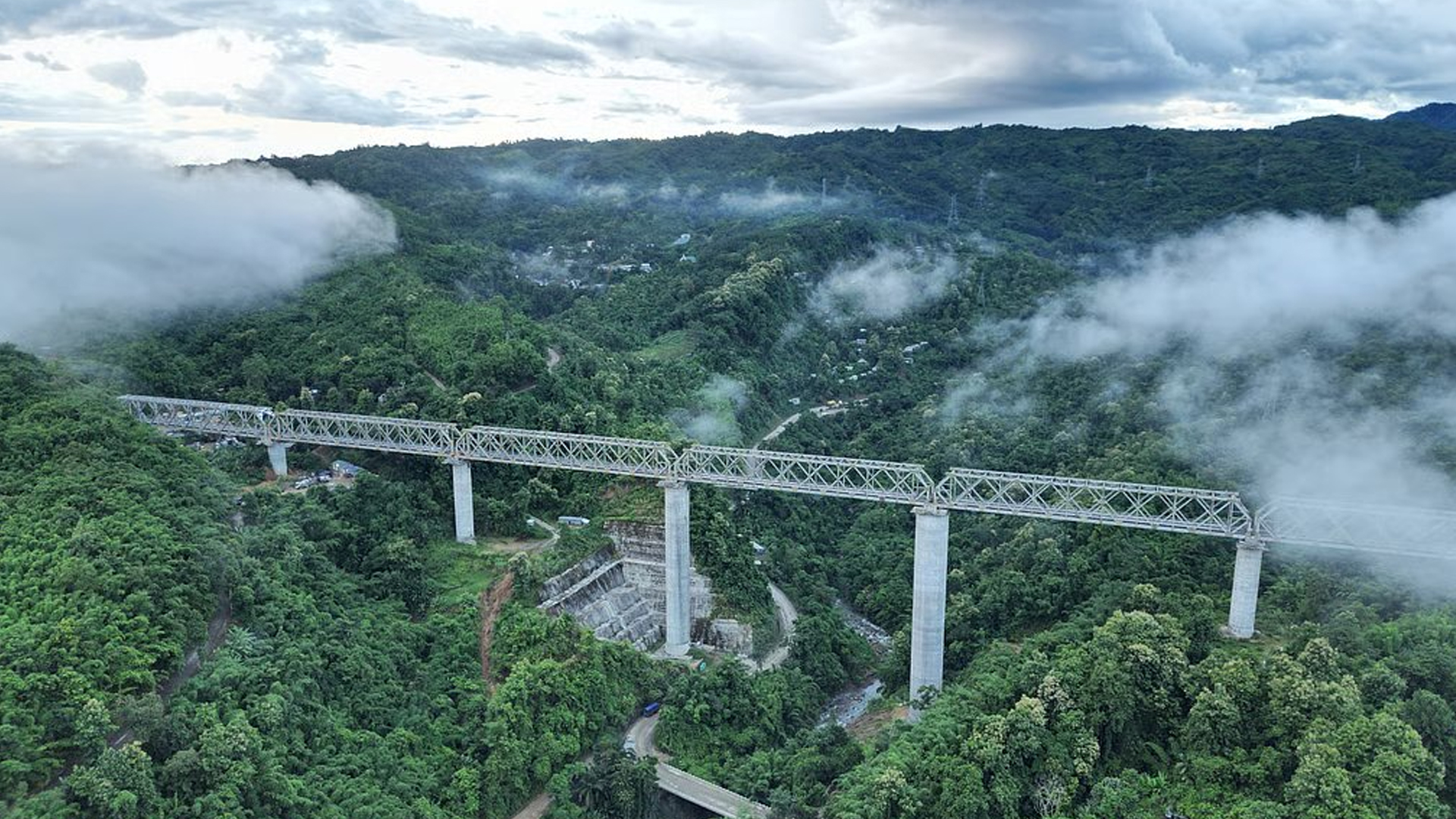
After decades of geographical isolation, Mizoram has taken a giant leap toward connectivity and development with the inauguration of the Bairabi–Sairang rail line. This ₹8,070 crore railway project, officially launched today by Prime Minister Narendra Modi, marks the state’s historic first connection to India’s vast national railway network. The new rail link is poised to unlock unprecedented economic opportunities, transform transportation, and weave Mizoram more closely into the fabric of the nation.

Stretching approximately 51 kilometers from Bairabi, a key junction in Assam, to Sairang near Aizawl, the capital of Mizoram, the rail line opens up unprecedented opportunities for trade, travel, and regional integration. For decades, Mizoram’s rugged terrain and lack of rail connectivity have posed significant challenges to its development. The new rail line promises to bridge that gap, facilitating smoother movement of goods and passengers.

Boost to Economic Growth and Connectivity

The inauguration of the Bairabi–Sairang rail line not only integrates Mizoram into India’s railway grid but also enhances connectivity with other Northeastern states and the rest of the country. This rail link is expected to significantly reduce travel time and transportation costs, benefiting local industries such as agriculture, handicrafts, and tourism.

A senior railway official said that this is a historic day for Mizoram and the entire Northeast region. By connecting remote areas to major markets, the rail line will catalyze development, create jobs, and improve the quality of life for thousands.

Enhanced Passenger Services

Alongside the inauguration, three new train services were flagged off from Sairang, namely, the Sairang–Delhi Rajdhani Express, the Sairang–Guwahati Express, and the Sairang–Kolkata Express,  enhancing passenger connectivity to major Indian cities. These trains will offer faster, more reliable options for travelers, linking Mizoram to key economic hubs.

Strategic and Social Impact

Beyond economics, the rail line holds strategic importance in strengthening national integration and security in the Northeast. The project aligns with the government’s vision to promote inclusive growth and reduce regional disparities by improving infrastructure.

For the people of Mizoram, the rail link is more than just steel tracks and trains; it is a symbol of progress, hope, and a new chapter in their journey toward prosperity.

Also Read: Coal India to Raise Workers’ Ex-Gratia Compensation to ₹25 Lakh from September 17

Coal India to Raise Workers’ Ex-Gratia Compensation to ₹25 Lakh from September 17


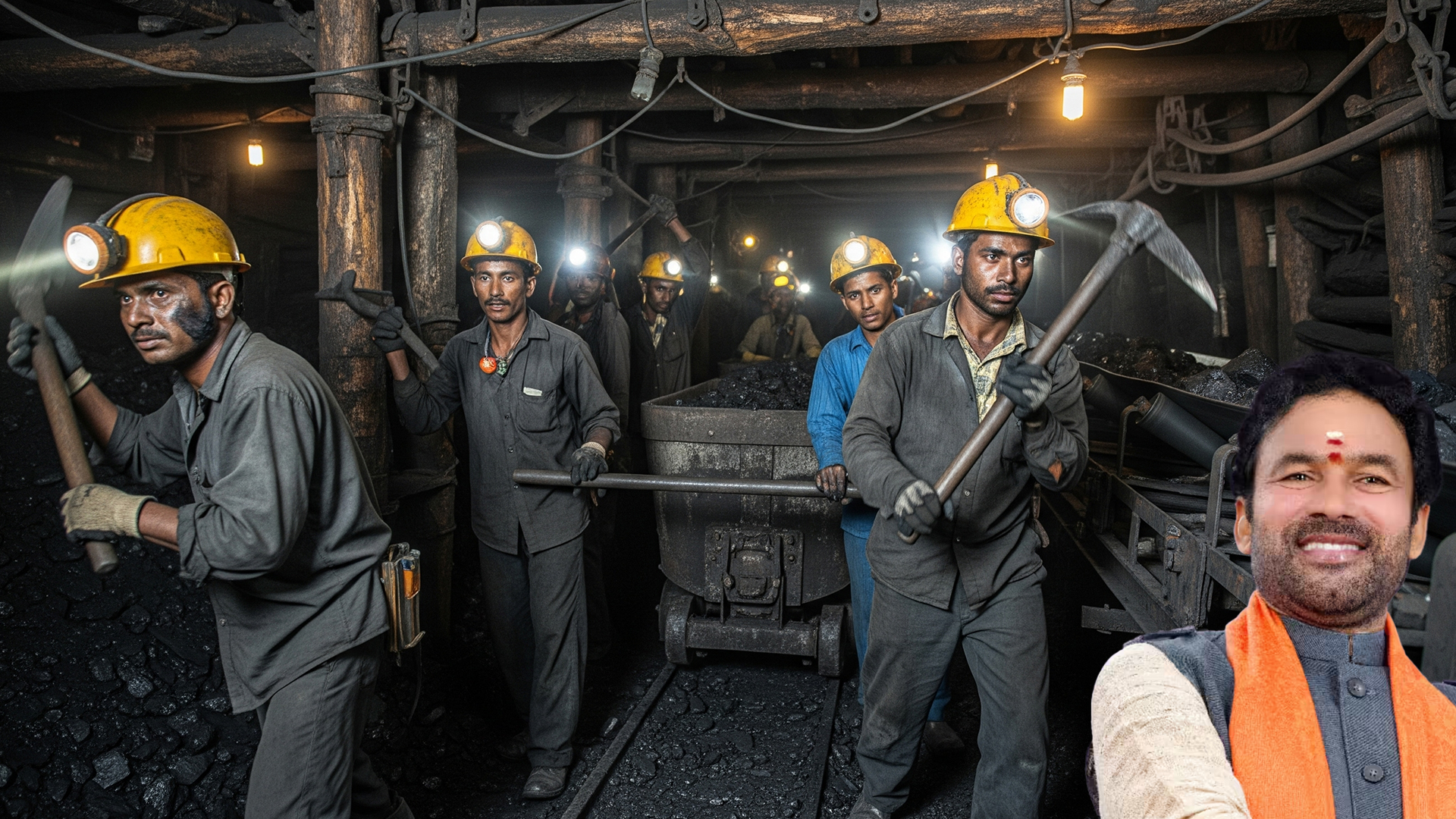
Union Coal Minister G. Kishan Reddy has announced that Coal India Limited (CIL) will raise the ex gratia payment for workers affected by mine accidents from ₹15 lakh to ₹25 lakh, effective September 17, 2025. This move is part of the government’s continued focus on enhancing worker welfare and safety in the coal sector.

The minister also revealed that accidental insurance coverage for permanent employees will be increased to ₹1 crore, while contractual workers will receive ₹40 lakh in insurance benefits.

In a landmark decision, Coal India will introduce uniforms for all its employees, ranging from ground-level workers to senior officials, including the Chairman and Managing Director. This is the first time since independence that such uniforms will be provided, aimed at fostering unity, discipline, and professionalism within the organization.

Minister Reddy further emphasized the government’s efforts to reduce India’s reliance on coal imports, highlighting savings of approximately ₹60,000 crore last year due to increased domestic production. He also underscored initiatives to boost transparency, ease of doing business, and critical mineral exploration under the National Critical Mineral Mission.

These comprehensive steps aim to improve the efficiency of the coal sector while prioritizing the safety and well-being of its workforce.

Also Read: Indian Railways Launches Parcel Train Service to Transport Kashmir Apples to Delhi

Tragedy Strikes Ganesha Procession: 8 Dead After Vehicle Rams Crowd in Hassan


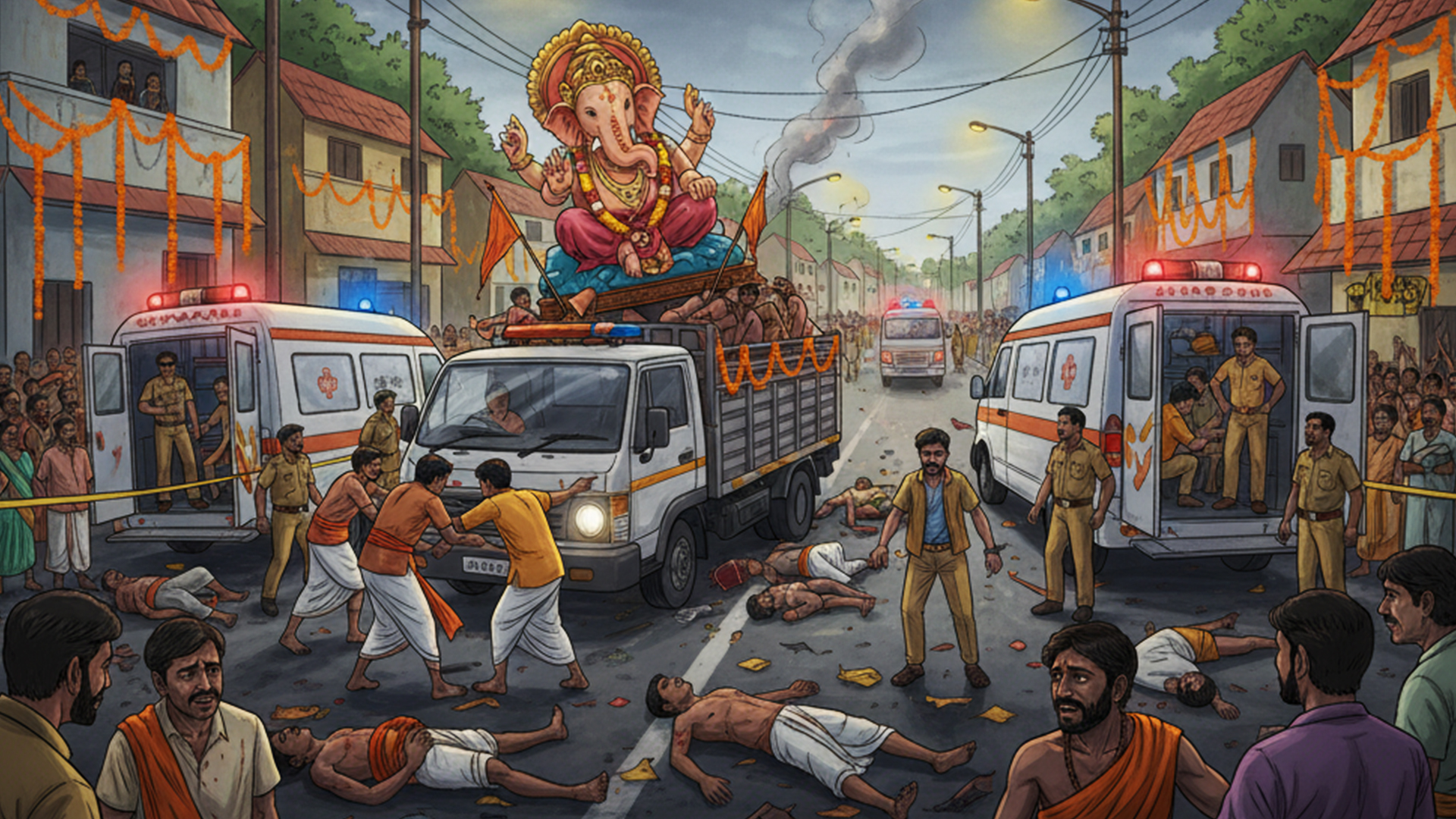
At least eight people lost their lives and more than 25 were injured when a goods vehicle rammed into a crowd participating in a Ganesha procession at Mosale Hosahalli on the Hassan-Holenarasipur Road on Friday evening. The incident occurred when participants were dancing to music during the religious procession, and the vehicle suddenly veered into the crowd, catching them off guard.

The injured were rushed to hospitals in Hassan by ambulances, with 18 being treated at the Hassan Institute of Medical Sciences and seven others admitted to private hospitals, according to a late-night statement by Krishna Byre Gowda, Revenue Minister and in-charge of Hassan district. Officials fear that the death toll could rise as several victims remain critically injured. A majority of those affected were youths, including a student from the Government Engineering College at Mosale Hosahalli.

According to eyewitnesses, the movement of vehicles had been restricted to one lane while the procession occupied the other. The goods vehicle reportedly struck a two-wheeler before losing control and ploughing into the crowd. Video footage from the scene shows the vehicle making an abrupt turn before hitting the devotees. The driver, identified as Bhuvanesh, has been taken into police custody for questioning.

Local residents quickly called emergency services, and ambulances transported the injured to medical facilities. The tragedy drew crowds from surrounding villages, with relatives and family members of the victims visibly distraught.

Compensation Announced, Leaders Visit Site

Chief Minister Siddaramaiah announced ex-gratia payments of ₹5 lakh for the families of the deceased and assured that the government would cover medical expenses for those injured. In a post on social media, the Chief Minister expressed deep sorrow and wished the victims a swift recovery.

Several political leaders visited the site and hospitals. Holenarasipur MLA H.D. Revanna and his son, MLC Suraj Revanna, were present at the scene, while Hassan MLA Swaroop Prakash and MP Shreyas Patel checked on the injured at the hospital. Union Minister for Heavy Industries H.D. Kumaraswamy also expressed shock over the incident, describing it as “unfortunate” and calling upon the State government to ensure free treatment for the injured.

Also Read: Chandrapuram Ponnusamy Radhakrishnan Sworn in as India’s 15th Vice President

Sushila Karki Appointed Nepal’s First Woman Prime Minister Amid Political Crisis


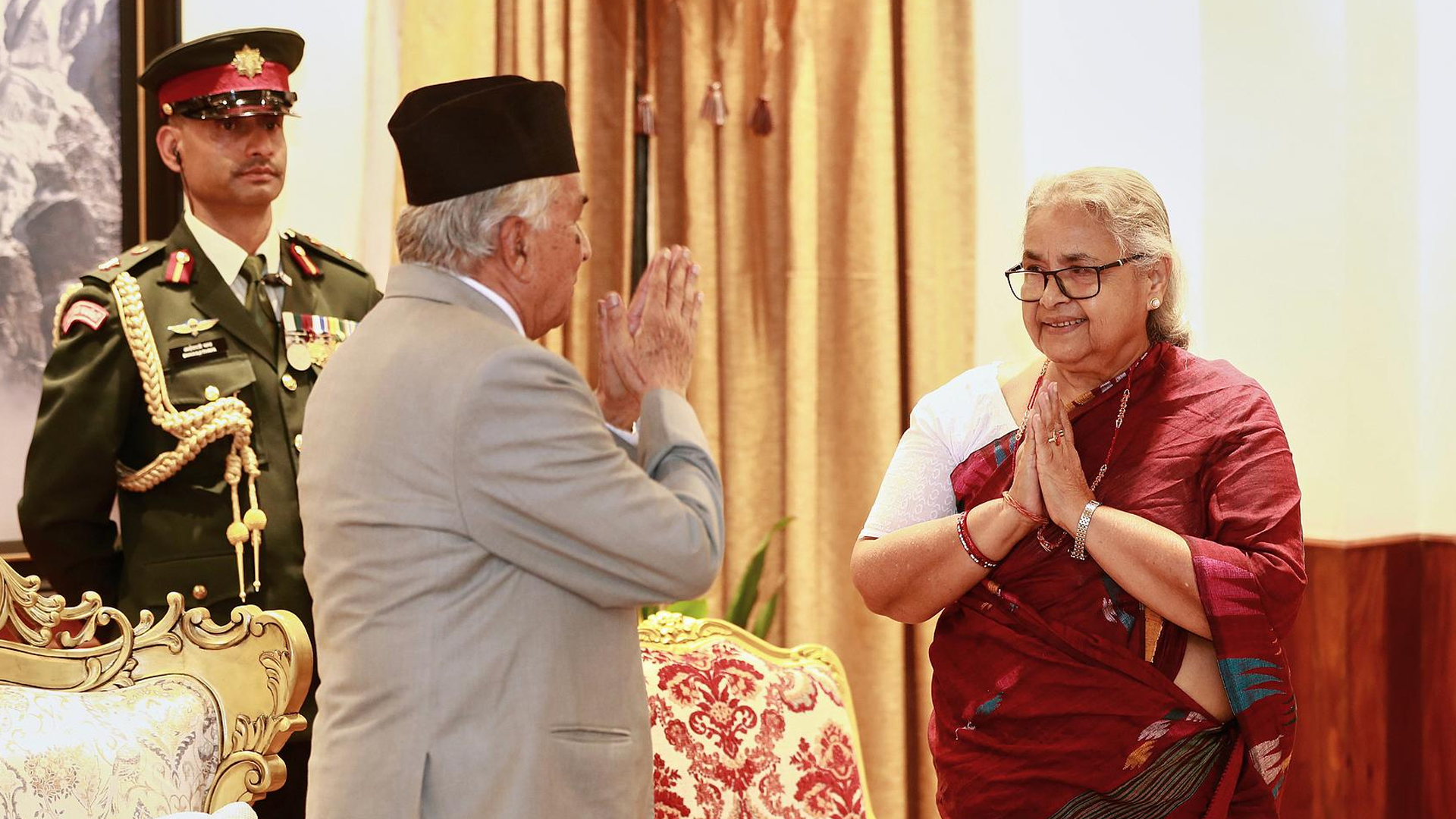
Nepal appointed former Chief Justice Sushila Karki as its interim Prime Minister on Friday, as the Himalayan nation seeks to restore stability following days of intense political unrest. President Ram Chandra Poudel also dissolved the Parliament and announced fresh elections to be held on March 5, 2026, responding to sustained protests led by young activists demanding an end to corruption and political impasse.

At 73, Karki becomes Nepal’s first woman Prime Minister, and her appointment was endorsed by Generation Z campaigners who have been at the forefront of the protests. She took the oath of office in a brief ceremony at the presidential palace, where President Poudel administered the oath of office and secrecy.

The protests erupted after the Oli government blocked popular social media platforms, triggering outrage among younger citizens frustrated by years of misrule and rising inequality. Clashes between demonstrators and security forces on September 8 resulted in at least 21 deaths, escalating demands for political change. The unrest culminated in the resignation of former Prime Minister K.P. Sharma Oli and the storming of key government buildings, including Parliament and the Supreme Court.

Following consultations with legal experts, political leaders, and the army, President Poudel cleared the way for the appointment. While some constitutional concerns had been raised, experts noted that the move was a remedial measure amid a national crisis.

Challenges Ahead as India Extends Support

Karki is expected to form a Cabinet that will oversee governance until elections are held within six months. Her government’s immediate tasks include maintaining law and order, restoring state institutions, and conducting free and fair elections. Constitutional expert Bipin Adhikari said that “given that her appointment is a remedial measure taken at a time of crisis, its legitimacy is not likely to be questioned.”

India’s Ministry of External Affairs welcomed the development, emphasizing the importance of peace and democratic processes in the region. “We welcome the formation of a new Interim Government in Nepal, led by Right Honourable Mrs. Sushila Karki. We are hopeful that this would help in fostering peace and stability,” the Ministry stated. It further reiterated that “as a close neighbour, a fellow democracy and a long term development partner, India will continue to work closely with Nepal for the well-being and prosperity of our two peoples and countries.”

Karki, widely regarded as an anti-corruption figure, holds a master’s degree in political science from Banaras Hindu University and a law degree from Tribhuvan University. Her tenure as Chief Justice between 2016 and 2017 earned her a reputation for integrity and judicial independence, attributes that contributed to her selection as leader during this period of national transition.

As protests subside and the political landscape shifts, Karki’s leadership will be closely watched by domestic stakeholders and international observers alike. With a mandate to guide Nepal through elections and institutional reforms, her government faces the challenge of translating public trust into sustainable governance. The next few months will be crucial in determining the course of Nepal’s democratic revival.

Also Read: Chandrapuram Ponnusamy Radhakrishnan Sworn in as India’s 15th Vice President

Powerful 7.4-Magnitude Earthquake Jolts Russia’s Kamchatka Peninsula, Tsunami Alert Briefly Issued


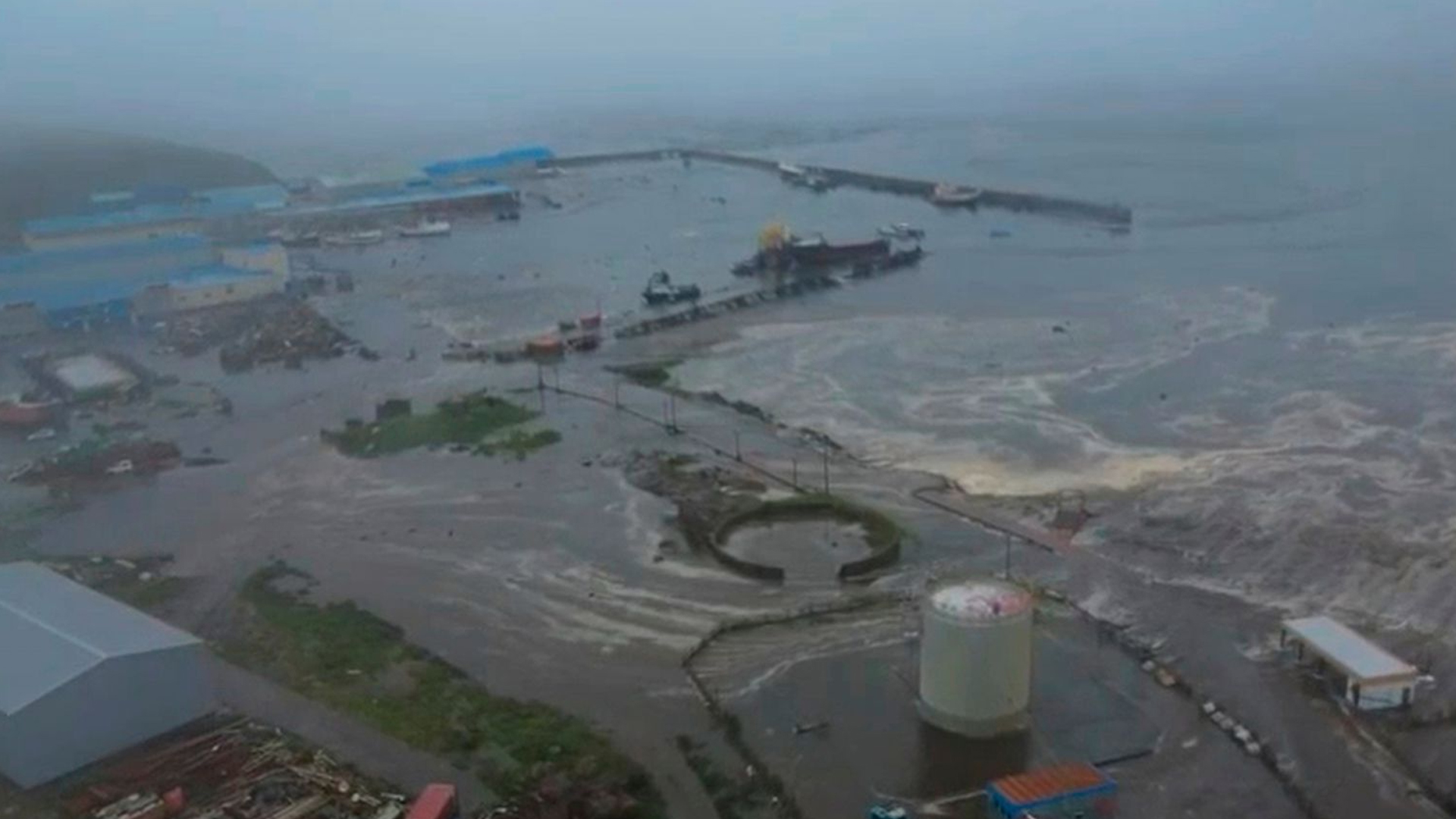
 A strong undersea earthquake measuring 7.4 magnitude struck off the Kamchatka Peninsula in Russia’s Far East early Saturday, 13 September, triggering widespread tremors and briefly raising concerns of a potential tsunami.

According to the United States Geological Survey (USGS), the earthquake occurred at a depth of approximately 39 kilometres, with the epicentre located around 111 km east of Petropavlovsk-Kamchatsky, a city situated near the southeastern coast of the peninsula.

Shortly after the tremor, the Pacific Tsunami Warning Center (PTWC) issued a tsunami threat alert, warning that hazardous waves could impact coastal areas within 300 kilometres of the epicentre. However, the warning was lifted a few hours later, as no significant wave activity was observed, and authorities confirmed that there was no tsunami threat.

Tremors Across the Region

Residents in the Kamchatka region reported experiencing strong shaking, but there were no immediate injuries or major damage. In Petropavlovsk-Kamchatsky, some buildings were temporarily evacuated as a precaution. A resident described the tremor as a long, rolling motion, not violent, but very unsettling.

The quake was initially recorded at magnitude 7.5, but the USGS later downgraded it to 7.4 after further analysis.

Seismically Active Region

The Kamchatka Peninsula is situated within the seismically active Pacific Ring of Fire, a region renowned for its frequent and intense geological activity, including earthquakes and volcanic eruptions.

This is not the first major quake in the region this year. In July 2025, a much stronger 8.8-magnitude earthquake struck off the same coast, triggering four-metre-high tsunami waves and prompting widespread evacuation alerts from Japan to Hawaii. That quake was one of the most powerful globally since the devastating 2011 earthquake and tsunami in Japan, which left over 15,000 people dead.

Preparedness and Monitoring

Emergency services in Kamchatka remain on alert. While there are no reports of casualties or significant infrastructure damage, authorities have urged residents to stay informed through official channels and review local emergency protocols in case of aftershocks.

A spokesperson for the Russian Academy of Sciences mentioned that the region is tectonically active, and such strong earthquakes are not uncommon. Seismologists continue to monitor the area closely for tremors.

Also Read: NATO Strengthens Eastern Defences After Russian Drones Shot Down Over Poland

India Supports UN Resolution Backing Two-State Solution for Palestine


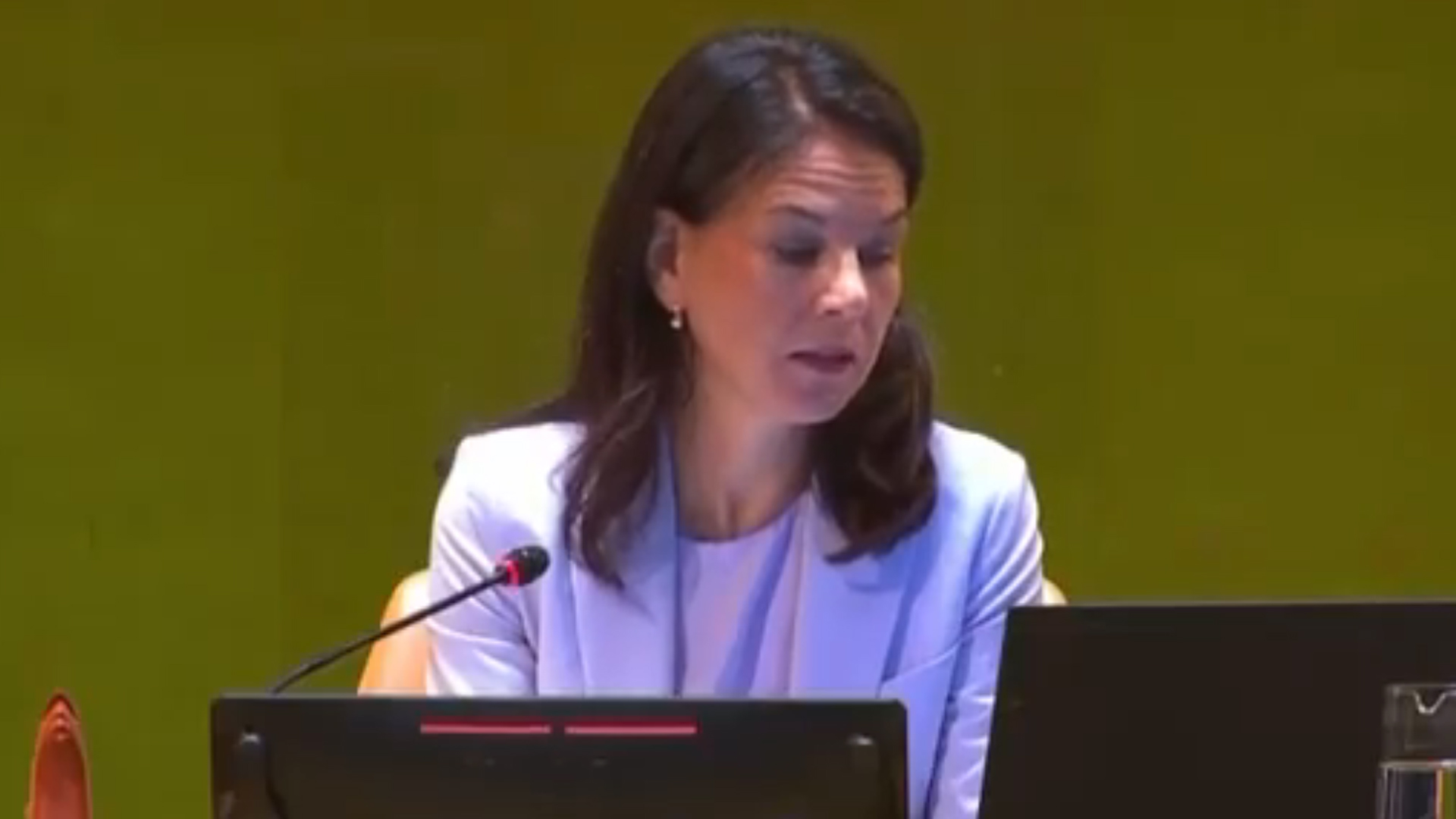
In a significant move at the United Nations, India voted in favor of a resolution endorsing the “New York Declaration,” which calls for the peaceful settlement of the Israeli-Palestinian conflict through a two-state solution. The resolution, introduced by France and Saudi Arabia, was passed with overwhelming support—142 nations voted in favor, 10 against, and 12 abstentions. Among those voting against were Israel, the United States, Argentina, and Hungary.

India’s support for the resolution reflects its long-standing diplomatic position advocating for a just and peaceful resolution to the Palestine issue. For decades, India has backed the creation of a sovereign, viable Palestinian state living in peace alongside Israel. The vote reiterates India’s commitment to international law, human rights, and regional stability, especially at a time when the Middle East conflict continues to threaten peace and security.

Key Points of the New York Declaration

The declaration urges concrete steps to establish two states based on pre-1967 borders and emphasizes ending violence and humanitarian crises in Gaza. It calls on Israel to immediately halt settlement expansions, land grabs, and annexation activities in Palestinian territories, including East Jerusalem. The resolution also stresses the right of the Palestinian people to self-determination and calls for an end to hostilities that have claimed thousands of lives and displaced countless civilians.

The declaration condemns violence from both sides—pointing to the grave human toll on civilians in Gaza, the West Bank, and Israel—and appeals to the global community to ensure robust and time-bound action. The resolution highlights that without decisive measures and international guarantees, the conflict could deepen, undermining regional peace efforts.

Israel’s Opposition and Continuing Challenges

The resolution comes amid growing tensions, as Israeli Prime Minister Benjamin Netanyahu continues to oppose the two-state framework. In a recent development, Netanyahu signed an agreement to push forward the “E1” settlement project, which critics say would fragment Palestinian territories and make the two-state vision unviable. Netanyahu openly rejected the formation of a Palestinian state, stating that the land “belongs to Israel.”

Israel’s stance has been supported by the U.S., which expressed concerns that the resolution would embolden Hamas and complicate peace efforts. However, the European Union has expressed support for the resolution and is exploring measures to hold accountable those involved in settlement activities.

For India, this vote is not merely a diplomatic gesture but a reaffirmation of its principled stance on global justice and peace. With a history of solidarity with the Palestinian cause and strong bilateral relations with Israel, India’s balanced approach is aimed at fostering dialogue rather than confrontation. The vote comes at a time when rising extremism and geopolitical instability threaten not only the Middle East but also broader global security—including energy supplies and trade routes vital to India’s economy.

By supporting the resolution, India has aligned itself with a global call for humanitarian intervention and peaceful resolution, while also underscoring its desire to maintain constructive engagement with both Palestine and Israel.

The resolution’s adoption is a step toward encouraging dialogue and reducing violence, but it also exposes the complexity of the conflict. With Israel continuing settlement expansion and rejecting negotiations, achieving a two-state solution will require sustained international pressure and diplomatic persistence. For India, the challenge lies in balancing strategic interests with moral commitments, ensuring that its voice continues to promote peace, stability, and human dignity on the global stage.

This development is expected to influence India’s foreign policy engagements in West Asia and shape its partnerships on broader issues like counter-terrorism, energy security, and humanitarian cooperation. The coming months will be crucial in assessing whether this resolution translates into tangible action—or remains a symbolic statement amid deep-rooted challenges.

Adani Coal Project in Dhirauli Sparks Controversy Over Forest Land, Tribal Rights


Congress leader Jairam Ramesh on Friday (September 12, 2025) alleged that the Adani Group has started cutting trees on government and forest land for its coal mine project in Dhirauli, Madhya Pradesh, in what he described as a “blatant violation” of the Forest Rights Act (FRA).

Ramesh, a former Environment Minister, claimed the Modi government imposed the allotment from above in 2019 and is now pushing ahead with it in 2025 without securing essential legal clearances. “This is simply because Modani is a (f)law unto itself,” he said on X. There was no immediate response from the Adani Group or the Centre to the allegations.

“In Dhirauli, Madhya Pradesh, Modani has begun cutting trees on government and forest land for its coal mine—without Stage-II forest clearance and in blatant violation of FRA, 2006; PESA, 1996. Villagers, mostly Scheduled Tribe communities and even a Particularly Vulnerable Tribal Group (PVTG), are rightly protesting,” he said.

The coal block is located in a Fifth Schedule Area, where tribal rights and self-governance provisions are constitutionally protected, Ramesh pointed out. He added that these protections appear to have been ignored, with no Gram Sabha consultations conducted despite the mandates of the Panchayats (Extension to the Scheduled Areas) Act, 1996, and Supreme Court judgments requiring Gram Sabha consent.

“The Forest Rights Act, 2006 mandates that Gram Sabhas must decide on the diversion of forest land for non-forest purposes,” Ramesh said, highlighting that approvals in this case appear to have been bypassed. Stage-II clearance from the Ministry of Environment, Forest and Climate Change for the diversion of roughly 3,500 acres of prime forest land has not been granted, even as the company begins deforestation. “Families earlier uprooted by projects now face eviction again—a double displacement,” he added.

Ramesh also warned about the environmental and livelihood impacts of the project. “Mahua, tendu, medicines, fuel wood—all will vanish with the implementation of this project,” he said, stressing that forests are not merely a source of sustenance but are sacred to local Adivasi groups. He noted that compensatory afforestation is an inadequate ecological substitute.

Earlier this month, Adani Power confirmed it had received approval from the Ministry of Coal to commence mining operations at the Dhirauli mine in Singrauli district. According to the statement, all permissions required from the Coal Ministry to begin operations have been secured.

The unfolding situation has placed the Dhirauli project at the center of a broader debate over industrial expansion, tribal rights, and environmental safeguards in India, raising questions about balancing development with legal and ecological responsibilities.

Also Read: Chandrapuram Ponnusamy Radhakrishnan Sworn in as India’s 15th Vice President

NATO Strengthens Eastern Defences After Russian Drones Shot Down Over Poland


NATO has reinforced its eastern defences after multiple Russian drones were intercepted and shot down over Poland earlier this week, prompting fears of escalation and renewed concern over alliance security.

The incident occurred overnight on September 10–11, when dozens of Russian drones crossed into Polish airspace during a wave of attacks targeting Ukraine. Polish authorities reported that the drones entered from the direction of Belarus and flew deep enough into Poland to trigger a coordinated NATO response.

Polish fighter jets, along with allied aircraft and ground-based air defence systems, were deployed to intercept the drones. Several airports, including Warsaw Chopin and Rzeszów-Jasionka, were temporarily closed or placed under airspace restrictions as the situation unfolded.

No injuries or damage were reported, but Polish officials called the incursion “unprecedented” in scale and seriousness.

In response, Poland invoked Article 4 of the NATO treaty, which calls for consultations when a member feels its territorial integrity or security is under threat. The move prompted an emergency meeting of NATO ambassadors in Brussels.

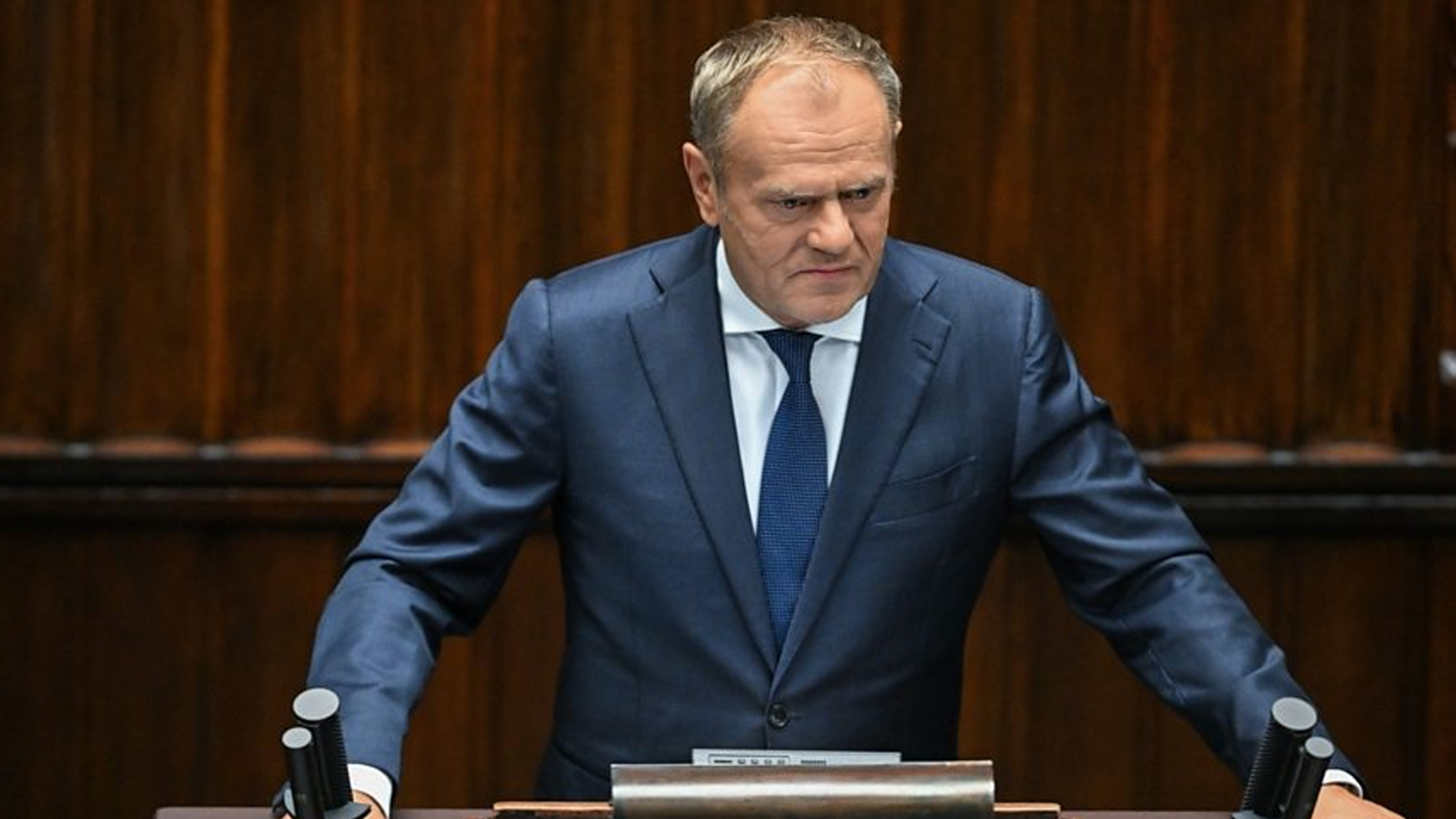
“This is a serious violation of our airspace,” Polish Prime Minister Mateusz Kowalski said in a statement. “We are treating it as a deliberate provocation and a test of NATO’s readiness.”

NATO Secretary General Jens Stoltenberg confirmed that additional air and missile defence systems have been deployed to the region. The response includes Dutch F-35 fighter jets, Italian surveillance aircraft, and enhanced radar coverage. Ground-based Patriot missile batteries already in place have been placed on high alert.

Germany also announced an expanded commitment to NATO’s eastern border, including plans to increase its air policing mission in Poland and the Baltics. British and French officials said they are reviewing their deployments in the region.

Russia has denied that its drones intentionally entered Polish airspace, claiming technical failures and Ukrainian interference. However, NATO officials say the scale of the drone incursion indicates a likely attempt to test the alliance’s reaction speed and cohesion.

Military analysts say the incident underscores growing concerns about the increasing use of drones in hybrid warfare and highlights the need for stronger counter-drone measures across NATO territories.

The situation remains tense, but NATO leaders have reiterated their commitment to defending all member states against any potential threat.

Also Read: Netanyahu Signs Controversial West Bank Settlement Expansion, Rejects Palestinian Statehood