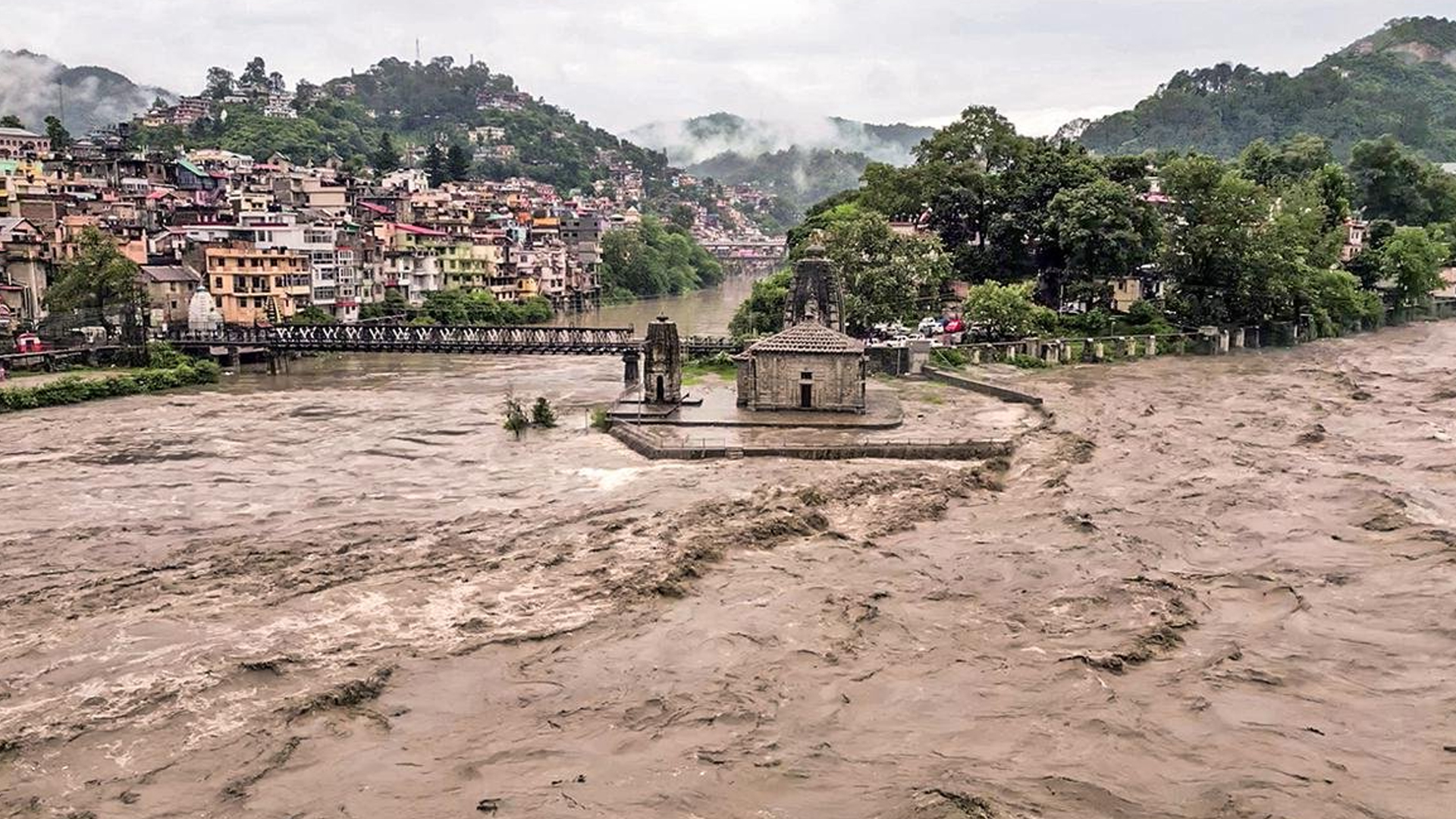
Torrential rains have brought north India to its knees. Over the past few days, floodwaters have swept through cities, towns, and villages, upending lives, drowning crops, and destroying homes. From the capital city of Delhi to the farmlands of Punjab and the hill slopes of Himachal, people are bracing for what’s being described as one of the worst monsoon disasters in decades.
Yamuna Swells, Delhi on Edge
In the heart of the capital, the Yamuna River breached its danger mark yet again, forcing the evacuation of around 10,000 people from flood-prone areas. Streets in parts of Delhi turned into muddy streams overnight, with families seen carrying their belongings on their heads or wading waist-deep through water in search of safety.
Schools have been closed, emergency shelters set up, and rescue teams deployed across the city. Authorities are urging residents to stay indoors as more rain is expected.
“It’s like last year’s floods, but worse,” said Rajni Sharma, a resident of Yamuna Bazar. “We’ve barely rebuilt from 2024, and now we’re back in camps.”
Punjab’s Worst Floods in a Generation
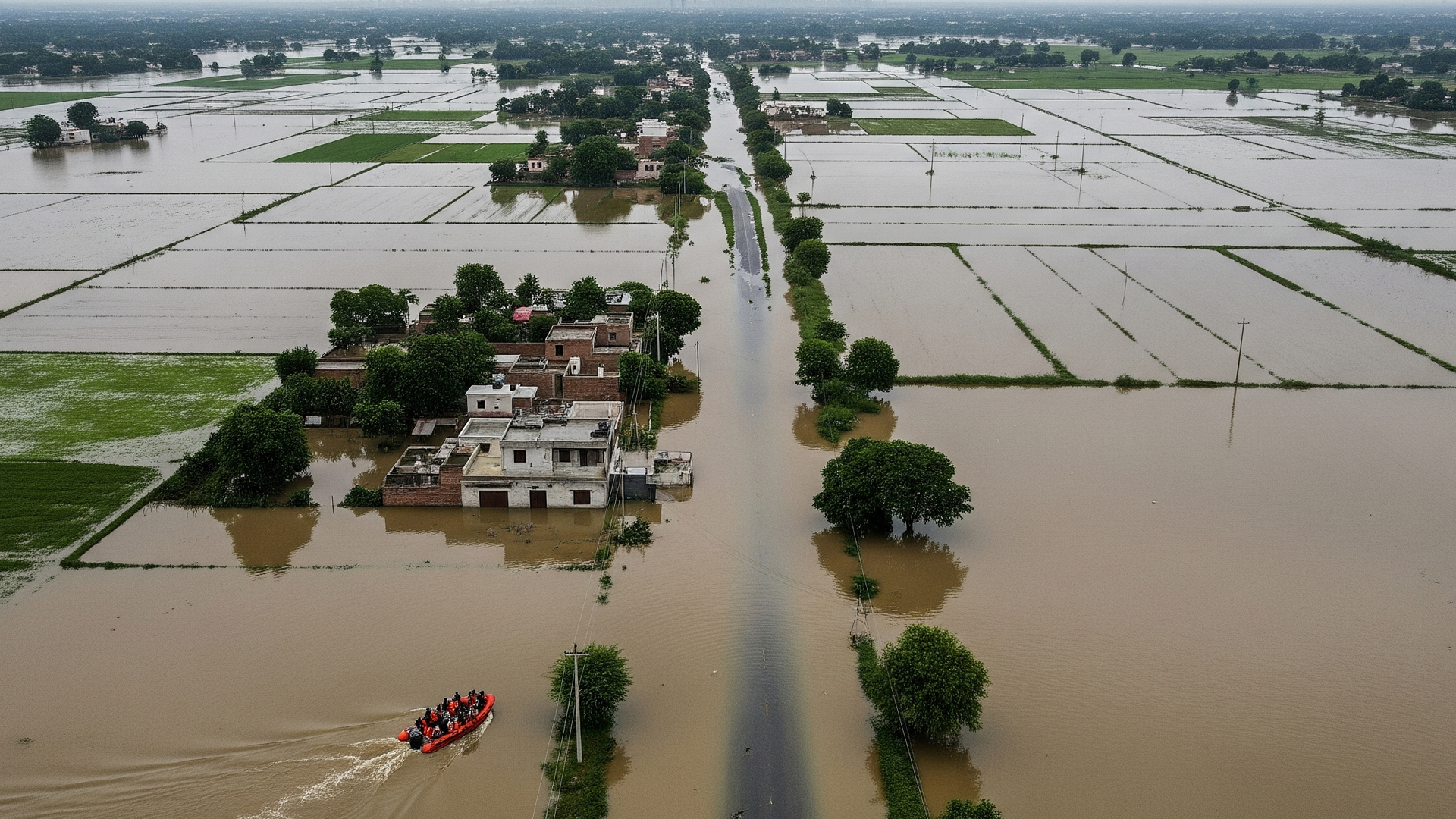
But it is Punjab that appears to be the hardest hit. The state has been officially declared a disaster-affected zone, with over 1,200 villages submerged and floodwaters swallowing entire paddy fields.
Chief Minister Bhagwant Mann called the floods “more severe than 1988,” referring to the catastrophic deluge that scarred the state’s memory nearly four decades ago.
Since the beginning of August, at least 30 people have lost their lives in the state. Over 20,000 residents have been displaced, and more than 150,000 hectares of standing crops have been destroyed.
In the village of Shahkot, a local farmer stood by what was once a flourishing paddy field as everything he had grown was gone as he was staring at the murky water that now covered the land. With no hope or insurance or compensation, all that remained was silence and an endless fathom of water.
Meanwhile, in districts like Tarn Taran and Amritsar, some farmers have taken a bold step—offering to sell their land to the government to build permanent flood protection embankments. “If we don’t act now, this will keep happening every year,” said one farmer in Chheharta.
Hills Tremble in Himachal and J&K
The Himalayan states haven’t been spared either. In Himachal Pradesh, heavy rains triggered a landslide in Mandi, killing three people and trapping others under debris. Roads have caved in, and several towns remain cut off.
In Jammu & Kashmir, a wall collapsed in Rajouri district, killing a mother and her young daughter, highlighting the precariousness of poorly built homes in flood-prone zones.
Red Alert and More Rain Coming
The India Meteorological Department (IMD) has issued a red alert for several states, including Punjab, Himachal Pradesh, Jammu & Kashmir, Ladakh, and parts of Haryana, Uttar Pradesh, Rajasthan, and Odisha. Extremely heavy rainfall is expected in the next 48 hours, sparking fears of flash floods and fresh landslides.
Relief operations are in full swing, with the Army and National Disaster Response Force (NDRF) deployed in several regions. Yet, access remains a challenge in many rural pockets.
Experts are warning that this monsoon catastrophe is a symptom of a larger crisis, one where climate change, unregulated construction, and poor urban planning are amplifying the impact of natural disasters. As floodwaters continue to rise, so does the collective anxiety of millions. Families cling to what little they have, hoping the rain will stop and that help will arrive before it’s too late.
Also Read: Severe Flooding and Rainstorms Disrupt North India Amid Record-Breaking Monsoon