rotating globe
4 Apr 2026


Bombay High Court Orders Mumbai Streets Cleared as Maratha Quota Protests Disrupt City


In a rare three-hour urgent hearing held during the Ganesh festival vacation, the Bombay High Court on Monday (September 1) sharply criticized Maratha quota protesters led by activist Manoj Jarange Patil for bringing South Mumbai to a standstill and directed the Maharashtra government to clear all protesters from city streets by noon on Tuesday (September 2).

The Special Bench of Justices Ravindra V. Ghuge and Gautam A. Ankhad ordered authorities to prevent more agitators from entering Mumbai and to ensure medical attention for Mr. Jarange if his health deteriorates. Jarange, 43, has been on an indefinite hunger strike at Azad Maidan since August 29, demanding a 10% quota for the Maratha community in government jobs and education under the OBC category. Supporters said he has stopped consuming water, escalating his protest.

The court observed that protesters had occupied several parts of South Mumbai, including Chhatrapati Shivaji Maharaj Terminus (CSMT), Churchgate station, Marine Drive, Flora Fountain, and even surrounded the High Court building. Judges noted that protesters were seen climbing traffic signals, playing kabaddi and tug-of-war on roads, bathing and cooking on streets, urinating in public, and damaging heritage property.

“We want normalcy to return. Mumbaikars cannot be inconvenienced further, especially during Ganesh festivities,” the Bench said, warning protest organizers to clean up all areas except Azad Maidan by Tuesday noon.

The court criticized Jarange for failing to keep assurances and questioned whether the protest remained peaceful. “You boasted that more people will come. Every assurance given by Mr. Jarange has been violated,” the judges remarked.

Chief Minister Devendra Fadnavis chaired a meeting with Deputy Chief Ministers to discuss a legally sustainable solution to the Maratha quota demand. Maharashtra minister Radhakrishna Vikhe Patil condemned reports of harassment of journalists and women reporters at the protest, saying such incidents had tarnished the image of the movement.

National Commission for Women chairperson Vijaya Rahatkar also expressed concern, urging protesters to respect journalists and the public. Security was tightened across Mumbai on Tuesday morning, with police preparing for possible tensions as they work to implement the High Court’s order.

Also Read: SC Declines Bihar Voter List Deadline Extension, Says Claims Can Be Filed Beyond September 1


Record Prize Pool Announced for ICC Women’s Cricket World Cup 2025


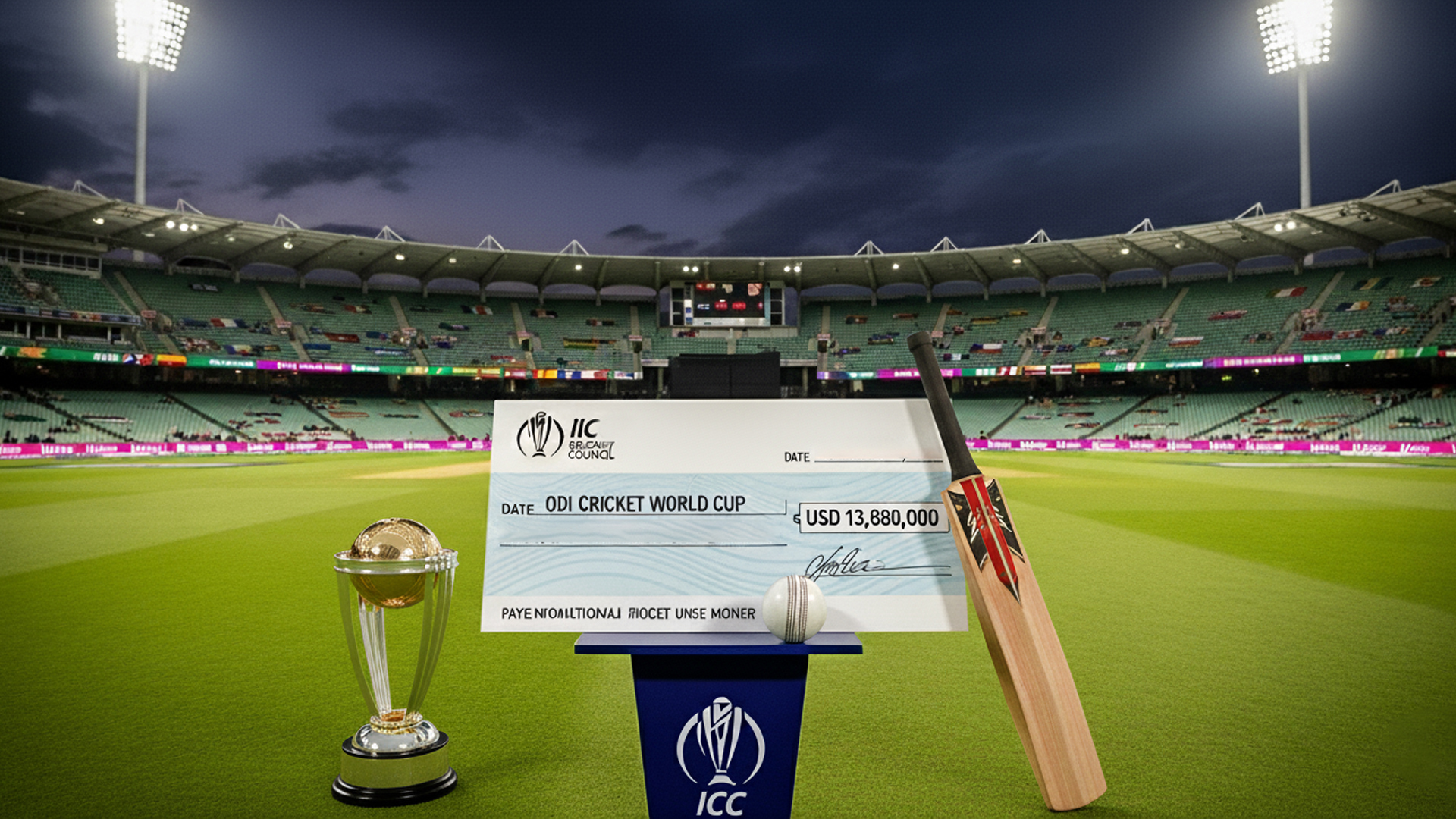
Dubai: The International Cricket Council (ICC) on Monday, September 1,  announced a record prize pool of USD 13.88 million for the ICC Women’s Cricket World Cup 2025, the largest in the tournament’s history and the first time it has exceeded the prize money awarded at a men’s World Cup.

The dramatic 297 percent increase from the USD 3.5 million awarded in 2022 reflects the ICC’s ongoing push towards gender parity in the sport. The winners of the 2025 edition will receive USD 4.88 million, while the runners-up will take home USD 2.24 million. Losing semi-finalists will be awarded USD 1.12 million each. Every participating team is guaranteed USD 250,000, with a bonus of USD 34,314 for each group-stage win. Teams finishing fifth and sixth will earn USD 700,000, and those in seventh and eighth place will receive USD 280,000 each.

ICC Chairman Jay Shah described the announcement as a “defining milestone in the growth of women’s cricket,” adding that the council remains committed to delivering equal opportunities and recognition for women’s teams on the world stage. The announcement follows the ICC’s 2024 decision to implement equal prize money across all men’s and women’s global tournaments, first applied at the Women’s T20 World Cup earlier this year.

The 2025 Women’s World Cup will be hosted jointly by India and Sri Lanka, with the opening match scheduled for September 30 in Guwahati. The significant increase in financial rewards is expected to boost participation, investment, and viewership as the women’s game continues its rapid ascent in global popularity.

Also Read: British Airways Introduces Priority Check-In Service for Indian Students Flying to Heathrow


SC Declines Bihar Voter List Deadline Extension, Says Claims Can Be Filed Beyond September 1


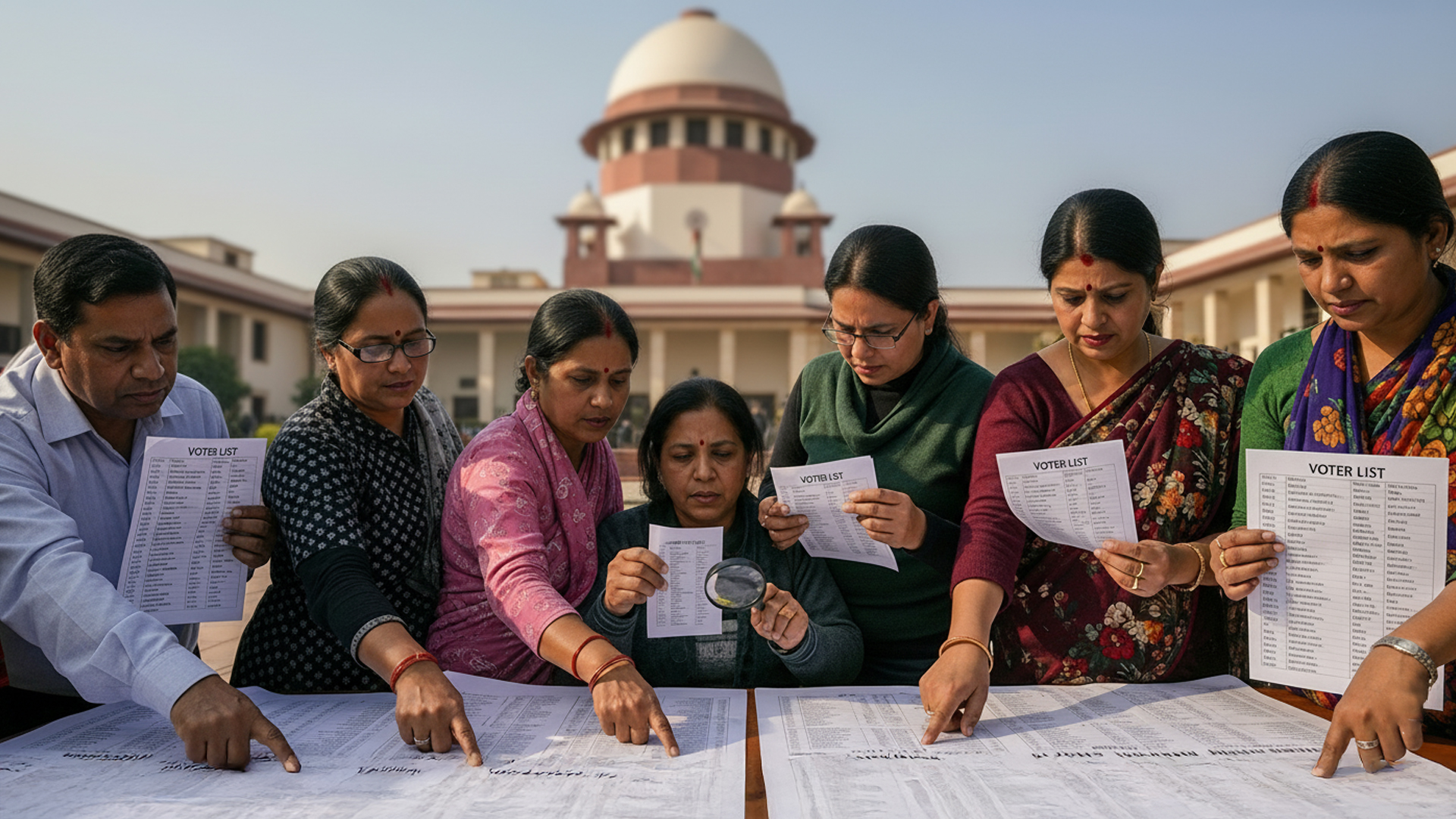
New Delhi: The Supreme Court on Monday refused to extend the September 1 deadline for filing claims and objections to Bihar’s draft electoral roll, after the Election Commission of India (ECI) clarified that voters and parties can continue to file requests for inclusion, deletion, and corrections even after the cutoff date.

A bench of Justices Surya Kant and Joymalya Bagchi noted that the ECI’s stance made a formal extension unnecessary, as the process of revising electoral rolls will remain open until the last date of nominations. “In light of this stand, let the claims/objections/corrections be continued to be filed,” the bench said, while directing political parties and petitioners to respond to the Commission’s note.

The order came on a plea by the Rashtriya Janata Dal (RJD), which had sought an additional two weeks beyond the September 1 deadline to submit claims and objections to the voters list.

Claims Accepted Beyond Deadline

In a detailed note, the ECI said that “the filing of claims or objections or corrections is not barred after 01.09.2025. These can be submitted even after the deadline and will be considered after the electoral roll has been finalised. The process continues until the last date of nominations, and all inclusions and exclusions are integrated in the final roll.”

Senior Advocate Rakesh Dwivedi, representing the ECI, also informed the court that verification of eligibility documents for voters is ongoing and will be completed by September 25, in accordance with the Special Intensive Revision (SIR) schedule issued on June 24, 2025.

Poor Response from Political Parties

The ECI criticised political parties for their “minimal engagement” in the revision process. According to the Commission, the RJD had filed only 10 claims through its booth-level agents, while the Communist Party of India (Marxist–Leninist) Liberation (CPI-ML) submitted 15 claims for inclusion and 103 objections for exclusion as of August 31. No other recognised party had filed claims on behalf of voters.

“Despite around 65 lakh names being excluded from the Draft Electoral Roll due to death, permanent shifting, or duplication, only 33,351 claims have been filed. This number is negligible given Bihar’s total electorate of 7.24 crore,” the note stated.

Data from the Commission’s daily bulletin revealed that most submissions sought deletion of names. Of 128 forms filed by political parties, 103 were for deletions and only 25 for inclusions. Individuals were more proactive, filing 33,326 applications for inclusion and 2,07,565 for deletion. In addition, over 15.32 lakh applications for first-time voter registration from newly eligible citizens have been received.

No Extension to Avoid Disruption

Opposing RJD’s plea for an extension, the ECI said any change in deadlines would “disrupt the entire schedule for finalisation of the electoral roll.” The current period, from September 1 to September 25, is designated for processing claims and objections, including issuing notices and verifying doubtful cases.

“The timelines have been fixed according to the Rules, and a maximum time of 30 days has already been provided for filing claims and objections,” the ECI told the court.

The court also directed the Bihar State Legal Services Authority to deploy paralegal volunteers to help voters and political parties file claims online. The names and contact numbers of these volunteers are to be shared with district judges by Tuesday noon, with confidential reports to follow.

The Commission’s verification exercise is part of a comprehensive overhaul of Bihar’s electoral rolls, which are scheduled to be finalised later this month.

Also Read: Afghanistan Earthquake Claims Over 800 Lives, Rescue Operations Intensify

India Pushes Back at U.S. Over Russian Oil Imports, Citing Market Stability and Sovereignty


India has sharply rebutted escalating U.S. pressure to curtail its imports of Russian crude, with Oil Minister Hardeep Singh Puri defending the policy as essential for global energy stability and national energy security. Speaking out in a column in The Hindu and during media engagements, Puri dismissed allegations—most notably from U.S. trade adviser Peter Navarro—that India is acting as a “laundromat” for Russian oil or fueling the Kremlin’s war effort.

Puri emphasized that India’s actions are fully compliant with international norms, particularly the Group of Seven (G7) price cap on Russian oil aimed at restricting Moscow’s revenue without disrupting supplies. “India’s adherence to all international norms prevented a catastrophic $200-per-barrel shock,” he wrote. “Some critics allege that India has become a ‘laundromat’ for Russian oil. Nothing could be further from the truth.”

Bloomberg highlighted Puri’s stance, noting how the imports of discounted Russian crude have helped shield the global economy from extreme price volatility.

The U.S. response has been aggressive—doubling import tariffs on Indian goods to 50% in a bid to force New Delhi to reduce purchases of Russian oil. Navarro and U.S. Treasury Secretary Scott Bessent have accused India of profiteering and undermining global efforts to penalize Russia over the Ukraine conflict. Navarro stated in a Bloomberg interview that unless India halts such imports, tariffs would remain, labeling the imports as financing Russia’s war machine.

Strategic Autonomy Meets Market Realities

India, however, stands firm. Prime Minister Narendra Modi, meeting Russian President Vladimir Putin during the SCO summit in China, reaffirmed the country’s pragmatic energy policy and deepening ties with Moscow. Puri echoed this in his defense, saying India’s buying has helped stabilize global oil markets and prevent disruptive price spikes.

Despite U.S. pressure, India remains the world’s largest importer of Russian seaborne oil, accounting for around 37% of its purchases this year. According to Reuters, India’s savings from discounted Russian oil—estimated at $17 billion since early 2022—have been significantly tempered by the new tariffs, threatening economic fallout of nearly $37 billion in exports and putting jobs in vulnerable sectors like gems, textiles, and furniture at risk.

Traders report that Indian refiners are planning modest cuts in Russian oil imports, but sources cited by Bloombergsuggest this is more a political gesture than a strategic shift. India appears unlikely to abandon these supplies unless a global ban is imposed, as such a move would significantly disrupt its energy security.

Growing Rift in Strategic Ties

The diplomatic fallout from the oil dispute is unfolding against the backdrop of a broader U.S.–India diplomatic and trade crisis. Indian officials and analysts view Washington’s targeting of New Delhi—while continuing its own trade with Russia—as hypocrisy. The Ministry of External Affairs has denounced the tariffs as “unjustified and unreasonable,” emphasizing that energy decisions are guided by India’s domestic needs.

Also Read: Heavy Rainfall Alert in Telangana and Andhra Pradesh as Monsoon Low Brings Widespread Showers

Heavy Rainfall Alert in Telangana and Andhra Pradesh as Monsoon Low Brings Widespread Showers


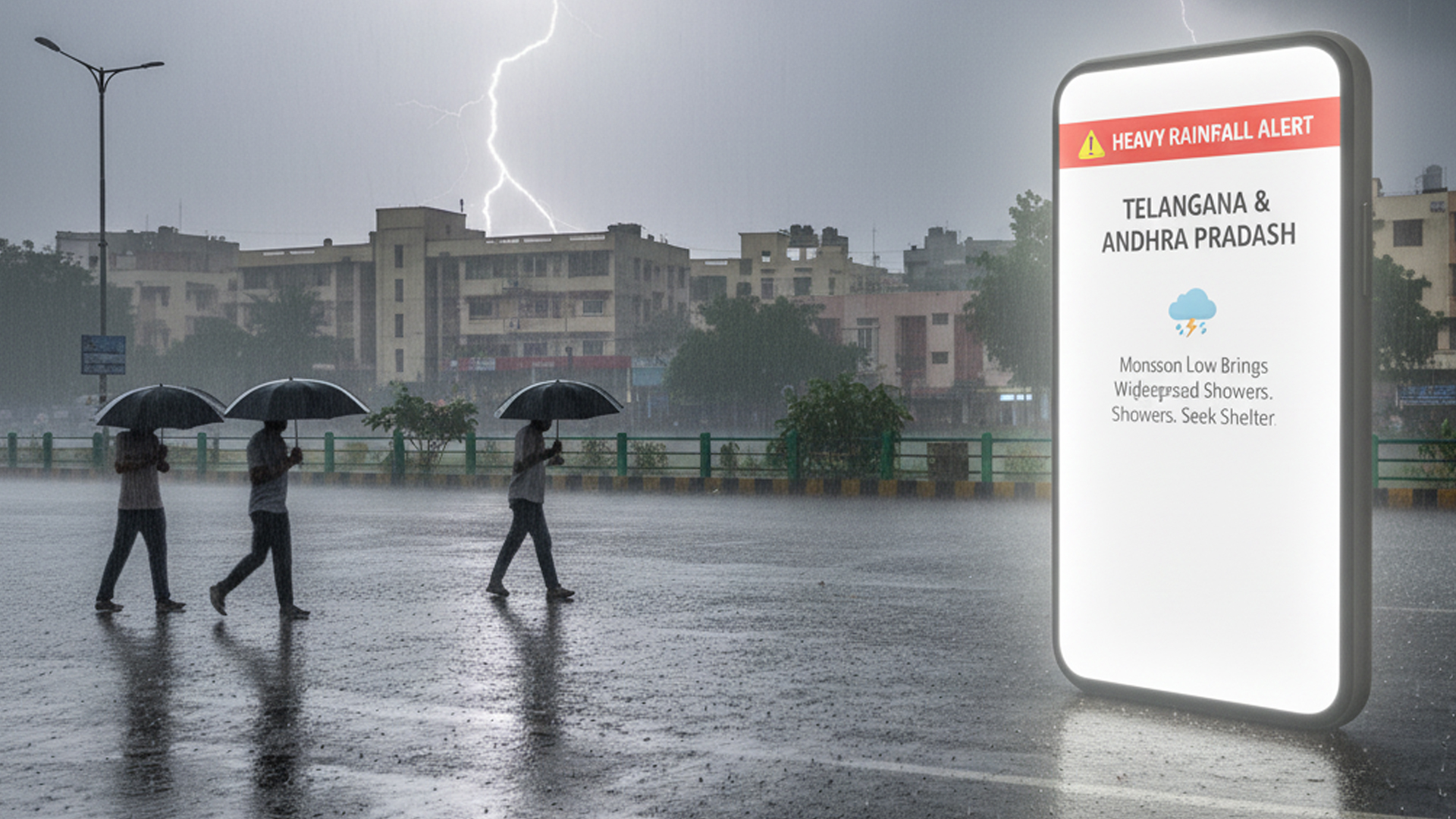
The India Meteorological Department (IMD) has issued a weather alert for parts of Telangana and Andhra Pradesh, warning of heavy to very heavy rainfall in several districts over the next 24 to 48 hours. A developing low-pressure area over the Northwest Bay of Bengal is expected to intensify the monsoon activity, triggering widespread rain and potential flooding in northern Telangana and adjoining regions.

As of Monday afternoon, four districts in Telangana—Bhadradri Kothagudem, Jayashankar Bhupalpally, Mulugu, and Peddapalli—were placed under an orange alert, indicating a high likelihood of heavy to very heavy rainfall from the afternoon through Tuesday morning. Other districts expected to receive heavy rainfall at isolated locations include Adilabad, Hanumakonda, Jagtial, Karimnagar, Khammam, Kumaram Bheem Asifabad, Mahabubabad, Mancherial, Nirmal, Nizamabad, and Warangal. In Hyderabad, light to moderate rain or thundershowers with gusty winds of 30–40 km/h are likely.

K Nagarathna, head of the Meteorological Centre in Hyderabad, noted that the low-pressure area could bring significant rainfall across northern Telangana, particularly in districts adjoining central India. These regions are prone to flooding from the Godavari River and its tributaries, and authorities have urged residents to remain cautious. The IMD has advised local administrations to prepare for possible waterlogging and disruptions to normal life.

From Monday morning to 1 p.m., the highest rainfall recorded in the state was 36.8 mm in Medak, according to the Telangana Development Planning Society. However, meteorologists expect the precipitation to intensify as the low-pressure system strengthens and moves inland.

In anticipation of the heavy rainfall, schools in several districts across Telangana and Andhra Pradesh were closed for the day to ensure the safety of students and staff. Residents are being advised to stay indoors during heavy showers, avoid unnecessary travel, and follow instructions from local authorities. Emergency services and disaster management teams have been put on alert to respond to any situations arising from flooding or waterlogging.

The IMD has forecast that on Tuesday, seven additional districts in Telangana will be placed under an orange alert. Heavy to very heavy rainfall is expected at isolated places in Bhadradri Kothagudem, Hanumakonda, Jagtial, Jayashankar Bhupalpally, Karimnagar, Khammam, Mahabubabad, Mulugu, Nirmal, Nizamabad, Peddapalli, Rajanna Sircilla, and Warangal.

Officials have emphasized that rainfall may be sporadic but intense, making flash floods and urban waterlogging a risk in low-lying areas. Authorities continue to monitor the situation closely and are coordinating with district administrations to ensure relief measures are in place where necessary. The IMD will continue to issue updated advisories as the system evolves, and residents are urged to stay informed and exercise caution in the coming days as heavy rain continues to affect the region.

Also Read: Afghanistan Earthquake Claims Over 800 Lives, Rescue Operations Intensify

Supreme Court Upholds Nationwide Rollout of E20 Petrol Amid Concerns Over Vehicle Compatibility


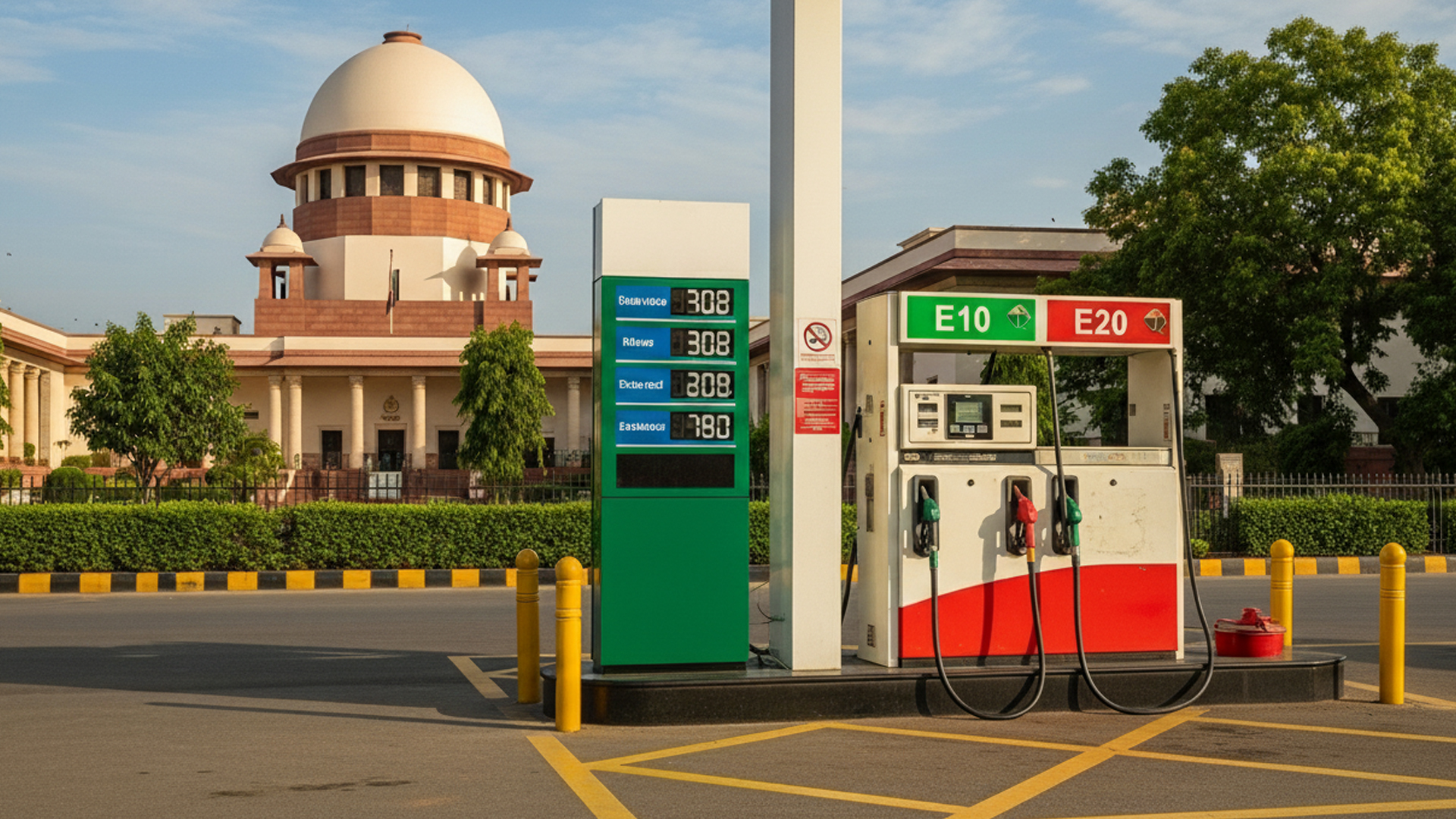
The Supreme Court on Monday, September 1, 2025, dismissed a public interest petition challenging India’s nationwide rollout of 20% ethanol-blended petrol (E20), which alleged that millions of motorists were being compelled to use fuel incompatible with their vehicles without the option of ethanol-free petrol.

A Bench comprising Chief Justice of India B.R. Gavai and Justice K. Vinod Chandran rejected the petition after the Union government defended the policy as one that boosts the income of sugarcane farmers and conserves foreign exchange. Attorney-General R. Venkataramani, appearing for the government, argued that the petitioner, a foreign resident, was a “name-lender” acting on behalf of a lobby, and questioned whether individuals outside India should dictate the country’s fuel policy. He emphasized that E20 rollout serves national interests by supporting farmers and reducing import dependence.

E20 petrol has been gradually introduced since 2023, following earlier blends such as E5 and E10, which were considered safer for older vehicles. However, only cars and two-wheelers manufactured after April 2023 are certified E20-compatible, and earlier ethanol-free options have largely been phased out at the country’s 90,000 fuel stations.

The petitioner, represented by senior advocate Shadan Farasat, clarified that the challenge was not to ethanol blending itself, but to the absence of an ethanol-free option for pre-2023 vehicles. The petition cited a 2021 NITI Aayog report, “Roadmap for Ethanol Blending in India 2020-25,” which acknowledged that blending ethanol up to 20% could reduce fuel efficiency by 6–7% in four-wheelers and 3–4% in two-wheelers. It argued that E20 use in non-compliant vehicles could lead to engine corrosion, premature wear and tear, and loss of manufacturer and insurance coverage, causing potential financial and mechanical harm to consumers.

The petition also highlighted the lack of public awareness and proper labelling at petrol pumps. It claimed that, unlike in the U.S. and E.U., where ethanol-free petrol is widely available and ethanol content is clearly displayed, Indian consumers are sold ethanol-blended fuel without disclosure of composition, limiting informed choice. Accordingly, the petitioner sought mandatory labelling of ethanol content at all dispensing units and a nationwide study on mechanical degradation and efficiency loss in non-compliant vehicles.

In response, the Ministry of Petroleum and Natural Gas cited NITI Aayog’s study, asserting that E20 petrol offers better acceleration and ride quality, in addition to economic benefits for farmers. The government maintained that the policy aligns with broader national goals of energy security and reducing reliance on imported fuels.

The Supreme Court’s dismissal effectively allows the ongoing E20 rollout to continue without requiring ethanol-free alternatives for older vehicles, leaving the government’s policy intact. While the decision is a win for India’s ethanol program and sugarcane farmers, it raises questions about consumer choice, public awareness, and potential vehicle compatibility issues as the country transitions to higher ethanol blends.

As India moves toward wider adoption of ethanol-blended fuels, balancing environmental and economic objectives with consumer protection will remain a key challenge, particularly for owners of vehicles not designed to handle higher ethanol content.

Afghanistan Earthquake Claims Over 800 Lives, Rescue Operations Intensify


A powerful 6.0-magnitude earthquake struck eastern Afghanistan late on Sunday, August 31, 2025, devastating the Kunar and Nangarhar provinces. The tremor, which occurred at 11:47 PM local time, has resulted in at least 812 fatalities and over 2,800 injuries, making it one of the deadliest earthquakes in the region’s recent history.

The earthquake’s epicenter was located in the Kuz Kunar District of Nangarhar Province, approximately 27 kilometers northeast of Jalalabad. The shallow depth of the quake amplified its destructive force, leading to widespread devastation in the affected areas. The Kunar Disaster Management Authority reported that the hardest-hit districts include Nurgal, Soki, Watpur, Manogi, and Chapadare, where entire villages have been reduced to rubble.

Rescue operations are underway, with both local authorities and international organizations mobilizing resources to assist the affected populations. Helicopters have been deployed to evacuate the injured and deliver essential supplies to remote areas that are otherwise inaccessible due to damaged infrastructure and ongoing aftershocks. The United Nations has dispatched emergency teams to provide humanitarian aid, including medical assistance, food, and shelter.

The mountainous terrain and damaged roads have significantly hindered rescue efforts. Landslides triggered by the quake and subsequent aftershocks have further complicated access to the most affected regions. Additionally, the region is experiencing adverse weather conditions, with thunderstorms and high temperatures forecasted in the coming days, which may exacerbate the situation.

The Afghan government has appealed for international assistance to support the ongoing relief operations and to address the immediate needs of the affected communities. The earthquake has not only caused a tragic loss of life but has also left thousands homeless and in urgent need of aid.

Also Read: Adani Power to Build ₹10,500 Crore Thermal Plant in Madhya Pradesh, Boosting State’s Energy Ambitions

Commercial LPG Gets Cheaper Again; Domestic Cylinder Rates Hold Steady


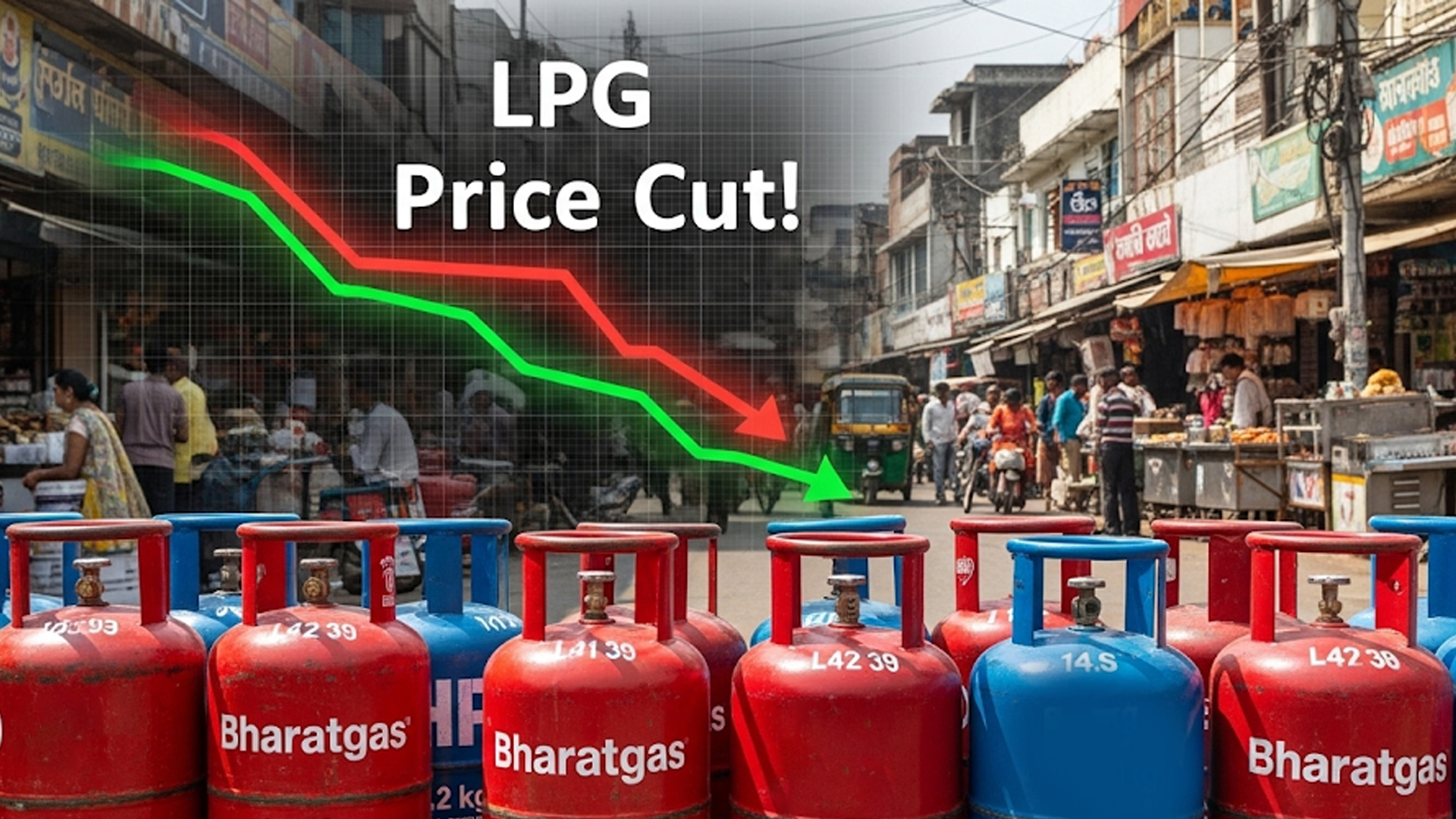
Starting September 1, the price of 19-kg commercial LPG cylinders has been reduced by ₹51.50, as announced by Oil Marketing Companies (OMCs), bringing relief to commercial establishments. This marks the second consecutive monthly price cut, aimed at easing operational costs for commercial establishments such as restaurants, hotels, and small businesses.

As per the revised rates, the price of a commercial LPG cylinder now stands at ₹1,580 in Delhi, ₹1,531.50 in Mumbai, ₹1,684 in Kolkata, and ₹1,738 in Chennai. The continuous reduction in rates is expected to bring relief to businesses that rely heavily on bulk LPG consumption.

In contrast, domestic LPG prices remain unchanged. The cost of a 14.2-kg domestic cylinder continues to be ₹853 in Delhi, ₹852.50 in Mumbai, ₹879 in Kolkata, and ₹868.50 in Chennai. The stable pricing offers no immediate relief or additional burden to household consumers.

LPG prices in India are revised at the beginning of each month, based on fluctuations in global benchmarks and currency exchange rates. While commercial LPG prices are linked more directly to international market trends, domestic rates are often moderated for consumer protection and political considerations.

In August 2025, commercial LPG prices were reduced by ₹99.75, and the latest revision further extends this downward trend. However, domestic prices have remained static for several months, indicating continued government focus on maintaining household affordability.


Also Read: IIT Guwahati Develops Rapid Nanosensor to Detect Cancer-Causing Water Pollutants

Adani Power to Build ₹10,500 Crore Thermal Plant in Madhya Pradesh, Boosting State’s Energy Ambitions


Adani Power Ltd, India’s largest private thermal power producer, has announced plans to set up a massive ₹10,500 crore thermal power plant in Madhya Pradesh’s Anuppur district, a move that underscores the state’s growing electricity needs and India’s continued reliance on coal to keep the lights on.

The new plant, which will have a capacity of 800 megawatts, is part of a contract awarded by MP Power Management Company Limited (MPPMCL), the state’s power utility. The project will be built using ultra-supercritical technology, which allows for higher fuel efficiency and lower emissions compared to older coal plants. The company said the facility is expected to be ready within 54 months, marking another milestone in its aggressive push to expand India’s thermal power capacity.

A Strategic Push Amid Rising Demand

Madhya Pradesh, one of India’s fastest-growing states, has seen an increase in electricity consumption driven by rapid urbanization, new industries, and rising household demand. State officials have emphasized the need for a steady power supply to support this growth, making large-scale energy investments like this project crucial to its long-term plans.

Adani Power’s new venture comes under the Design, Build, Finance, Own, and Operate (DBFOO) model, giving the company long-term control over the plant’s construction and operations. Coal for the project will be sourced through the government’s SHAKTI policy, a scheme aimed at ensuring a reliable coal supply for power plants across India.

Industry experts note that while renewable energy is growing at a record pace in India, coal remains the backbone of the country’s energy mix, providing nearly 70% of electricity. “Round-the-clock supply is still a challenge for solar and wind power,” said an energy analyst. “Plants like this one are essential for grid stability, especially as India electrifies more households and industries.”

Stock Market Cheers the Move

News of the Thermal project sent Adani Power’s shares rising over 2% on Monday morning. The stock opened at ₹606 on the National Stock Exchange and hit an intraday high of ₹614.80. The rally reflects investor confidence in the company’s continued dominance of India’s power sector and its strong project execution track record.

This announcement also marks Adani Power’s fourth major project win in the past year, further solidifying its position as a key player in India’s energy landscape.

Balancing Coal and Clean Energy Goals

India has pledged to increase its renewable energy capacity to 500 GW by 2030, a goal that requires massive investment in solar, wind, and hydropower. However, experts say coal-fired plants will remain vital for decades to come.

Adani Power has emphasized that the use of ultra-supercritical technology in the new plant will help minimize environmental impact by improving fuel efficiency and lowering emissions per unit of electricity generated. Such advancements are seen as a way to bridge the gap between India’s growing energy needs and its commitment to sustainability.

For Madhya Pradesh, the project is expected to bring not just energy security but also significant economic benefits, including job creation during construction and plant operations. Local communities in Anuppur are expected to see a surge in infrastructure development as work on the plant begins.

The new thermal plant represents more than just a business expansion for Adani Power. It’s a reflection of India’s complex energy journey—balancing ambitious clean energy targets with the immediate need for reliable, large-scale power production to fuel a fast-growing economy.

IIT Guwahati Develops Rapid Nanosensor to Detect Cancer-Causing Water Pollutants


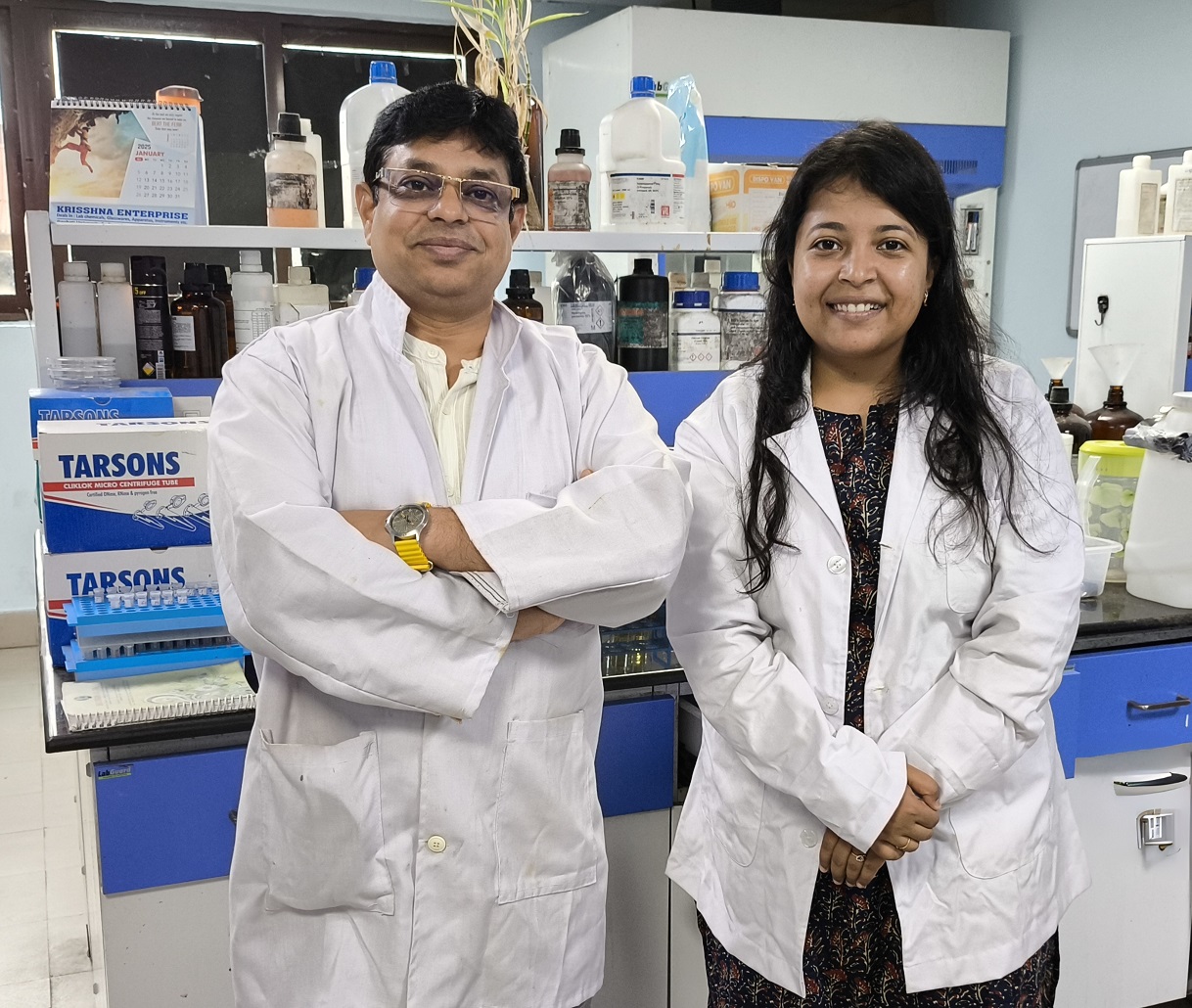
Guwahati: Researchers at the Indian Institute of Technology (IIT) Guwahati have developed a novel nanosensor capable of detecting Mercury and harmful antibiotics in water in less than 10 seconds. The breakthrough technology, led by Prof. Lal Mohan Kundu of the Department of Chemistry, uses carbon dots derived from milk protein and thymine, a nucleobase, to identify contaminants with high sensitivity.

With increasing urbanisation, industrialisation, and pharmaceutical overuse, water contamination is emerging as a pressing global concern. Mercury, even in trace amounts, is highly toxic and linked to cancer, neurological disorders, and cardiovascular diseases. Similarly, tetracycline antibiotics, widely used to treat respiratory infections, can enter the environment through improper disposal, contributing to antibiotic resistance and other health hazards. Rapid detection of these substances is crucial for both public health and environmental safety.

The IIT Guwahati sensor operates on a simple yet effective principle: carbon dots glow under ultraviolet (UV) light but dim in the presence of harmful substances such as Mercury or tetracyclines. This dimming provides an immediate visual signal of contamination.

“Our sensor can detect Mercury and tetracyclines at extremely low concentrations,” said Prof. Kundu. “We synthesised carbon dots from low-cost, biogenic precursors—milk protein and thymine. Their nanoscale size and inherent fluorescence make this a highly sensitive and rapid detection technique. The sensor has potential applications not only in water testing but also in biological systems.”

On a laboratory scale, the sensor has demonstrated reliable detection within 10 seconds of exposure to contaminants. Mercury can be detected at concentrations as low as 5.3 nanomolar (1.7 parts per billion), below the safety thresholds set by the U.S. Environmental Protection Agency. Tetracycline antibiotics are detectable at 10–13 nanomolar concentrations.

To ensure versatility, the researchers tested the sensor in diverse samples, including tap and river water, milk, urine, and serum. For practical, on-the-spot testing, the team also coated the sensor onto paper strips, allowing rapid detection with a simple UV lamp.

The research, co-authored by Prof. Kundu and his scholars Ms. Pallabi Paul and Ms. Anushka Chakraborty, was published in the journal Microchimica Acta. The team emphasises that the technology is still at the laboratory stage and requires further validation before commercial deployment.

Beyond water testing, the sensor’s biocompatibility and sensitivity open possibilities for broader biomedical applications. Its low cost, rapid response, and accuracy make it a promising alternative to conventional water quality monitoring techniques.

Prof. Kundu added, “With rising concerns over environmental pollutants and antibiotic residues, such a sensor can play a crucial role in safeguarding both human health and ecosystems. This is a step forward in developing accessible, real-time detection tools for harmful substances in water and other biological fluids.”

Also Read: At SCO Summit, Modi Denounces Terror Double Standards, Calls for Global Unity