rotating globe
2 Apr 2026


Adobe Firefly 5 Powers Custom Creativity

A creative companion that delivers native high-res output, style consistency, and multi-model flexibility

Adobe’s newest update, Firefly Image Model 5, feels less like a tool upgrade and more like a creative awakening. The generative-AI engine, now in public beta, aims to blur the boundaries between human artistry and machine precision, helping creators express ideas faster, truer, and more intuitively.

One of its standout features is Layered Image Editing. Think of it as Photoshop meeting AI intuition. Firefly can now break an image, whether generated or uploaded, into distinct parts like foreground, background, and subjects. This means a creator can move a tree, soften a shadow, or replace a cloudy sky simply by typing a prompt. Its new Prompt-to-Edit function listens, interprets, and acts, without breaking the visual harmony of the scene.

Another leap forward is Custom Model Training, a feature that allows users to teach Firefly their own artistic language. By uploading a portfolio or a set of branded visuals, designers and marketers can train Firefly to mirror their specific tone, color palette, or illustration style. The AI then generates new material, logos, characters, or campaign imagery that feels uniquely “theirs.” It’s a dream come true for creators chasing visual consistency across projects.

But Adobe’s ambitions go further. Firefly is evolving into an all-in-one creative studio, capable of generating not just images, but also music, voiceovers, and short video clips, all from a single interface. This unified workspace promises to simplify the creative process from concept to final edit.

For the first time, Adobe is also opening Firefly to partner AI models from OpenAI, Google, and Luma AI, allowing users to choose the engine that best fits their project.

With Firefly 5, Adobe is reimagining what creative freedom feels like in the age of AI, which pitches on fast, fluid, and deeply personal.

Also Read: ₹38,000-Crore Fertiliser Support for Rabi 2025-26

Centre To Launch 14th Coal Mine Auctions

Includes underground gasification and two new digital portals

India’s coal sector is taking another decisive step toward modernization and self-reliance. The Ministry of Coal is set to launch the 14th round of commercial coal mine auctions in New Delhi today, marking a key milestone in the government’s ongoing drive to reform and digitize the industry.

This brings together a diverse mix of fully and partially explored coal blocks, opening doors for established companies, new entrants, and technology-driven mining firms to participate.

In a major first, the auction framework now includes provisions for Underground Coal Gasification, a technology that allows energy extraction from deep, untapped coal seams. The approach promises to curb import dependence and attract fresh investment into cleaner, more efficient energy practices.

The Ministry is also rolling out two new digital platforms to make coal mining more transparent and responsive. The “Coal Land Acquisition, Management, and Payment (CLAMP)” portal will simplify processes around land acquisition, compensation, and rehabilitation. Meanwhile, the “Koyla Shakti” dashboard will offer a real-time, integrated view of the entire coal value chain, from exploration to production and logistics.

Also Read: North Korea’s Missile Test Before Seoul Summit

North Korea’s Missile Test Before Seoul Summit

As Trump and Xi prepare for crucial discussions, Pyongyang chooses missiles over words

In a calculated display of power, North Korea fired multiple sea-to-surface cruise missiles from its western coast early Wednesday, sending a pointed signal as global attention shifts to Seoul for the upcoming meeting between US President Donald Trump and President Xi Jinping.

According to initial assessments, the missiles flew for more than two hours before hitting designated targets in the Yellow Sea with high precision. The test is widely seen as both a technical trial and a political message, affirming Pyongyang’s resolve to preserve its strategic deterrent even as diplomatic momentum builds.

Although Kim Jong Un did not attend the launch, senior military officials hailed it as proof of the nation’s rapidly advancing weapons technology and combat readiness. Analysts interpret the timing as deliberate, reminding the world that North Korea’s military ambitions remain undiminished despite evolving regional dynamics.

The launch highlights the fragile equilibrium in Northeast Asia, where every missile test reverberates through a climate of sanctions, security anxieties, and fragile diplomacy.

Also Read: ₹38,000-Crore Fertiliser Support for Rabi 2025-26 Season

₹38,000-Crore Fertiliser Support for Rabi 2025-26

Centre approves revised nutrient-based rates to balance global price pressures and sustain India’s food production cycle

The Union Cabinet has approved revised subsidy rates for phosphatic and potassic (P&K) fertilisers under the Nutrient-Based Subsidy (NBS) scheme for the Rabi 2025-26 season, reaffirming its commitment to farmer welfare and affordable crop inputs.

The decision will cost the exchequer around ₹37,952 crore, which is nearly ₹736 crore higher than the subsidy bill for the Kharif season. The government has increased the subsidy on phosphorus from ₹43.60 per kg to ₹47.96 per kg, and on sulphur from ₹1.77 per kg to ₹2.87 per kg. Subsidy rates for nitrogen and potash remain unchanged.

Officials said the move will help stabilise fertiliser prices for farmers, particularly for commonly used varieties such as DAP and TSP, while ensuring manufacturers are compensated for rising global input costs.

The NBS scheme, which covers more than two dozen grades of P&K fertilisers, links subsidies to nutrient content and channels payments directly to manufacturers. This mechanism ensures that farmers continue to access fertilisers at regulated, affordable retail prices.

With the Rabi sowing season underway across major grain-growing states, the timing of the subsidy hike is expected to provide relief to farmers cultivating wheat, mustard, gram, and other winter crops. The government said the decision underscores its long-term focus on ensuring food security and strengthening rural incomes.

Also Read: Karnataka HC Pauses State Order on Public Gatherings

Karnataka HC Pauses State Order on Public Gatherings

Court says government cannot curb citizens’ right to assemble through an executive order

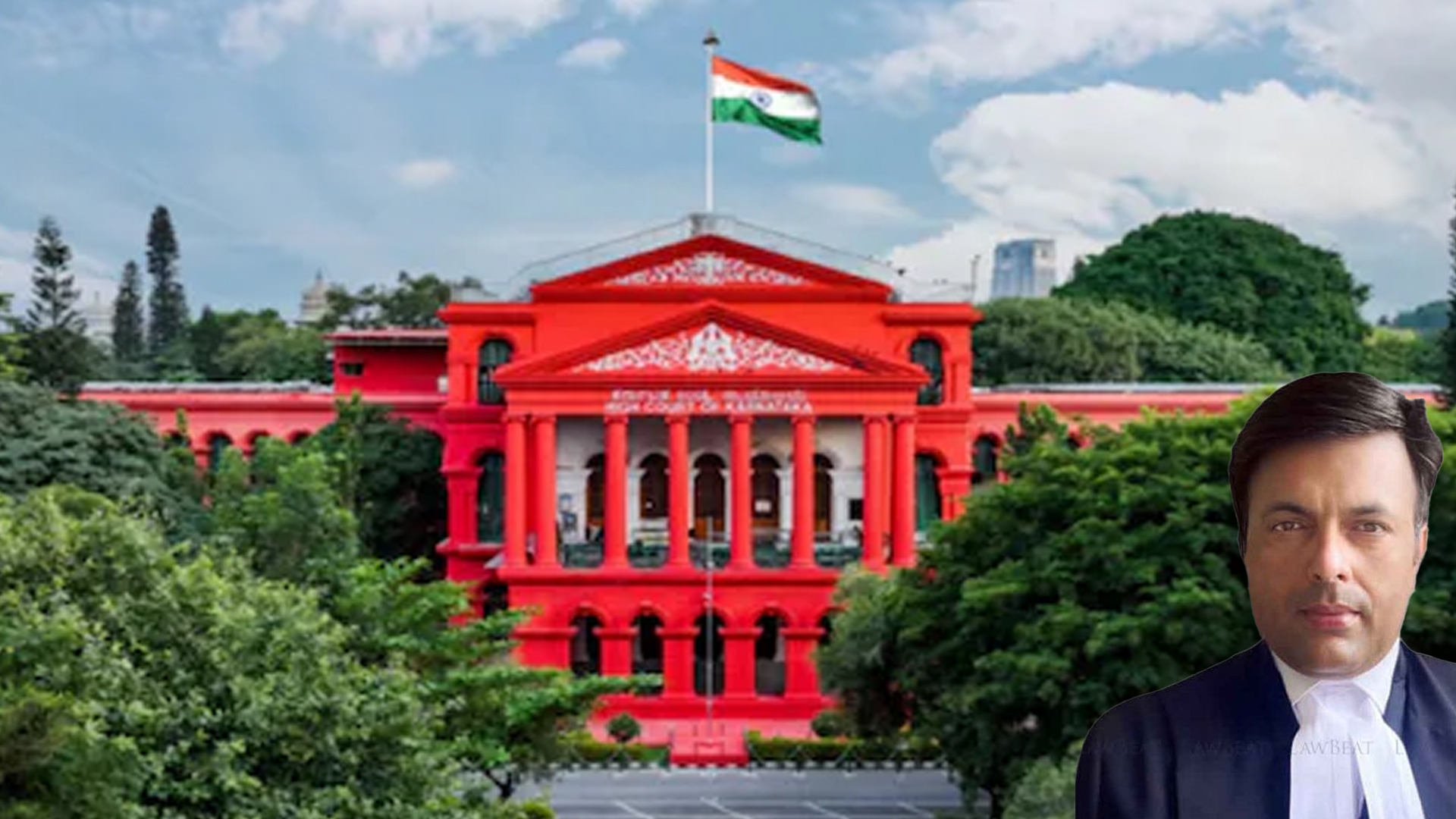
The Karnataka High Court has stayed the state government’s controversial order that sought to regulate public gatherings by private organisations on government-owned land.

Issued on October 18, the order required any private body, association, or group of ten or more people to obtain written permission before organising events, meetings, or activities on public property — including schools, parks, roads, and playgrounds.

Though the order did not explicitly name any organisation, it was widely viewed as being aimed at restricting the activities of the Rashtriya Swayamsevak Sangh (RSS) and other groups known for conducting public marches and assemblies.

Hearing multiple petitions challenging the order, the High Court observed that the government had overstepped its authority. Justice M Nagaprasanna noted that such sweeping restrictions on citizens’ right to peaceful assembly and expression, protected under Articles 19(1)(a) and 19(1)(b) of the Constitution,  cannot be imposed through an executive directive.

The court held that if the state wished to regulate public gatherings, it must do so through proper legislation, not administrative orders. Until then, the directive cannot be enforced.

The ruling effectively restores the right of organisations to hold lawful public events without needing prior approval from the state, as long as they adhere to general law and order norms. The next hearing in the case is scheduled for November 17, while the government has indicated it may challenge the stay.

Also Read: Cabinet Approves The 8th Pay Commission Terms

Cloud-Seeding Yields No Rain in Delhi

Low humidity and dry winter skies dashed Delhi’s hopes of rain from its ₹3.2-crore cloud-seeding experiment

Delhi’s ₹3.2-crore cloud-seeding experiment to curb air pollution failed to bring rain on Tuesday.

A plane sprayed silver iodide over Burari, Mayur Vihar, and Karol Bagh, but the clouds were too dry, with only 10–15% humidity.

Experts said Delhi’s stable winter weather prevented rainfall and warned that only emission cuts can ensure lasting pollution relief.

Cyclone Montha Ravages Andhra and Odisha

Trains, flights disrupted and crops damaged. One fatality reported. Rescue teams race to restore normalcy

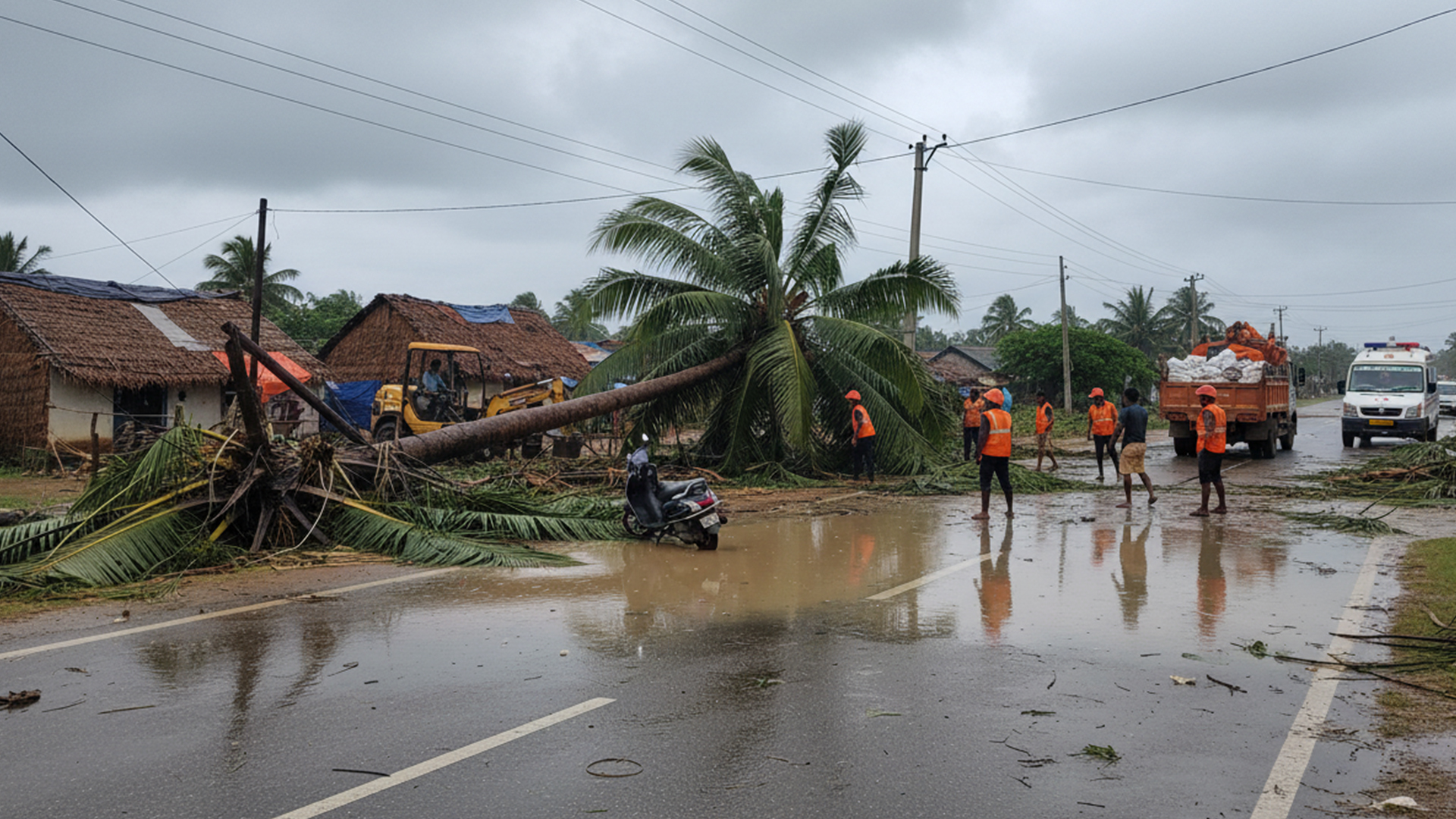
Cyclone Montha made landfall late Tuesday evening near Kakinada on the Andhra Pradesh coast, unleashing strong winds, torrential rain, and widespread damage across parts of Andhra Pradesh and southern Odisha before weakening into a cyclonic storm.

According to the India Meteorological Department (IMD), Montha struck between Machilipatnam and Kalingapatnam with wind speeds of 90–100 kmph, gusting up to 110 kmph. The storm uprooted trees, flooded roads, damaged crops, and disrupted road, rail, and air transport across the region.

One woman was killed in Andhra Pradesh’s Konaseema district when a palmyra tree collapsed on her house. Several others were injured in rain-related incidents. Authorities in Andhra Pradesh evacuated over 76,000 people from coastal and low-lying areas to cyclone shelters, while in Odisha, around 11,000 residents were moved to safety across eight districts including Ganjam, Gajapati, and Koraput.

Public infrastructure suffered extensive damage. Roads in Guntur, East Godavari, and Vizianagaram were blocked by fallen trees and electric poles, prompting restoration work through the night. Power and mobile networks were disrupted in several areas. Railways cancelled more than 120 trains in the South Central zone and diverted several others. Flight operations at Visakhapatnam and Vijayawada airports were also affected due to strong winds and poor visibility.

Initial reports indicate that over 38,000 hectares of farmland and 1.38 lakh hectares of horticultural crops were damaged by heavy rainfall and flooding. Fishermen have been advised not to venture into the sea due to rough conditions.

The Andhra Pradesh government deployed disaster response teams, set up over 200 medical camps, and distributed 865 tonnes of animal fodder in affected areas. Odisha activated nearly 2,000 cyclone and flood shelters to accommodate evacuees.

The IMD said Montha has now weakened into a deep depression and is moving northwestward, likely to bring heavy to very heavy rainfall over north coastal Andhra, south Odisha, and parts of Chhattisgarh. Red and orange alerts remain in place as officials assess damage and focus on restoring essential services.

Also Read: Delhi Conducts Cloud-Seeding Trial to Curb Pollution

Delhi Conducts Cloud-Seeding Trial to Curb Pollution

Cloud-seeding aircraft carrying silver iodide and salt flares flew over Khekra, Burari, and Mayur Vihar, targeting cloud clusters

Delhi’s war against toxic air took to the skies on Tuesday as scientists from IIT-Kanpur launched the city’s first full-scale cloud-seeding experiment, hoping to trigger artificial rain and bring respite from an early and severe smog spell.

A small aircraft carrying silver iodide and salt flares flew over Khekra, Burari, and Mayur Vihar, targeting cloud clusters identified by the India Meteorological Department (IMD). The mission aimed to encourage light rainfall, which is nature’s most effective air purifier, to knock down the city’s dense mix of dust and pollutants.

One of the scientists involved in the project mentioned that even a drizzle could reduce particulate matter by up to 40 percent, but then success depended entirely on cloud conditions.

That remains the main uncertainty. The atmospheric humidity stood between 15 and 20 percent, well short of the 50 percent typically required for a successful seeding event. Nonetheless, scientists proceeded with the test to assess equipment performance, chemical dispersion, and radar monitoring.

If conditions improve, rain could follow within 30 minutes of seeding. Otherwise, the team plans to attempt another round in early November, when moisture levels and cloud density are expected to rise.

For residents enduring the season’s first smog blanket, even the idea of artificial rain is a source of comfort. “Anything that helps us breathe better is worth trying,” said Manoj Kumar, a 52-year-old shopkeeper from Karol Bagh, adjusting his mask.

Delhi’s pollution crisis, however, runs deeper than weather anomalies. Crop residue burning in Punjab and Haryana, vehicle emissions, construction dust, and Diwali fireworks combine each year to push the Air Quality Index (AQI) well beyond 300, a level classified as “very poor.” A 2023 study estimated that long-term exposure to such conditions shortens the average Delhi resident’s life by nearly 12 years.

While the cloud-seeding experiment may not be an immediate fix, officials see it as a step toward technological innovation in the city’s long battle for cleaner air.

Also Read: Cabinet Approves The 8th Pay Commission Terms

Albania’s Virtual Minister “Gives Birth” to 83 AI Assistants

Prime Minister Edi Rama’s imaginative announcement about his AI Minister’s “pregnancy” sparks global debate on the ethics of AI in politics

At the Berlin Global Dialogue, Albania’s Prime Minister Edi Rama made headlines not just for what he said, but how he said it. Taking the stage before a global audience, Rama introduced Diella, Albania’s first AI Minister, describing her as “pregnant” with 83 children.

The remark drew laughter, then curiosity. Rama clarified that these were not human offspring but 83 digital assistants, each programmed to help Members of Parliament analyse debates, summarise discussions, and identify key issues. His metaphor underscored a larger message: Albania aims to lead a new wave of digital governance powered by algorithms and transparency.

Diella’s design carries symbolic weight. Visualised as a poised woman in traditional Albanian dress, she represents both cultural continuity and technological ambition. While not human, she embodies qualities central to governance, channelizing creativity, progress, and accountability.

Rama’s talk of “pregnancy” was a poetic reference to the nation’s digital transformation. The AI “offspring” are being developed to improve legislative efficiency and track government decisions, expenses, and commitments with greater accuracy. By 2026, Rama envisions a governance system that integrates artificial intelligence into core oversight functions, promoting fairer procurement processes and clearer public spending.

The initiative has sparked both intrigue and concern. Supporters see it as a bold experiment in modernising governance, as critics warn it could blur the lines of responsibility in case anything goes wrong with the algorithm.

Still, Rama’s announcement has opened a fresh conversation about technology’s role in democracy. Whether Diella emerges as a groundbreaking model or a cautionary tale, she already stands as a symbol of Albania’s ambition to reimagine politics in the age of AI.

Also Read: Cabinet Approves The 8th Pay Commission Terms

Cabinet Approves The 8th Pay Commission Terms

Commission to submit report in 18 months and recommendations expected to take effect from January 2026

The Union Cabinet on Monday approved the Terms of Reference (ToR) for the 8th Central Pay Commission (CPC), setting the stage for a fresh round of salary and pension revisions that could benefit more than one crore government employees and pensioners.

The move begins the formal process for the next pay revision, expected to take effect from January 1, 2026. The Commission has been given 18 months to submit its recommendations, a timeline that could shape one of the largest pay adjustments in recent years.

For central government staff awaiting a revision since the 7th Pay Commission’s rollout in 2016, the decision brings both relief and anticipation. The 8th CPC will review pay scales, allowances, and pensions for nearly 50 lakh serving employees and 69 lakh pensioners, aiming to ensure parity, equity, and fiscal responsibility.

The Commission will be chaired by former Supreme Court judge Justice Ranjana Prakash Desai, with Professor Pulak Ghosh as a part-time member and Pankaj Jain as member-secretary.

While the announcement has brightened employee sentiment, the panel faces a complex task,  balancing the need for fair remuneration with the government’s commitment to fiscal prudence. The ToR instructs the Commission to factor in inflation trends, economic growth, resource availability, and the financial impact of non-contributory pension schemes.

It will also examine implications for State Governments, many of which mirror central pay structures, and benchmark salaries against public sector undertakings and private industry to ensure competitiveness.

Economists expect a ripple effect from the 8th CPC’s rollout, potentially boosting household spending, supporting demand in key sectors, and influencing inflation patterns. For millions of families, a revised pay structure could mean greater financial stability and renewed confidence in the economy.

Interim reports on specific issues such as pensions or allowances may precede the final submission. Once approved, revised pay scales are likely to be implemented retrospectively from early 2026, consistent with past practice.

For government employees, the approval marks long-awaited recognition and morale revival for the economy as it reinstates India’s commitment to reward its public workforce while maintaining fiscal balance.

Also Read:  Seven Electronics Projects Worth ₹5,532 Crore Get Government Nod