rotating globe
2 Apr 2026


Apple to open fifth India store in Noida

Second store in Delhi‑NCR, launches December 11

Apple is all set to open its fifth store in India at DLF Mall of India, Noida, on December 11, 2025. This will be the company’s second store in the Delhi‑NCR region, joining its flagship outlet in Saket, New Delhi.

The new store stands out with a peacock-inspired design, giving it a lively and modern feel, similar to Apple’s recent stores in Bengaluru and Pune. Inside, visitors can try out the latest iPhone 17 series, the powerful M5 iPad Pro, and the 14-inch MacBook Pro, exploring the full Apple range in a hands-on environment.

Apple specialists and Geniuses will be on hand to help customers set up devices, troubleshoot issues, or offer advice, making sure everyone gets the most out of their gadgets. The store will also host “Today at Apple” sessions, where people can join workshops on photography, music, art, coding, and other creative skills — a space to learn, experiment, and create.

This Noida store is part of Apple’s effort to bring more of its retail experience to India, alongside growing local manufacturing and operations. With stores now in Mumbai, Bengaluru, Pune, Delhi, and Noida, Apple is giving its customers not just products, but a complete experience involving shopping, support, and creativity all under one roof.

For tech lovers in Delhi‑NCR, the new Apple store promises a chance to explore, learn, and connect with the Apple community, making it a place to inspire and create.

Also Read: UAE freezes visas for most Pakistanis amid rising crime

UAE freezes visas for most Pakistanis amid rising crime
Ordinary Pakistani travellers now face visa delays or denials

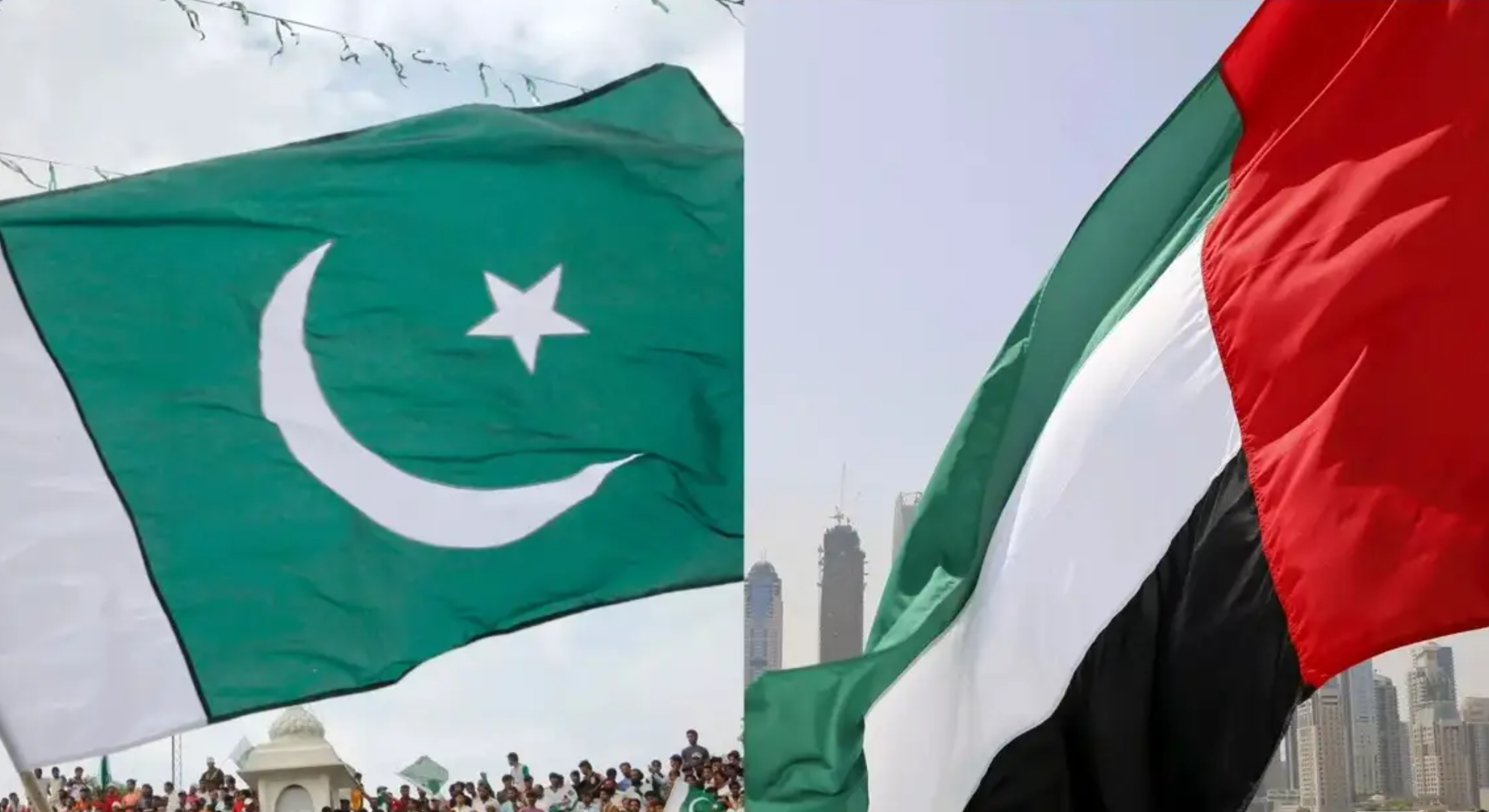
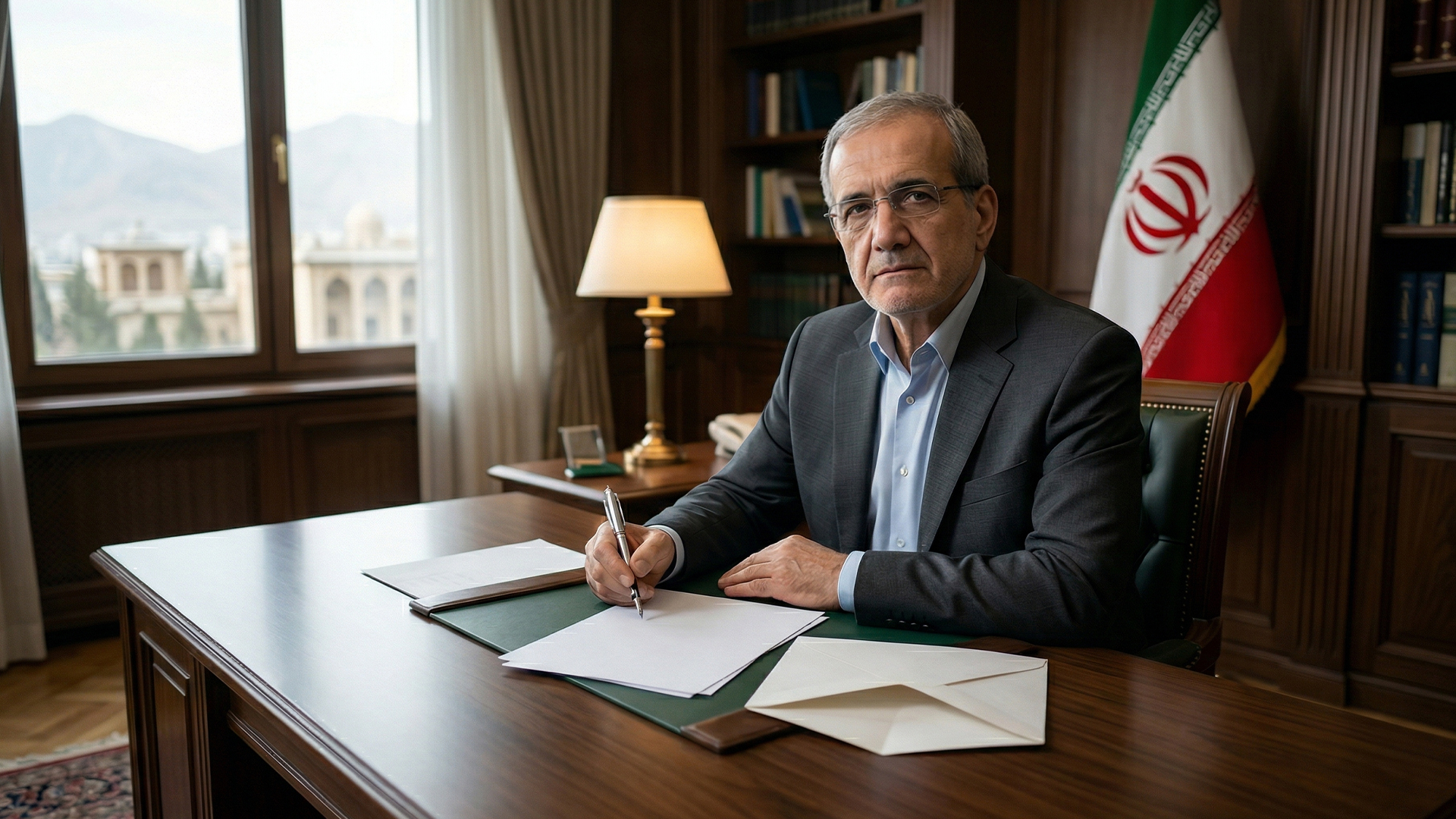
The United Arab Emirates (UAE) has put a freeze on issuing visas for most Pakistani citizens. Only government and diplomatic passport holders are still able to travel easily, while ordinary passport holders face strict restrictions.

Pakistani officials say the move is linked to rising cases of illegal activities by some travellers in the UAE, including begging and overstaying their visas. The freeze was discussed as a full passport ban at one point, highlighting how serious the UAE government is about curbing misuse of visit visas.

A top Pakistani interior ministry official confirmed that only “very few” visas are being issued now, often after lengthy and complicated procedures. Lawmakers noted that repeated cases of unlawful behaviour by Pakistani nationals prompted the UAE to tighten rules.

This follows similar actions by Saudi Arabia, which recently deported thousands of Pakistanis accused of misusing pilgrim visas or begging. While the UAE has introduced digital visa systems to streamline travel for some, these reforms do not currently benefit ordinary Pakistani travellers.

The visa freeze affects thousands of Pakistanis planning to travel to the UAE for work, family, or other reasons. It also raises concerns about the future of migrant employment and remittances, which many Pakistani families rely on.

Also Read: India enters Asia’s major-power league

India enters Asia’s major-power league

Operation Sindoor and stronger economic performance lift India to third place in the 2025 Asia Power Index

India has achieved a major milestone in the 2025 Asia Power Index, earning the status of a “major power” for the first time. The Index, prepared by the Lowy Institute, measures how countries perform across areas like economy, defence, diplomacy, and influence. This year, India crossed the 40-point mark, which is the level needed to be considered a major power.

In the overall rankings, India now stands at third place out of 27 countries. Only the United States and China are placed higher. This marks India’s strongest position ever on the Index and reflects its growing weight in the region.

India’s rise is driven by two major improvements. First, the country’s economic strength increased due to higher foreign investment and better trade relationships. The Index notes that India became a more attractive option for global investors as companies looked for new supply-chain partners.

Second, India earned a higher score for military capability. The report highlights the impact of Operation Sindoor, a major military operation in 2025 that showcased India’s readiness and operational strength. This helped reinforce confidence in India’s defence preparedness and contributed to the jump in rankings.

Despite these gains, the Index shows that India still has weaknesses. The country ranks 11th in defence partnerships, meaning it has fewer alliances and military agreements compared to many Asian nations. The report also points out a growing “power gap”, India has strong potential, but not all of it converts into real influence, especially when compared to China.

Overall, the 2025 Asia Power Index reflects India’s growing position as a key Asian power. With a stronger economy and better military standing, India is becoming a more influential regional player, even as it works on improving partnerships and expanding its global reach.

Also Read: Putin to visit India for Annual Summit on Dec. 4,5

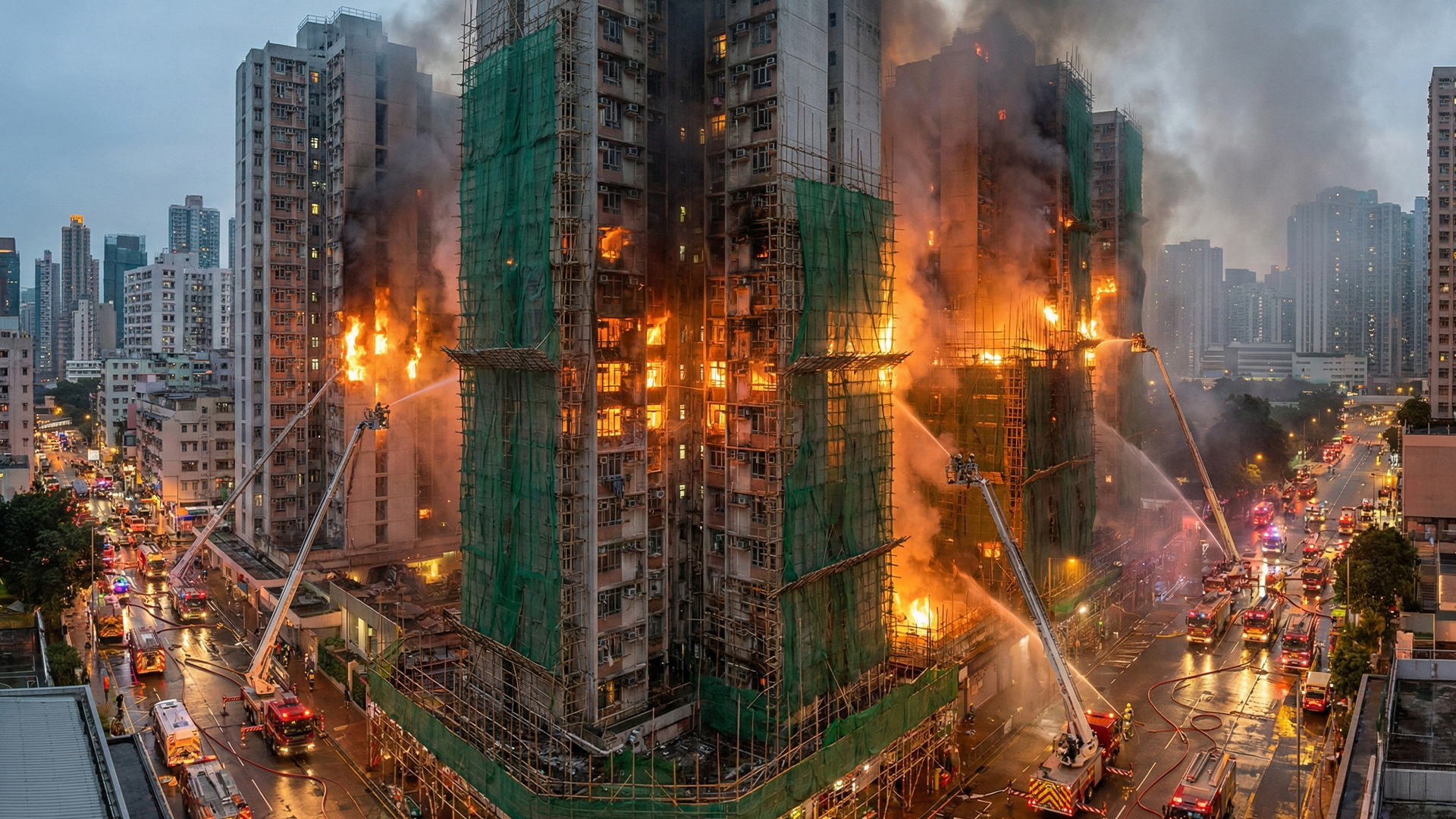
Deadly blaze in Hong Kong killed 128

Faulty alarms failed as fire tore through Tai Po high-rise

A massive fire broke out on November 26 at Wang Fuk Court, a residential high-rise complex in Hong Kong’s Tai Po district. Flames spread rapidly across seven of the eight buildings, killing at least 128 people, marking the deadliest residential fire in the city in decades.

Authorities revealed that fire alarms in all buildings were not working, leaving residents unaware of the danger as the fire engulfed their homes.

The fire spread faster due to renovation work. Bamboo scaffolding, protective netting, and foam panels used during construction caught fire quickly, helping flames climb from floor to floor.

Several people connected to the renovations, including contractors and engineers, have been arrested for negligence and possible manslaughter. Authorities are investigating the causes and promised to hold those responsible accountable.

Nearly 200 people are still missing, and officials warn the death toll could rise.

The disaster has shocked Hong Kong and highlighted serious fire safety lapses in high-rise apartments. Experts and citizens are demanding stricter regulations, regular inspections, and stronger enforcement to prevent similar tragedies.

The government has promised a full investigation and better oversight of renovations and building safety systems, aiming to ensure that such a catastrophic fire does not happen again.

Also Read: India enters Asia’s major-power league

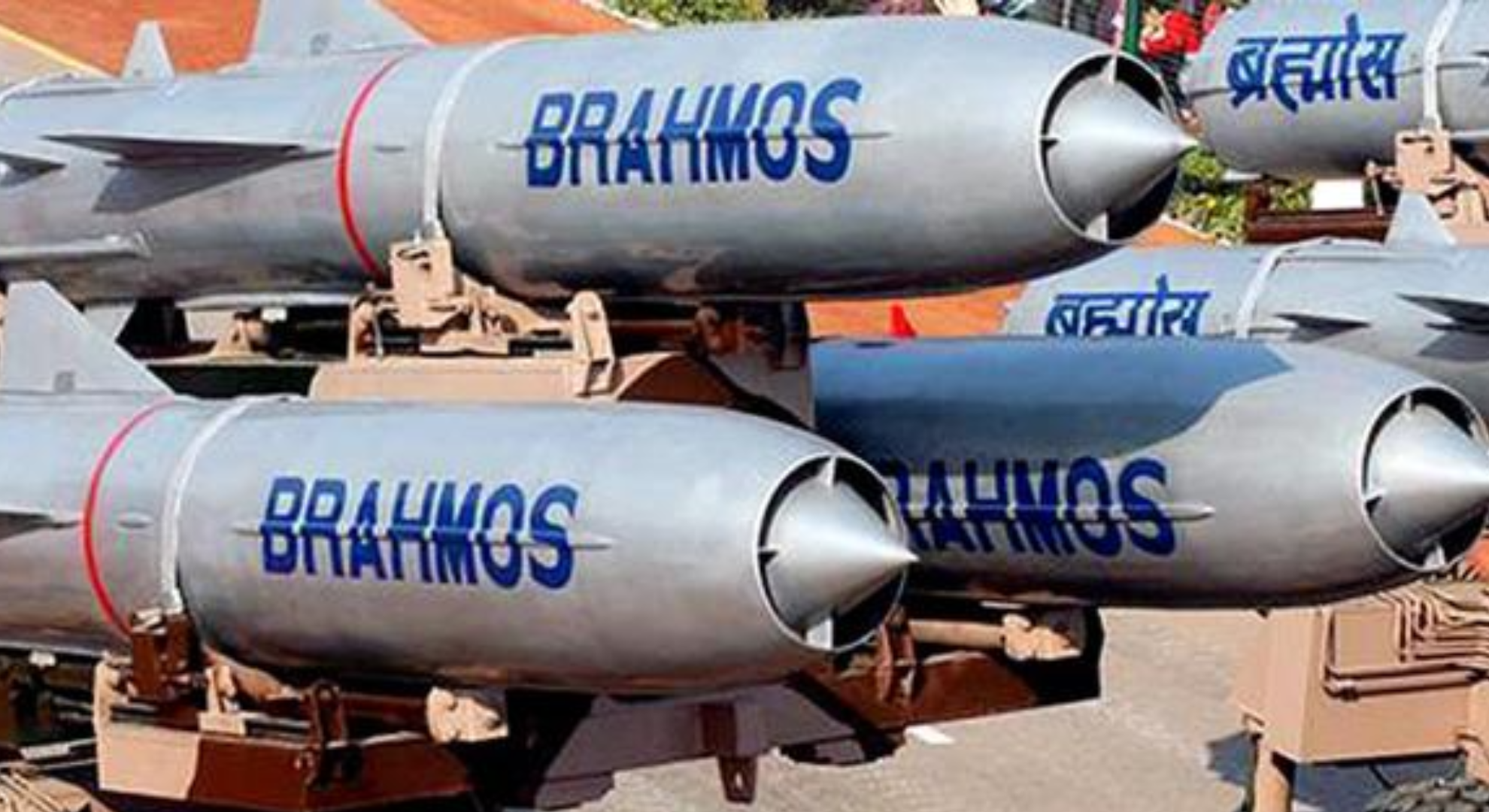
India, Indonesia near breakthrough on BrahMos sale

Rajnath Singh’s meeting with Indonesia’s defence minister marks a major step toward a $450 million missile partnership

India and Indonesia are drawing closer to a landmark defence partnership, one that could reshape security cooperation in the Indo-Pacific. When Defence Minister Rajnath Singh met his Indonesian counterpart Sjafrie Sjamsoeddin in New Delhi, the conversation went far beyond hardware. It was about trust, shared concerns, and the growing need for neighbours to stand together in a rapidly changing region.

At the heart of their meeting was the possible sale of the BrahMos supersonic cruise missile, a system known for its speed and precision. After months of discussions, both sides now seem aligned on the broad pricing, nearly $450 million. During the talks, Singh even walked the Indonesian minister through a model of the missile, reflecting the level of comfort and openness between the two nations.

If Indonesia finalises the purchase, it will become only the second country after the Philippines to induct BrahMos. For Jakarta, the missile would add significant strength to its coastal defence at a time when maritime tensions in the region remain unpredictable. For India, the deal marks another strong step in its ambition to become a reliable defence partner to countries that share its vision of a stable and rules-based Indo-Pacific.

But the meeting was not just about weapons. Both countries underlined their shared responsibility to keep the region peaceful and open. They agreed to deepen cooperation in maritime security, cybersecurity, submarine support, logistics, military healthcare and defence-industry collaboration. These are long-term commitments rooted in mutual respect and shared security needs.

The discussions signal how India and Indonesia,two large democracies connected by the Indian Ocean, are choosing partnership over distance. If the deal is signed, it will not just be a transaction; it will be a statement of confidence and a step towards a safer, more cooperative region.

Also Read: UAE freezes visas for most Pakistanis amid rising crime

Satellite Nisar offers a fresh portrait of Godavari delta

A joint India-US mission brings Earth’s hidden patterns alive

The Godavari Delta has always been a place of quiet magic  that denotes the sacred union of river, soil and sea where mangroves breathe, farmers coax life from the land, and countless waterways weave their own stories. Now, for the first time, we are seeing this vast landscape the way nature sketches it from above.

The NISAR satellite which is a collaboration between ISRO and NASA , has entered its full science operations phase, and its very first S-Band radar image has stunned scientists. Captured on 19 August, the picture reveals every curve of the river channels, the bold textures of farmland, the intricate geometry of aquaculture ponds, and the dense threads of mangrove forests.

It’s almost as if the Earth has opened a secret diary page, and NISAR is helping us read it.

The satellite, launched in July 2025, carries two powerful radars, India’s S-Band and the US-built L-Band, mounted on a 12-metre antenna. For months, engineers have been tuning, testing and calibrating the instrument as it quietly circled the planet. Now, with everything working in sync, NISAR has officially begun its global observations.

But the Godavari Delta image is more than a technological milestone. It’s a reminder of how environmental change silently shapes our lives. With its ability to monitor crops, forests, glaciers, soil moisture, river patterns and even surface deformation, NISAR will help scientists track changes before they become disasters. From improving flood prediction to supporting farmers with better land-use data, the mission promises real, everyday impact.

As the first public S-Band image makes its way across scientific circles and social media, one thing feels certain: we are looking at the beginning of a new way of understanding our planet, not as a map, but as a living, breathing story.

Also Read: India, Indonesia near breakthrough on BrahMos sale

AP backs Amaravati with ₹7,500 cr

State Cabinet greenlights second phase of land pooling for faster infrastructure rollout

The Andhra Pradesh government has approved the second phase of land pooling (LPS‑II) for Amaravati, covering around 16,666 acres across seven villages, including Vaikunthapuram, Pedamadduru, Yendrai, Karlapudi, Vadlamanu, Harichandrapuram, and Pedaparimi. This move aims to accelerate the long-delayed development of the state capital.

Alongside LPS‑II, the National Bank for Financing Infrastructure and Development (NaBFID) has sanctioned a ₹7,500 crore loan to fund key infrastructure projects in Amaravati. The funds will be used for roads, drainage, water supply, sewerage, electricity, and other civic amenities across the land-pooled areas.

Officials said that work on these projects will start soon. Farmers who pooled their land will now receive proper layouts and promised amenities, addressing earlier delays.

The Cabinet’s decision reflects the state government’s commitment to building Amaravati as a modern, well-planned capital. By combining land pooling with substantial financial support, the administration hopes to ensure systematic development, better facilities, and faster urban growth.

With LPS‑II and the NaBFID loan in place, Amaravati is poised to move ahead on one of Andhra Pradesh’s largest infrastructure projects, providing a clearer roadmap for the capital city’s future.

Also Read: Putin to visit India for Annual Summit on Dec. 4,5

Putin to visit India for Annual Summit on Dec. 4,5

Modi and Putin will review defence, trade and overall strategic partnership during the two-day visit

Russian President Vladimir Putin will visit India on December 4 and 5 for the 23rd Annual India-Russia Summit. The visit is taking place at the invitation of Prime Minister Narendra Modi.

During the visit, Putin will meet Modi to review how the India-Russia partnership has progressed in the past year. Both sides will discuss cooperation in defence, trade, energy, science and technology, and cultural exchanges. They are also expected to talk about major global and regional issues.

President Droupadi Murmu will also host a state banquet in honour of Putin.

According to official statements, India and Russia will use the summit to plan the next steps in their long-standing “Special and Privileged Strategic Partnership.” Several agreements and a joint statement are likely to be announced.

This will be Putin’s first visit to India since 2021 and comes at a time when the two countries continue to expand cooperation in defence and energy, despite global geopolitical pressures.

Also Read: US reviews green cards from 19 countries after shooting