rotating globe
2 Apr 2026


Chennai on high alert as cyclone Senyar nears coast

Heavy rain, strong winds expected in Tamil Nadu, Puducherry; authorities advise caution in low-lying areas

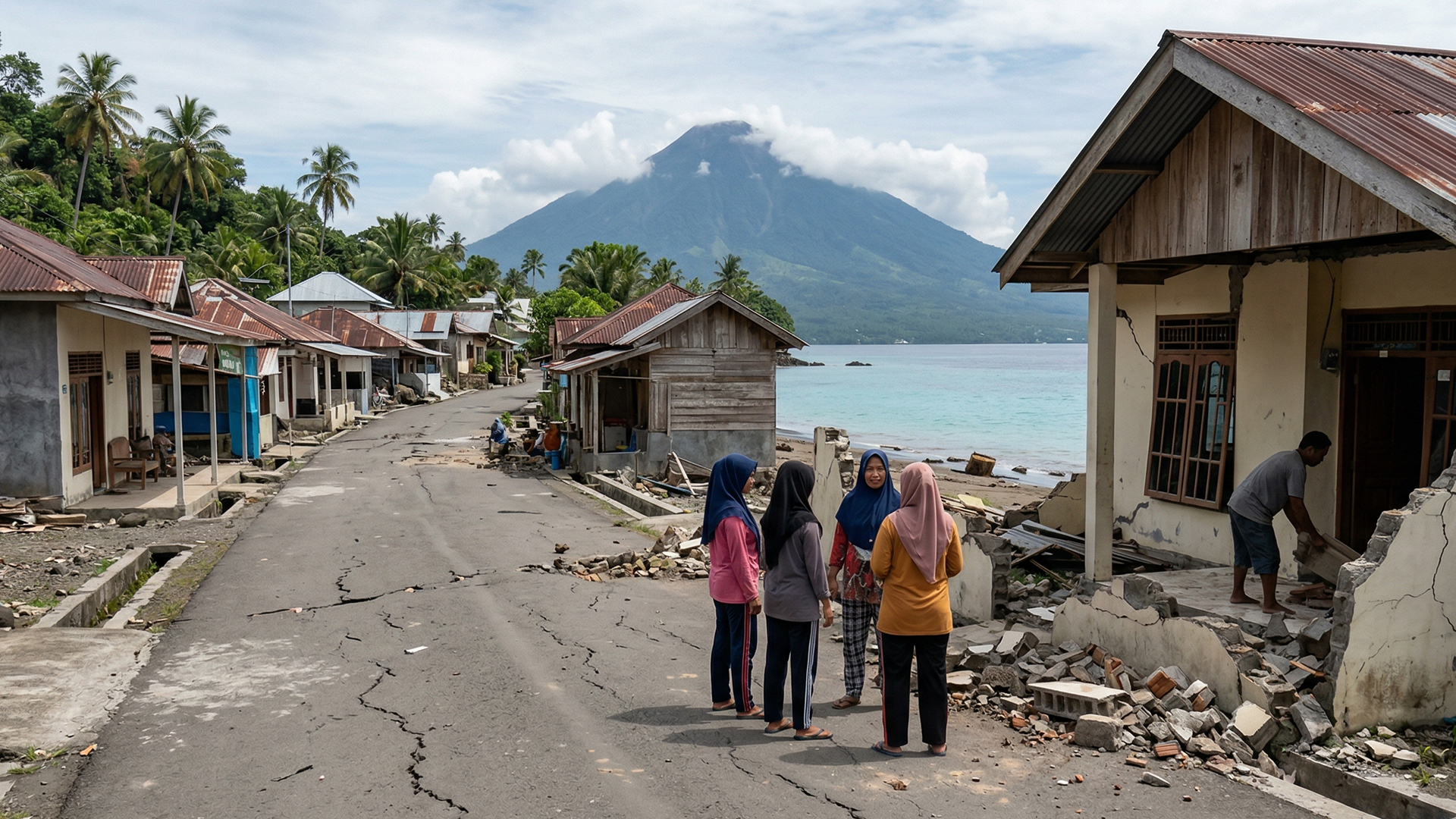
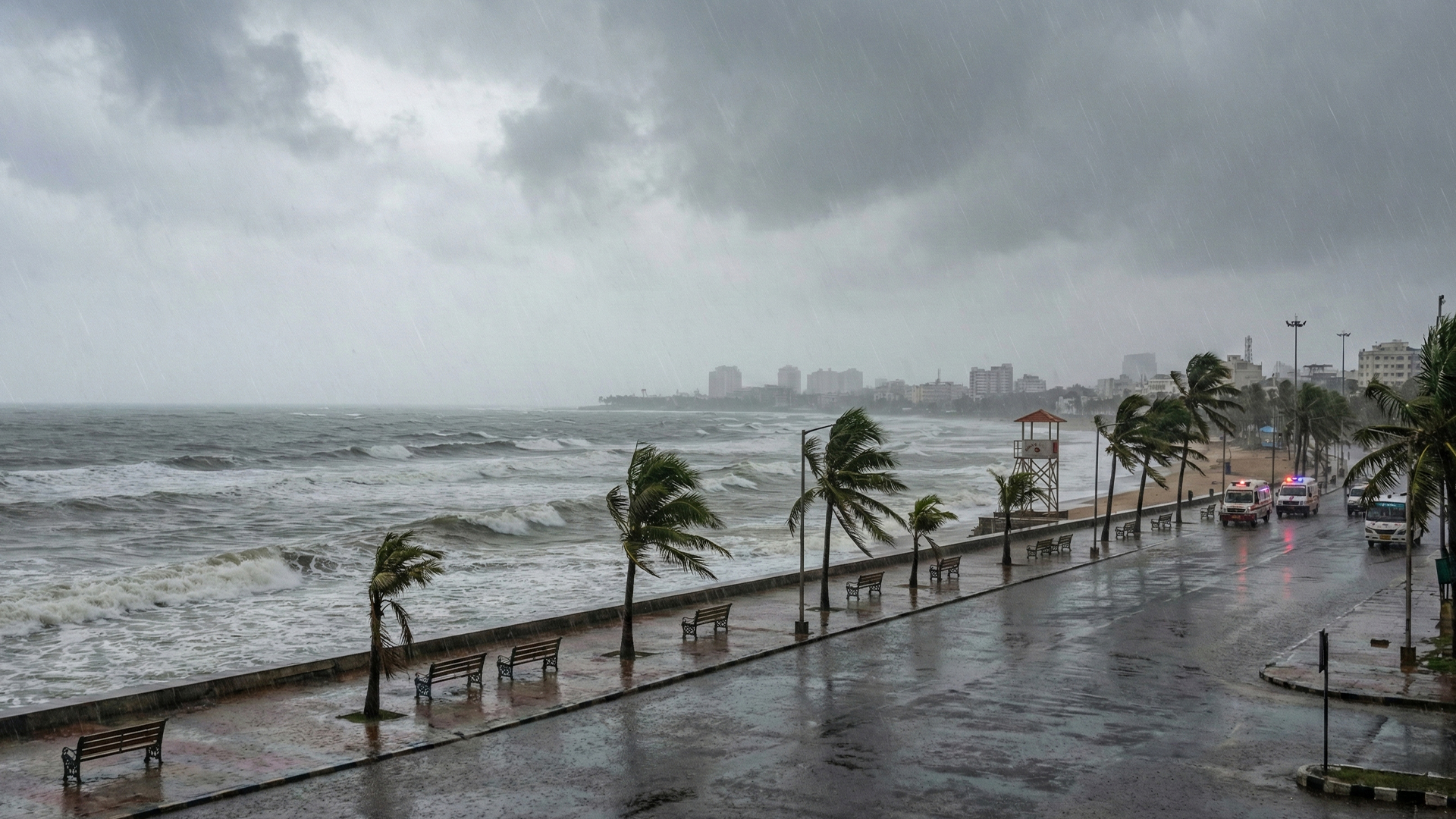
Chennai and nearby regions are preparing for heavy rain and strong winds as Cyclone Senyar develops over the Bay of Bengal. The storm is moving closer to the southern coast, with the possibility of turning into a full-fledged cyclone in the coming days.

The India Meteorological Department (IMD) has issued warnings for Tamil Nadu, Puducherry, and parts of Kerala. Chennai and surrounding districts are under an orange alert, meaning heavy rain is expected on November 29, while a yellow alert remains for November 30, signaling moderate rainfall. Coastal districts may see rainfall starting as early as November 28.

Authorities are urging people to stay alert and take precautions. Low-lying areas in Chennai, including T. Nagar, Velachery, Guindy, Kodambakkam, Koyambedu, and along the Adyar river, may face waterlogging and flooding. Traffic could be affected, and power cuts may happen in some neighborhoods as a preventive measure.

Fishermen and people living near the coast are advised not to go out to sea. Strong winds and rough waters are likely, which can be dangerous. Earlier this week, some parts of Tamil Nadu already received heavy rain, causing waterlogging in fields and streets. This new storm could make conditions worse.

Officials are monitoring the situation closely and have asked citizens to follow updates from local authorities. Residents are advised to avoid unnecessary travel, stay away from waterlogged areas, and keep emergency supplies ready.

While the exact path of Cyclone Senyar is still being tracked, it is expected to bring rain and wind to Chennai, Puducherry, and northern coastal districts over the next few days. Civic agencies are on standby to handle any disruption, including clearing blocked drains and restoring power in affected areas.

The IMD continues to track the storm’s movement and intensity. People are encouraged to stay informed through official updates and prepare for heavy rainfall and strong winds as Cyclone Senyar moves closer to the southern coast.

Also Read: 44 dead, 3 arrested over Hong Kong blaze

Afghan immigration halted after White House attack

Shooting near White House leaves two National Guard soldiers wounded, Afghan suspect Rahmanullah arrested

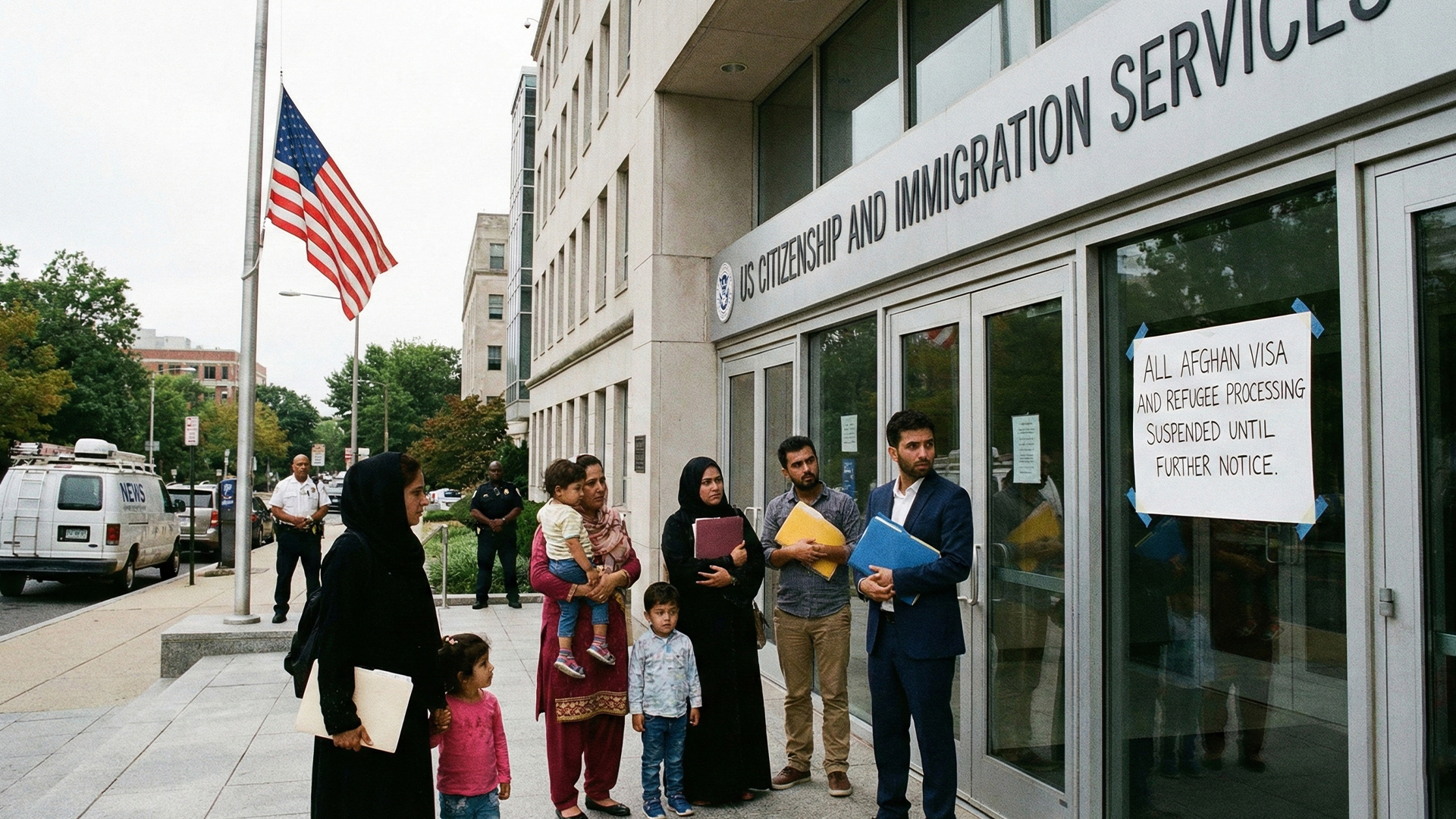
The United States has suspended all immigration applications from Afghan nationals following a shocking attack near the White House that left two National Guard soldiers critically injured.

The incident occurred Wednesday when two guardsmen on routine patrol were fired upon by a lone attacker just blocks from the presidential residence. The suspect, identified as 29-year-old Afghan national Rahmanullah Lakanwal, arrived in the US in 2021 under the evacuation program following the US withdrawal from Afghanistan. During the attack, Lakanwal was wounded and taken into custody. Authorities have not publicly confirmed his motive, but the attack is being treated as a security and terror-related incident.

In a public statement, President Donald Trump called the shooting “an act of terror” and suggested a review of all Afghan nationals admitted under earlier resettlement programs. He emphasized that national security must remain the top priority.

Following the attack, US immigration authorities announced an immediate and indefinite freeze on all Afghan-related visas, asylum requests, and other immigration applications. Officials said the suspension is a precautionary measure aimed at protecting American citizens and ensuring public safety. No timeline has been set for when processing might resume.

Local law enforcement described the shooting as a rare and alarming event, especially given its proximity to the White House. The incident has reignited debates over immigration policies, resettlement programs, and national security measures.

The freeze affects thousands of Afghan nationals who arrived in the US lawfully or are seeking refuge, illustrating how a single violent act can trigger rapid policy changes. Authorities continue to investigate the incident, while the National Guard members remain under intensive care.

Also Read: Ahmedabad hosts 2030 Commonwealth Games

Ahmedabad hosts 2030 Commonwealth Games

The Sardar Vallabhbhai Patel Sports Enclave will welcome athletes from across the Commonwealth for a grand sporting festival

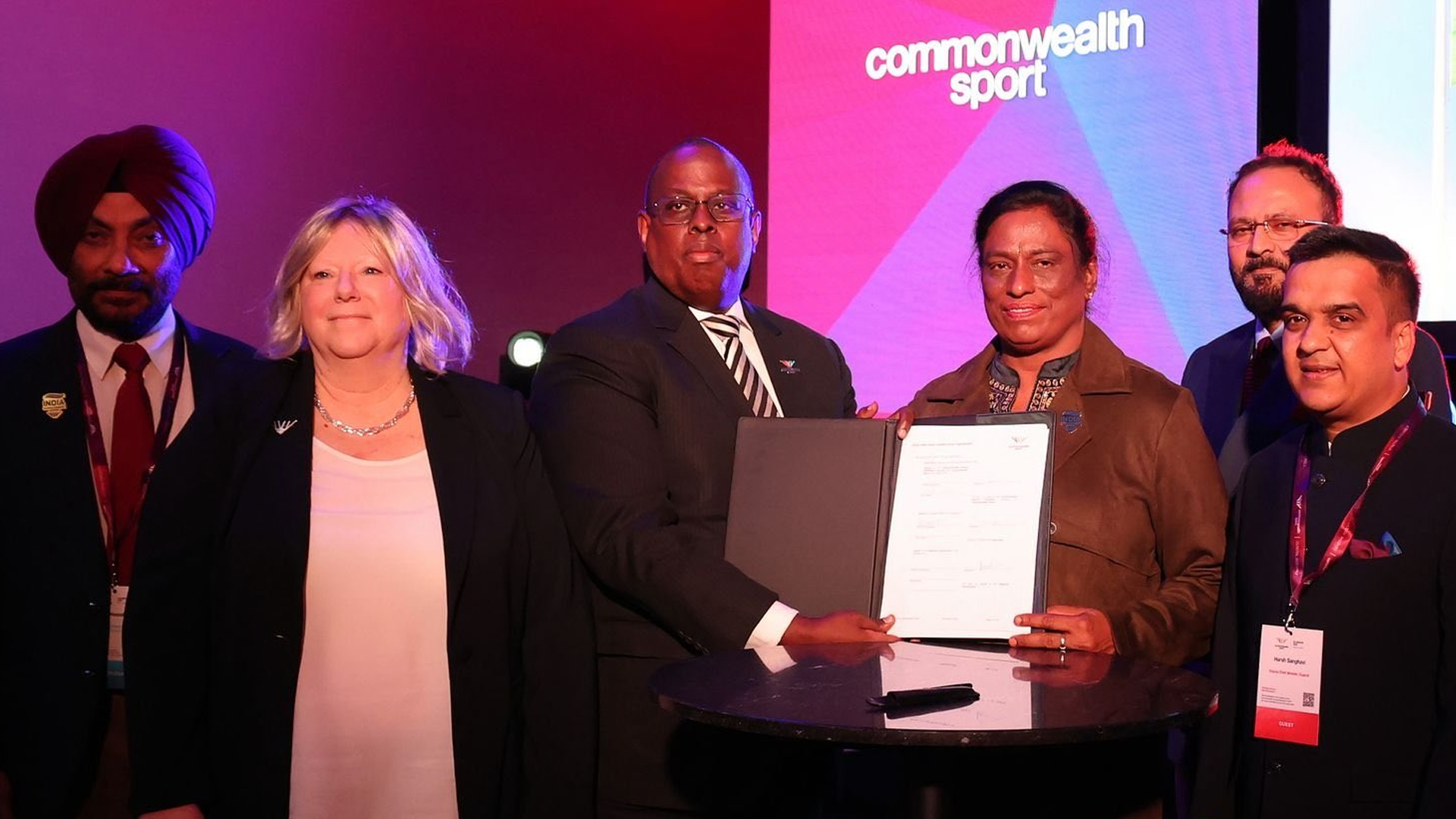
Ahmedabad is gearing up to welcome the world in 2030 as India’s host city for the 2030 Commonwealth Games which is a defining moment of national pride. The announcement reinforces India’s rising stature in global sport and its growing confidence in hosting large-scale international events with precision and flair.

The confirmation came at the Commonwealth Sports General Assembly in Glasgow, where Ahmedabad’s strong infrastructure, detailed planning, and readiness to deliver an exceptional Games were applauded. For India, the 2030 edition goes beyond sport as it is a statement of ambition, unity, and inspiration for generations of athletes to come.

At the centre of Ahmedabad’s bid is the Sardar Vallabhbhai Patel Sports Enclave in Motera, built around the iconic Narendra Modi Stadium. The enclave will feature world-class aquatics and indoor arenas, a football stadium, and a sprawling athletes’ village,  all designed to meet international standards.

Known as the “Manchester of India” for its vibrant textile legacy, Ahmedabad seamlessly blends heritage and modernity. The city’s charm lies in its UNESCO-listed architecture, buzzing markets, and irresistible street food,  from crisp fafda-jalebi to spicy local snacks. Backed by its entrepreneurial spirit, strong institutions, and warm hospitality, Ahmedabad is ready to offer the world not just state-of-the-art sporting venues, but an unforgettable cultural experience.

Preparations are already in motion. The Gujarat government has begun upgrading transport networks, accommodation, and city infrastructure, while other Indian cities will play supporting roles as satellite hubs for logistics and hospitality.

For athletes, fans, and citizens alike, yes it is an event that will be etched forever in the history of sports. Alongside, this is a celebration of India’s energy, talent, and openness. As Ahmedabad steps onto the global stage, the 2030 Commonwealth Games promise to be a grand festival of sport, culture, and unity, showcasing India at its proudest and most vibrant.

Also Read: Shree Hanuman Chalisa is India’s first 5 billion video

Shree Hanuman Chalisa, India’s first 5 billion video

This is among YouTube’s Top 10 globally, says T Series MD Bhushan Kumar

The devotional video of Shree Hanuman Chalisa has made history by becoming the first Indian video to cross 5 billion views on YouTube. Released in 2011, the video has grown into a global sensation, reaching audiences far beyond India.

The video was uploaded by T-Series and features the late Gulshan Kumar. It is sung by popular singer Hariharan and composed by Lalit Sen. Its calm melody and spiritual lyrics have connected with millions of viewers over the years, helping it reach this huge milestone.

Currently, the video has more than 5,006,713,956 views. Other Indian hits like Lehenga and Rowdy Baby have far fewer views, showing how special this achievement is.

Bhushan Kumar, Managing Director of T-Series, said this milestone is very meaningful because his father, Gulshan Kumar, wanted to bring devotional music to people’s homes. He also mentioned that being among YouTube’s Top 10 most-watched videos globally highlights how much people love this chant.

Globally, videos like Baby Shark Dance and Despacito have more views, but the success of Shree Hanuman Chalisa is remarkable because it shows the power of devotion and faith in the digital world. Millions of people continue to watch and listen to this video, making it an enduring symbol of spirituality online.

This milestone is a sign that traditional and devotional music can still reach and touch people worldwide, even in the age of modern pop songs and viral videos.

Also Read: Cabinet approves ₹7,280 cr rare-earth magnet scheme

Cabinet approves ₹7,280 cr rare-earth magnet scheme

Government aims to boost domestic production for EVs, wind turbines, and electronics

The Indian cabinet  has approved a ₹7,280 crore plan to produce rare-earth permanent magnets in the country. These magnets are important for electric vehicles, wind turbines, electronics, and defence equipment. The move is part of India’s effort to reduce dependence on imports, especially from China.

The scheme will create factories that handle the entire production process,  from turning rare-earth materials into metals, then into alloys, and finally into finished magnets. The government aims to set up plants that can produce a total of 6,000 metric tons per year.

This step is seen as critical because India currently imports most of its rare-earth magnets. With the demand expected to double by 2030 due to electric vehicles and renewable energy, producing them domestically will secure India’s supply and help the country become more self-reliant.

Most of the ₹7,280 crore, about ₹6,450 crore, will be given as incentives based on the sale of magnets made in India. Another ₹750 crore will go toward helping set up the manufacturing plants. The government will select up to five companies, both Indian and global, through a competitive process. Each company can produce up to 1,200 metric tons of magnets per year.

The plan will take seven years to complete: two years to set up the factories and five years for production under the incentive scheme.

Experts say this initiative could strengthen India’s technology and clean-energy industries, create jobs, and reduce reliance on imports. It is also expected to support the country’s environmental goals, including the aim to achieve net-zero emissions by 2070.

By producing these magnets at home, India will not only meet growing demand for electric vehicles and renewable energy but also boost its strategic and technological independence.

Also Read: India cuts Russian oil imports in December

Constitution empowers every Indian to dream

The letter calls on people to respect rights, fulfil duties and stay united

Prime Minister Narendra Modi marked Constitution Day by calling the Indian Constitution a powerful and transformative document that has changed the lives of millions. He said the Constitution gives every citizen,  including people from humble and economically weaker backgrounds like himself,  the freedom and confidence to dream big and achieve their goals. Modi said his own journey, from modest beginnings to becoming the country’s Prime Minister, reflects the strength and fairness of India’s democratic system.

In his message to the nation, the Prime Minister said the Constitution is not just a legal document but a moral guide that encourages unity, equality, dignity, and justice. He reminded people that India has grown stronger over the years because its citizens have respected these principles. He said that as the country moves towards becoming a developed nation, it is important for everyone to actively participate in this journey.

Modi especially highlighted the importance of constitutional duties. He said that while rights are essential, duties are equally important for building a responsible society. He urged citizens to follow these duties in their daily lives,  whether it is respecting laws, maintaining harmony, or contributing positively to the community. According to him, when people fulfil their duties, they help create a more stable, prosperous, and peaceful India.

The Prime Minister also paid tribute to the Constitution’s framers, especially Dr. B.R. Ambedkar and the members of the Constituent Assembly, who laid the foundation for modern India. He mentioned the contributions of national leaders and freedom fighters like Sardar Vallabhbhai Patel, Mahatma Gandhi, and Birsa Munda, whose work continues to inspire the nation.

Modi concluded by urging citizens to stay united, uphold constitutional values, and work together to build a strong, confident, and developed India for future generations.

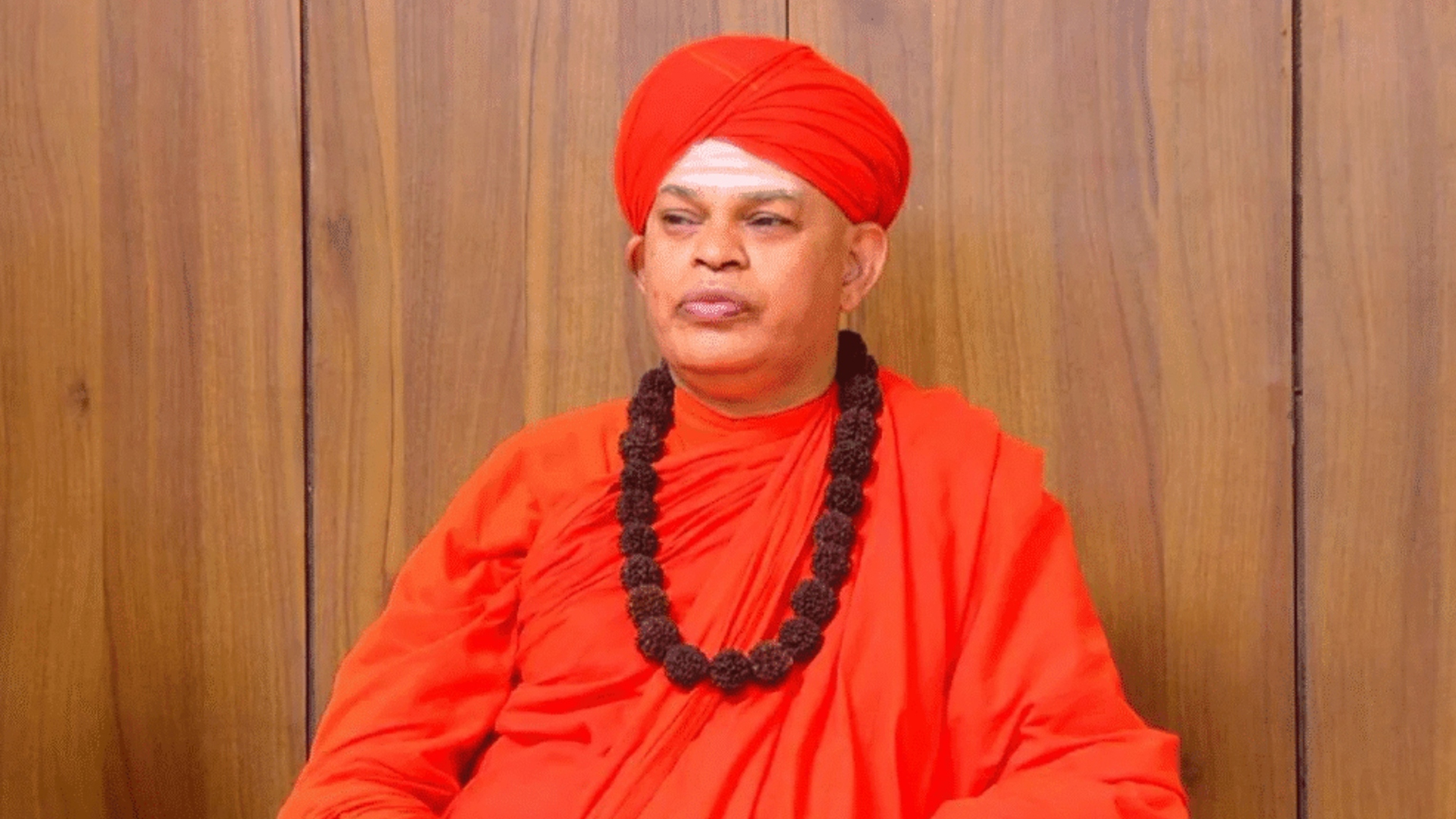
Murugha Mutt seer acquitted in first POCSO case

Court finds insufficient evidence against Murugha Mutt seer

Shivamurthy Murugha Sharana, the head of the Murugha Mutt in Karnataka, has been acquitted in the first of two POCSO cases filed against him. The district court concluded that there was no evidence to support allegations of sexual abuse made by two minor girls from a hostel run by the Mutt.

The case, which first came to light in 2022, had sparked widespread concern and media attention. The girls had accused Sharana and other staff members of repeated sexual exploitation. The allegations shook the community around the Mutt, which is known for its religious and spiritual activities.

During the trial, the defence argued that the accusations were influenced by internal disputes and misunderstandings within the Mutt. The court examined testimonies, evidence, and procedural records over several hearings. On 26 November 2025, the judge delivered a one-line verdict acquitting Sharana and all co-accused hostel and Mutt staff, stating that the prosecution had failed to establish guilt beyond reasonable doubt.

The ruling has brought relief to Sharana and the accused staff, who had maintained their innocence throughout the proceedings. Legal experts say that acquittals in such high-profile POCSO cases are rare, reflecting the court’s thorough scrutiny of the evidence.

However, this verdict pertains only to the first case. A second case against Sharana is still pending in the courts. While the acquittal provides a temporary reprieve for the seer, the broader legal and social scrutiny surrounding the Murugha Mutt continues. The community and the public await further developments as the remaining case moves through the judicial process.

Also Read: Shree Hanuman Chalisa is India’s first 5 billion video

Chennai receives 220,000 H‑1B visas, fraud alerted

Economist Dave Brat calls the numbers “industrial-scale fraud” and urges review

Allegations of misuse in the US H‑1B visa programme have drawn attention to Chennai. Economist Dave Brat recently claimed that in 2024, the Chennai consular district,  covering Tamil Nadu, Karnataka, Kerala, and Telangana, was issued around 220,000 H‑1B visas. This number is far higher than the US annual cap of 85,000, raising serious questions about how visas are being allocated.

Brat described the situation as industrial-scale fraud, indicating that many applicants may not meet the programme’s skill requirements. He added that the distribution of H‑1B visas globally is uneven: while Indians receive the majority, only 12% go to Chinese applicants. This, he argued, indicates that the system may be exploited, potentially taking away job opportunities from US workers.

The H‑1B visa programme is intended to bring skilled professionals to the US, especially in technology and other specialized sectors. But concerns have long existed about loopholes and misuse. Reports from past years point to irregularities such as fake employer letters, forged academic credentials, and proxy interviews, all of which make it easier for unqualified candidates to get visas.

The new allegations focus attention on how one consular district could process such a large number of visas. Experts say this could undermine the original purpose of the programme, affecting wages, jobs, and career prospects for American workers.

The controversy has sparked calls for stronger checks and better monitoring. Critics want clearer verification of credentials, stricter enforcement against fraudulent applications, and more transparent reporting of visa allocations. These steps are seen as necessary to ensure that only genuinely qualified professionals receive H‑1B visas.

The situation has also opened a broader discussion about fairness and accountability in the global talent movement. With Chennai at the center of the debate, questions remain about how the US government plans to prevent misuse in the future and maintain trust in the programme.

Also Read: Cabinet approves ₹7,280 cr rare-earth magnet scheme

Anthropic upgrades Claude Opus 4.5

New update strengthens coding, reasoning and agentic performance

Anthropic has launched Claude Opus 4.5, a new version of its AI model that aims to make working with technology feel more seamless and collaborative. Instead of just answering questions, the upgraded Claude is built to assist with real tasks,  from writing code to managing multi-step workflows,  in a way that feels more dependable and intuitive.

At the heart of the update is a big boost in coding strength. Claude can now understand complex software problems, debug issues, and rewrite code across several languages with more accuracy. It performs better on engineering tests, showing it can support developers with the kind of work that usually demands human attention.

The model also takes a step forward in agentic behaviour,  meaning it can plan, break down tasks, use tools and follow through on jobs that have many moving parts. Whether it’s preparing documents, analysing data, or organising information, Claude can now handle deeper, more structured tasks without losing track.

A major quality-of-life improvement is its longer memory. The AI can hold on to more context, making conversations and tasks feel smoother and less repetitive. This helps when users are working on large documents, long coding sessions or multi-stage projects.

Anthropic says Opus 4.5 is also built with stronger safety checks to avoid errors or misuse, especially as AI agents begin to operate with more independence.