rotating globe
7 Apr 2026


Former CJI backs bail before conviction

Justice Dhananjaya Y. Chandrachud calls for fairness in delayed trials, citing Umar Khalid case.

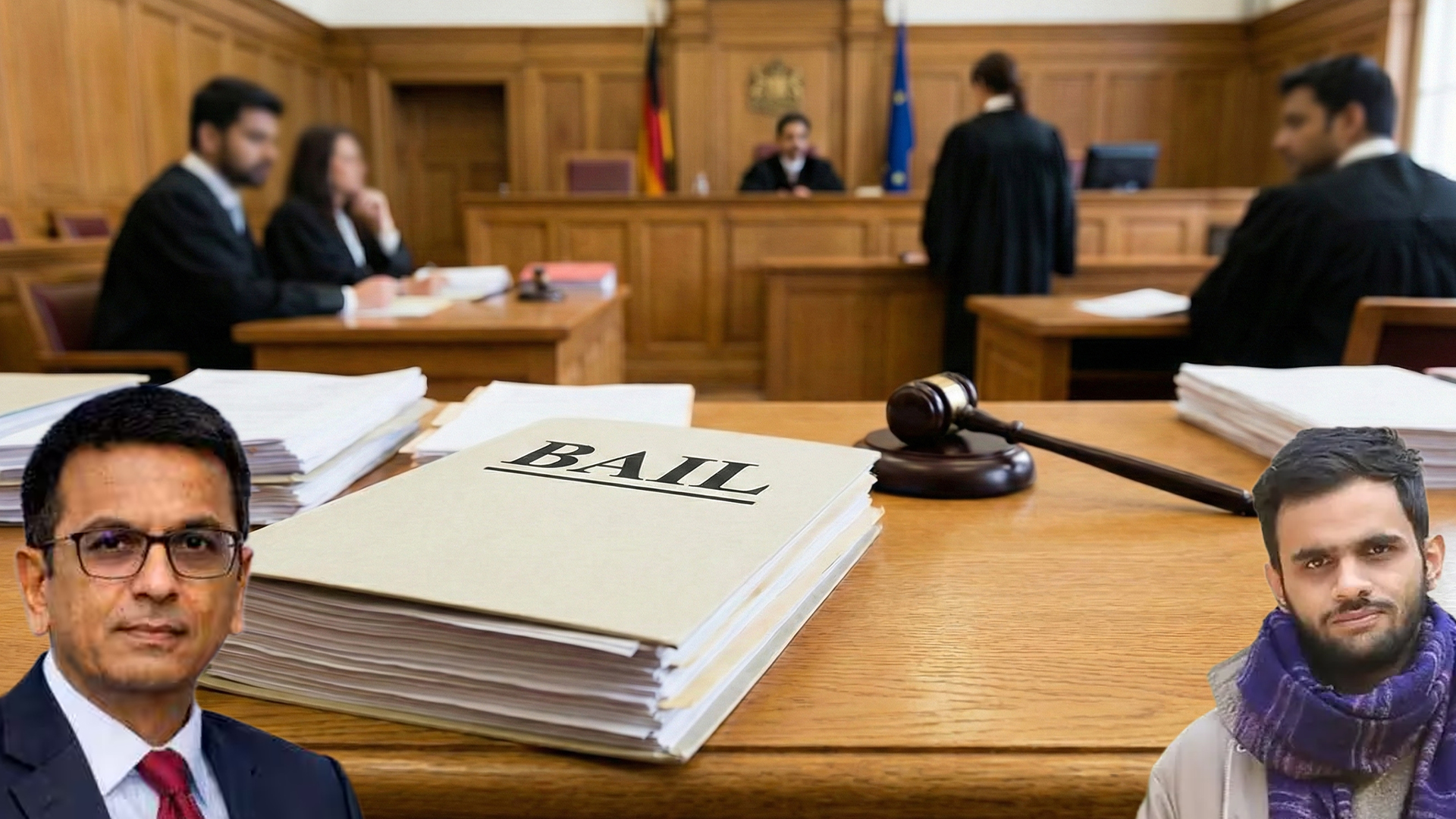
Former Chief Justice of India Dhananjaya Y. Chandrachud has said that bail before conviction should be treated as a matter of right, particularly in cases where legal proceedings are delayed. Speaking at the Jaipur Literature Festival, he highlighted the challenges faced by individuals who spend years in pre-trial detention.

Chandrachud stressed that the Indian legal system is built on the principle that every accused is presumed innocent until proven guilty. Yet, prolonged trials often mean that people spend years in jail without being convicted, losing valuable time with no compensation, even if later acquitted.

While acknowledging that courts must carefully examine national security cases, he said bail should only be denied if there is a strong likelihood that the accused might commit the offence again, tamper with evidence, or evade the law. “If these conditions are not met, bail should be granted,” he said.

Chandrachud’s comments come amid the ongoing legal proceedings of activist Umar Khalid, who has been in jail since 2020 in connection with the northeast Delhi riots case under the stringent Unlawful Activities (Prevention) Act. Fellow activist Sharjeel Imam is also in custody. The Supreme Court recently denied their bail, while some co‑accused secured release.

The former CJI also pointed to broader systemic issues, noting that lower courts often hesitate to grant bail due to fear of criticism, leaving such matters to the Supreme Court. He emphasised that the right to a speedy trial under Article 21 should guide bail decisions. If timely trials are not possible, granting bail should become the rule rather than the exception.

Also Read: Trump invites India to join Gaza Peace board
Kerala man dies after viral bus video

Alleged misbehaviour sparks online outrage, family dispute, and debate over social media accountability

A viral video can have real-life consequences, as seen in a tragic incident in Kerala where a man took his own life following online allegations. A 42‑year‑old man from Kozhikode, U Deepak, died by suicide on January 18, 2026, days after a video showing him allegedly misbehaving with a woman on a crowded Kerala State Road Transport Corporation (KSRTC) bus went viral. Police found him hanging inside his residence at Govindapuram early Sunday morning. Authorities have registered a case of unnatural death and are investigating the circumstances surrounding both the video and his death.

The controversy began when a woman, identified as Shimjitha, recorded a video on a bus journey between Payyannur railway station and a bus stop in Kannur district. In the footage, Deepak appears to brush against her in the crowded aisle. She described the act as sexual misconduct and said she recorded it after noticing another woman allegedly made uncomfortable by him. Shimjitha has maintained that her allegations are genuine but expressed regret over Deepak’s death, acknowledging the tragic outcome of the situation.

The video quickly went viral on social media, receiving millions of views and sparking intense discussion online. Deepak’s family strongly denied the allegations, calling them baseless and insisting that the public attention and online scrutiny contributed to his mental stress. They argued that the video was shared more for social media attention than as a genuine complaint about misconduct, describing it as character assassination.

The incident has reignited debates around digital responsibility and the potential harms of online shaming. Legal experts and activists have pointed out that while reporting misconduct is important, public circulation of unverified claims can seriously damage reputations and even push individuals toward extreme actions. Men’s rights activists, including Rahul Easwar, criticised the viral posting and called for safeguards to protect individuals from false allegations.

Police continue to investigate the case, including reviewing the viral video and interviewing both the accuser and witnesses. The inquiry is ongoing, and further legal action is expected as authorities examine the matter in detail.

Also Read: EU and Mercosur sign historic trade agreement

Chile wildfires kill 18, force 20,000 to flee

At least 24 fires burn 8,500 hectares across Ñuble and Bío Bío, overwhelming emergency responders

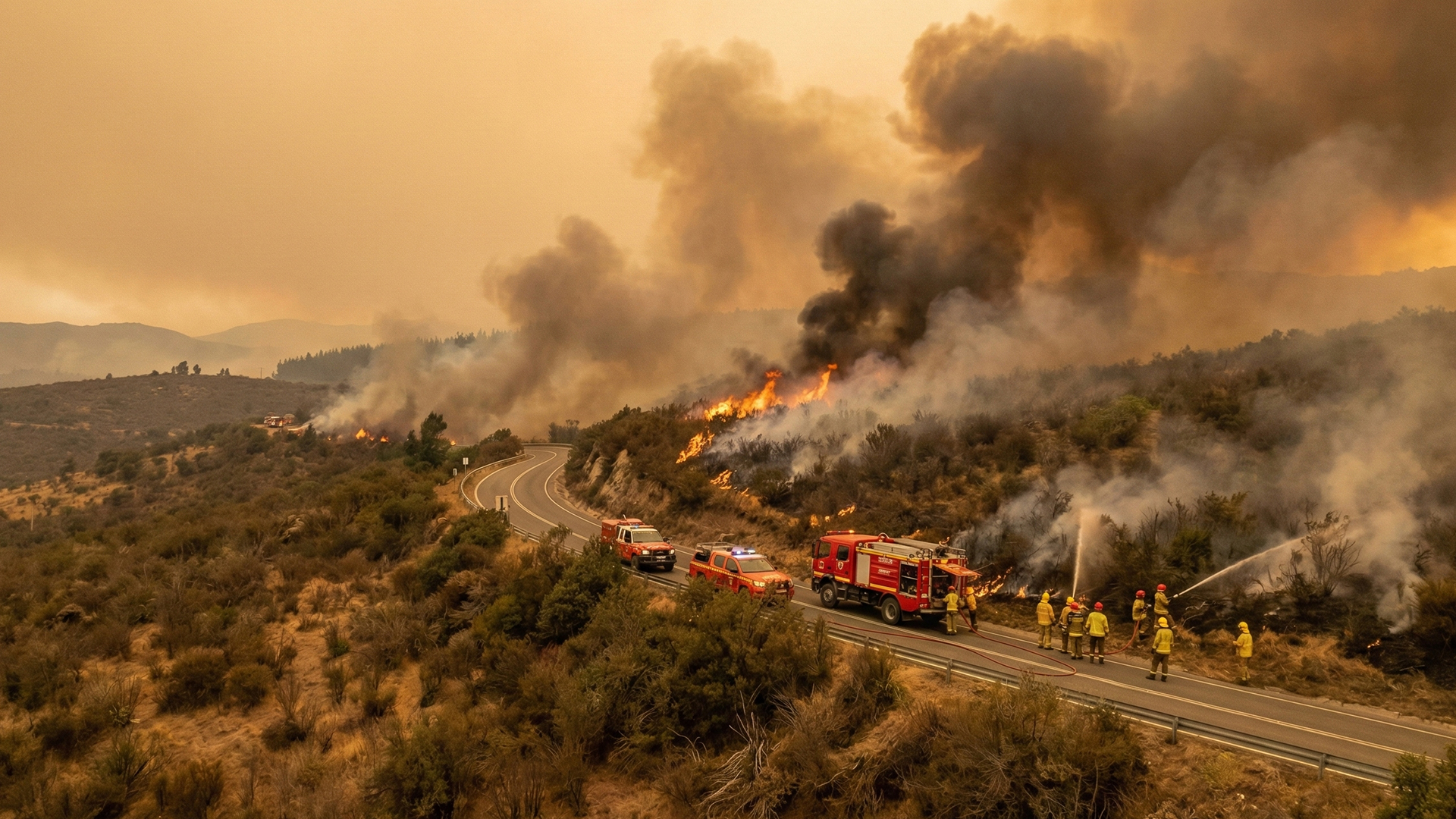
Chile has declared a state of catastrophe in response to rapidly spreading wildfires in the south of the country, after at least 18 people died and around 20,000 residents were forced to evacuate. President Gabriel Boric announced the measure on Sunday for the regions of Ñuble and Bío Bío, roughly 500 kilometres south of Santiago, as emergency teams struggled to contain dozens of active fires.

Authorities said the wildfires were fueled by extreme heat, strong winds, and prolonged drought conditions, making containment difficult. At least 24 separate fires were reported nationwide, with the most severe concentrated in Ñuble and Bío Bío. Together, these blazes have destroyed nearly 8,500 hectares (about 21,000 acres) of land, including forests and residential areas.

Chile’s National Forestry Corporation (CONAF) confirmed that approximately 20,000 people were evacuated from high‑risk areas, and at least 250 homes were destroyed. Disaster authorities are continuing evacuations and coordinating emergency shelters for those displaced by the fires.

The state of catastrophe allows the government to mobilize additional resources, including the armed forces, to assist firefighting and rescue operations. President Boric emphasized in a social media post that “all resources are available” to combat the crisis and protect affected communities.

Residents of towns such as Penco and Lirquén described fleeing rapidly moving flames, often taking only the clothes they were wearing as smoke and fire engulfed their neighbourhoods.

This wildfire emergency follows a broader heatwave affecting southern South America. Scientists warn that rising temperatures and prolonged droughts are increasing the intensity and frequency of fires in the region.

Also Read: Former CJI backs bail before conviction

EU pushes back against Trump tariff threats

Macron urges strong EU trade response as bloc backs Denmark in Greenland row

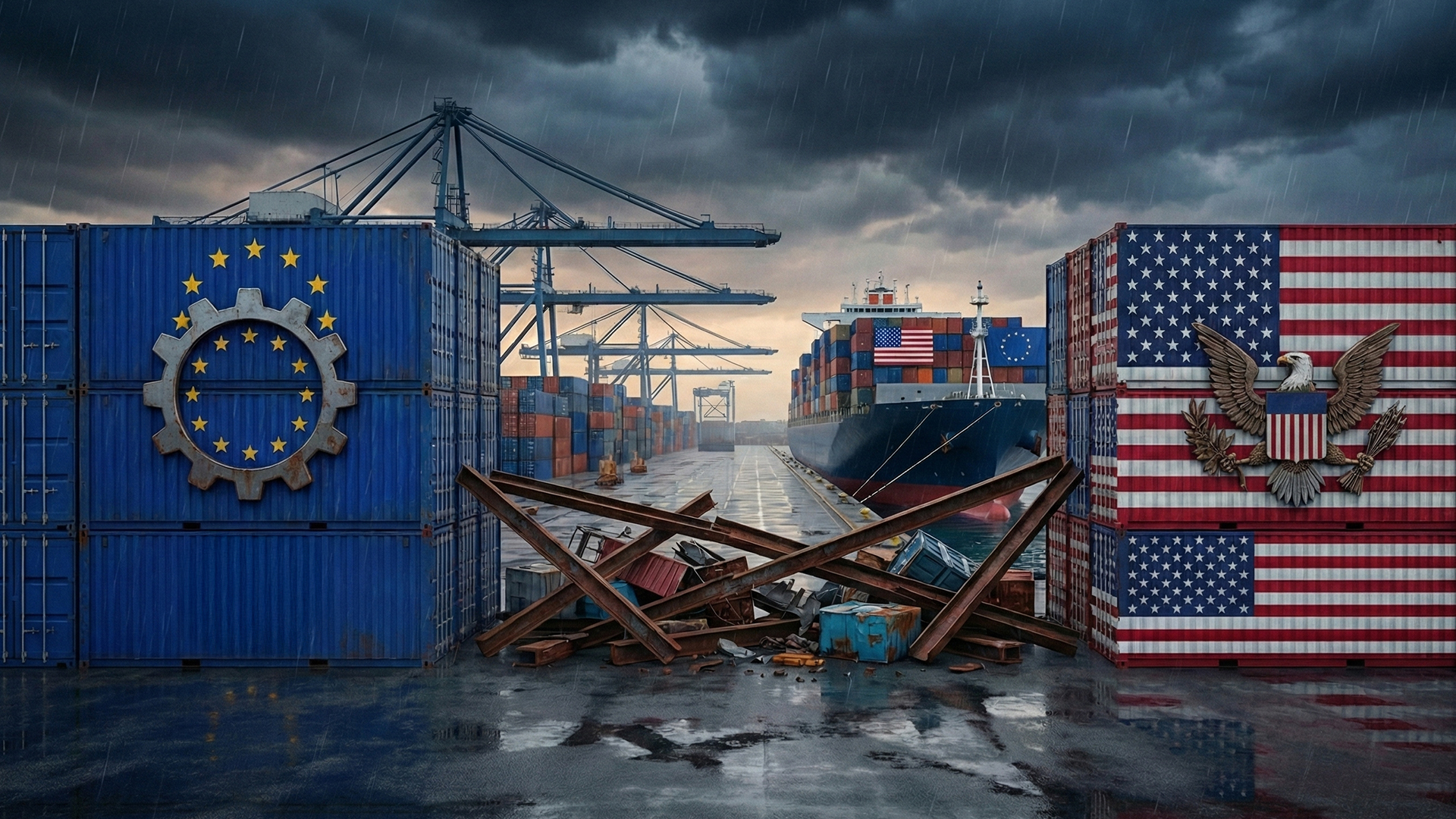
Tensions between the United States and the European Union have escalated after US President Donald Trump threatened to impose steep tariffs on several European countries amid a renewed dispute over Greenland. The move has drawn sharp criticism from major EU states, with French President Emmanuel Macron urging the bloc to prepare a strong and unified trade response.

Trump has warned that European nations opposing his interest in acquiring Greenland could face tariffs of up to 10 per cent from February, rising to 25 per cent by June if no agreement is reached. The countries named include France, Germany, the United Kingdom, Denmark, Sweden, Norway, the Netherlands and Finland. Denmark, which governs Greenland, has firmly rejected any suggestion of selling the autonomous territory, calling the proposal unacceptable.

Reacting strongly, President Macron said the tariff threat amounted to economic pressure and was “not the right way” to manage relations between allies. He called on the European Union to consider activating its Anti-Coercion Instrument (ACI), a powerful legal tool designed to respond to economic intimidation by external countries. Often referred to as the EU’s “trade bazooka,” the ACI would allow the bloc to impose counter-tariffs, restrict market access or take other trade measures in response.

Other major EU nations echoed Macron’s concerns. Germany, Spain and Italy condemned the U.S. move, warning that it could seriously damage transatlantic ties and destabilise global trade. European leaders stressed that Greenland’s status is not negotiable and reaffirmed their support for Denmark’s sovereignty.

EU officials said emergency discussions were held in Brussels to assess possible responses, including retaliation if the U.S. follows through on its tariff threats. While some leaders called for calm and dialogue to avoid a trade war, others made it clear that the EU would not hesitate to act if its members were targeted unfairly.

The dispute has also raised concerns about broader economic fallout, as higher tariffs could affect industries ranging from automobiles to agriculture. Analysts warn that escalating trade tensions between long-standing allies could hurt businesses and consumers on both sides of the Atlantic.

Also Read: Trump invites India to join Gaza Peace board
Gilli Nata wins Bigg Boss Kannada Season 12

Comedian lifts trophy, Rs 50 lakh prize, and luxury car after 112-day journey and Rakshita Shetty named runner-up as fans erupt in joy across Karnataka

The grand finale of Bigg Boss Kannada Season 12, hosted by Kiccha Sudeep, aired live on Sunday via Colors Kannada and JioHotstar. The season began on September 25, 2025, with 24 contestants enduring 112 days of challenges and drama. Six finalists remained: Ashwini Gowda, Dhanush Gowda, Gilli Nata, Kavya Shaiva, Mutant Raghu, and Rakshita Shetty. Gilli Nata triumphed, securing the trophy alongside Rs 50 lakh cash and a new Maruti Suzuki car. He expressed deep gratitude for fan support, pledging to stay true to his roots despite the victory.

Eliminations built high suspense throughout the night. Dhanush Gowda departed first among finalists, followed by Raghu and Kavya Shaiva, who received Rs 10 lakh from sponsors. The top three—Rakshita Shetty, Ashwini Gowda, and Gilli Nata—faced intense podium tension with dramatic lighting. Ashwini Gowda exited next, taking home Rs 14 lakh in total sponsor prizes after reflecting on her growth. Rakshita Shetty, the youngest participant, earned runner-up honors with Rs 25 lakh, comprising Rs 20 lakh in vouchers and Rs 5 lakh cash. Her comeback from early eviction highlighted remarkable resilience.

Gilli Nata’s win capped a stellar entertainment career. He placed as runner-up in Comedy Kiladigalu Season 4, impressing with natural humor and stage presence. Dance Karnataka Dance awarded him Best Entertainer for his versatility. Contributions to Darshan’s film Devil further showcased his talent, blending comedy with genuine house connections, particularly with Kavya Shaiva. A pre-finale poll reflected strong public backing for him at nearly 69 percent.

Social media buzzed with fan excitement. Many shared emotional reactions to his journey video, crediting it for season-long joy. Others celebrated his unique charm and spirit. Season 2 contestant Swetha Changappa praised the win as a milestone for Kannada entertainment, noting appeal across all ages. Gilli’s team expressed profound thanks for unwavering votes, prayers, and dedicated fandom, including tattoos in his support.

Also Read: EU and Mercosur sign historic trade agreement

Trump calls for change in Iran’s top leadership

Trump urges end to Iran’s Supreme Leader Khamenei amid deadly protests

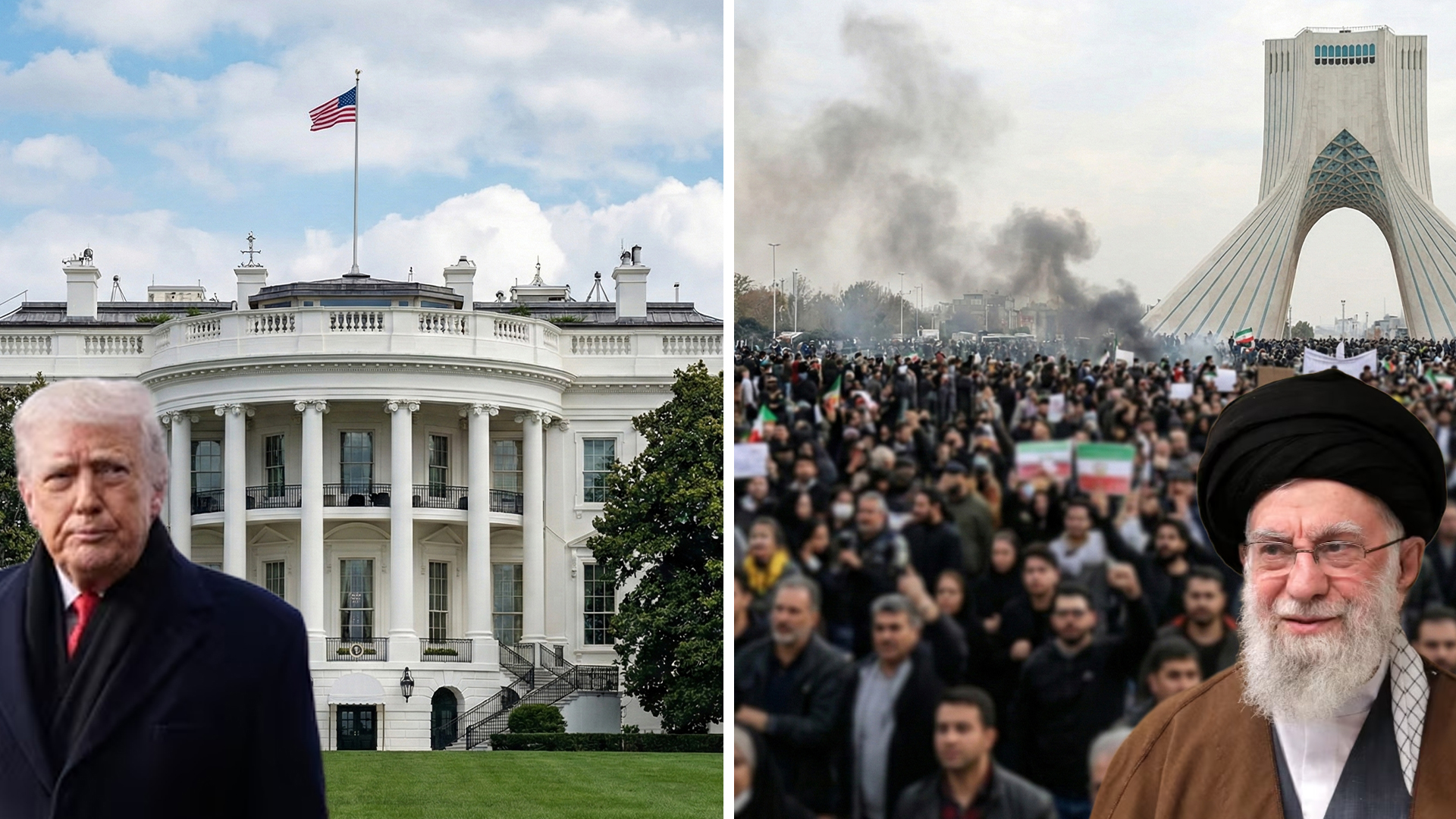
US President Donald Trump has said that Iran needs new leadership, openly calling for the removal of Supreme Leader Ayatollah Ali Khamenei. Trump made the remarks after Khamenei blamed the United States for the wave of protests and violence that has spread across Iran in recent weeks.

Trump criticised Iran’s leadership for what he described as a failure to govern responsibly. He said true leadership is built on respect and care for people, not fear, force, or bloodshed. According to Trump, the current leadership has caused suffering for ordinary Iranians by responding to protests with violence instead of addressing public concerns.

The unrest in Iran began in late December 2025, initially triggered by rising prices, unemployment, and economic pressure. The demonstrations soon expanded into widespread protests against Iran’s political and religious leadership. Human rights groups and independent sources claim that thousands of people have been killed and many more arrested during a heavy security crackdown. Authorities have also restricted internet access to control the spread of information.

Ayatollah Khamenei responded sharply to Trump’s comments, calling him a “criminal” and accusing the United States of interfering in Iran’s internal matters. He said foreign powers were trying to create instability and chaos inside the country. Khamenei defended the government’s actions, saying they were necessary to protect national security.

Iran’s government has also issued strong warnings to the US. President Masoud Pezeshkian said that any attack or threat against Iran’s Supreme Leader would be treated as an attack on the entire nation. He warned that such action could lead to a full-scale war. Iranian leaders have also blamed US sanctions for worsening the country’s economic crisis.

EU and Mercosur sign historic trade agreement

Deal to cut tariffs, boost trade, and link 700 million people

The European Union (EU) and the Mercosur bloc of South American nations have signed a historic free trade agreement, ending over 25 years of negotiations. The deal, finalized on January 17, 2026, in Paraguay, aims to strengthen economic ties and create one of the world’s largest trade zones, connecting more than 700 million people.

Mercosur consists of Argentina, Brazil, Paraguay, and Uruguay. Bolivia is not included in the agreement, and Venezuela remains suspended from the bloc. Under the deal, most tariffs on goods like cars, machinery, and chemicals will be gradually removed. The agreement is expected to lower costs for consumers and save businesses billions in customs duties.

European Commission President Ursula von der Leyen described the pact as a step for “fair trade over tariffs,” highlighting its importance for Europe’s global trade. Argentina’s President Javier Milei welcomed the deal as a boost for trade and economic growth.

Before it comes into effect, the agreement must be approved by the European Parliament and the national legislatures of Mercosur countries. Some European farmers and environmental groups have raised concerns that cheaper imports could harm local agriculture and contribute to environmental damage, including deforestation. The agreement includes quotas and safeguards to address these issues, and the EU has promised support to its farming sector.

Also Read: Chile wildfires kill 18, force 20,000 to flee