rotating globe
6 Apr 2026


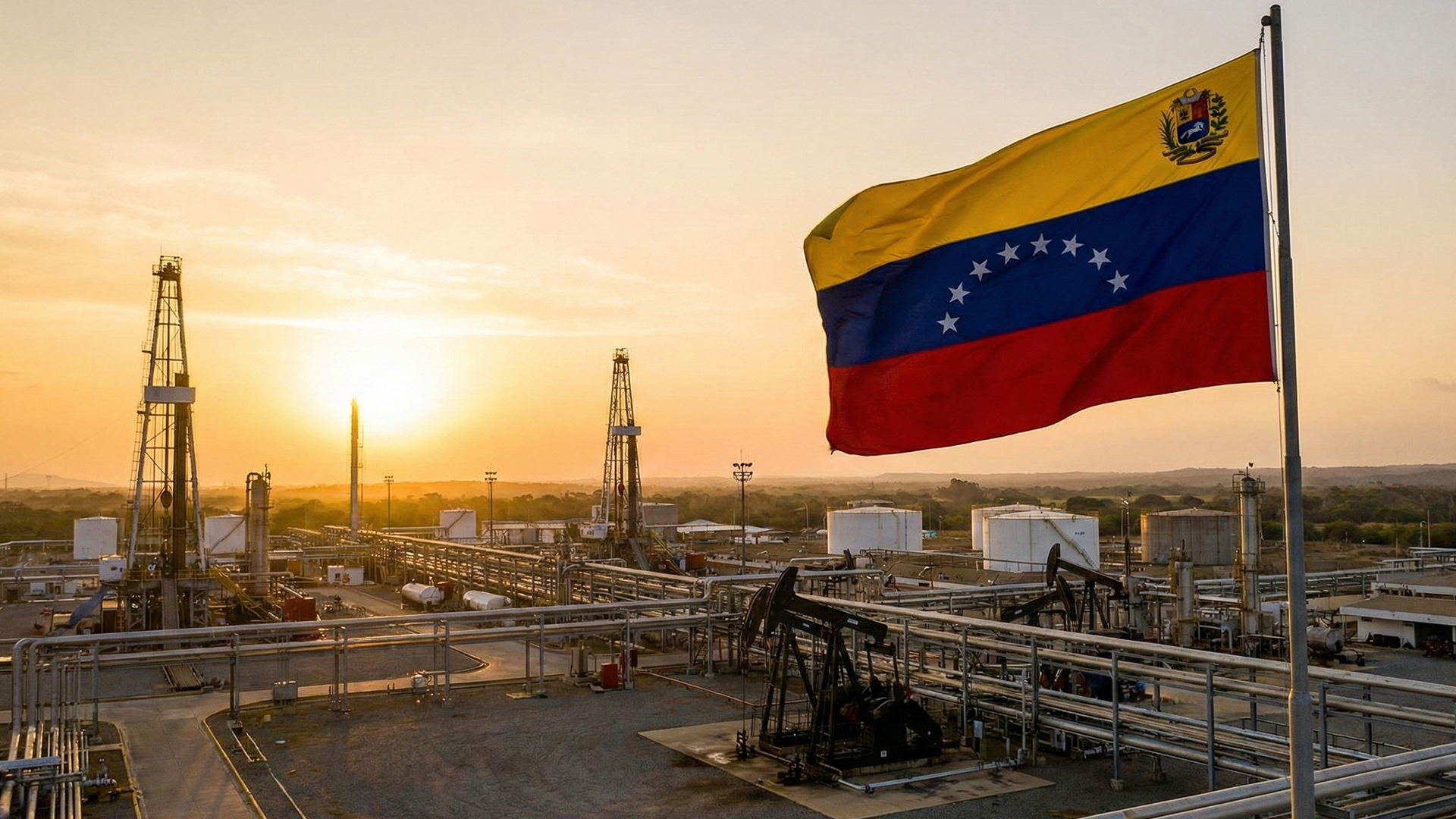
Venezuela welcomes foreign oil investment

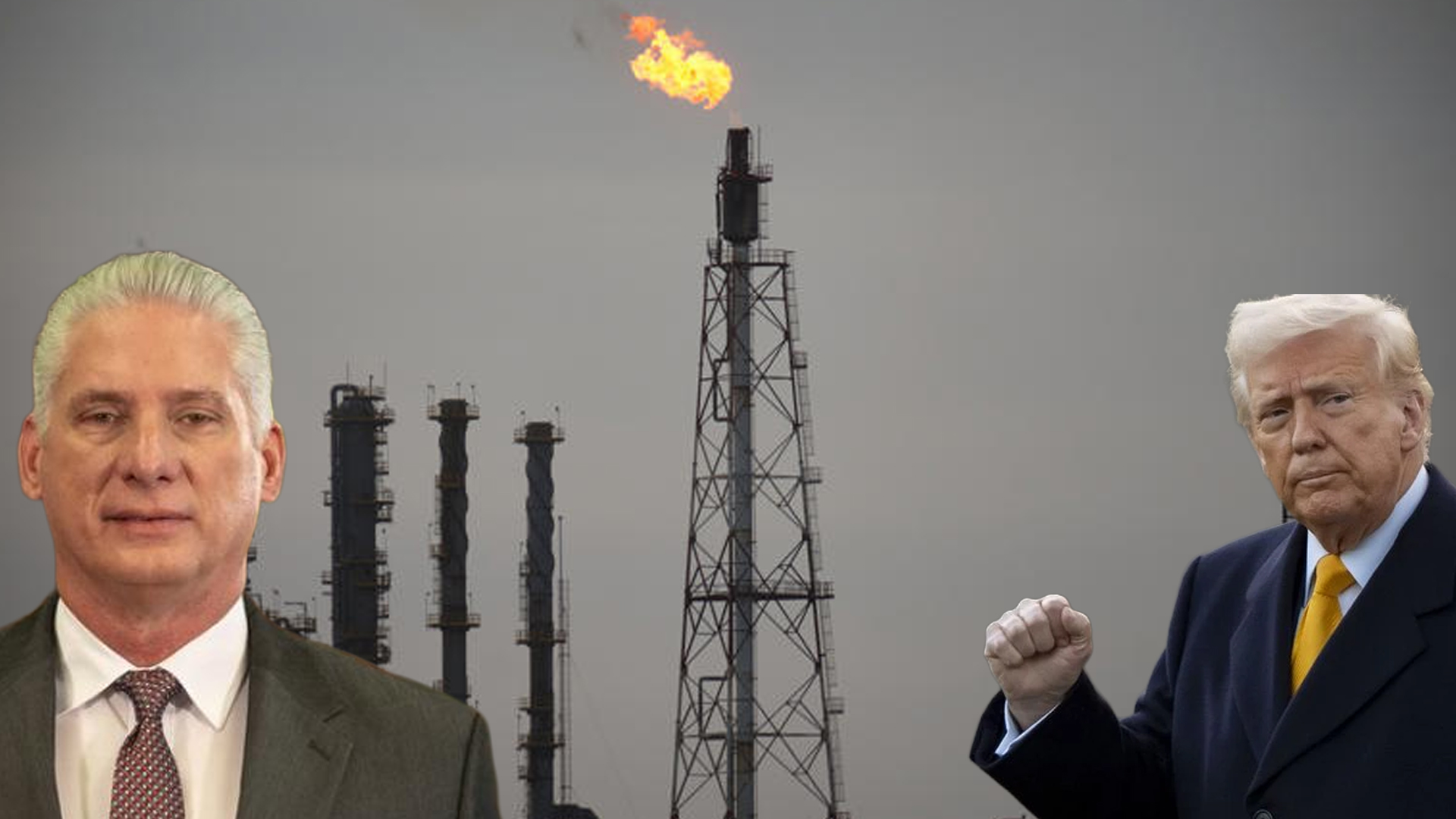
Historic reform loosens state control, offers flexible royalties, and coincides with US sanction easin

Venezuela has taken a major step to attract foreign investment by passing a landmark reform of its oil industry. Signed into law by acting President Delcy Rodríguez, the legislation eases decades of state control, allowing private and international companies to operate oil projects while the state retains ownership of reserves. The move aims to revive the country’s declining oil production and draw back investors who had long been hesitant to enter the market.

Under the new rules, companies can manage production and sales at their own risk, while independent arbitration is now permitted for disputes, reducing legal uncertainties that previously discouraged foreign operators. The law also grants greater operational freedom, letting companies make key decisions on investment and day-to-day management — a sharp reversal of policies introduced during Hugo Chávez’s nationalisation drive in 2007.

Financial incentives have been added to improve competitiveness. Royalties are capped at 30%, with regulators able to adjust rates for individual projects. This flexibility is expected to attract technologically advanced operators and large-scale investors to help modernize Venezuela’s energy sector.

The reform coincides with partial easing of U.S. sanctions on Venezuelan oil. A newly issued general license allows certain U.S. firms to engage in trade and transport of Venezuelan crude, signaling international support for the country’s efforts to reopen its oil market. Analysts say the combination of domestic reform and sanction relief could restore investor confidence and potentially boost production in the coming years.

Venezuela holds the world’s largest proven oil reserves, but output has fallen sharply due to years of mismanagement, underinvestment, and sanctions. Industry experts say the law could stimulate production, generate revenue, and create jobs, although political instability and past economic challenges remain key risks.

Also Read: Trump proposes 50% tariff on Canadian jets


Trump proposes 50% tariff on Canadian jets
US signals action over aircraft certification, heightening trade tensions

US President Donald Trump has indicated he may impose a 50% tariff on aircraft imported from Canada, escalating an already tense trade relationship between the two countries. The move targets Canada’s handling of aircraft certifications and comes amid ongoing disputes in the aerospace sector.

Trump stated that unless Canada approves US made jets, including models from Gulfstream Aerospace, the United States would impose steep tariffs on Canadian aircraft. In addition, he said the US could “decertify” all Canadian-made aircraft, including Bombardier jets, effectively barring them from US markets until Canada resolves the certification issues.

The president’s warning was shared on social media, emphasizing that the tariffs would apply to “any and all aircraft sold into the United States” if the situation is not corrected promptly. This comes as part of a broader strategy by Trump to use trade measures to pressure other countries on commercial regulations.

Canada has not immediately responded to Trump’s comments. Industry experts have warned that linking aircraft certification and trade tariffs could disrupt airline operations, affect safety standards, and have far-reaching economic consequences for both countries. Bombardier, one of Canada’s largest aircraft manufacturers, could face major losses if the tariffs are implemented.

This latest dispute adds to a series of trade tensions between the US and Canada. Recently, Trump also suggested a 100% tariff on Canadian goods if Ottawa pursued separate trade deals with China. These developments underline the fragile nature of the US–Canada economic relationship under Trump’s administration.

The aerospace industry is particularly vulnerable in these disputes because aircraft certification is a highly technical process that ensures safety and compliance with international standards.

Also Read: An ode to Mark Tully, the ‘Voice of India’

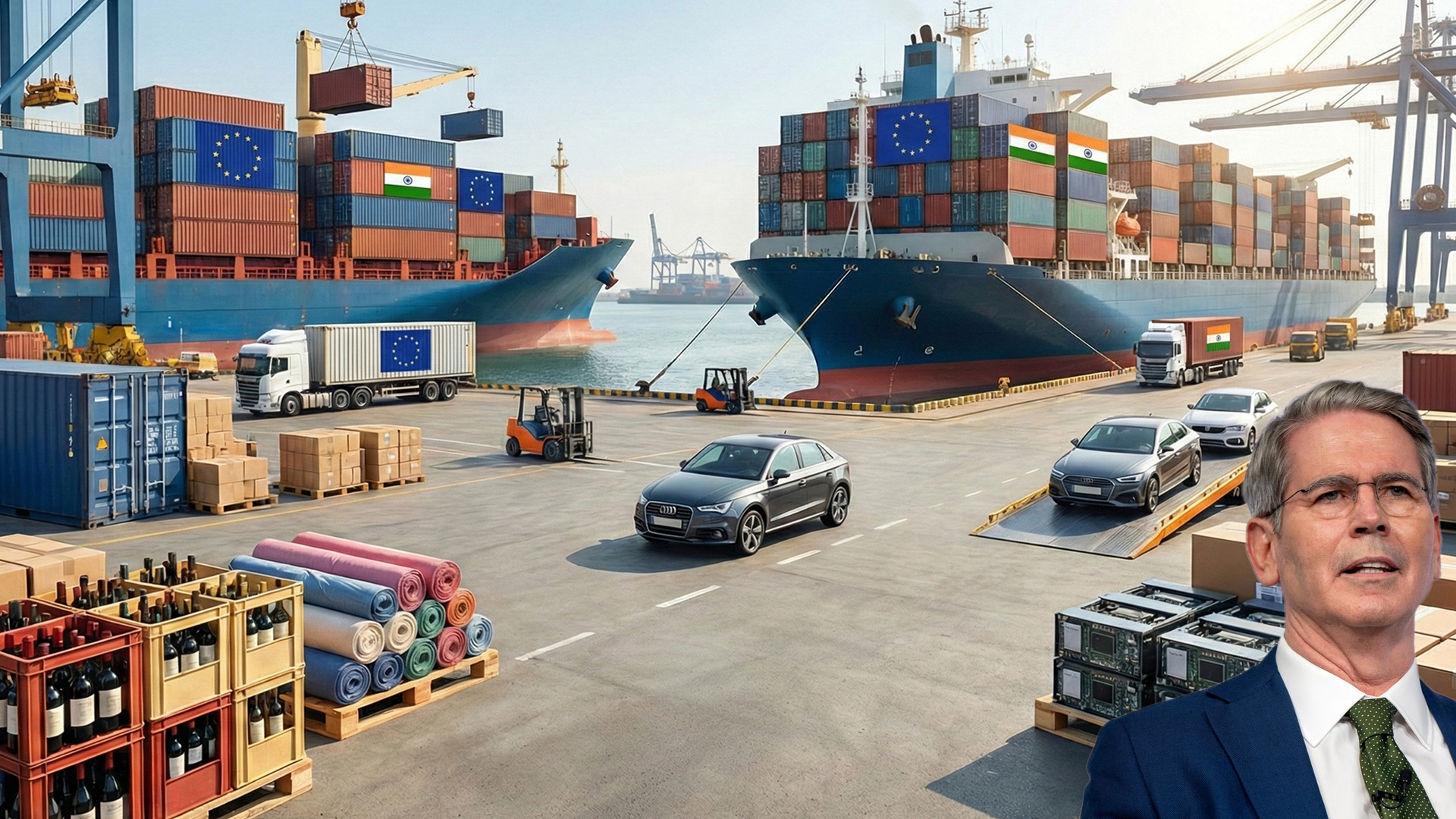
US slams India-EU trade pact, flags Ukraine concerns

Treasury Secretary Scott Bessent says Europe chose business interests over unity on the Ukraine war, sharpening transatlantic tensions

The United States has openly criticised the newly concluded India–European Union trade agreement, with US Treasury Secretary Scott Bessent accusing Europe of putting commercial gains ahead of its political and moral commitments to Ukraine.

Speaking days after the deal was announced, Bessent said the agreement was “deeply disappointing”, arguing that it weakens Western unity at a time when the US and its allies are trying to maintain pressure on Russia over the ongoing Ukraine war .

The India–EU Free Trade Agreement, negotiated over several years, is being described by European leaders as a landmark pact that could dramatically boost trade between the two sides. It aims to cut or eliminate tariffs on most goods and expand cooperation across sectors such as manufacturing, technology, services and clean energy. Supporters in Europe see it as a major economic win that could significantly increase exports to India in the coming decade.

However, Bessent argued that the timing and intent of the deal raise serious questions. He said European countries continue to buy refined fuel products from India that are made using Russian crude oil, which he claimed indirectly helps fund Moscow’s war effort. According to him, Europe is effectively “financing the war against itself” while publicly supporting Ukraine .

The US treasury chief contrasted Europe’s approach with Washington’s tougher stance. He noted that the United States has imposed 25% tariffs on certain Indian imports linked to Russian oil, while European governments have chosen not to back similar measures because they were keen to finalise the trade deal with New Delhi .

Bessent’s comments underline growing differences between the US and Europe over how to balance economic interests with geopolitical responsibilities. While Washington has pushed for stricter economic penalties to isolate Russia, European countries have faced internal pressures over energy security, inflation and growth, making a clean break from Russian-linked trade more complex.

Also Read: Smithsonian museum to return 3 stolen Indian temple bronzes

Shashi Tharoor meets Rahul, Kharge, Congress shows unity

Nearly two-hour talks aim to end speculation over internal differences

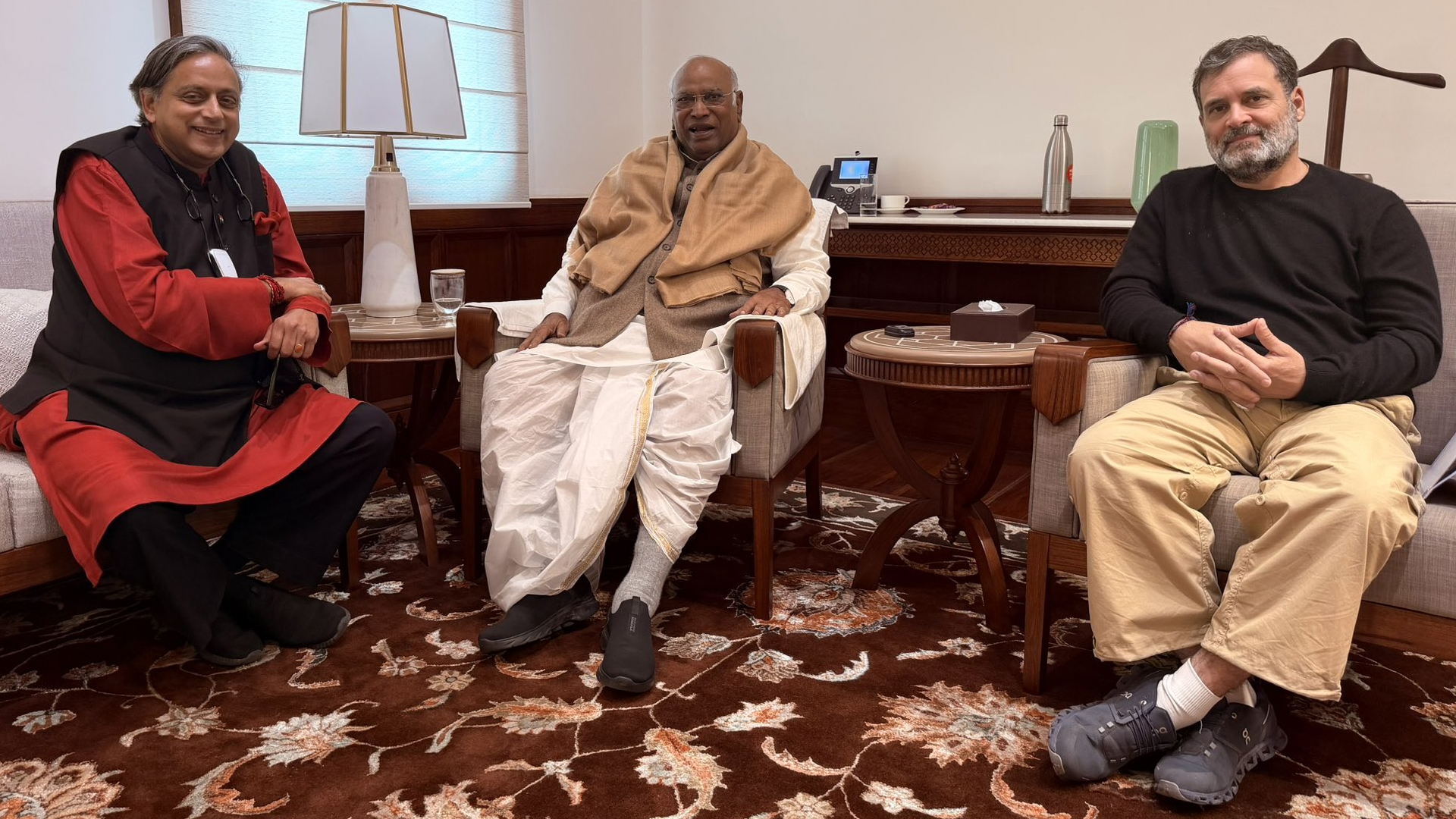
Senior Congress leader Shashi Tharoor met party president Mallikarjun Kharge and former Congress chief Rahul Gandhi in New Delhi on Thursday, sending out a strong message of unity amid reports of internal unease within the party. The meeting, held at Kharge’s office in the Parliament House complex, lasted for nearly two hours.

After the meeting, Tharoor downplayed speculation about differences within the Congress leadership, saying “all is good” and stressing that the leadership was on the same page. The interaction comes against the backdrop of recent political chatter over Tharoor’s role in the party, especially following his absence from a few organisational meetings and public discussions around leadership choices in Kerala.

According to party sources, the meeting was cordial and constructive, with discussions covering organisational matters, parliamentary strategy and the party’s broader political direction. There was no confrontation or disagreement, and all sides appeared keen to put an end to rumours of discord.

Tharoor later described the discussion as warm and positive, thanking Rahul Gandhi and Mallikarjun Kharge for taking the time to engage on a wide range of issues. His comments were widely seen as an attempt to reassure party workers and supporters that the leadership remains united ahead of important electoral challenges.

The meeting has also been interpreted as significant in the context of the Kerala Assembly elections, with repeated speculation that Tharoor was unhappy with the party’s state leadership or positioning himself for a larger role. However, Tharoor has consistently denied such claims, stating that he has no ambitions beyond his role as a Member of Parliament and remains committed to strengthening the Congress.

From the party’s perspective, the public messaging after the meeting appears deliberate. With the Congress looking to project stability and cohesion, especially after recent electoral setbacks, the leadership is keen to counter narratives of internal rifts.

The meeting reflects the Congress high command’s effort to close ranks and manage perceptions, ensuring that individual differences do not overshadow collective goals. By presenting a united front, the party hopes to focus attention back on governance issues, parliamentary opposition and upcoming elections rather than internal politics.

Also Read: IAF battles forest fires in Lohit valley, Arunachal

An ode to Mark Tully, the ‘Voice of India’

Legendary BBC journalist remembered for decades of empathetic reporting across South Asia

Sir Mark Tully, the legendary BBC correspondent often called the “voice of India,” passed away in New Delhi at the age of 90 after a brief illness. For more than three decades, Tully’s calm, insightful voice guided millions through the complex political and social landscapes of South Asia.

Born in Kolkata in 1935, Tully joined the BBC in the mid‑1960s and soon became the broadcaster’s foremost correspondent in India. He covered some of the most defining events in the region’s history: the 1971 India‑Pakistan war that led to Bangladesh’s independence, the siege of the Golden Temple in 1984, the assassination of Prime Minister Rajiv Gandhi, and the Babri mosque demolition in 1992. Yet, what set Tully apart was not just the events he reported, but the empathy and clarity with which he narrated them, giving audiences a nuanced understanding of often turbulent situations.

Tully’s connection with India went beyond journalism. Fluent in Hindi and deeply immersed in Indian culture, he lived and traveled across the country, earning trust and respect from people of all walks of life. He authored several books that explored India’s politics, society, and everyday life, blending reportage with personal reflection.

Recognized globally, Tully was knighted in 2002 for services to broadcasting and received India’s Padma Shri and Padma Bhushan, rare honors for a foreign journalist. His work reflected not only professional excellence but also a profound personal bond with the country he covered.

Leaders, colleagues, and audiences remember him as a storyteller who combined rigor with humanity. Prime Minister Narendra Modi described him as a “towering voice of journalism,” while countless listeners recall tuning in to his broadcasts for clarity, context, and compassion.

Also Read: US slams India-EU trade pact, flags Ukraine concerns

Smithsonian museum to return 3 stolen Indian temple bronzes

Artefacts taken from Tamil Nadu temples to be sent back to India after provenance probe

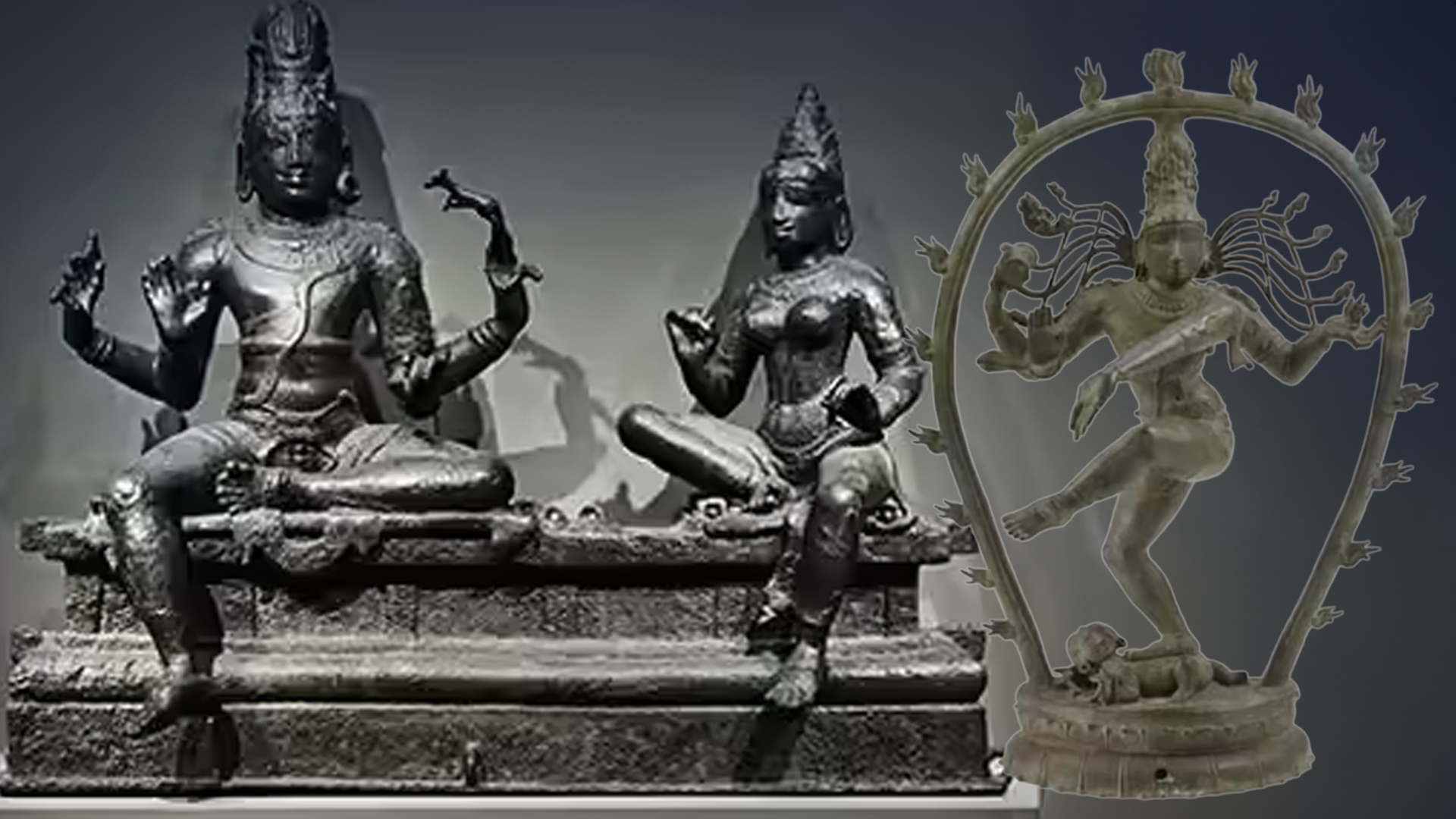
After decades far from home, three ancient bronze sculptures that once belonged to temples in Tamil Nadu are set to return to India. The Smithsonian’s National Museum of Asian Art in the United States has announced it will repatriate the artefacts after confirming they were illegally removed from their original temple settings.

The decision follows detailed provenance research by the museum, which traced the sculptures’ history through old photographs, records and archival material. This investigation revealed that the bronzes were documented in South Indian temples during the 1950s, long before they appeared in the international art market.

The sculptures include a Chola-era Shiva Nataraja dating back to around 990 CE, a Somaskanda bronze from the 12th century, and a 16th-century Vijayanagar-period sculpture of Saint Sundarar with his consort Paravai. All three are important not just as works of art, but as sacred icons that were once central to temple worship and religious processions.

Experts say these bronzes represent the height of South India’s metal-casting tradition, known for its spiritual symbolism and technical mastery. Their removal from temples deprived local communities of living heritage that had been part of daily ritual life for centuries.

The museum’s findings were supported by photographs from the French Institute of Pondicherry, which clearly showed the sculptures in their original temple locations. The Archaeological Survey of India later reviewed the evidence and confirmed that the artefacts had been taken out of the country in violation of Indian law.

Under the agreement, two sculptures will be fully returned to India, while the Shiva Nataraja will remain at the Smithsonian on a long-term loan, with India’s consent. The museum plans to display it along with clear information about its journey,  from a Tamil Nadu temple to the US, and now back under Indian ownership.

Also Read: IAF battles forest fires in Lohit valley, Arunachal

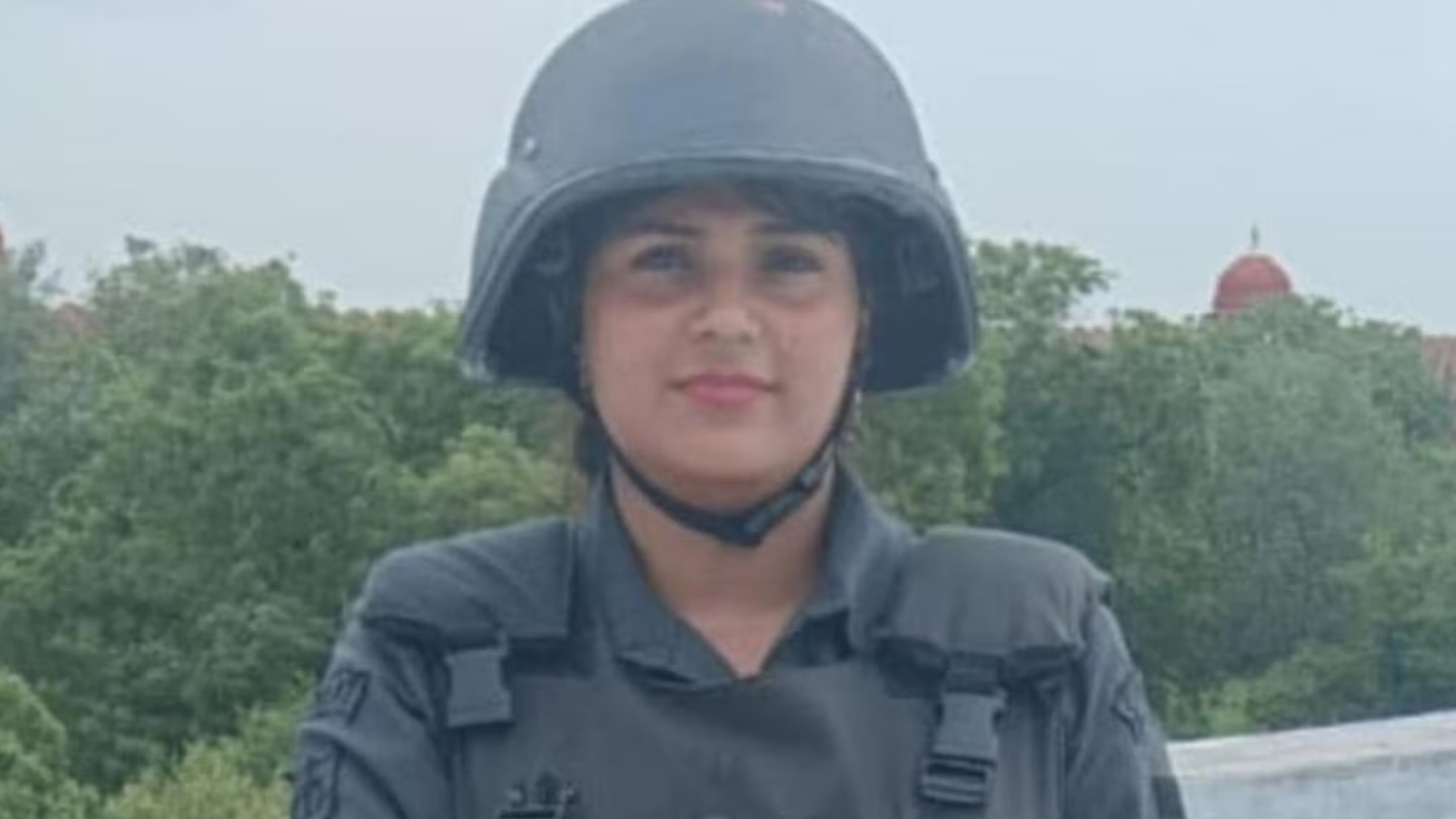
Delhi SWAT officer killed by husband

27-year-old Kajal Chaudhary dies after alleged dumbbell assault by husband

A tragic case of domestic violence has shaken the capital. Kajal Chaudhary, a 27-year-old Delhi Police SWAT officer, died after being brutally attacked by her husband at their home in Mohan Garden, southwest Delhi.

According to police, Kajal was hit repeatedly on the head with a dumbbell by her husband, Ankur, leaving her with critical injuries. She was on the phone with her brother, a Delhi Police constable, when the assault began. Nikhil reportedly heard her screams and later received a call from Ankur saying, “She is dead, come to the hospital.”

Kajal was rushed to hospital but succumbed to her injuries on January 27, five days after the attack. The couple has a young son.

Police have arrested Ankur, who works as a clerk in the Ministry of Defence. Investigations are ongoing to determine whether disputes over finances or dowry harassment played a role in the attack.

This case has drawn widespread attention due to Kajal’s role as a trained law enforcement officer and underscores the persistent threat of domestic violence, even within police families.

Also Read: Ajit Pawar’s death spurs NCP reunion talks

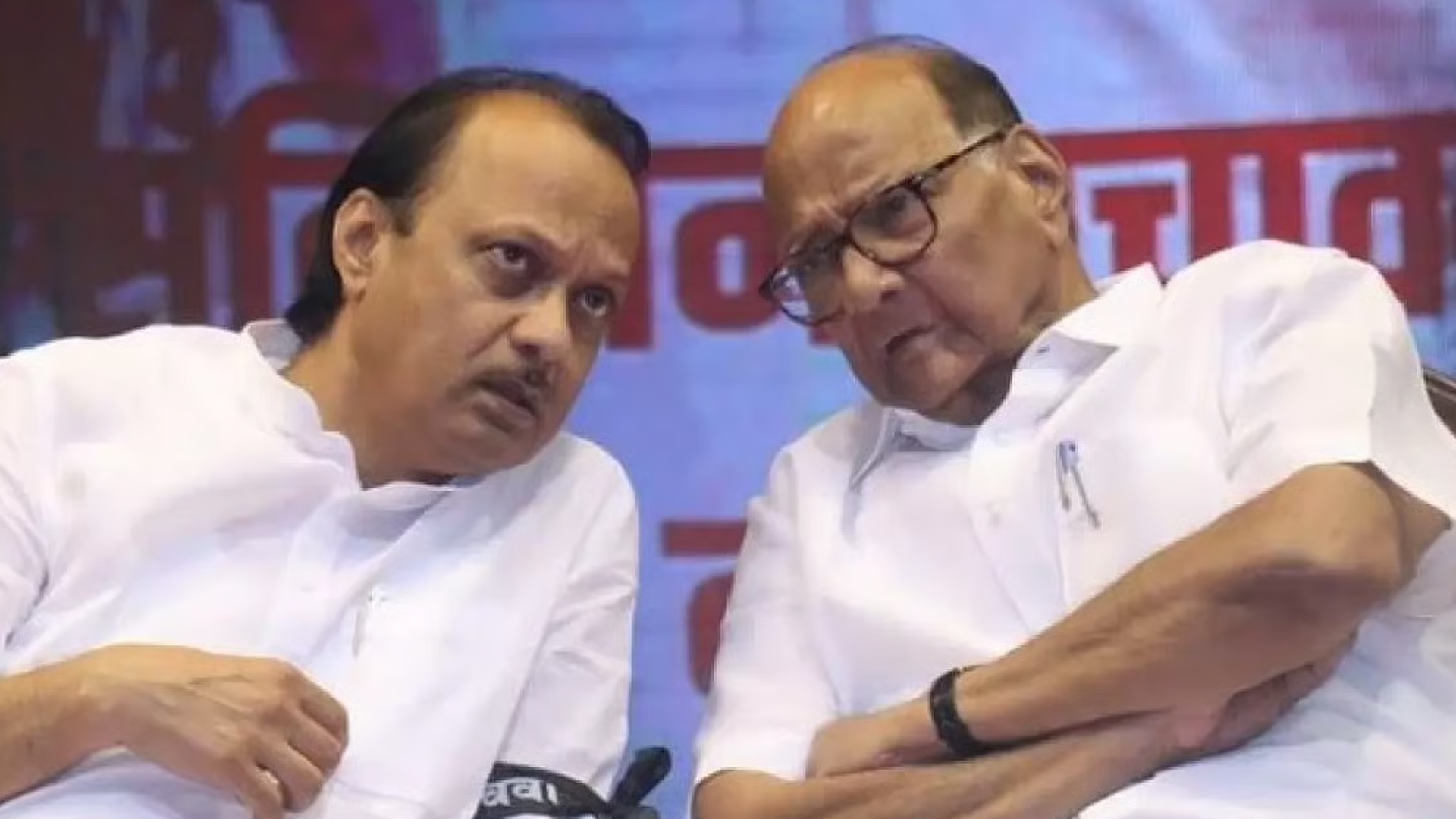
Ajit Pawar’s death spurs NCP reunion talks

Maharashtra politics sees urgent realignments as Sharad Pawar may step forward to reunite factions

Maharashtra’s political scene has been jolted by the sudden death of Deputy Chief Minister Ajit Pawar, who died in a plane crash near Baramati Airport on January 28, 2026. The crash, which occurred during a second landing attempt in poor visibility, also claimed the lives of four others traveling with him.

Ajit Pawar’s passing has created a leadership gap in the state government and within his NCP faction, which controlled key portfolios including finance and excise. Talks are underway on a cabinet reshuffle, with Chief Minister Devendra Fadnavis expected to temporarily oversee the portfolios. Senior party leaders like Dilip Walse Patil and Jayant Patil are being considered to fill the void.

Before his death, Ajit Pawar had been actively working to reunite the two factions of the NCP—his own and the Sharad Pawar-led group. He reportedly envisioned the merger as a personal “gift” to his uncle and party founder, Sharad Pawar, aiming to formalize it around the latter’s birthday in December. Meetings were held in mid-January to negotiate terms, with plans to contest local body elections jointly and complete the unification afterward.

A close aide revealed that Ajit Pawar was fully committed to the merger, indicating that significant progress had been made just days before the crash. The factions had already shown signs of cooperation during recent civic polls, hinting at smoother reconciliation ahead.

In the wake of the tragedy, Sharad Pawar may take a more active role in guiding the party and ensuring stability in Maharashtra’s political landscape. Observers suggest his involvement could shape the merger’s outcome and the NCP’s future strategy within both state and national politics.

Condolences poured in from across the country, including a resolution in the Uttar Pradesh cabinet honoring Pawar’s public service. Meanwhile, discussions continue over the party’s leadership and the future of its position in the ruling coalition, as Maharashtra navigates this sudden and sensitive transition.

Also Read: Baramati crash probe fast-tracked