rotating globe
6 Apr 2026


CISA Chief under review for ChatGPT file uploads

Acting CISA director shared sensitive government documents on public AI, prompting internal cybersecurity probe

Madhu Gottumukkala, acting head of the US Cybersecurity and Infrastructure Security Agency (CISA), is under review after uploading sensitive government files to the public version of ChatGPT. While the documents were not classified, they were marked “for official use only,” meaning they contained sensitive information not meant for public access.

Gottumukkala, an Indian‑origin cybersecurity expert appointed as interim CISA director in May 2025, received special permission to use ChatGPT for work purposes. At the time, the AI tool was blocked for most Department of Homeland Security (DHS) employees due to security concerns.

The files he uploaded were related to government contracts. Because public ChatGPT inputs can be used to train its AI and improve responses, the uploads triggered automated cybersecurity alerts within CISA. These alerts prompted an internal review to assess whether the data sharing posed any security risks. The results of this review have not been made public.

CISA’s Public Affairs Director, Marci McCarthy, stated that Gottumukkala’s ChatGPT access was controlled, temporary, and intended to help explore AI for government use. She emphasized that the agency is following guidelines set under President Donald Trump’s executive order to encourage AI innovation in federal work.

Internal emails indicate that Gottumukkala last used ChatGPT in mid‑July 2025 under this temporary exception. The tool remains blocked for most DHS staff unless special permission is granted.

Gottumukkala, who holds advanced degrees in information systems and computer science, continues to lead CISA as the agency assesses the incident and its potential impact on cybersecurity policies.

Also Read: Economic Survey 2026 sees 7.4% GDP growth

Ajit Pawar’s funeral with state honours

Union Minister Amit Shah, family, and thousands attend funeral. State declares three days of mourning

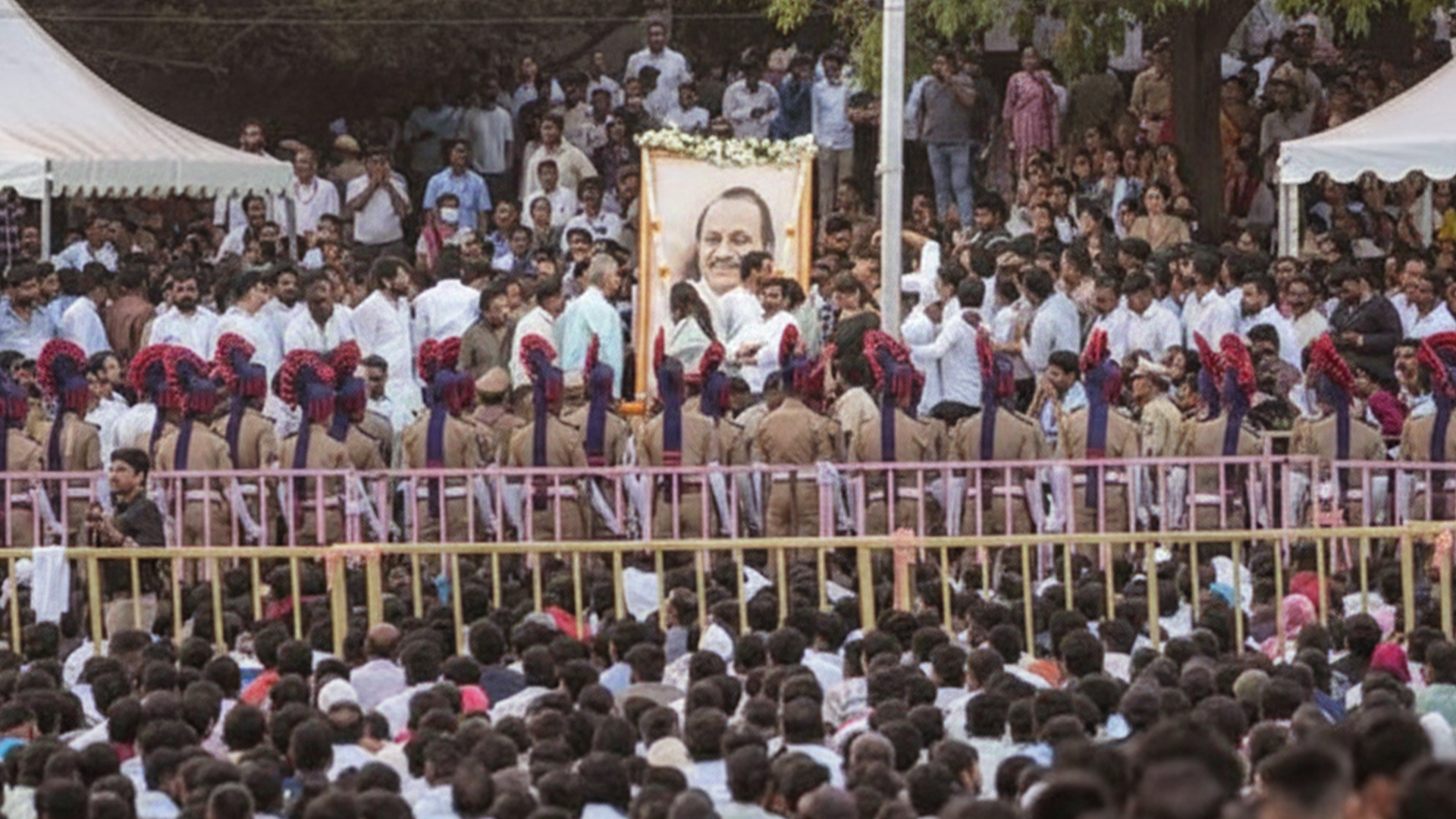
Maharashtra Deputy Chief Minister Ajit Pawar’s funeral was held on 29 January 2026 at the Vidya Pratisthan sports ground in Baramati with full state honours. The ceremony was attended by  Union Home Minister Amit Shah, Maharashtra Chief Minister Devendra Fadnavis, Deputy CM Eknath Shinde, and other senior political leaders.

Family members present included Pawar’s wife Sunetra Pawar, sons Parth and Jay Pawar, uncle Sharad Pawar, cousin Supriya Sule, and nephew Rohit Pawar. Thousands of supporters, party workers, and local residents also joined, many chanting slogans to pay their respects. Authorities had to adjust the procession route to manage the large crowd. The state declared three days of mourning, and flags were flown at half-mast across Maharashtra to honour the late deputy CM.

Maharashtra Deputy Chief Minister Ajit Pawar, 66, died on 28 January 2026 when his chartered plane crashed while landing at Baramati Airport. The aircraft, flying from Mumbai to Baramati for election work, fell short of the runway and caught fire. All five people on board, Pawar, two staff members, and two crew,  lost their lives.

The DGCA confirmed there were no survivors. Early flight data showed the plane went silent at around 8:43 am, marking the time of the crash. The Aircraft Accident Investigation Bureau (AAIB) has launched a full investigation to determine the cause of the accident, including examination of the black boxes.

Political leaders from across parties described Pawar’s death as a huge loss for Maharashtra. Known for his administrative experience, leadership skills, and influence in Western Maharashtra, he played a key role in state governance and politics. His passing leaves a significant void in both the state’s political leadership and public life.

The massive turnout at the funeral and emotional tributes from supporters highlighted Pawar’s popularity and decades-long impact on Maharashtra politics. Authorities continue to investigate the crash to understand the circumstances behind this tragic incident.

Also Read: Maharashtra Deputy CM Ajit Pawar dies in plane crash

India’s industrial growth up 7.8%

Manufacturing, mining, and electricity power the fastest industrial expansion since 2023

India’s industrial sector ended 2025 on a high note, with output rising 7.8% in December, the fastest pace in over two years. The surge highlights a strong revival in factories, power plants, and mines, signaling a resilient industrial momentum as the economy moves into 2026.

Manufacturing, which makes up the largest share of industrial activity, led the charge with 8.1% growth. Electronics, optical products, and motor vehicles recorded notable gains, reflecting healthy domestic demand and a pickup in production after earlier slowdowns.

Mining output climbed 6.8%, while electricity generation rebounded with a 6.3% increase, reversing November’s decline. Analysts note that the combined strength across these key sectors shows that India’s industrial base is broadening and not reliant on one segment alone.

On a use-based level, infrastructure and construction goods were the top performers, supported by growth in consumer durables, capital goods, and intermediate products. This mix points to steady investment activity alongside consumer-driven demand.

Compared to November’s 7.2% growth, December’s numbers reveal a clear acceleration in industrial production, boosting optimism for early 2026. Still, cumulative growth for the April–December period remains slightly lower than the previous year, reflecting uneven activity earlier in 2025.

Economists see December’s strong numbers as a positive indicator for the broader economy. With factories humming, power production rising, and mining activity picking up, India appears poised to maintain its industrial momentum, which could support jobs, investments, and economic growth in the months ahead.

Also Read: Jessica Pegula qualifies for Australian Open semi-final

Meta tests paid features on all its apps

New subscriptions for Instagram, Facebook, WhatsApp may bring AI tools and extra creative features

Meta Platforms is gearing up to test premium subscription plans across its flagship apps, Instagram, Facebook, and WhatsApp. The idea is simple: the core apps remain free, but users who want extra features and AI-powered tools could pay a monthly fee.

For Instagram, the potential premium perks are particularly focused on creators and power users. Subscribers may gain advanced audience insights, see which accounts follow them back, and even view Stories without notifying the poster. Enhanced AI features could help users create content faster, design videos, or manage posts more effectively. Some AI-powered tools, which are currently free, might shift to a freemium model, giving paying users access to more advanced capabilities.

Details for Facebook and WhatsApp are less specific, but Meta says subscriptions could offer productivity, messaging, and content creation benefits. For example, WhatsApp could introduce tools useful for professionals, groups, and community managers—like scheduling messages, managing contacts, or organizing chats more efficiently.

These subscriptions are separate from Meta Verified, the company’s existing paid service aimed at identity verification, support, and protection for creators. Meta plans to apply insights from Verified to help shape its broader premium offerings, balancing new features with the free apps millions already rely on.

Meta will test these subscriptions gradually, monitoring user feedback and adjusting offerings before any wider rollout. Pricing, launch dates, and regions for the tests haven’t been revealed yet.

Also Read: Sonamarg avalanche engulfs resort, no casualities

WhatsApp launches strict account settings

New securiity mode helps users block unknown messages, calls, and risky links

WhatsApp has rolled out a new security feature called Strict Account Settings, aimed at giving users an extra layer of protection against cyber threats. The feature is being introduced gradually for both Android and iOS users and is particularly useful for those who are at higher risk of targeted attacks, including journalists, activists, and public figures.

The new mode automatically applies the strictest privacy and security controls on a user’s account. When activated, it limits who can send messages, share media, or make calls. Messages and calls from unknown contacts are blocked or restricted, reducing the chances of users being targeted by spam, scams, or phishing attempts. Additionally, the feature helps prevent the sharing of potentially harmful links by disabling link previews from unknown senders.

WhatsApp has emphasized that the Strict Account Settings feature is optional and can be enabled by users who want tighter security. To activate it, users need to navigate to Settings > Privacy > Advanced and switch on the new mode once it becomes available. WhatsApp has stated that while end-to-end encryption already protects user chats, this feature adds an extra safeguard by controlling interactions with unknown contacts and preventing malicious content from reaching the user.

The messaging platform has been increasingly focusing on cybersecurity in recent years, responding to growing concerns about online harassment, hacking, and scams. This rollout is part of WhatsApp’s wider effort to strengthen privacy and ensure that users have more control over their digital interactions.

Experts suggest that such features can help reduce incidents of cybercrime, especially for high-profile individuals who are more likely to face targeted attacks. For general users, it offers peace of mind by limiting unwanted interactions and providing a safer messaging environment.

Also Read: Meta tests paid features on all its apps

Nipah virus outbreak triggers airport alerts across Asia

Limited West Bengal cases prompt Asian countries to screen travellers for safety

A Nipah virus outbreak in India’s West Bengal has prompted heightened health screenings at airports and border points across Asia, though Indian authorities say the situation is under control.

Indian health officials confirmed two laboratory‑verified cases since December, with 196 close contacts traced and tested — all negative and symptom-free. Nipah is a zoonotic virus that can spread from animals like fruit bats or pigs to humans, and in rare cases between people through close contact or contaminated food. There is no approved vaccine or specific treatment, and the fatality rate ranges from 40% to 75%, according to the WHO.

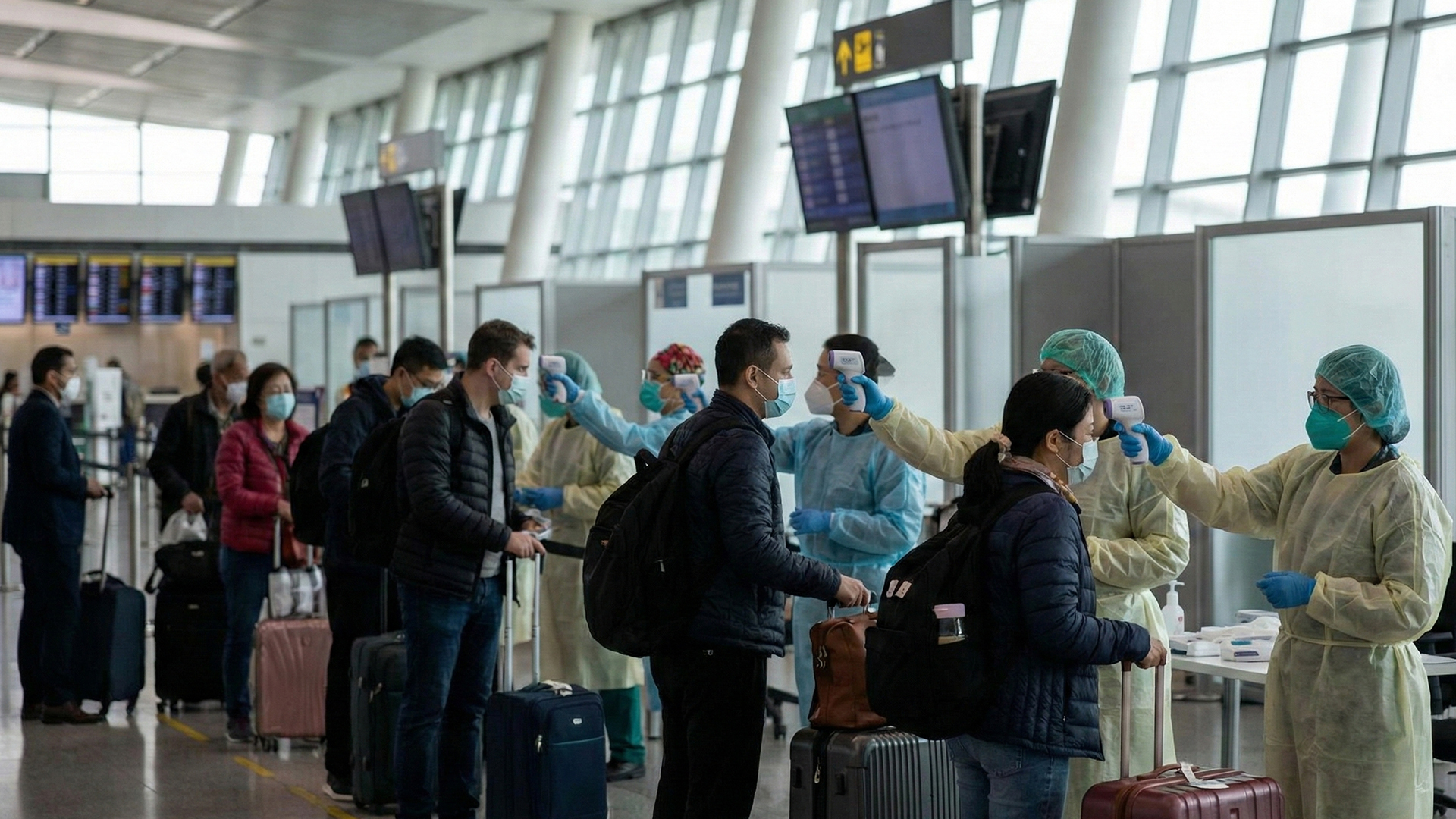
To prevent cross-border spread, Thailand, Nepal, and Taiwan have introduced precautionary airport screenings, including temperature checks, symptom observation, and health declaration forms for travellers arriving from West Bengal.

In Thailand, major international airports such as Suvarnabhumi, Don Mueang, and Phuket are monitoring incoming passengers, though no domestic Nipah cases have been detected. Health advisory cards are also distributed for symptom awareness.

Nepal has set up health desks at Kathmandu airport and key land borders, while Taiwan is reinforcing surveillance and considering making Nipah a notifiable disease.

Experts note that Nipah’s transmission requires close contact, unlike airborne viruses like COVID‑19, reducing in-flight transmission risk but making early detection and isolation crucial.

Indian authorities continue to emphasise that the outbreak is limited, with surveillance and containment measures focused on preventing wider community spread.

Also Read: Shashi Tharoor denies CPI(M) links, confirms talks

Jessica Pegula qualifies for Australian Open semi-final

American star sets up last-four clash with Elena Rybakina after straight-sets quarter-final win

American tennis star Jessica Pegula stormed into the 2026 Australian Open women’s singles semi-finals with a commanding 6‑2, 7‑6 (7‑1) victory over compatriot Amanda Anisimova on Wednesday at Melbourne Park. Hailing from Buffalo, New York, Pegula continues to make her mark on the Grand Slam stage, now reaching the semi-finals at Melbourne for the first time in her career.

The sixth-seeded Pegula set the tone early, breaking Anisimova’s serve and racing to a 5‑1 lead in the opening set. Her strong baseline game and precise serving, including six aces, helped her close the set in about 30 minutes. Anisimova, the fourth seed, struggled with consistency, committing 44 unforced errors against Pegula’s 21.

The second set was tighter, with both players holding serve until the tiebreak. Pegula dominated the decider, sealing the match and denying Anisimova a chance to push it to a third set. After the loss, Anisimova acknowledged Pegula’s steadiness as the key factor.

Pegula now faces fifth-seeded Elena Rybakina of Kazakhstan in Thursday’s semi-final. Rybakina advanced by defeating world No. 2 Iga Swiatek 7‑5, 6‑1, preventing a career Grand Slam for the Pole in Melbourne.

With her confidence high and hard-court game firing on all cylinders, Pegula will aim to reach her first Grand Slam final.

Also Read: WhatsApp launches lockdown-style security mode

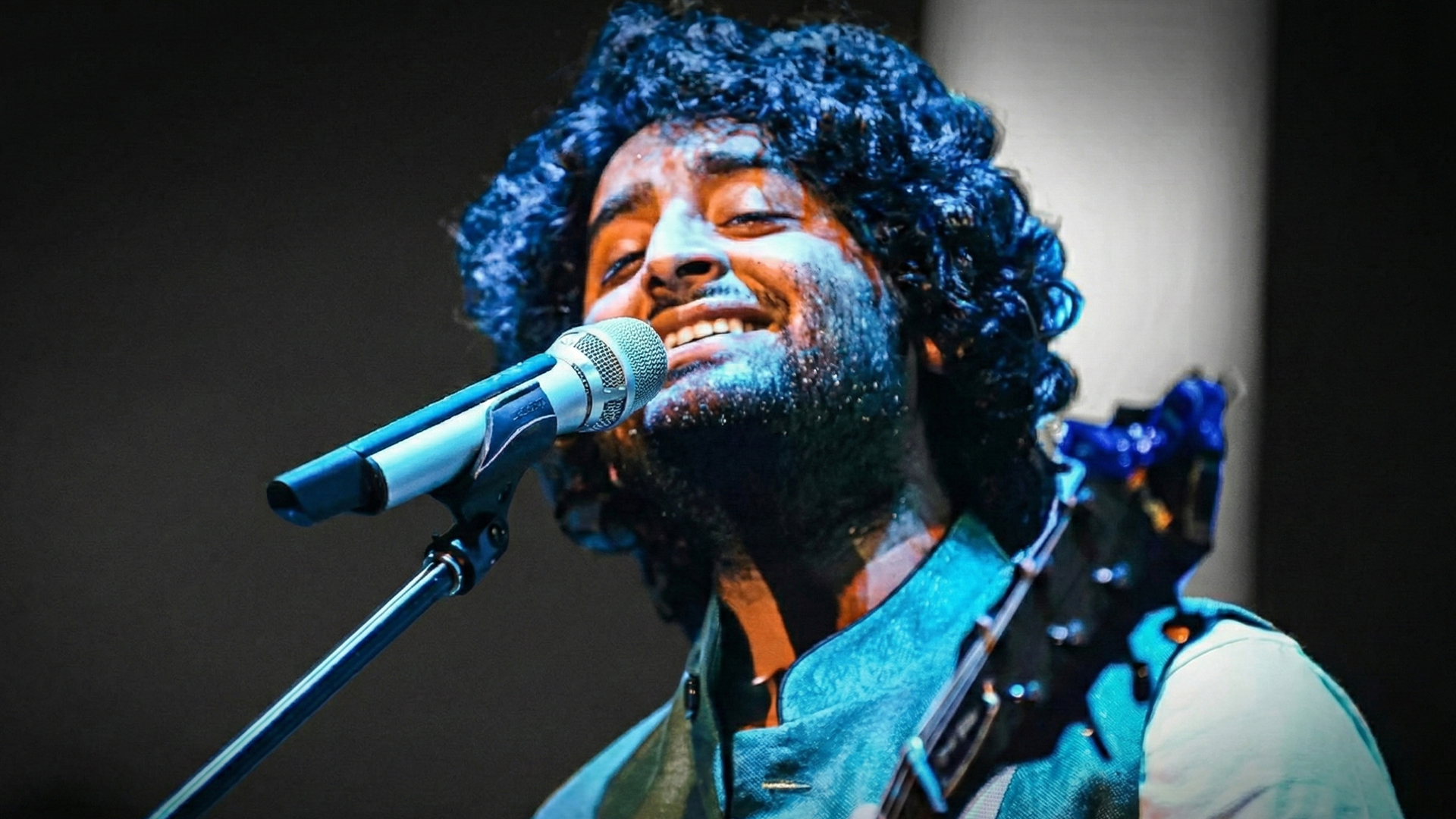
Arijit Singh retires from playback singing

Reknown singer exits film music at peak, eyes direction and independent projects

For over a decade, Arijit Singh’s voice has been the sound of love, heartbreak, hope, and healing for millions. From late-night playlists to wedding aisles and long solo drives, his songs became emotional companions across generations. That is why his decision to step away from Bollywood playback singing at the very peak of his career, has struck a deeply personal chord with fans.

According to reports, Arijit Singh has chosen to take a year-long break from film singing, signalling not an exit from music, but a pause from the relentless rhythm of the industry. Those close to the singer say the decision comes from a place of creative introspection rather than burnout, with Singh keen to explore new forms of expression, including independent music and possibly film direction.

Arijit’s journey has never been about overnight success. Raised in a musically inclined family in Jiaganj, West Bengal, he trained rigorously in classical music. The public first noticed him during Fame Gurukul in 2005, but fame did not arrive immediately. He spent years working quietly as a music programmer before destiny intervened in 2013 with Tum Hi Ho from Aashiqui 2, a song that didn’t just top charts, but rewrote the soundscape of Hindi cinema.

What followed was extraordinary. Song after song—Channa Mereya, Agar Tum Saath Ho, Phir Le Aaya Dil, Kesariya, Shayad, cemented Arijit as the emotional voice of a generation. He collected National Awards, Filmfares, global streaming milestones, and sold-out concerts worldwide. Yet, despite unmatched success, he remained famously grounded, often shying away from glamour and public attention.

In past interviews, Singh has spoken candidly about the pressure of repetition, the fear of losing authenticity, and the need to protect one’s inner artist. His current decision reflects that philosophy, choosing depth over volume, and meaning over momentum.

While fans may miss hearing his voice in new film releases, there is comfort in knowing this is not a goodbye. As Arijit Singh steps back to listen to his own silence, the music world waits patiently, knowing that when he returns, it will be on his own terms and with something honest to say.

Also Read: India tops in landmark EU trade deal