rotating globe
9 Apr 2026


Bill Gates meets Andhra Pradesh leaders

Microsoft co‑founder reviews digital governance, AI, and public health initiatives with state officials

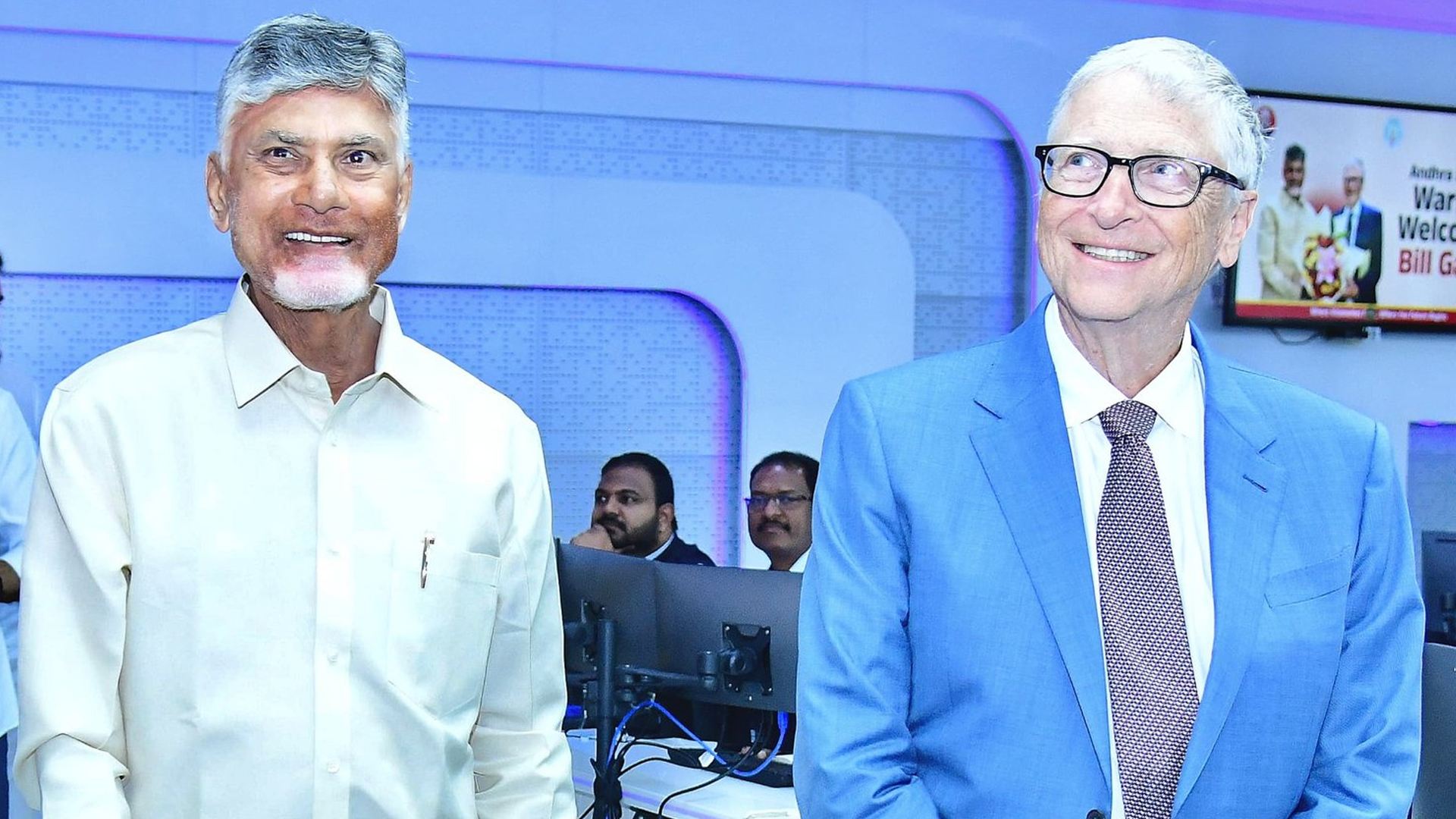
Microsoft co‑founder Bill Gates visited Andhra Pradesh on Monday to discuss expanding technology‑driven collaborations in governance, public health, and development. Gates met Chief Minister N. Chandrababu Naidu, Deputy Chief Minister Pawan Kalyan, and other senior officials at the State Secretariat after being received at Gannavaram Airport by State Minister Nara Lokesh.

During the meeting, Gates reviewed Andhra Pradesh’s digital governance initiatives, including the Real Time Governance Society (RTGS), Data Lake, AWARE 2.0, and WhatsApp Governance platforms. These systems integrate data from multiple departments to improve citizen services, enhance transparency, and support informed decision‑making. Gates appreciated the state’s efforts in adopting cutting‑edge technology to make governance more efficient and citizen‑friendly.

The discussion also focused on public health initiatives. Gates was briefed on the Sanjeevani health project in Chittoor district, a partnership with the Gates Foundation that uses digital health records and diagnostic tools to improve healthcare delivery. He reviewed progress and expressed interest in expanding such projects across the state.

Beyond governance and health, Gates explored applications of artificial intelligence (AI) and data analytics in improving public services. He will also witness technology‑enabled farming practices near Undavalli village, including drone-assisted agriculture and AI-based monitoring, highlighting the state’s push for modernizing agriculture.

Chief Minister Naidu shared the government’s “Swarna Andhra 2047” vision, which emphasizes technology adoption, educational reforms, health system strengthening, and innovation-led growth. Gates’ visit underscores the potential for long-term partnerships between the Gates Foundation and Andhra Pradesh to harness technology, AI, and health innovations for inclusive development.

Also Read: 7 dead in Rajasthan chemical factory fire

SC flags translation row in Sonam Wangchuk case

Court questions mismatch in speech transcript used for NSA detention; seeks original records and complete video evidence

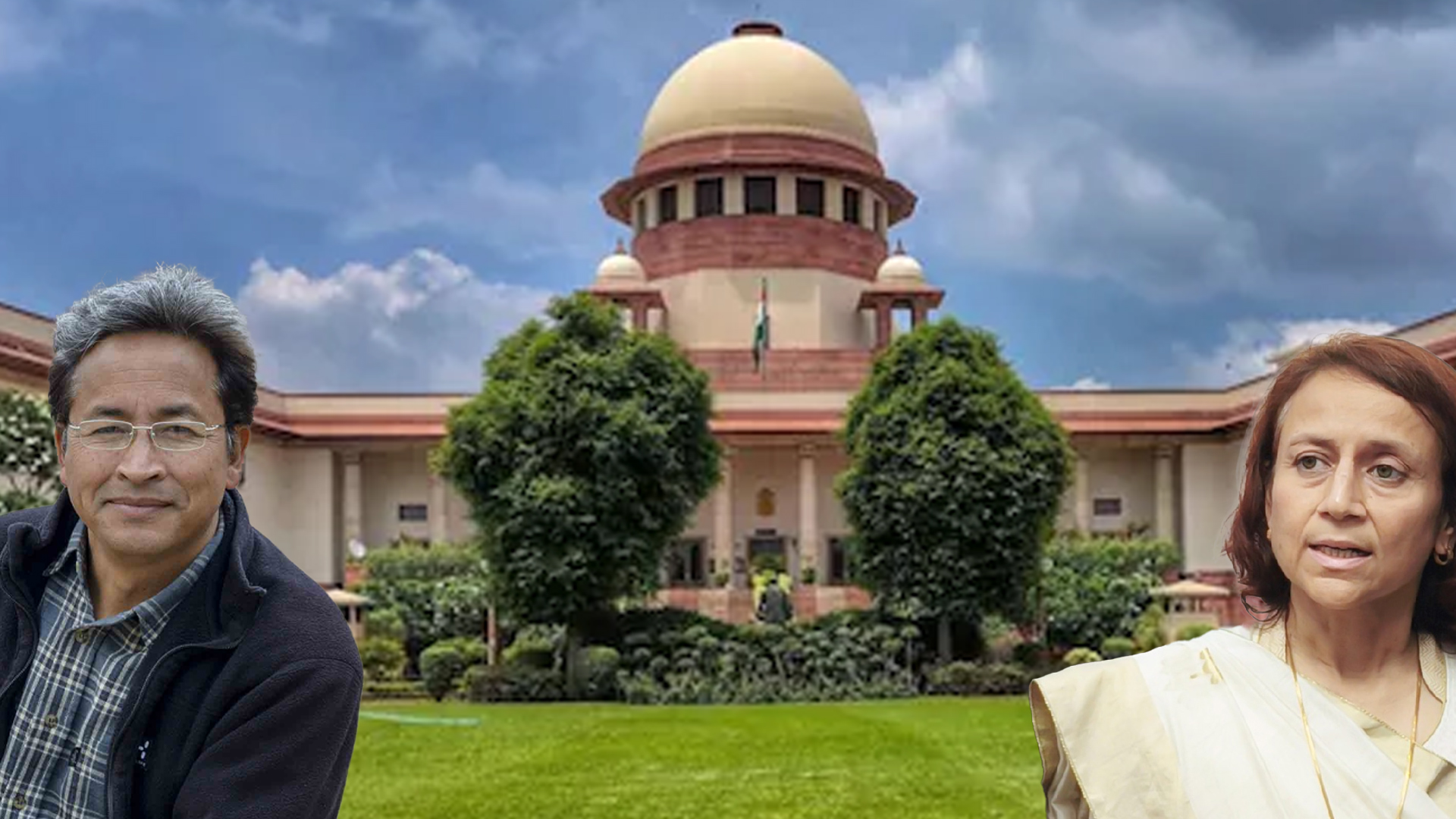
The SC on Monday expressed strong concern over what it called an inaccurate translation of activist Sonam Wangchuk’s speech, which forms a key basis for his detention under the National Security Act (NSA). The court made it clear that when personal liberty is at stake, the material placed before judges must be reliable and precise.

Hearing a habeas corpus plea filed by Wangchuk’s wife challenging his detention, a bench of Supreme Court of India justices pointed to a striking inconsistency. A speech that originally lasted about three minutes had been presented in translation as a much longer address. The judges said that in today’s technology-driven world, where tools for accurate transcription and translation are easily available, even small errors can have serious consequences.

“The least we expect is a correct translation,” the bench observed, underlining that the accuracy of evidence becomes even more critical in preventive detention cases.

Senior advocate Kapil Sibal, appearing for Wangchuk, argued that the translated version attributed several statements to the activist that he had never made. According to the defence, Wangchuk’s speech called for peace and non-violence, but the version submitted by the authorities projected it as provocative. Sibal said such discrepancies go to the root of the detention order.

The Centre, however, maintained that the translation had been prepared by a competent department and said that in the age of artificial intelligence, such processes are generally dependable. The court responded that technology cannot be a substitute for accuracy and accountability.

The bench also took note of the allegation that some of the videos cited in the detention order were missing from a pen drive provided to Wangchuk in jail. It directed authorities to secure and produce the device to ensure that all material relied upon by the government is available for scrutiny.

While the Centre has described Wangchuk as a key instigator in the Leh unrest last year, the petitioner has insisted that he has consistently advocated peaceful protest.

Also Read: AI for all, PM Modi maps India’s plan


7 dead in Rajasthan chemical factory fire

Tragedy at chemical unit in Bhiwadi's Khushkhera-Karoli industrial hub. Leaders express condolences as emergency teams battle flames

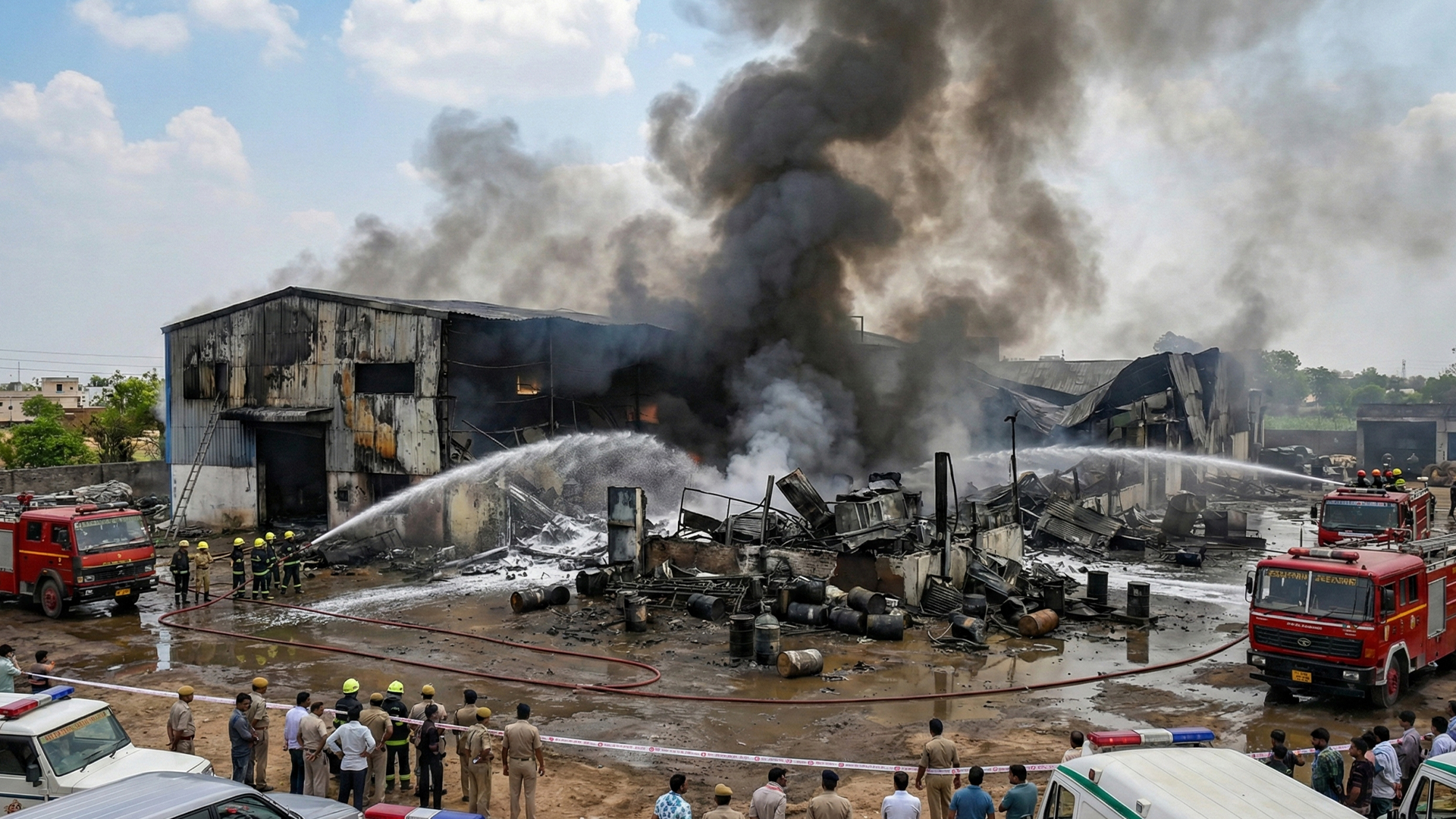
A major fire erupted at a chemical factory in the Khushkhera-Karoli industrial area of Bhiwadi, Rajasthan, on Monday morning, killing seven workers and leaving others trapped, officials confirmed. The blaze started around 9:30 am, quickly engulfing the facility and prompting an urgent rescue and firefighting operation.

Authorities said 20–25 workers were inside the factory when the fire broke out. Some managed to escape, while seven were found dead, and two remain trapped as emergency teams continue search efforts. Officials noted that the storage of combustible materials inside the unit may have worsened the fire, making containment difficult.

The district administration has ordered a detailed investigation to determine the cause and assess whether safety regulations were followed. Local fire brigades and police worked together to control the flames and evacuate the workers.

Expressing grief over the incident, Vice President C.P. Radhakrishnan extended condolences to the families of the deceased and prayed for the recovery of those injured. Prime Minister Narendra Modi also described the incident as tragic and deeply saddening, offering sympathies to the victims’ families.

The Rajasthan government has directed officials to ensure swift rescue operations and provide relief to the affected families. As investigations continue, authorities are examining potential safety lapses at the factory to prevent future tragedies.

The fire has sent shockwaves through the industrial hub of Bhiwadi, highlighting the need for stringent industrial safety measures, especially in units handling hazardous chemicals.

Rescue teams remain on site, and officials are urging anyone with information about missing workers to come forward.

Also Read: China expands secret nuclear sites in Sichuan

India scripts emphatic 61-run win over Pakistan

Ishan Kishan’s explosive knock and disciplined bowling seal one-sided win in Colombo

India registered a comprehensive 61-run victory over Pakistan in a high-profile Group A match of the ICC Men’s T20 World Cup in Colombo on Saturday, riding on a fluent half-century from Ishan Kishan and a disciplined effort from their bowlers.

Batting first, India posted 175 for 7 after being put in. Ishan  Kishan anchored the innings with a stroke-filled 77 off 40 balls, striking boundaries at regular intervals and maintaining the tempo through the middle overs. He found support from the middle order, which added useful runs in the closing stages to push the total well beyond the 170-mark.

Pakistan’s chase got off to a shaky start as Jasprit Bumrah struck early to remove the top-order batters. The early setbacks meant the required run rate kept climbing, forcing Pakistan into risky strokes. Hardik Pandya then delivered crucial breakthroughs to prevent any recovery, while wrist spinner Kuldeep Yadav controlled the middle overs with tight lines and key wickets.

Despite the collapse around him, Usman Khan offered some resistance with a fighting 44, but lacked support from the other end as Pakistan were bowled out for 114 in 18 overs. India’s sharp fielding further added to the pressure, converting half-chances into wickets and saving valuable runs.

Ishan Kishan was named Player of the Match for his match-defining innings that laid the foundation for India’s victory.

The win ensured India’s qualification for the Super 8 stage and extended their dominant record against Pakistan in T20 World Cup encounters. Pakistan, on the other hand, now face a must-win situation in their remaining group fixture to stay in contention.

Also Read: India AI Summit hosts leaders, tech, talent

Shashi Tharoor applauds Priyanka Chopra at Harvard

Actor receives heartfelt appreciation from the Congress MP; Chopra responds with gratitude and admiration

At the Harvard India Conference 2026, senior Congress leader Shashi Tharoor and actress‑producer Priyanka Chopra Jonas shared a warm backstage reunion after more than a decade. The event, held at Harvard University, brings together global leaders, policymakers, and cultural icons to discuss India’s influence in the world.

Tharoor posted pictures of the meeting on X (formerly Twitter), describing Chopra as “remarkable” and praising her for making India proud on a stage where few Indians get the opportunity to appear. He highlighted her poise, confidence, and thoughtful presence, noting it was inspiring to see her shine internationally.

“Caught up with @priyankachopra backstage at @HarvardIndConf,” Tharoor wrote. “She looks stunning, appears perfectly poised, and sounds thoughtful and wise — what’s not to be proud of?”

Chopra, who has built a successful career in both Bollywood and Hollywood, responded warmly to the praise. She thanked Tharoor for attending her keynote session and appreciated his sharp wit and wisdom, adding that she hoped to meet him again soon.

During her keynote, Chopra reflected on her personal journey, discussing how her experiences abroad shaped her independence and identity. Her talk aimed to inspire the student audience, sharing lessons from her career and life while emphasizing the importance of ambition, resilience, and staying connected to one’s roots.

The interaction between Tharoor and Chopra resonated with social media users, highlighting mutual respect between two prominent Indian figures.

This reunion at Harvard celebrated not just past connections but also the shared pride in India’s presence on international stages, with both personalities reflecting excellence, inspiration, and the value of meaningful dialogue.

Also Read: Global pledge of $5 bn to rebuild Gaza

China expands secret nuclear sites in Sichuan

Satellite images reveal new construction and upgrades at hidden facilities, signaling a boost in China’s nuclear capabilities

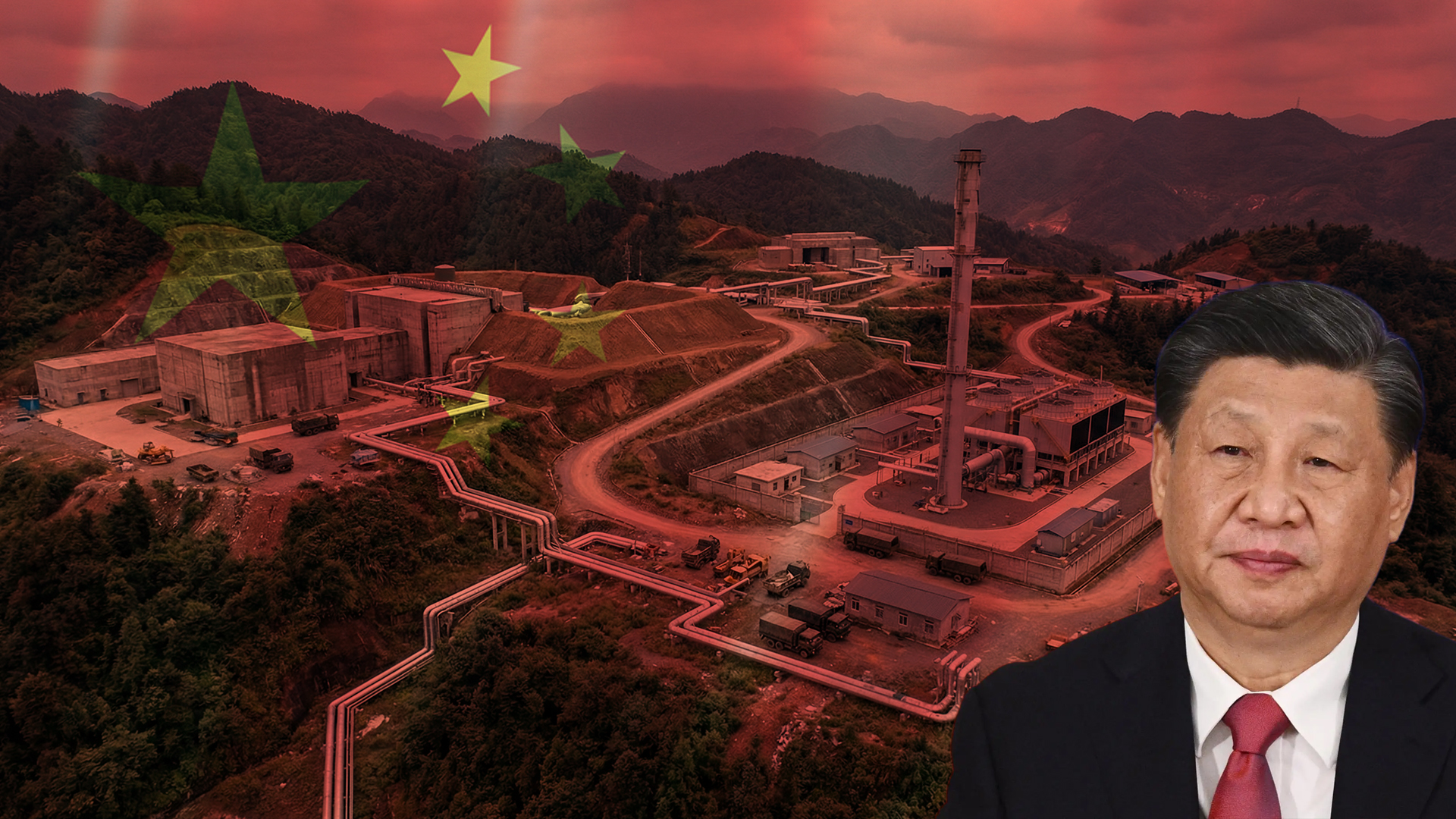
New satellite imagery shows that China is rapidly expanding and modernizing covert nuclear weapons facilities deep in Sichuan Province, raising global concern over its growing arsenal.

Experts analyzing images from 2022–2026 highlight major construction at Zitong and Pingtong, including hardened structures, extensive piping, and large ventilation systems — features consistent with handling plutonium and other nuclear materials. The Pingtong site shows a 360‑foot‑high vent stack, likely part of modernized plutonium pit production.

These developments appear part of a broader acceleration of China’s nuclear program since 2019, updating facilities originally built in the 1960s “Third Front” effort to shield sensitive work. Analysts estimate China could reach over 600 nuclear warheads by 2026, potentially 1,000 by 2030.

Beijing has not explained the purpose of these expansions. The growth comes amid the absence of a global nuclear arms control framework including China, following the expiration of key U.S.-Russia treaties.

While satellite images confirm infrastructure expansion, exact production or testing activity remains unclear, leaving the full scope of China’s nuclear strategy uncertain.

Also Read: Global pledge of $5 bn to rebuild Gaza

Global pledge of $5 bn to rebuild Gaza

Trump-led initiative aims to support humanitarian aid and reconstruction amid ongoing fragile ceasefire

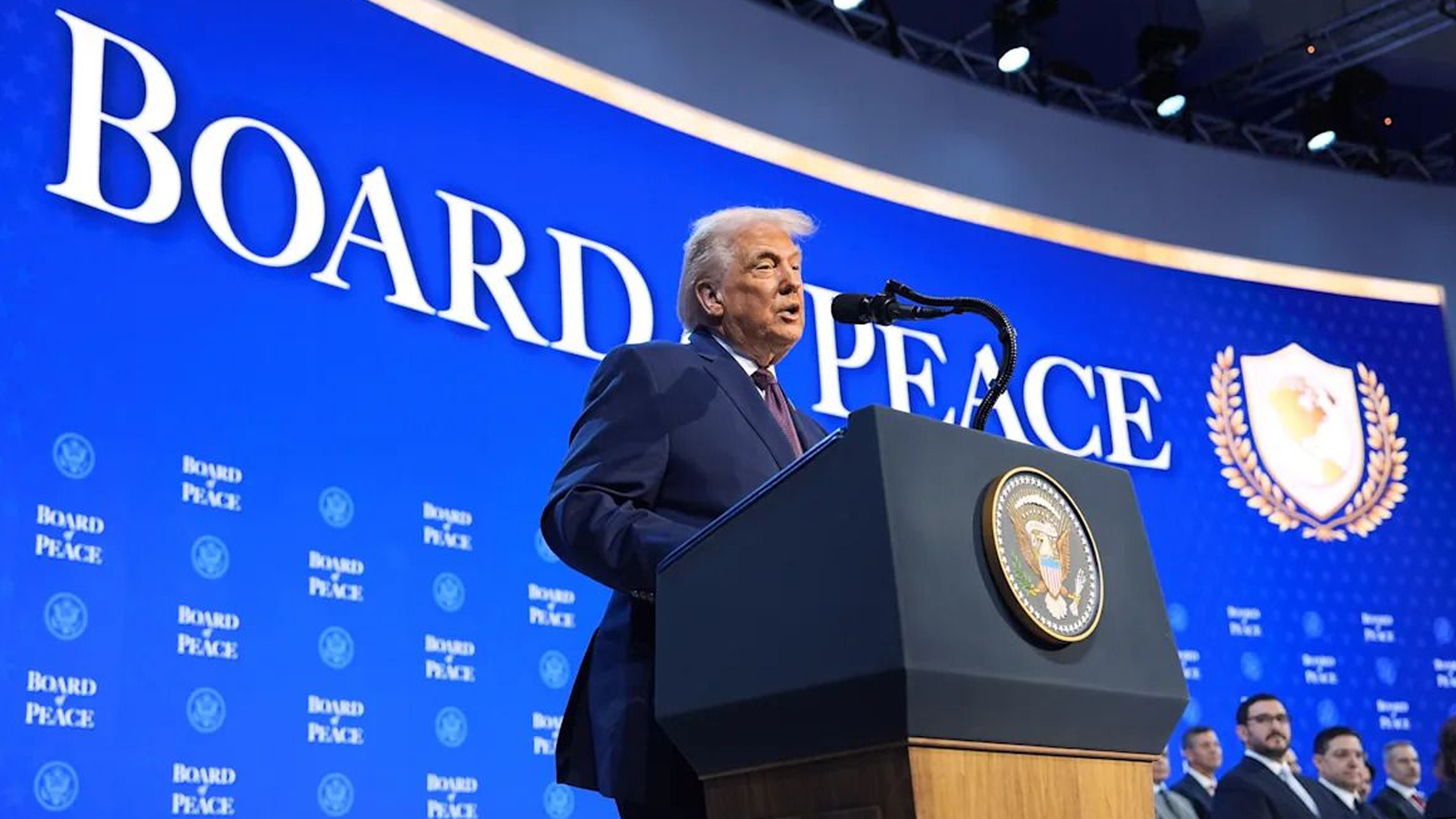
US President Donald Trump has announced that members of the newly formed Board of Peace have pledged more than $5 billion to assist in humanitarian relief and the reconstruction of the Gaza Strip. The pledges are set to be formally revealed at the board’s inaugural meeting on February 19 in Washington, D.C.

Trump, who chairs the Board of Peace, said participating countries have also committed thousands of personnel for an international stabilization force and local policing to help maintain security in Gaza. The initiative is being presented as a framework to accelerate aid and rebuild infrastructure in the conflict-affected region.

The board, created last year under a UN Security Council resolution, includes over 20 countries. Key members are Turkey, Egypt, Saudi Arabia, Qatar, Israel, and Indonesia, among others. While several nations have joined the initiative enthusiastically, some traditional Western allies have been cautious about formal involvement.

Trump described the board as having “unlimited potential” to promote peace and stability not only in Gaza but in other conflict zones worldwide. However, he did not provide a detailed breakdown of which countries contributed funds or will send personnel.

A notable concrete pledge came from Indonesia, whose military indicated it could deploy up to 8,000 troops by June for a humanitarian and peacekeeping mission in Gaza.

The reconstruction requirements in Gaza remain massive, with international estimates putting the total cost at around $70 billion due to extensive damage from more than two years of conflict. While the $5 billion pledge is significant politically, it covers only a fraction of what will be needed to rebuild homes, hospitals, schools, and other essential services.

Also Read: Cotton farmers voice trade deal concerns