rotating globe
9 Apr 2026


Cotton farmers voice trade deal concerns

Leaders and farmer groups warn the pact may hurt growers and exporters

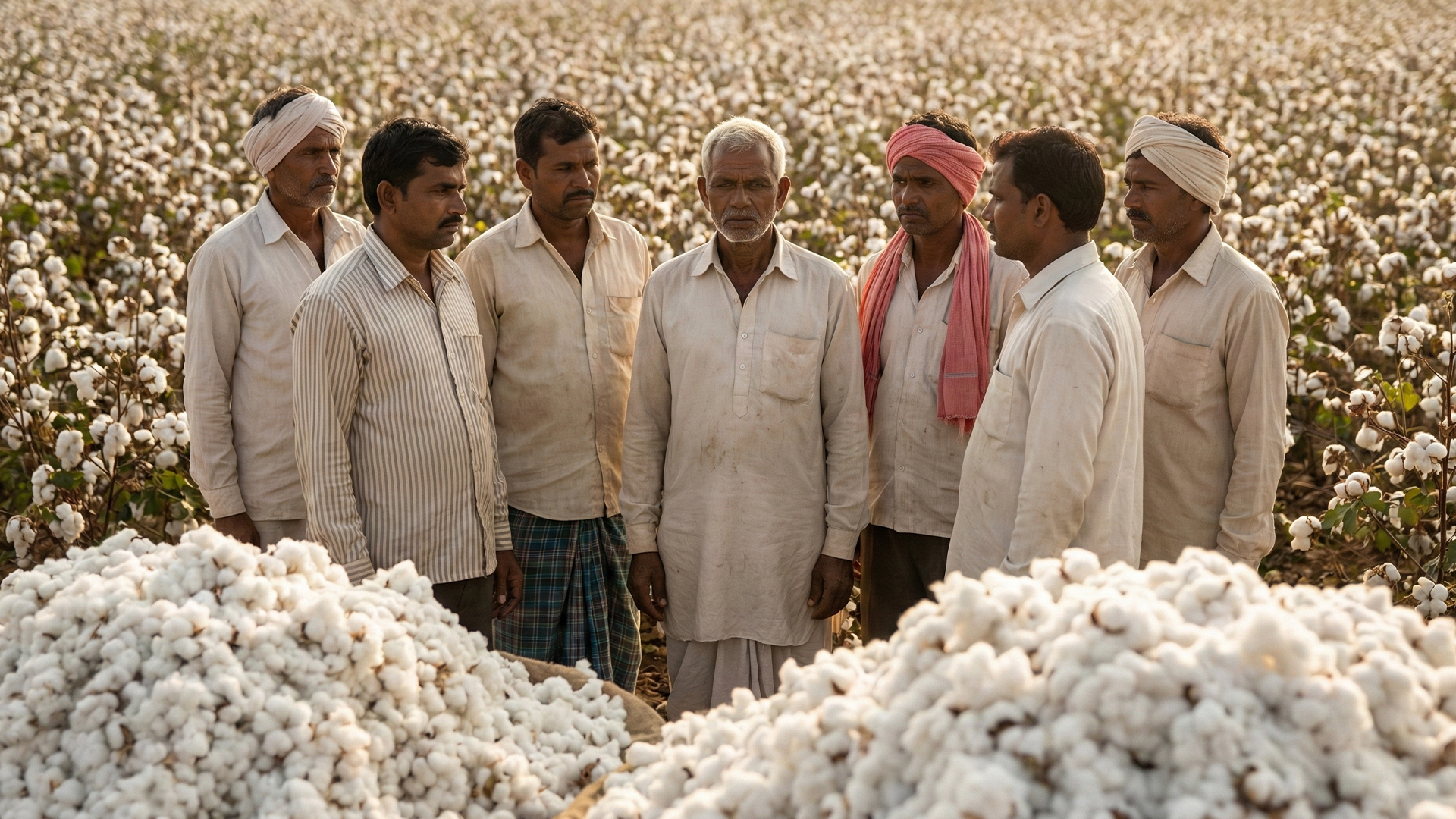
Cotton farmers and textile industry stakeholders in India have raised concerns over the recent India‑US trade framework, fearing it could negatively impact domestic growers and exporters. The deal has sparked debate across political and farming circles, prompting calls for greater transparency from the government.

Congress leader Rahul Gandhi criticised the pact, saying it “cheats cotton farmers and textile exporters.” He highlighted that Indian garments face an 18% tariff in the U.S., while Bangladesh enjoys duty-free access, putting Indian producers at a disadvantage. Gandhi added that importing U.S. cotton could either harm local farmers or weaken India’s textile sector, threatening millions of livelihoods.

Farmer unions have echoed these worries, staging gatherings in states such as Bihar, Haryana, Odisha, Karnataka, and Tamil Nadu. While the demonstrations have been peaceful, organisers emphasised the risks of allowing duty-free imports of subsidised U.S. cotton, which they say could depress domestic prices and reduce rural incomes.

Industry groups also voiced apprehensions about the long-term impact on the textile export sector, calling for a review of the agreement to safeguard Indian manufacturers. Many stressed that even a limited increase in imports could affect the delicate balance of supply and demand in the domestic market.

The government, through Commerce Minister Piyush Goyal, has defended the deal, stating that 90–95% of Indian agricultural products are excluded and that farmers’ interests remain protected. Officials highlighted that the framework aims to expand export opportunities for Indian goods while ensuring sensitive sectors are not adversely affected.

Despite these assurances, opposition parties and farmer groups continue to urge the government to release full details of the pact, particularly regarding its implications for agriculture, pricing, and rural livelihoods.

Also Read: Assam seeks more emergency landing strips

 

Assam seeks more emergency landing strips
State seeks additional facilities to strengthen defence, disaster response, and regional air connectivity

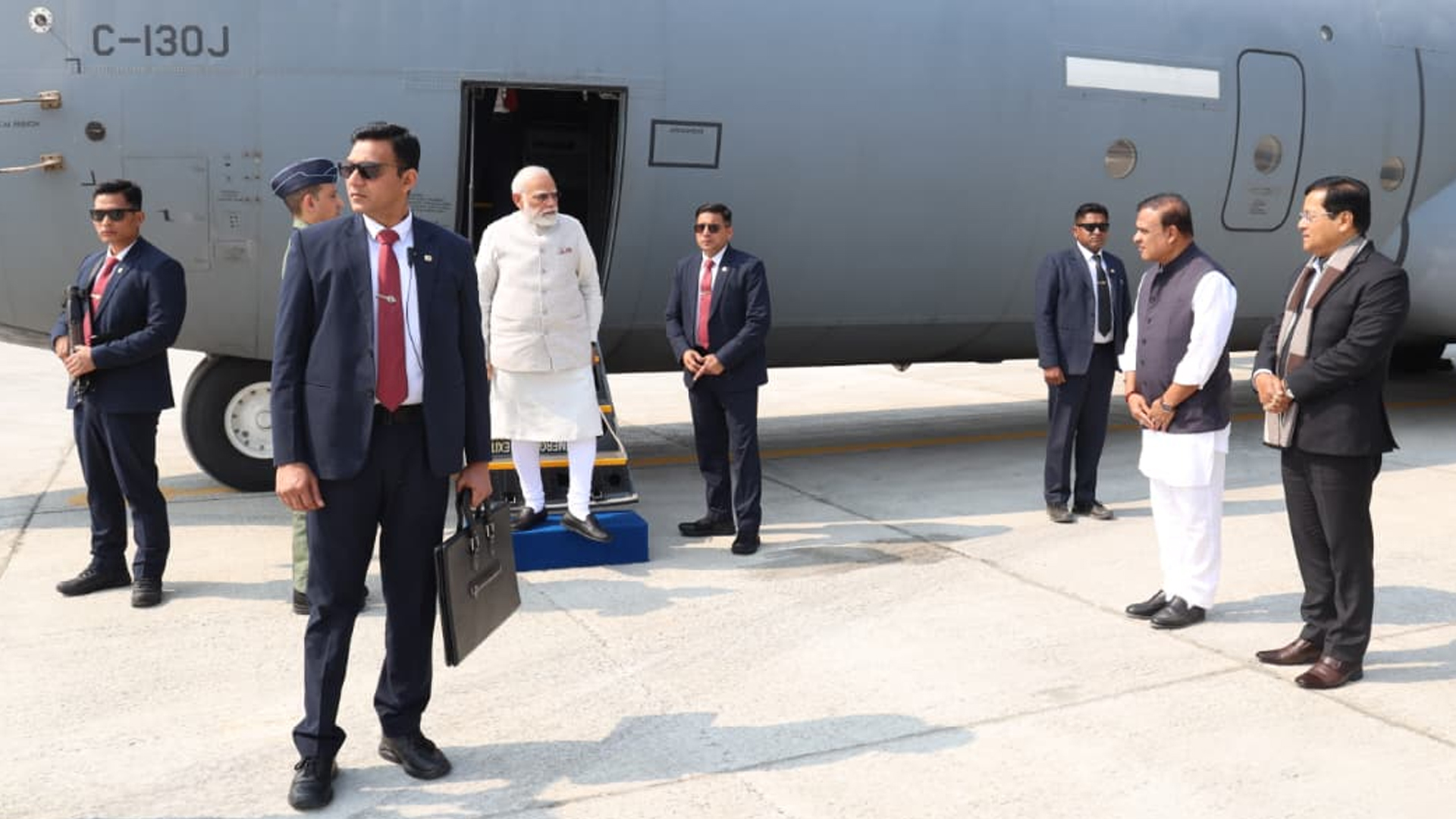
Assam has stepped up its plans to enhance strategic infrastructure by requesting the Centre to establish more emergency landing facilities (ELFs) across the state. The move comes days after Prime Minister Narendra Modi landed on the Northeast’s first highway airstrip at Moran in Dibrugarh district, marking a major milestone in the region’s aviation and defence capabilities.

The Moran ELF, a 4.2‑kilometre reinforced stretch of National Highway‑37, was inaugurated recently and is designed to accommodate both military and civilian aircraft, including transport planes and fighter jets. The facility, which cost approximately ₹100 crore, demonstrates India’s increasing focus on the Northeast as a critical frontier for defence and disaster preparedness.

Assam Chief Minister Himanta Biswa Sarma emphasized the “extreme strategic importance” of such installations, highlighting their dual role in supporting defence operations and providing access during emergencies, such as floods or other natural disasters. He noted that the Prime Minister’s visit, along with the presence of the Air Chief Marshal, underscored the government’s commitment to regional security and rapid response capability.

The state government has proposed that at least four to five additional ELFs be constructed in remote and flood‑prone areas. These facilities would act as backup hubs for logistical operations and emergency landings, ensuring that even during crises, the region remains accessible by air.

Alongside the ELF expansion plan, Assam is exploring the development of four new regional airports at Majuli, Diphu, Umrangso, and Manas, in partnership with the Civil Aviation Ministry. Feasibility studies are expected to commence soon, with the aim of significantly improving regional connectivity over the next five years.

These initiatives are part of a larger strategic push in Assam, which includes projects such as a twin‑tube road‑cum‑rail tunnel under the Brahmaputra and a railway line beneath the Siliguri Corridor, all designed to strengthen national security, disaster readiness, and economic growth in the Northeast.

Also Read: PM Modi, Emmanuel Macron to meet in Mumbai

PM Modi, Emmanuel Macron to meet in Mumbai

Innovation, AI, defence and Indo-Pacific cooperation high on agenda

Prime Minister Narendra Modi will hold wide-ranging talks with French President Emmanuel Macron in Mumbai on February 17, as India and France move to strengthen their long-standing strategic partnership and expand cooperation in new areas such as artificial intelligence and innovation.

The two leaders are expected to review the progress of the Horizon 2047 roadmap, which lays out an ambitious long-term vision for bilateral ties. Discussions will cover defence, space, civil nuclear energy, climate action, high technology and connectivity, along with regional and global developments, particularly in the Indo-Pacific.

Following the talks, both sides will exchange several agreements and issue a joint press statement. A major highlight of the visit will be the launch of the India-France Year of Innovation 2026, a programme aimed at deepening collaboration in research, startups, education and emerging technologies while promoting stronger people-to-people links.

In Mumbai, Modi and Macron will attend the India-France Innovation Forum, which will bring together business leaders, researchers, entrepreneurs and policymakers from both countries. They will also participate in a cultural event at the Gateway of India, underlining the growing cultural connect between the two nations.

President Macron, who arrived in India on February 16, will later travel with the Prime Minister to New Delhi to take part in the global AI Impact Summit. The summit is expected to see participation from world leaders, technology experts and industry representatives, and is being viewed as a major platform for shaping the future of responsible and inclusive artificial intelligence.

This is Macron’s fourth visit to India and comes soon after Modi’s trip to France last year, reflecting the steady momentum in high-level political engagement.

Also Read: India AI Summit hosts leaders, tech, talent

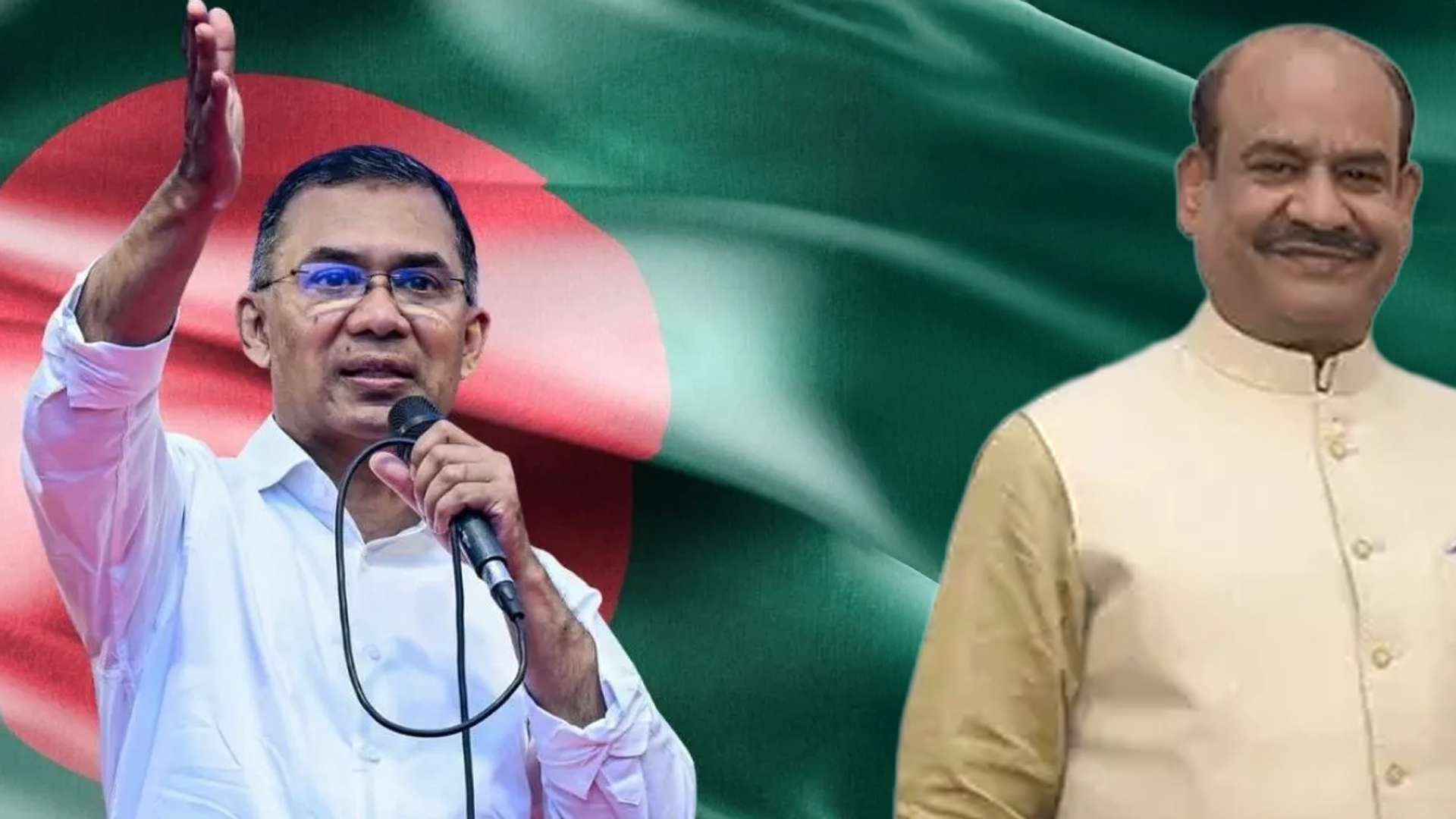
Om Birla to attend Tarique Rahman’s swearing-in

India sends Lok Sabha Speaker to Dhaka as PM Modi stays back for Mumbai programme

India will be represented by Lok Sabha Speaker Om Birla at the swearing-in ceremony of Bangladesh’s Prime Minister-designate Tarique Rahman on February 17 in Dhaka. Prime Minister Narendra Modi, who received an official invitation for the event, will not attend due to his pre-scheduled engagements in Mumbai.

The ceremony is being seen as an important political moment for Bangladesh as Rahman prepares to take charge after his party’s decisive electoral victory. Leaders and representatives from around 13 countries have been invited, underlining the regional importance of the new government’s formation.

India’s delegation will also include Foreign Secretary Vikram Misri. According to official sources, sending the Lok Sabha Speaker reflects New Delhi’s intention to maintain strong and stable ties with Dhaka and to show support for the democratic transition in the neighbouring country.

The programme in Dhaka will begin with the swearing-in of the newly elected Members of Parliament, followed by the oath-taking of the Prime Minister and the Council of Ministers. The event will be held at the national Parliament complex and is expected to be attended by several international dignitaries.

India has already conveyed its good wishes to the incoming government and expressed readiness to work closely with the new leadership. Despite the Prime Minister’s absence, the high-level representation at the ceremony is being viewed as a strong diplomatic gesture and a sign of the importance India places on its relationship with Bangladesh.

Rahman, who heads the Bangladesh Nationalist Party (BNP), is set to lead the new government after the party secured a clear mandate in the general election. His leadership marks a significant political shift, and both countries are expected to work towards continuing cooperation in areas such as trade, connectivity, security and cultural exchange.

Also Read: PM Modi, Emmanuel Macron to meet in Mumbai

India AI Summit hosts leaders, tech, talent

Leaders and tech giants meet at Bharat Mandapam to chart an inclusive AI future.

New Delhi opened the India AI Impact Summit 2026 at Bharat Mandapam, today, marking one of the largest global gatherings on artificial intelligence to be hosted in the Global South. The five-day event has drawn a high-profile mix of political leadership, technology companies, research institutions and startup founders to deliberate on the next phase of AI innovation, governance and talent development.

Prime Minister Narendra Modi is leading the host nation’s participation and will formally inaugurate the India AI Impact Expo. Confirmed international attendees include Ursula von der Leyen, Emmanuel Macron and Justin Trudeau, along with ministers from several G20 and Global South countries. Their presence signals the growing geopolitical importance of AI in trade, security, skilling and digital public infrastructure.

The opening sessions focused on the structural impact of AI on employment, education and governance. Policy discussions examined how emerging technologies can improve public service delivery, including the use of AI-enabled systems to enhance judicial efficiency and reduce case backlogs through data-driven decision support.

The India AI Impact Expo, one of the summit’s central attractions, features more than 600 startups, country pavilions and enterprise-grade solutions. The showcase highlights real-world deployments of AI across healthcare, agriculture, manufacturing, financial services and citizen services, and is expected to draw over 2.5 lakh visitors.

The broader programme includes leadership dialogues, CEO roundtables, a dedicated research symposium and multiple thematic tracks built around the pillars of People, Planet and Progress. Bilateral meetings between India and participating countries are expected to focus on semiconductor collaboration, compute capacity, investment partnerships and future-ready skilling frameworks.

Extensive security and traffic management measures are in place across central Delhi to facilitate VVIP movement while minimising disruption to board examinations and daily commuters.

With participation from leading global policymakers and technology players, the summit is being positioned as a strategic platform for shaping AI standards, scaling innovation ecosystems and reinforcing India’s ambition to become a key node in the global digital economy.

Also Read: Andhra Pradesh unveils ₹3.32 lakh cr budget

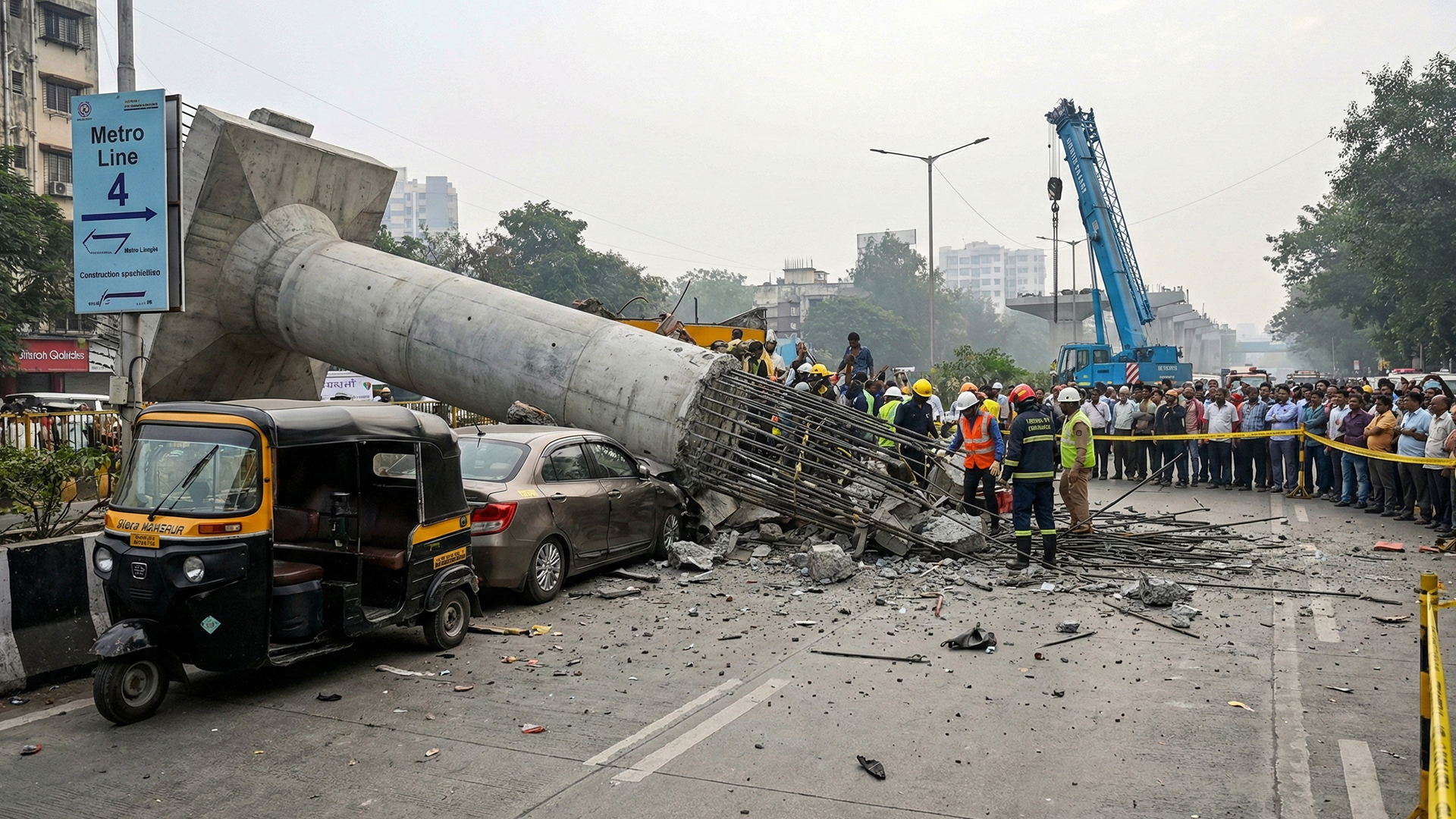
Mumbai Metro pillar collapses in Mulund, 1 dead

Portion of under-construction structure falls on busy LBS Road; authorities probe safety lapses

A portion of an under-construction metro pillar collapsed on Saturday afternoon in Mulund, killing one person and injuring three others. The incident occurred around 12:15 pm on LBS Road near the Johnson & Johnson factory, a busy arterial route.

The debris, part of the elevated Metro Line 4 structure, fell onto the road while construction was ongoing, striking an autorickshaw and a car passing below. The deceased has been identified as Ramdhan Yadav, who succumbed to injuries at Upasani Multispeciality Hospital. Three others — Rajkumar Indrajeet Yadav (45) in critical condition, and Mahendra Pratap Yadav (52) and Deepa Ruhiya (40), both stable — were admitted for treatment.

Emergency services, including the Mumbai Fire Brigade, police, metro project staff, civic authorities, and ambulance teams responded immediately. The affected stretch was cordoned off, and traffic was temporarily diverted.

The Mumbai Metropolitan Region Development Authority (MMRDA) confirmed that the project team is coordinating rescue and relief efforts with civic authorities. A detailed inquiry has been ordered to determine the cause of the collapse and check whether safety protocols were properly followed.

The Chief Minister, Eknath Shinde, expressed grief over the accident and said he had directed authorities to carry out a thorough investigation and ensure strict safety measures at construction sites.

Eyewitnesses and local residents expressed shock, highlighting concerns about construction safety standards at major urban infrastructure projects.

Also Read: Kerala infant donor saves 4 lives

Andhra Pradesh unveils ₹3.32 lakh cr budget

Focus on education, welfare, farmers and fiscal discipline in the new state budget

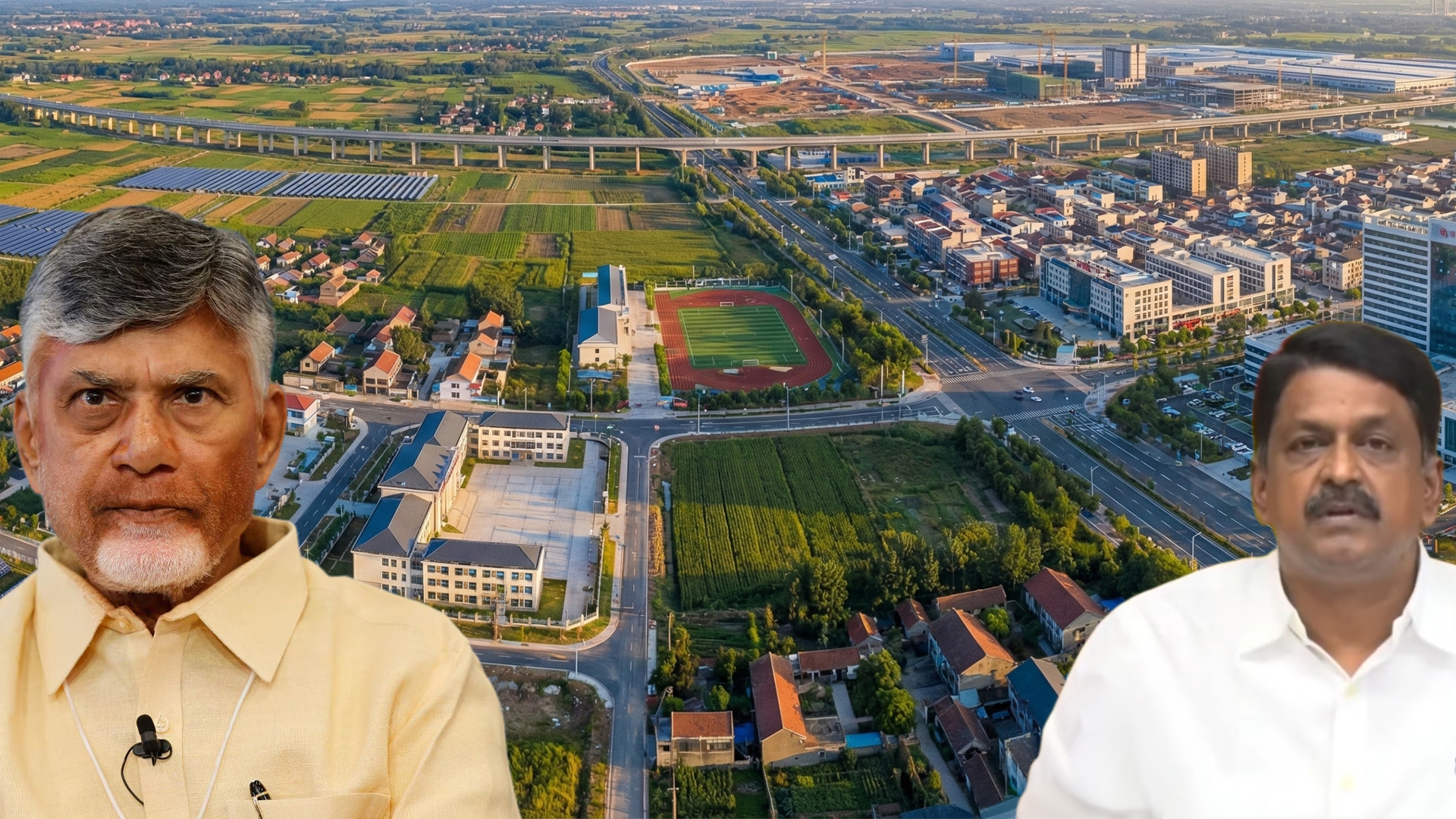
Andhra Pradesh Finance Minister Payyavula Keshav on Saturday presented the ₹3.32 lakh crore budget for 2026‑27 in the State Assembly. The budget aims to balance social welfare, development, and financial stability.

Revenue expenditure is projected at ₹2.56 lakh crore, while capital spending is estimated at nearly ₹54,000 crore. The state plans a fiscal deficit of ₹75,868 crore and a revenue deficit of ₹22,002 crore, keeping fiscal discipline in mind.

Education and social welfare are top priorities. Over ₹32,300 crore is allocated to schools, including ₹15,000 per child under the “Talliki Vandanam” scheme. Rural development and backward class welfare also get a boost, with significant allocations for health, water resources, and Panchayati Raj initiatives.

Farmers will benefit through the Annadata Sukhibhava‑PM Kisan scheme, receiving ₹6,660 crore to support nearly 47 lakh families, along with additional funding for agriculture and allied sectors.

Finance Minister Keshav described the budget as a plan reflecting the aspirations of people across the state. It aligns with Andhra Pradesh’s long-term “Swarna Andhra 2047” vision, aiming for sustainable growth and prosperity.

Also Read: Nikhil Gupta admits plot to kill sikh leader

Nikhil Gupta admits plot to kill sikh leader

Indian man pleads guilty to conspiracy targeting US-based Gurpatwant Singh Pannun

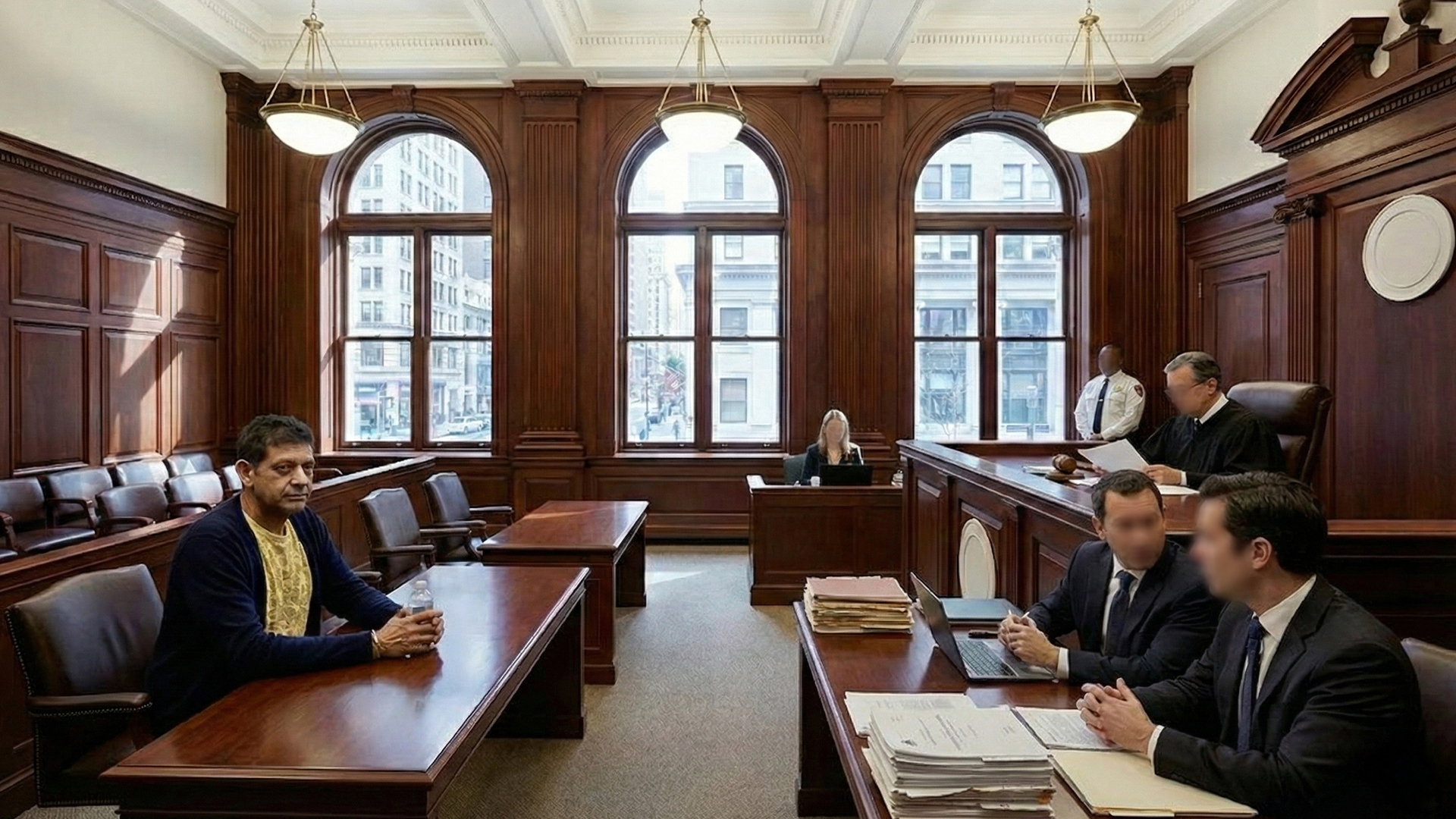
In a significant legal development in New York, 54-year-old Indian national Nikhil Gupta has pled guilty in a federal court to charges related to a failed plot to assassinate Gurpatwant Singh Pannun, a prominent US-based Sikh separatist leader. Pannun, a citizen of the United States and head of the advocacy group Sikhs for Justice, has long campaigned for a separate Sikh homeland, a cause India considers illegal and linked to terrorism.

Gupta appeared before a Manhattan federal court on February 13, 2026, admitting to three counts: murder-for-hire, conspiracy to commit murder-for-hire, and conspiracy to commit money laundering. Under US. law, these offenses carry a maximum penalty of 40 years in prison, although sentencing guidelines suggest a likely term of 20 to 24 years. His formal sentencing is scheduled for May 29, 2026.

According to prosecutors, Gupta agreed to pay $15,000 as an advance to what he thought was a hired killer to carry out the assassination in mid-2023. Unbeknownst to him, the supposed hitman was an undercover US law enforcement officer working with the DEA, who helped thwart the conspiracy.

Court filings indicate that Gupta was allegedly recruited by Vikash Yadav, identified as a former Indian government official with ties to intelligence work. Yadav, also indicted by US authorities, remains at large. Investigators allege the total contract for the murder was $100,000, and communications planning the plot were monitored by US agencies.

The case has drawn attention due to its international implications, as it involves attempts to target a political activist on American soil. US prosecutors emphasized that targeting individuals in the United States for exercising free speech and political advocacy will be met with vigorous legal action.

Gupta was previously extradited from the Czech Republic in 2024 and had been held without bail since. The case underscores ongoing concerns about transnational plots aimed at silencing political voices and highlights the role of US law enforcement in protecting residents from politically motivated violence.

Also Read: PM Modi launches major projects in Assam

Apple opens Borivali store on Feb 26

Second Mumbai outlet strengthens Apple’s retail push in India

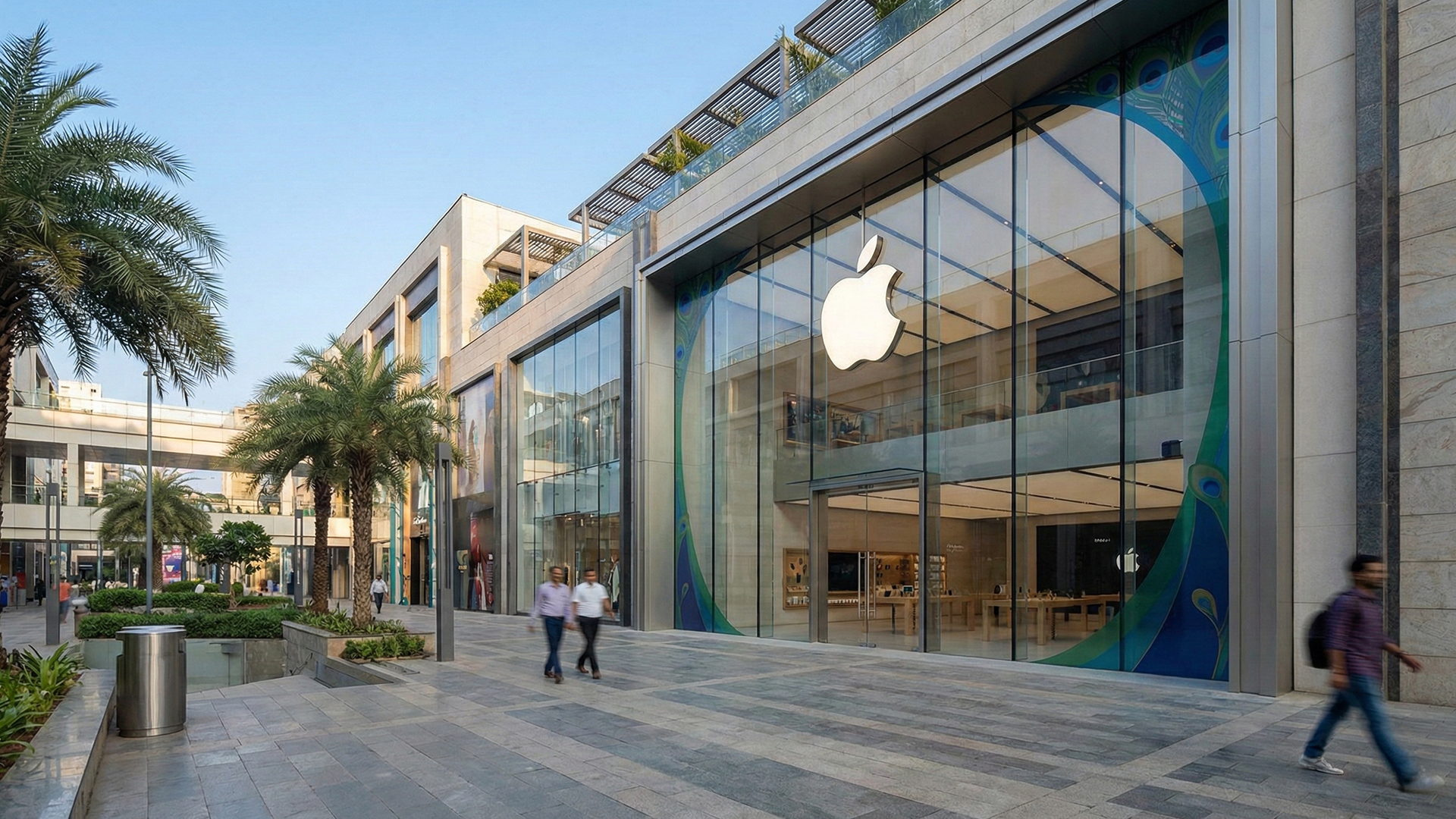
Apple is set to launch its sixth official retail store in India on February 26, marking another milestone in its steady expansion across the country. The new outlet in Mumbai’s Borivali area will be the company’s second store in the city.

The upcoming store will be located inside a prominent shopping mall in Borivali and is aimed at serving customers across Mumbai’s western suburbs. With rising demand for premium smartphones and devices in India, Apple is strengthening its direct-to-customer retail presence.

The store will provide hands-on access to Apple’s latest devices and offer in-store technical support, personalised guidance, and educational sessions. Customers will be able to explore products, receive assistance from trained specialists, and participate in creative workshops under the Today at Apple programme.

Apple’s India retail expansion began with flagship openings in Mumbai and Delhi and has since extended to other major cities. The addition of the Borivali outlet highlights the company’s confidence in India’s growing consumer market and expanding middle class.

Also Read: India up 10 spots in 2026 passport index

PM Modi launches major projects in Assam

He inaugurates Moran Emergency Landing Facility, bridges, IIM Guwahati, and digital infrastructure worth over ₹5,400 crore

Prime Minister Narendra Modi is on a one-day official visit to Assam, inaugurating several major projects aimed at boosting infrastructure, connectivity, education, and defence preparedness in the state ahead of Assembly elections.

The day began in Dibrugarh, where the Prime Minister landed at the Moran Emergency Landing Facility (ELF), the first such facility in Northeast India. The 4.2-kilometre reinforced runway, constructed at a cost of around ₹100 crore, is designed for both military and civilian aircraft during emergencies. Officials highlighted that the Moran ELF will strengthen the region’s strategic and disaster-response capabilities. During the visit, PM Modi also witnessed an impressive aerial display by the Indian Air Force, featuring fighter jets, transport aircraft, and helicopters, underlining the facility’s importance for national security.

Later in Guwahati, Mr. Modi inaugurated multiple development projects worth more than ₹5,400 crore. Key initiatives include the Kumar Bhaskar Varma Setu, a new six-lane bridge over the Brahmaputra River that will reduce travel time between Guwahati and North Guwahati. He also launched the IIM Guwahati campus, aimed at expanding higher education opportunities, and a National Data Centre to strengthen the state’s digital infrastructure. Additionally, a fleet of electric buses was rolled out to improve urban mobility in Assam.

Officials noted that these projects are intended to enhance connectivity, support education and employment for youth, and boost economic growth across the region. The Prime Minister’s visit is seen as a significant push for development in Assam, combining strategic infrastructure with social and educational initiatives.

PM Modi is also scheduled to interact with BJP workers and supporters later in the day, completing his Assam programme. His visit comes amid efforts to accelerate development in the state while showcasing national security and technological preparedness.

Also Read: CIA sparks China tensions with PLA recruitment video