rotating globe
6 Apr 2026


Ramayana: Part I first cut wows LA audience

Ranbir Kapoor, Yash, and Sai Pallavi starrer praised for its scale, visuals, and storytelling ahead of Diwali release

The much-awaited mythological epic Ramayana: Part I recently gave audiences a first glimpse at a special screening in Los Angeles, and the response has been overwhelmingly positive. Fans and viewers alike applauded the film for its grand scale, stunning visual effects, and engaging storytelling, signaling big things for its upcoming release.

The screening, held at the Cinemark Playa Vista theatre, featured a select audience aged 18 to 60. It was organized to gather early reactions and feedback before the final edits are completed ahead of its Diwali 2026 release. Attendees were reportedly amazed by the cinematic world-building, with many saying the production felt as vast and detailed as international blockbusters.

Directed by Nitesh Tiwari, the film stars Ranbir Kapoor as Lord Ram, Sai Pallavi as Sita, and Yash as the demon king Ravana. The movie also boasts music by acclaimed composers A.R. Rahman and Hans Zimmer, adding to the film’s epic atmosphere.

Being produced on a massive scale, Ramayana is planned as a two-part saga, with the first part arriving this Diwali and the second slated for Diwali 2027. While the LA screening showed only the first cut, the filmmakers were reportedly thrilled by the audience’s enthusiastic response. Feedback from this preview will be used to fine-tune the final version, ensuring the movie delivers a captivating experience for audiences worldwide.

Ramayana: Part I promises to be a visual spectacle that combines mythology, storytelling, and world-class filmmaking, making it one of the most awaited films of 2026.

Also Read: Meerut RRTS sees 1 lakh riders on day one

‘MTV Splitsvilla 7’ star Mayank dies at 37

Fans and friends mourn the loss of the beloved reality TV personality

The entertainment world is in shock after the sudden passing of Mayank Pawar, the 37-year-old reality TV star who won hearts on MTV Splitsvilla 7. Known for his energetic spirit, charisma, and candid personality, Mayank became a favourite among viewers and social media followers alike. His family confirmed his death, though details surrounding the cause have not yet been made public.

Mayank’s journey on Splitsvilla 7 left a lasting impression. He wasn’t just a contestant; he was someone who brought energy, laughter, and an infectious confidence to the screen. Fans remember him for his fearless attitude, playful banter, and memorable moments that made him stand out among the many contestants. Beyond the show, he cultivated a devoted online following, where his personality shone just as brightly.

In the days before his passing, Mayank shared a post on Instagram that has now gone viral. Fans have revisited it, offering heartfelt tributes and expressing their disbelief and grief over the sudden loss. Messages of condolence have flooded social media, with admirers describing him as “fun-loving, fearless, and inspiring,” someone who lit up rooms and screens alike.

Fellow reality TV stars and industry colleagues also shared emotional tributes, remembering Mayank not only for his on-screen persona but for the warmth, humor, and kindness he brought to personal interactions. Many recalled private moments behind the camera, highlighting his generosity, loyalty, and the joy he spread among friends and co-workers.

Though his life was cut tragically short, Mayank Pawar leaves behind a legacy of laughter, courage, and a vibrant presence that will be remembered by fans across India. His passing is a stark reminder of how fleeting life can be, even for those who seem larger than life on television.

As the entertainment community and fans continue to mourn, messages of support for his family keep pouring in.

Also Read: US acts on worker safety, plans H‑1B wage hike

Donald Trump calls for ‘Dalilah Law’ after California crash

Trump seeks CDL ban for undocumented immigrants after crash

Donald Trump has urged Congress to pass a new measure called the “Dalilah Law,” aimed at preventing undocumented immigrants from receiving commercial driver’s licences (CDLs).

The proposal follows a serious road accident in California in June 2024 that left a five-year-old girl, Dalilah Coleman, with severe and permanent injuries. According to authorities, the crash occurred when a tractor-trailer allegedly failed to slow down near a construction zone, leading to a multi-vehicle collision.

The truck was driven by Partap Singh, an Indian-origin man who had entered the United States illegally in 2022. After the incident, he was arrested and later taken into custody by U.S. Immigration and Customs Enforcement.

Dalilah suffered a traumatic brain injury, skull fractures and a broken leg in the crash. She remained in a coma for nearly three weeks and spent months in hospital. Doctors later diagnosed her with cerebral palsy and developmental delays. She is expected to need ongoing therapy and medical care.

During his address to Congress, Trump invited Dalilah and her father to attend. He praised her strength and recovery, saying her story highlights the need for stricter laws.

Currently, commercial driver’s licences are issued by individual states. Trump argued that the federal government should step in to ensure undocumented immigrants are not granted such licences. He said the proposed law would improve road safety and protect American families.

The “Dalilah Law” is likely to face debate in Congress, with supporters backing stronger enforcement measures, while critics warn the proposal could deepen divisions over immigration policy and affect the transportation workforce.

Also Read: US acts on worker safety, plans H‑1B wage hike

Centre blocks 5 OTT platforms over content

Action targets apps accused of streaming obscene material; websites and social media handles also disabled

The Centre has blocked five over-the-top (OTT) platforms for allegedly hosting and distributing obscene and inappropriate content, tightening its crackdown on digital streaming services that violate Indian laws.

According to officials, the action was taken by the Ministry of Information and Broadcasting in coordination with other government agencies after receiving multiple complaints about explicit material being made available through these platforms. The ban covers the mobile applications, associated websites and their social media accounts to prevent further access and circulation of the content.

The government said the platforms were found to be streaming shows and videos that went beyond permissible limits under Indian regulations. Authorities flagged that several programmes contained sexually explicit scenes and inappropriate visuals without any meaningful age-based access control. Such content, officials noted, is in violation of provisions under the Information Technology Act and other relevant laws.

The move is part of a broader effort to make digital streaming services more accountable. While OTT platforms currently follow a self-regulatory code, the Centre has repeatedly warned that freedom of creativity cannot be used as a shield for obscenity or content that offends public decency.

Officials added that intermediaries were directed to disable public access to these apps and websites with immediate effect. Internet service providers have also been instructed to block the URLs, ensuring that the platforms cannot operate in India.

The latest crackdown follows earlier instances where the government had taken action against streaming platforms for similar violations. The ministry has maintained that content must comply with Indian legal and cultural norms, especially as OTT services are widely accessible across age groups.

The government has reiterated that it supports creative storytelling but will continue to act against platforms that publish or distribute material considered obscene or unlawful under Indian rules.

Also Read: 11,000 flights cancelled as US storm hits

Trump proposes tariffs to replace Income Tax

Targets trade levies to ease financial burden on Americans, criticises Supreme Court ruling

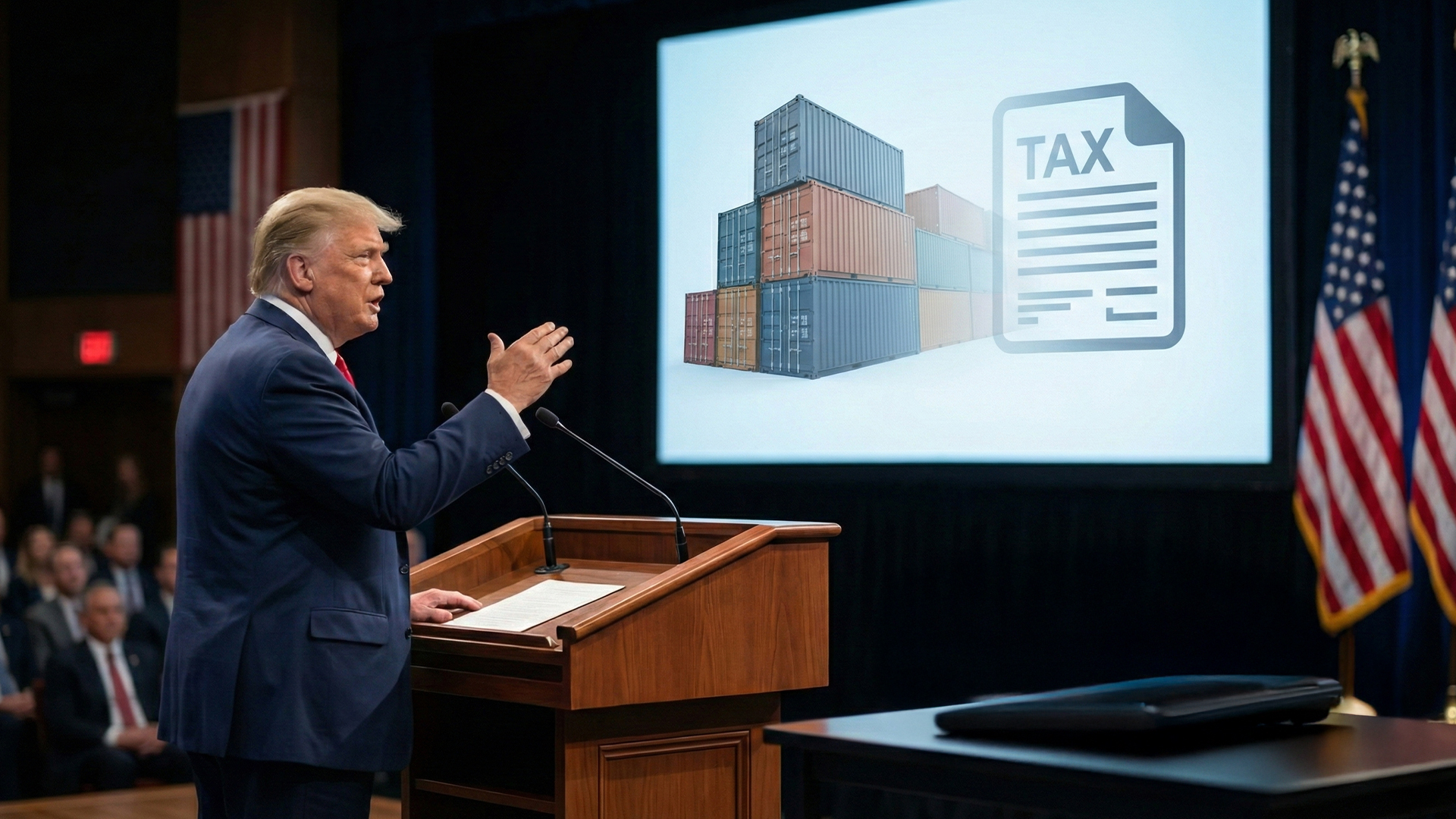
US President Donald Trump said he plans to replace federal income tax with tariffs on imported goods, claiming the move would reduce the financial burden on American families and workers. Speaking in a State of the Union–style address, Trump framed the policy as a way to fund government programs without directly taxing citizens’ paychecks, while also protecting domestic industries from foreign competition.

“Tariffs will replace income tax and will take the burden off Americans,” Trump said, presenting the proposal as both a revenue and economic protection strategy. He argued that the tariff system would generate sufficient government revenue while discouraging imports that hurt local manufacturing.

Trump also criticised a recent US Supreme Court decision that blocked parts of his tariff plan, calling the ruling “unfortunate” and warning that it limits the executive branch’s ability to enforce trade measures. He urged Congress to revise trade laws to provide clearer authority for implementing tariffs, highlighting the role of trade in national economic security.

The proposal has drawn mixed reactions. Supporters say it would shift tax responsibility away from workers, encourage domestic production, and boost American industries. Critics, however, caution that replacing income tax with tariffs could increase consumer prices, spark trade retaliation, and create uncertainty in global markets. Economists note that government revenue depends heavily on income tax, and tariffs alone may not sustain spending levels.

While the plan remains largely conceptual, the speech signals that tariffs and taxation will remain major topics in US policy discussions. The administration appears poised to pursue further legislation and executive measures to expand trade authority and reshape revenue collection in the coming months.

Also Read: US acts on worker safety, plans H‑1B wage hike

US acts on worker safety, plans H‑1B wage hike

Penalties follow dairy deaths. Federal review signals fairer pay for foreign workers

The United States government has taken strong action against companies responsible for unsafe working conditions after six employees died at a dairy farm in Colorado, while separately, federal authorities are moving toward raising wage requirements for H‑1B visa and employment‑based green card holders. Both developments reflect Washington’s increasing focus on worker protection, safety, and fair compensation.

The Colorado incident sparked an investigation that revealed serious lapses in workplace safety. Federal labour and occupational safety officials found that the companies involved had failed to provide adequate protections for employees, despite repeated warnings. The fatalities prompted authorities to impose penalties aimed at holding employers accountable and deterring similar negligence in high-risk sectors such as agriculture, where hazardous conditions and long hours often put workers at risk. Officials stressed that enforcement of existing safety regulations is critical to preventing future tragedies.

In parallel, the US Department of Labor has cleared a proposal to revise prevailing wages for H‑1B and employment‑based green card workers. The proposal, which must still go through final rulemaking, seeks to ensure that foreign professionals receive compensation comparable to American workers in similar roles. This is designed to prevent employers from hiring international talent at lower wages, which can undercut the domestic labour market. If implemented, the wage adjustments are expected to significantly increase the minimum pay levels for thousands of tech, healthcare, and other specialised workers on H‑1B or green card tracks.

It is anticipated that higher wage floors could increase operational costs and affect hiring plans, labour advocates say the move is necessary to ensure fairness and reduce exploitation of foreign workers. Together with stricter enforcement of safety regulations, the wage review reflects a broader US policy push to protect workers’ rights.

Also Read: India abstains in UN ceasefire vote on Ukraine

India abstains in UN ceasefire vote on Ukraine

Decision reflects balanced diplomatic stance amid ongoing conflict and geopolitical concerns

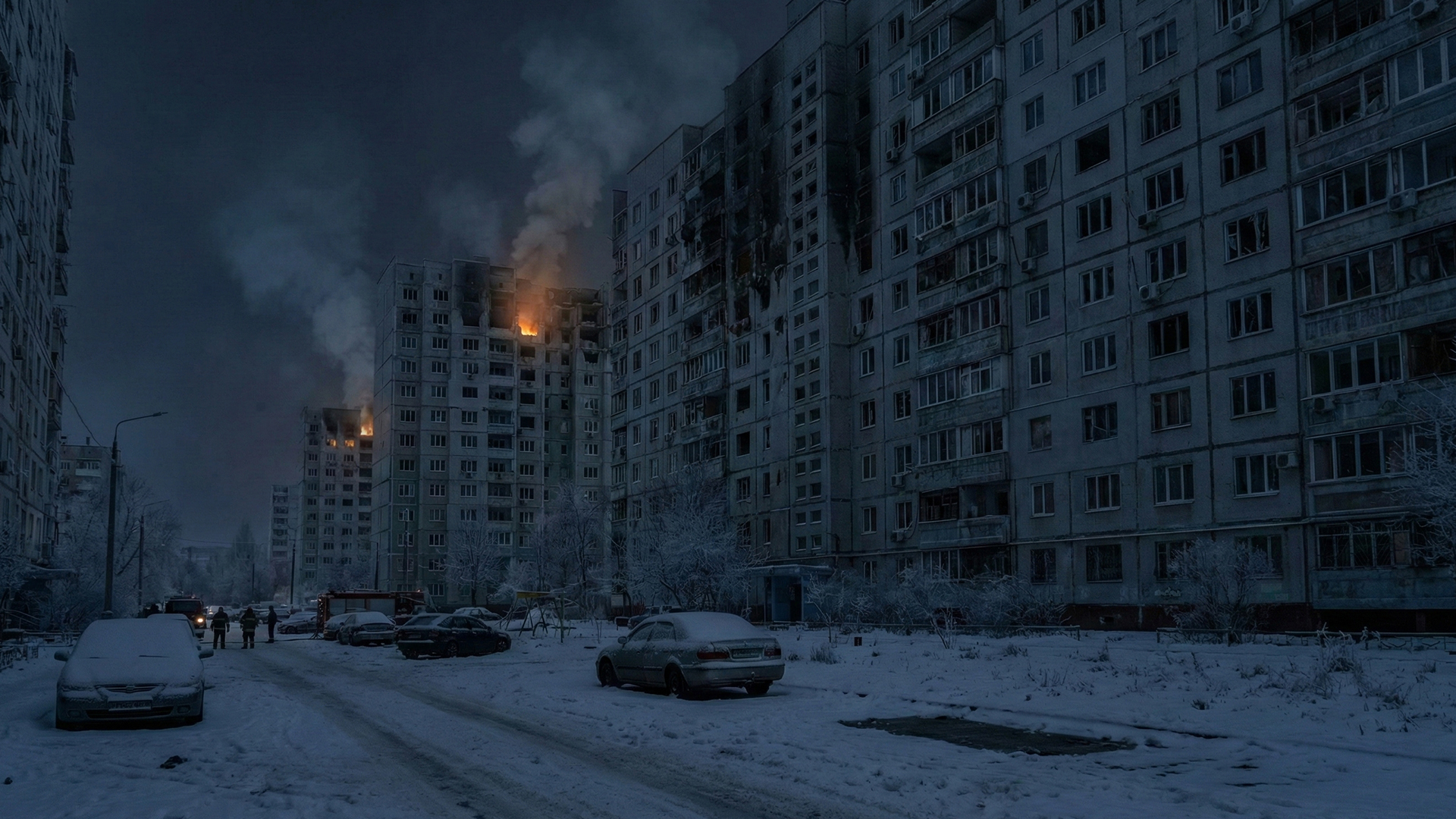
India abstained in a United Nations General Assembly vote calling for an immediate ceasefire between Russia and Ukraine, reflecting its effort to maintain a neutral and balanced diplomatic stance amid the ongoing conflict. The resolution, which urged all parties to stop hostilities, protect civilians, and respect international law, was passed with strong support from most member states, while a small group of countries, including India, chose to abstain.

Officials in New Delhi explained that the decision aligns with India’s long-standing policy of promoting dialogue and negotiation rather than taking sides. While India has consistently called for an end to violence, protection of civilians, and respect for sovereignty, it has avoided voting in a way that could strain ties with either Kyiv or Moscow. The abstention underscores India’s intent to balance strategic relationships while advocating for a peaceful resolution.

Since the start of the war, India has maintained active engagement with both countries — continuing humanitarian and economic support for Ukraine while sustaining long-term defence and energy ties with Russia. New Delhi has emphasised that ceasefire calls alone, without addressing security concerns and broader negotiations, are unlikely to produce lasting peace.

In recent months, India has also pushed for safe evacuation corridors, unhindered humanitarian aid, and the protection of civilians. Officials stress that a negotiated settlement respecting territorial integrity and security guarantees is the most sustainable path to ending the conflict.

The UN vote took place amid continued fighting in eastern Ukraine and growing global debate over responsibility for civilian suffering. While the resolution received overwhelming support, some countries abstained or opposed it for political or strategic reasons.

Also Read: 11,000 flights cancelled as US storm hits

India, France amend tax pact with dividend relief

Revised treaty ends MFN clause, gives India wider rights to tax share sales

India and France have agreed to change their old tax treaty to make it more suitable for current investment rules and global tax standards. The revised agreement lowers the tax on dividends for major French investors while allowing India to tax more types of capital gains.

Under the new terms, French companies that hold a large stake in Indian firms will pay a reduced tax on the dividends they receive. This step is expected to encourage long-term investments from France and provide more clarity to companies operating between the two countries.

At the same time, India has gained broader powers to tax profits made from the sale of shares in Indian companies by French investors. Earlier, India could tax such gains only when the French entity had a substantial holding. With the new changes, that restriction has been removed, giving India more taxation rights on transactions involving Indian assets.

One of the most important updates in the treaty is the removal of the Most Favoured Nation (MFN) clause. This clause had allowed France to automatically claim the same tax benefits that India gave to some other countries. Its removal follows recent legal and policy developments and brings the agreement in line with India’s current tax approach.

The revised pact also aims to improve transparency and prevent tax avoidance, while ensuring that income is taxed in a fair and predictable way. Officials say the move will help create a better investment environment and strengthen economic cooperation.

France is one of India’s key partners in Europe, with major companies present in sectors such as defence, energy, infrastructure, technology and manufacturing. The updated tax rules are likely to influence future investment decisions and support the flow of capital between the two countries.

Also Read: Modi starts Israel visit to strengthen strategic ties