rotating globe
6 Apr 2026


Sasikala launches party, honours ‘Amma’

Jayalalithaa image on flag; move set to reshape AIADMK vote base

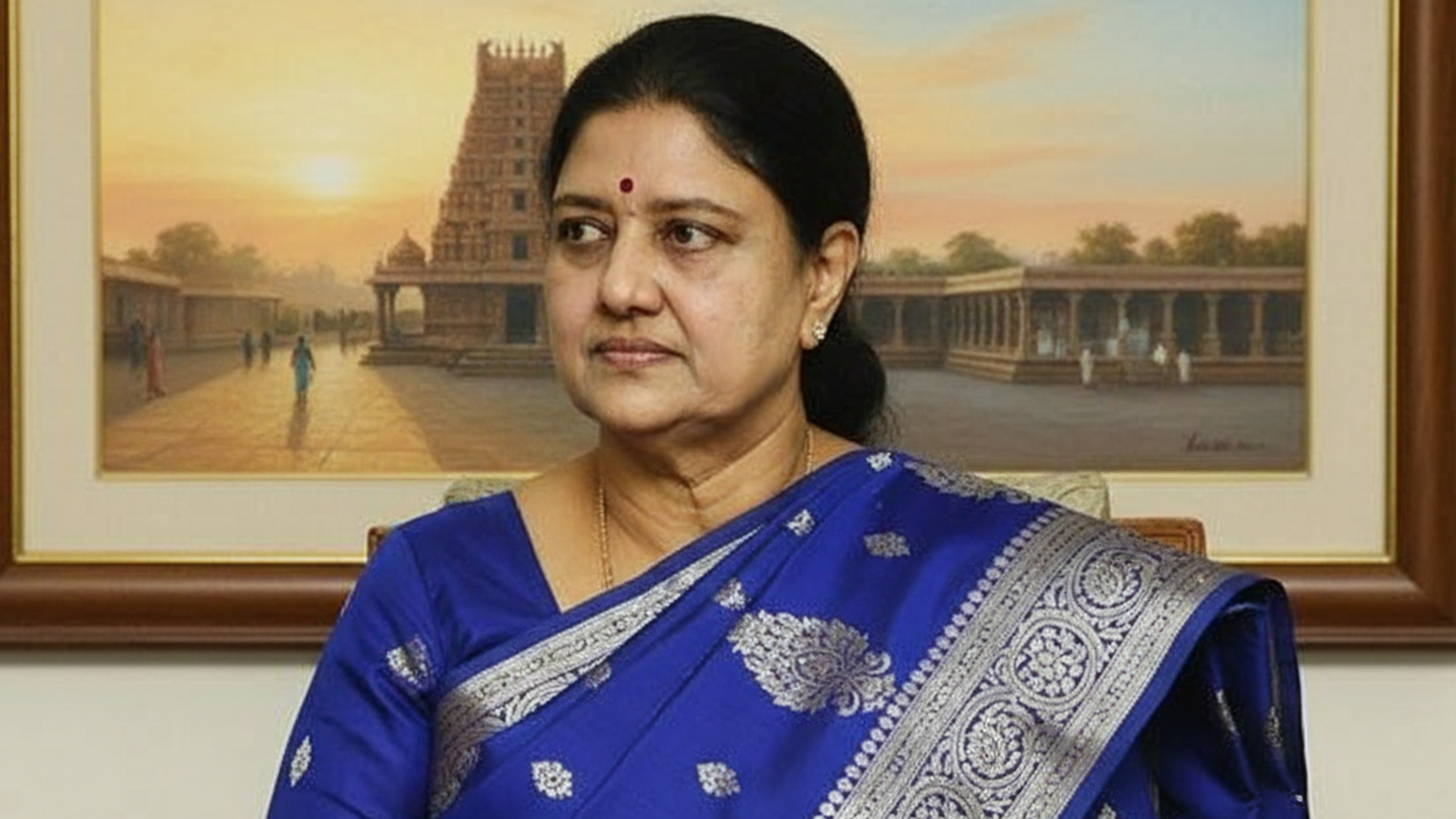
Expelled AIADMK leader V. K. Sasikala has launched a new political party ahead of the 2026 Tamil Nadu Assembly elections and unveiled its flag carrying the image of former chief minister J. Jayalalithaa. The move signals her formal return to active politics and a direct challenge to the current AIADMK leadership.

Announcing the party, Sasikala said her aim is to bring back the governance model associated with Jayalalithaa, popularly known as “Amma”. She accused the present AIADMK leadership, led by Edappadi K. Palaniswami, of straying from the party’s original path and weakening its base. Her new outfit is expected to contest the upcoming Assembly polls and seek support from AIADMK’s traditional voters.

The party flag closely reflects symbols linked to Jayalalithaa, underlining Sasikala’s attempt to claim the late leader’s political legacy. She said the new party would focus on welfare schemes, grassroots organisation and restoring what she described as people-friendly rule in the state.

The AIADMK leadership has criticised the development, maintaining that Sasikala has no connection with the party after her expulsion. In response, her camp said there is nothing illegal about starting a new political party and asserted that she still enjoys support among cadre and long-time followers.

Her entry is expected to have a significant impact on the electoral battle in Tamil Nadu. Political observers believe the new party could divide the AIADMK’s vote share in several constituencies, which may alter the opposition space in a contest where the ruling DMK is seeking to retain power.

The announcement comes at a time when alliance talks and campaign preparations are gaining momentum in the state. With Sasikala now in the fray, the 2026 Tamil Nadu elections are likely to witness a more complex and multi-cornered contest.

Also Read: Centre blocks 5 OTT platforms over content

Kerala to be officially renamed Keralam

Union Cabinet approves move to reflect state’s linguistic and cultural heritage

The Union Cabinet has approved changing the official name of Kerala to “Keralam”, matching the name used by locals in Malayalam. The move follows requests from the Kerala Legislative Assembly, which passed resolutions asking the central government to update the state’s name in the Constitution.

The Cabinet approved the Kerala (Alteration of Name) Bill, 2026, which will now go to the state assembly for its opinion. After that, the Bill will be introduced in Parliament. Once Parliament passes it and the President gives approval, “Keralam” will become the state’s official name in all government records, maps, and legal documents.

Supporters say the change reflects the state’s culture, history, and language. Chief Minister Pinarayi Vijayan and other leaders have highlighted that residents have long used “Keralam” in daily speech, and the update aligns official records with local usage.

The decision comes just months before the Kerala Assembly elections expected in April–May 2026. While the change is mostly symbolic, it holds cultural and political importance.

With Cabinet approval now in place, the state is set to formally embrace Keralam as its official name, marking a new chapter in its history and identity. The Bill’s passage in Parliament will complete the process, ensuring that the name used by millions of residents for generations is reflected in all official records.

Also Read: SC examines NEET-PG cut-off reduction

Modi starts Israel visit to boost ties

Talks with PM Netanyahu to focus on defence, trade and technology as regional security concerns remain high

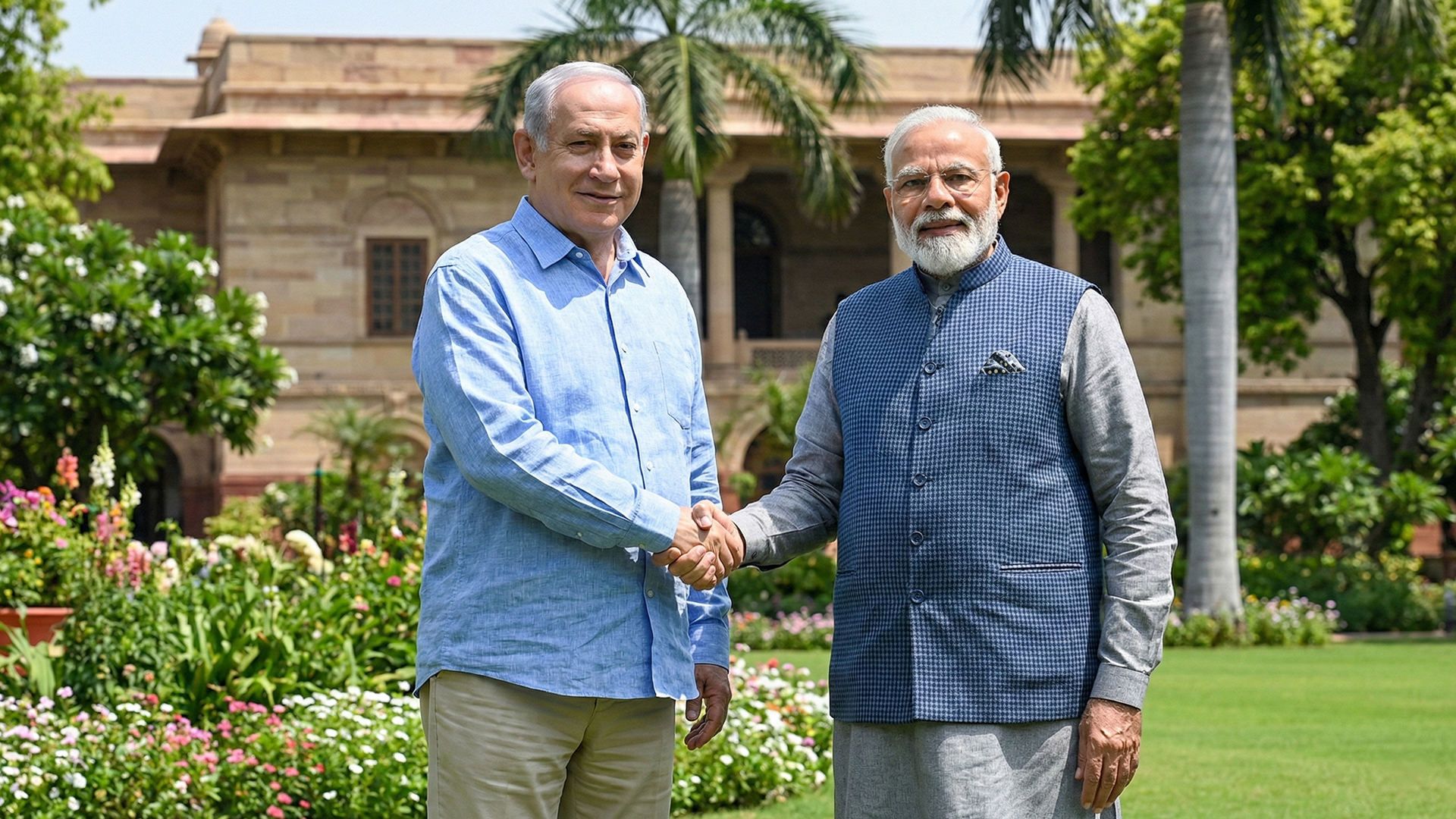
Prime Minister Narendra Modi began his two-day visit to Israel on Wednesday, aiming to deepen cooperation in defence, trade, science and innovation. The visit is expected to give a major push to the relationship between India and Israel, with both sides planning to upgrade ties to a “special strategic partnership.”

During the trip, Modi will hold detailed talks with Israeli Prime Minister Benjamin Netanyahu and meet President Isaac Herzog. He is also scheduled to address the Knesset, which is considered a significant diplomatic honour and reflects the growing closeness between the two nations.

Defence cooperation is expected to be the main focus of the visit. India and Israel already work closely in this sector, and the new discussions are likely to include joint development and production of advanced military equipment. Both countries are also looking at stronger cooperation in security, especially at a time when tensions in West Asia remain high due to the ongoing situation in Gaza and the wider region.

Apart from defence, the talks will cover trade, agriculture, water management, space, artificial intelligence, and other high-technology areas. Efforts will be made to increase business partnerships and encourage investment, as both countries see strong potential for growth in innovation-led sectors.

Modi is also expected to interact with the Indian community in Israel, highlighting the people-to-people connection that has strengthened over the years.

This is Modi’s second visit to Israel, and officials say it marks an important step in taking bilateral ties to a higher level. The planned upgrade in the partnership will allow the two countries to work more closely during crises and expand cooperation across key sectors.

Also Read: Kerala to be officially renamed Keralam


7 killed in air ambulance crash in Jharkhand

Aircraft carrying patient and medical team crashes in Chatra district shortly after take-off from Ranchi

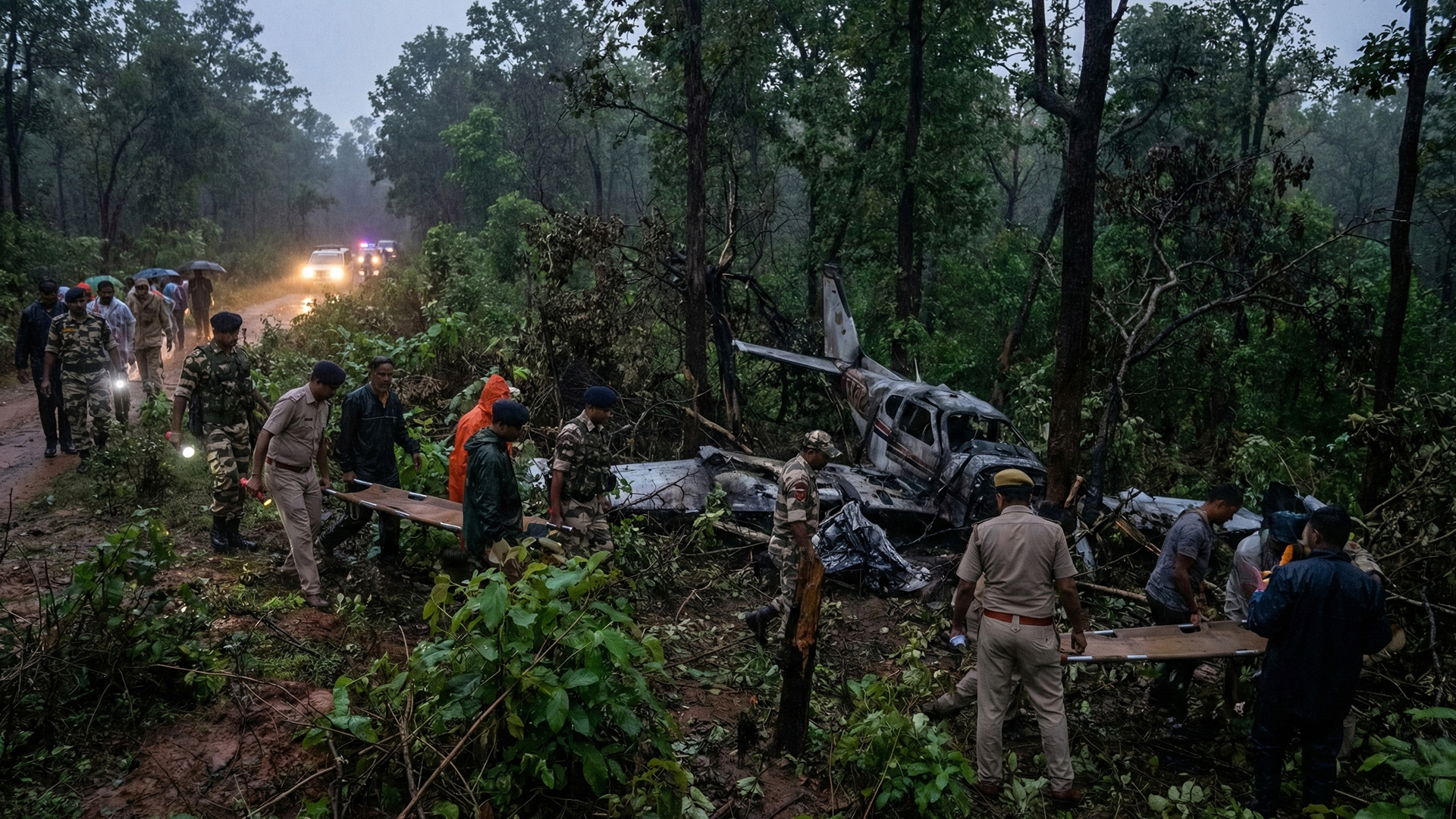
All seven people on board an air ambulance were killed after the aircraft crashed in Jharkhand’s Chatra district on Monday evening.

The plane had taken off from Ranchi and was headed to Delhi when it went down near the Simaria area, a forested region that made rescue operations difficult. According to officials, the aircraft lost contact with air traffic control shortly after departure. Local authorities and rescue teams later reached the crash site and recovered the bodies.

Those killed included two pilots and five others, a critically ill patient, his relatives and medical staff accompanying him. The patient was being airlifted to Delhi for advanced treatment. Reports said he had suffered serious burn injuries and his condition had worsened, prompting the family to arrange for an air ambulance.

After the crash, the bodies were brought to a hospital in Chatra for post-mortem examinations. Officials said the identification process and other formalities are being carried out.

Initial reports suggest that bad weather, including strong winds and rain in the area, may have contributed to the accident. However, authorities have said that the exact cause of the crash will be known only after a detailed investigation.

Aviation authorities have launched a probe into the incident. Teams are expected to examine technical details, including flight data and communication records, to determine what led to the tragedy.

The crash has shocked local residents and raised concerns about safety during medical evacuation flights, especially in difficult weather conditions. Further updates are awaited as investigators continue their work.

Also Read: India tells citizens to leave Iran as US tensions rise

Amazon launches major office in Bengaluru

Second largest in Asia, the new campus to host 7,000 staff and boost India’s tech growth

US e-commerce giant Amazon has unveiled its second-largest office in Asia in Bengaluru, marking a significant milestone in the company’s expansion in India. Spread across 1.1 million square feet on five acres in Yelahanka, the 12-storey campus will house more than 7,000 employees across technology, e-commerce, operations, payments, and seller services. The move underscores Bengaluru’s growing importance as a global technology and business hub.

Designed to promote collaboration and employee well-being, the office features modern workspaces, meeting rooms, breakout zones, landscaped lawns, sports courts, and cafeterias, blending productivity with comfort.

The inauguration was attended by Karnataka Industries Minister Dr. M.B. Patil, who highlighted that the investment reflects India’s rising significance in global tech and innovation. Samir Kumar, Amazon India Country Manager, said Bengaluru remains central to the company’s expansion in Asia, offering a strong base of talent and technology expertise.

This new office complements Amazon’s existing presence in Karnataka, which includes corporate offices, fulfillment centers, and a wide delivery network. The company has invested over $40 billion in India so far and plans to invest an additional $35 billion by 2030 to expand operations, support local sellers, and generate employment opportunities.

The Bengaluru campus reinforces Amazon’s confidence in India’s growth trajectory and positions the city as a hub for innovation, global operations, and talent development.

Also Read: SC examines NEET-PG cut-off reduction

Banks cautioned against mis-selling under BNS

Nirmala Sitharaman pushes lenders to prioritise core banking over fee income from third-party product sales

Finance Minister Nirmala Sitharaman has cautioned banks that mis-selling financial products will attract penal action under the Bharatiya Nyaya Sanhita, signalling a sharper regulatory stance on customer protection and sales practices in the financial sector.

At a review meeting with heads of public sector and private banks, the minister asked lenders to refocus on their core functions, deposit mobilisation and credit growth, instead of relying heavily on commissions from distributing third-party products such as insurance and mutual funds. She said pushing unsuitable products to customers to meet revenue targets undermines trust in the banking system and exposes institutions to legal and reputational risks.

The directive comes amid an increase in customer complaints about being compelled to buy investment or insurance products while taking loans or opening accounts. Sitharaman stressed that product sales must be aligned with a customer’s financial profile and requirements, and not driven by cross-selling targets.

Banks were also advised to strengthen internal controls, improve staff training and fix accountability at senior management levels to prevent coercive or misleading sales practices. The finance minister called for better grievance-redressal systems and closer monitoring of frontline operations.

From a business perspective, the message signals a shift in the operating environment for lenders that have been using fee-based income to support margins. With regulatory scrutiny set to rise, banks may need to recalibrate their distribution strategies and place greater emphasis on balance-sheet growth, asset quality and credit expansion.

The government also urged banks to step up lending to productive sectors of the economy while maintaining prudent risk management.

Also Read: Rajagopalachari bust replaces Lutyens at Rashtrapati Bhavan

Dust storms may explain why Mars lost its water

New research shows even small storms could have pushed the Red Planet’s water into space

For decades, scientists have been intrigued by a mystery: why did Mars, once home to rivers, lakes, and possibly oceans, become the dry, frozen desert we see today? New research suggests that dust storms may have quietly drained much of its water into space.

Using data from Mars’ upper atmosphere, researchers discovered that regional dust storms can push water vapor far above the surface, where sunlight breaks it apart into hydrogen and oxygen. Hydrogen, being extremely light, escapes the planet’s gravity and drifts into space. During one storm, water vapor levels were 10 times higher than usual, and hydrogen levels spiked 2.5 times, showing that even smaller, short-lived storms can play a significant role in the planet’s water loss.

Earlier theories focused on massive, planet-wide storms as the main culprit, but this study shows that frequent, smaller storms can also steadily strip Mars of its water over billions of years. This could explain why so much of Mars’ water seems to be missing, something earlier models struggled to account for.

Understanding how Mars lost its water is key to unlocking its climate history and its potential to support life in the past. Scientists believe early Mars had a thicker atmosphere and warmer climate, which allowed liquid water to flow on the surface. Over time, as water escaped into space, the planet cooled and dried, creating the barren landscape we see today.

This breakthrough gives researchers a clearer picture of Mars’ transformation from a watery world to a desert planet. It also highlights the dramatic role that dynamic, everyday events like dust storms can play in shaping a planet’s environment. It makes us wonder that even small forces in space can have massive consequences.

Also Read: Amazon launches major office in Bengaluru

US to halt illegal tariff collections from Feb 24

Customs agency acts after Supreme Court strikes down Trump-era duties imposed under emergency powers

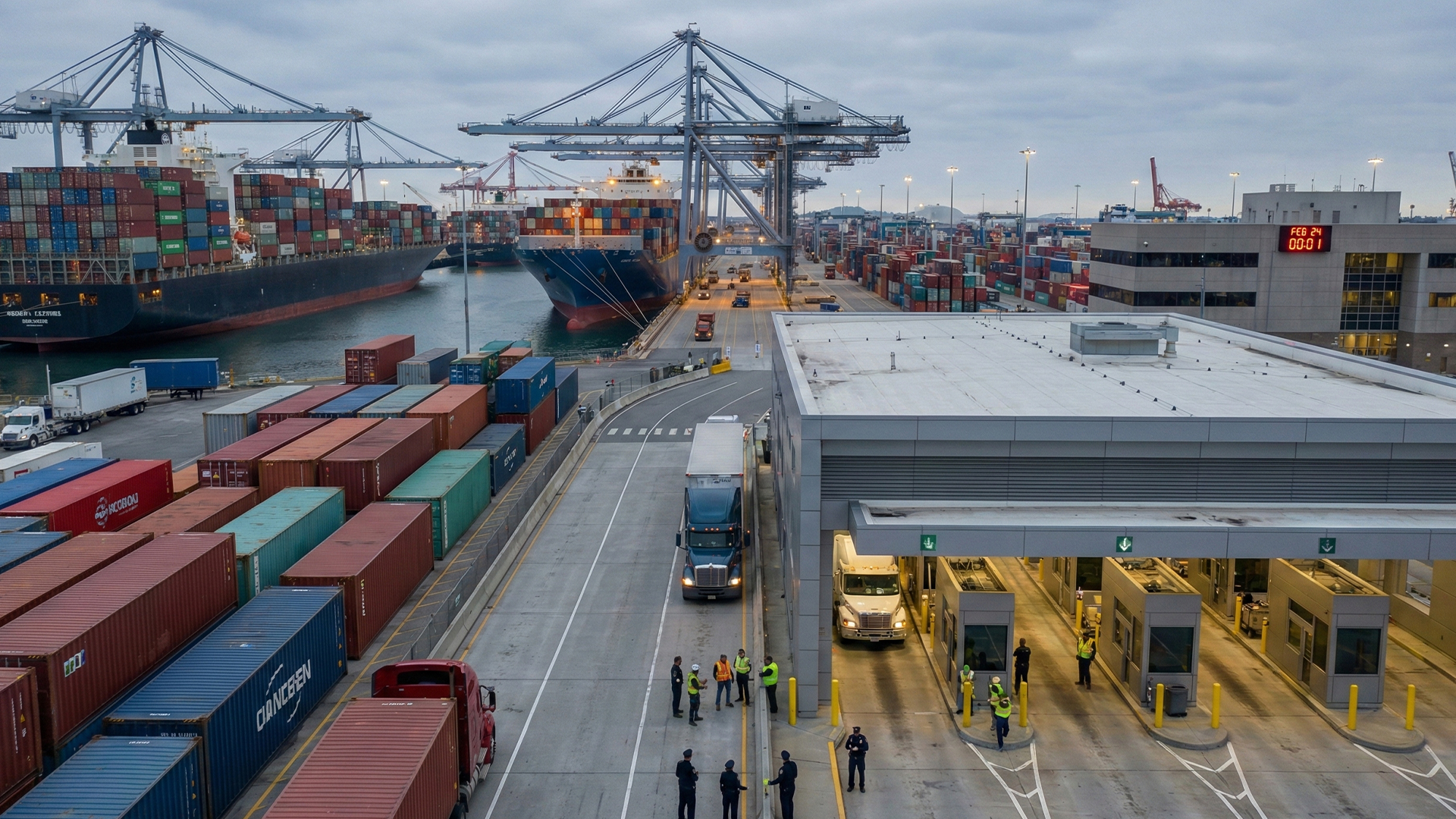
The United States will stop collecting a set of import tariffs from today, February 24, after the US Supreme Court ruled that they were imposed without legal authority.

The decision will be implemented by US Customs and Border Protection, which said it will end the collection of the affected duties from just after midnight. The move follows the court’s finding that the tariffs, introduced using emergency economic powers, went beyond the powers of the president.

The duties had been imposed during the presidency of Donald Trump as part of a broader effort to address the US trade deficit. However, the Supreme Court held that tariff-setting authority lies with Congress and cannot be exercised through the emergency law that was used.

The ruling confirms earlier lower-court judgments and is being seen as an important check on the use of executive powers in trade policy. It also reinforces the role of lawmakers in approving wide-ranging tariff measures.

For importers and businesses, the decision is expected to reduce costs and remove a source of uncertainty that had affected supply chains and pricing. Companies that had challenged the tariffs in court had argued that the duties created financial pressure and disrupted trade.

Also Read: India launches first anti-terror policy ‘PRAHAAR’