rotating globe
3 Apr 2026


Qatar military helicopter crash kills six

Authorities continue search after technical fault causes military helicopter accident

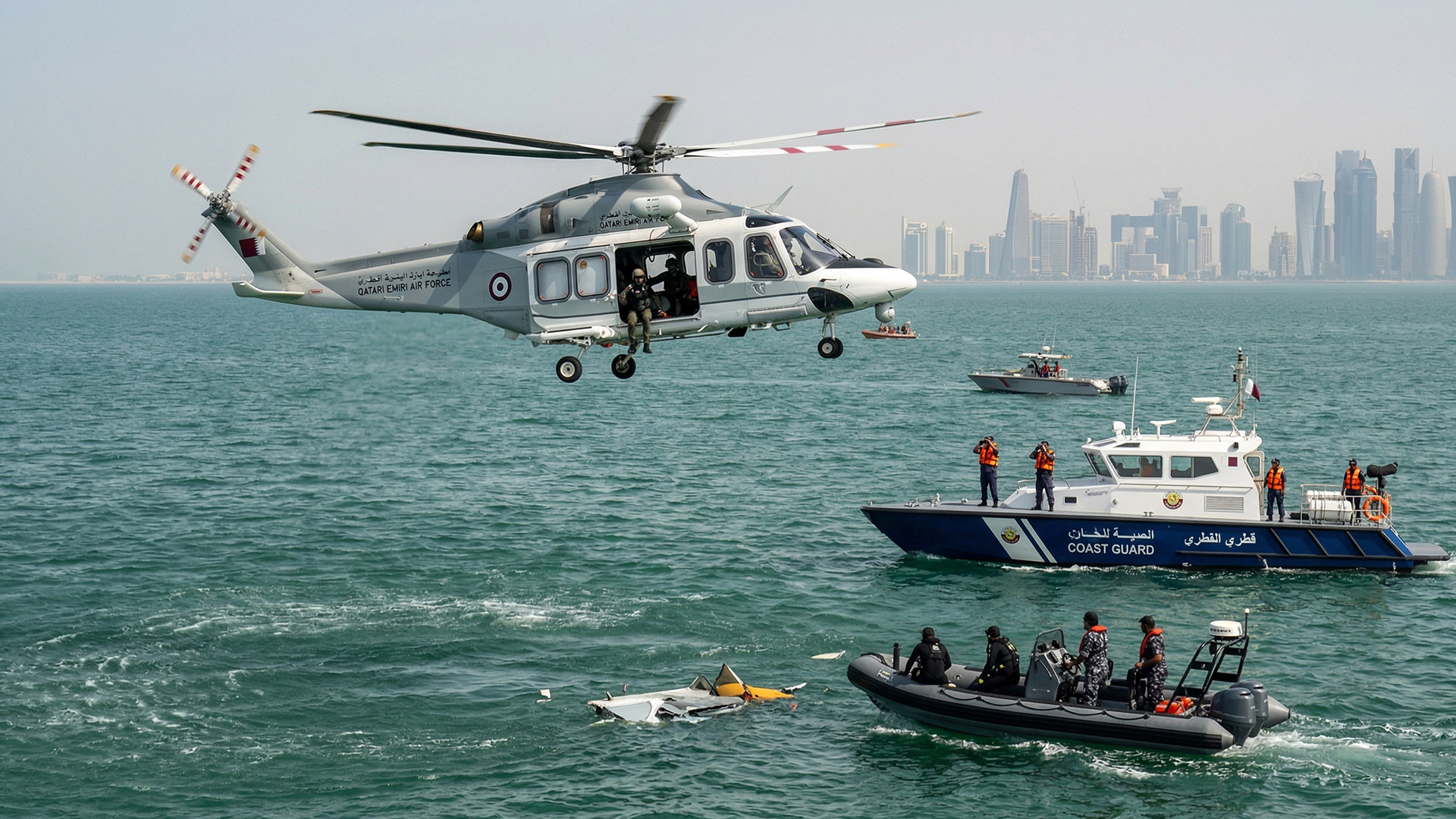
A military helicopter crashed in Qatar’s territorial waters, killing six people and leaving one person missing, officials confirmed on Sunday. Authorities said the crash was caused by a technical malfunction during a routine operation, prompting an ongoing search and rescue mission.

The Qatari Interior Ministry reported that six bodies have been recovered, while one individual remains unaccounted for. The ministry has not yet released the names, nationalities, or roles of those on board.

The Qatar Defence Ministry described the incident as a result of a technical fault during “routine duty,” emphasizing that specialized teams are actively searching for the missing person in Qatar’s territorial waters.

Reports indicate the six confirmed deaths include a combination of Qatari and Turkish nationals — three Qatari servicemen and three Turkish personnel. The seventh person, who is still missing, was also part of the helicopter’s crew or passenger list.

Though the crash occurred amid broader Middle East tensions, authorities stressed that there is no indication of hostile action. The main focus remains on understanding the mechanical failure that led to the accident and completing the search for the missing individual.

Also Read: Kashmir sends aid to war‑striken Iran

Sirens, blasts in Jerusalem after Iran missile alerts

Residents rush to shelters as tension escalates in the Middle East

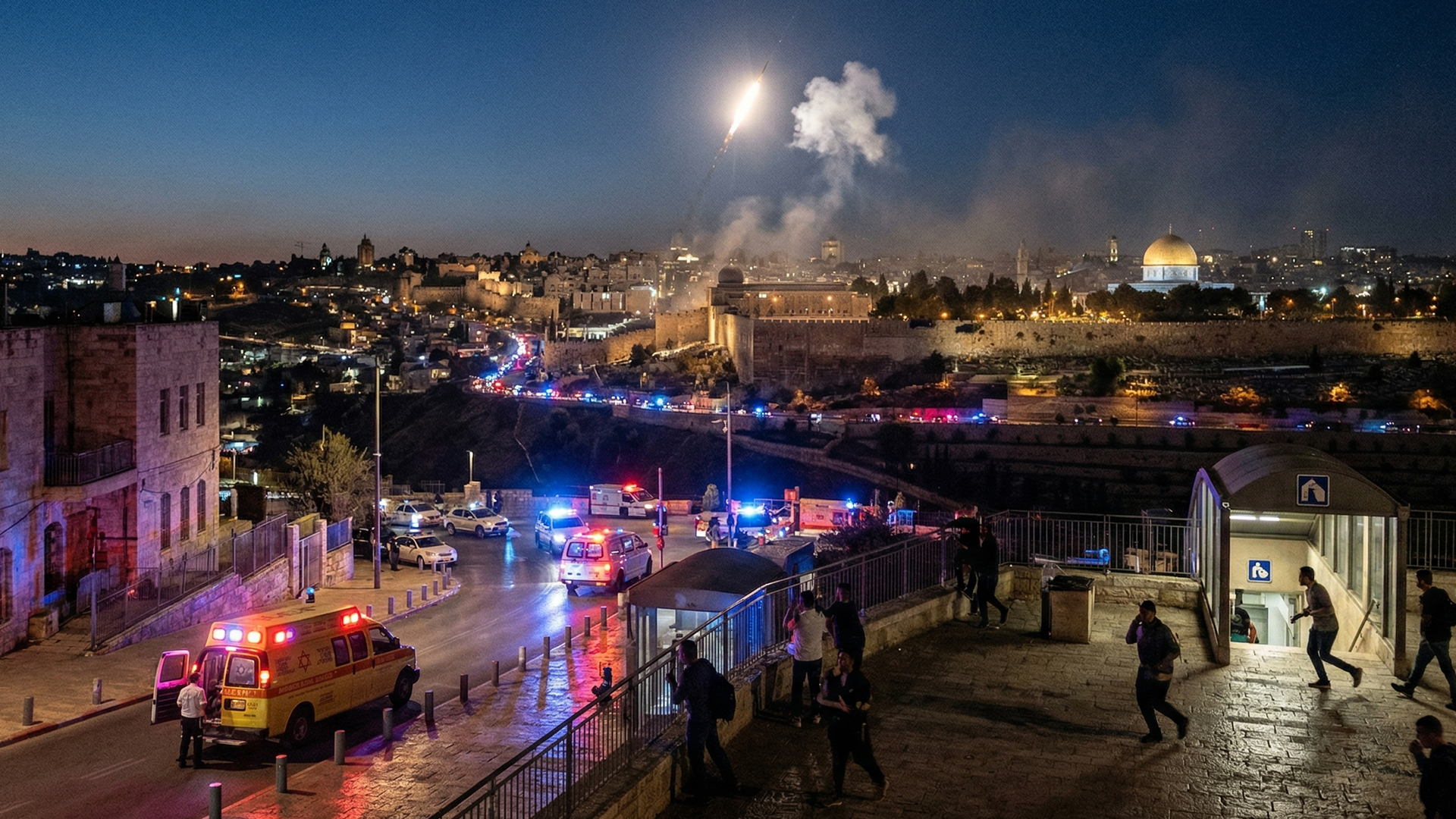
Jerusalem residents were jolted awake by blasts and piercing air‑raid sirens after Israel detected missiles launched from Iran, sending a wave of fear through the city. Families hurried to bomb shelters, while the sound of explosions echoed through streets, rattling windows and nerves alike.

Eyewitnesses described the scene as chaotic and frightening. “We barely had time to reach the shelter before the sirens stopped,” said one resident. The Israeli Home Front Command had issued urgent warnings across Jerusalem and surrounding areas, instructing civilians to move to protected spaces immediately.

Military sources reported that Israel’s Iron Dome and other defense systems intercepted the incoming missiles, with some explosions caused by debris from intercepted projectiles. While no mass casualties were immediately reported, fragments from previous incidents have struck near homes and historic sites, underscoring the ever-present danger to civilians.

The incident comes amid rising tensions between Iran and Israel, with both sides recently exchanging missile and drone strikes. Iran claims its actions are retaliation for operations targeting its facilities, while Israel continues to defend its territory against what it perceives as imminent threats.

Residents recounted a sense of fear and uncertainty. “You never know if it’s safe to go back home,” one local said. Schools and businesses temporarily closed as people stayed in shelters, highlighting the human toll of regional conflict.

Authorities continue to monitor the situation closely, ensuring defensive measures remain in place while emergency teams respond to affected areas. The government has urged calm, reminding citizens that early warning systems and air‑defense measures are active to protect lives.

Also Read: Qatar military helicopter crash kills six

7th round of India mineral auctions

19 mineral blocks offered to strengthen domestic supply

India has launched the seventh round of auctions for critical and strategic mineral blocks, a move aimed at boosting the country’s self-reliance and securing vital resources for industries of the future.

The auction was inaugurated by Union Minister G. Kishan Reddy and will be conducted online through a transparent two-stage process. This follows six earlier rounds in which 46 critical mineral blocks were successfully auctioned, reflecting growing interest from investors in India’s mining sector.

This latest tranche offers 19 blocks across several states, containing minerals that are essential for sectors like electronics, renewable energy, defence, fertilisers, and advanced manufacturing. Key resources in these blocks include lithium, graphite, rare earth elements, tungsten, vanadium and titanium, all critical for modern technology and clean energy.

The government’s focus on these minerals comes amid rising global demand and increasingly strained supply chains. Many critical minerals are concentrated in a few regions worldwide, making domestic access vital for India’s industrial and strategic needs.

To facilitate this, the Mines and Minerals (Development and Regulation) Act, 1957, was amended in August 2023, formally recognising 24 minerals as “critical and strategic.” This gives the central government authority to auction mining leases and composite licences, with revenue shared with the respective state governments.

The online auction process selects winners based on the highest bid percentage of the value of mineral output. Over the years, the procedure has been refined to improve transparency and efficiency, including smoother post-auction steps like performance security and licence issuance.

Officials say the continued auction rounds are part of India’s broader strategy to reduce import dependence, attract investment, and build robust domestic industries that rely on these minerals. The seventh tranche is expected to draw interest from both domestic and international investors, contributing to India’s goal of secure and sustainable mineral supply chains.

Also Read: PM Modi sets record for longest time in office

Ex-Pak envoy Abdul Basit’s ‘India strike’ remark sparks row

Opposition and activists say proposed changes could weaken rights

A statement by former Pakistan High Commissioner to India, Abdul Basit, has sparked controversy after he suggested that Indian cities could be targeted in a conflict scenario.

Speaking during a televised discussion, Basit referred to a hypothetical situation in which the United States launches an attack on Pakistan, particularly its nuclear facilities. He said that if Pakistan is unable to directly retaliate against a distant country like the US, it may consider striking nearer targets, including cities such as New Delhi and Mumbai.

The remarks quickly gained attention and triggered strong reactions in India, with many calling them provocative and irresponsible. Critics argued that even in a hypothetical context, such statements from a former senior diplomat can raise serious concerns about regional security and stability.

Basit reportedly indicated that India could become a “default” option for retaliation due to geographical proximity and existing tensions between the two countries. His comments have been widely circulated online, further fuelling public debate.

Political leaders in India reacted sharply, condemning the statement and describing it as dangerous rhetoric. Some said the remarks reflect a troubling mindset and warned that such comments could worsen already strained relations between the two neighbours.

The controversy comes at a time when global geopolitical tensions are already high, making such statements more sensitive. Analysts point out that comments involving potential military action, especially between nuclear-armed countries like India and Pakistan, can have serious implications even if they are made in a speculative setting.

Basit, who served as Pakistan’s envoy to India between 2014 and 2017, has held key diplomatic positions in the past. This has added weight to his remarks and contributed to the strong response they have received.

While there has been no official response from the Pakistani government, the episode has once again highlighted the fragility of relations in South Asia and the risks posed by inflammatory statements.

The incident has reignited discussions on the need for responsible communication, particularly from individuals who have held important diplomatic roles, given the potential impact on regional peace and security.

Also Read: Opposition, activists oppose Transgender Bill changes

Opposition, activists oppose Transgender Bill changes

Opposition and activists say proposed changes could weaken rights

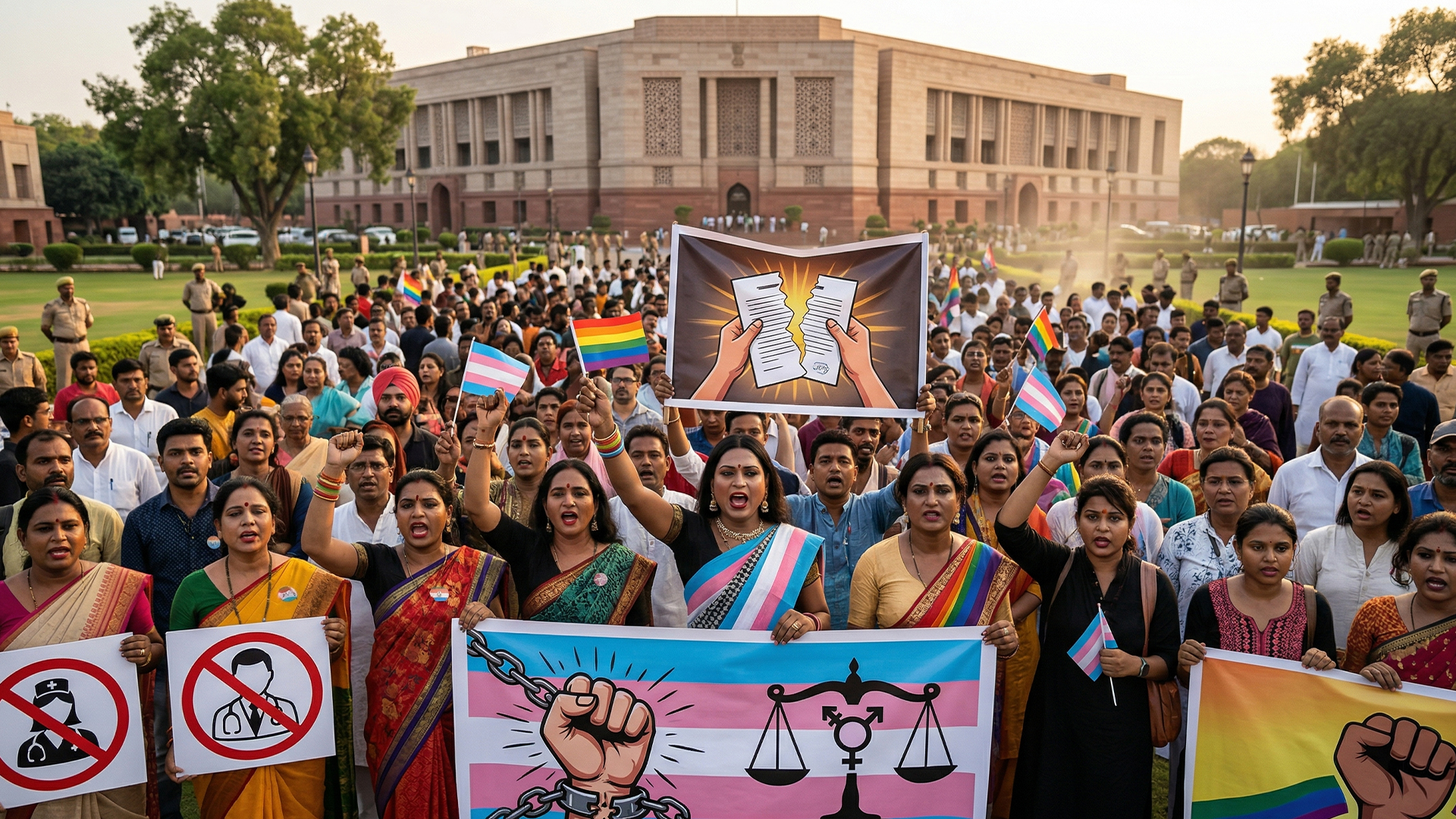
A fresh political and social debate has erupted over the proposed amendments to the Transgender Persons (Protection of Rights) Act, 2019, with Opposition MPs and activists urging the government to withdraw the Bill.

At the centre of the controversy is the Transgender Persons (Protection of Rights) Amendment Bill, 2026, which critics say could roll back key rights won by the transgender community over the years. During consultations and public discussions, several Opposition leaders and members of the community expressed concern that the changes may do more harm than good.

One of the biggest concerns is over the issue of self-identification. Activists argue that the current law, backed by the Supreme Court’s landmark NALSA judgment, allows individuals to identify their own gender. The proposed amendments, however, suggest a verification process involving medical boards. Many see this as intrusive and a step backwards, saying it could strip people of dignity and personal choice.

There are also worries about how the amendments redefine who qualifies as transgender. Critics say the new definition could exclude certain groups within the community, making it harder for them to access government benefits, legal recognition and welfare schemes.

Opposition MPs have echoed these concerns, calling the Bill “regressive” and warning that it risks weakening constitutional protections. They have demanded that the government pause the process and hold wider consultations with the transgender community before moving forward.

Protests and meetings have taken place in different parts of the country, with activists stressing that laws affecting their lives must include their voices. Many have pointed out that without proper dialogue, such changes could deepen existing challenges rather than solve them.

The government has maintained that the amendments are meant to improve clarity and ensure benefits reach the right people. However, with criticism growing louder, the issue has turned into a larger debate about rights, dignity and inclusion.

As discussions continue, the future of the Bill remains uncertain, but it has already sparked an important conversation on how best to protect and uphold transgender rights in India.

Gurugram cab strike causes travel delays

Drivers protest over safety concerns, demand strict passenger verification

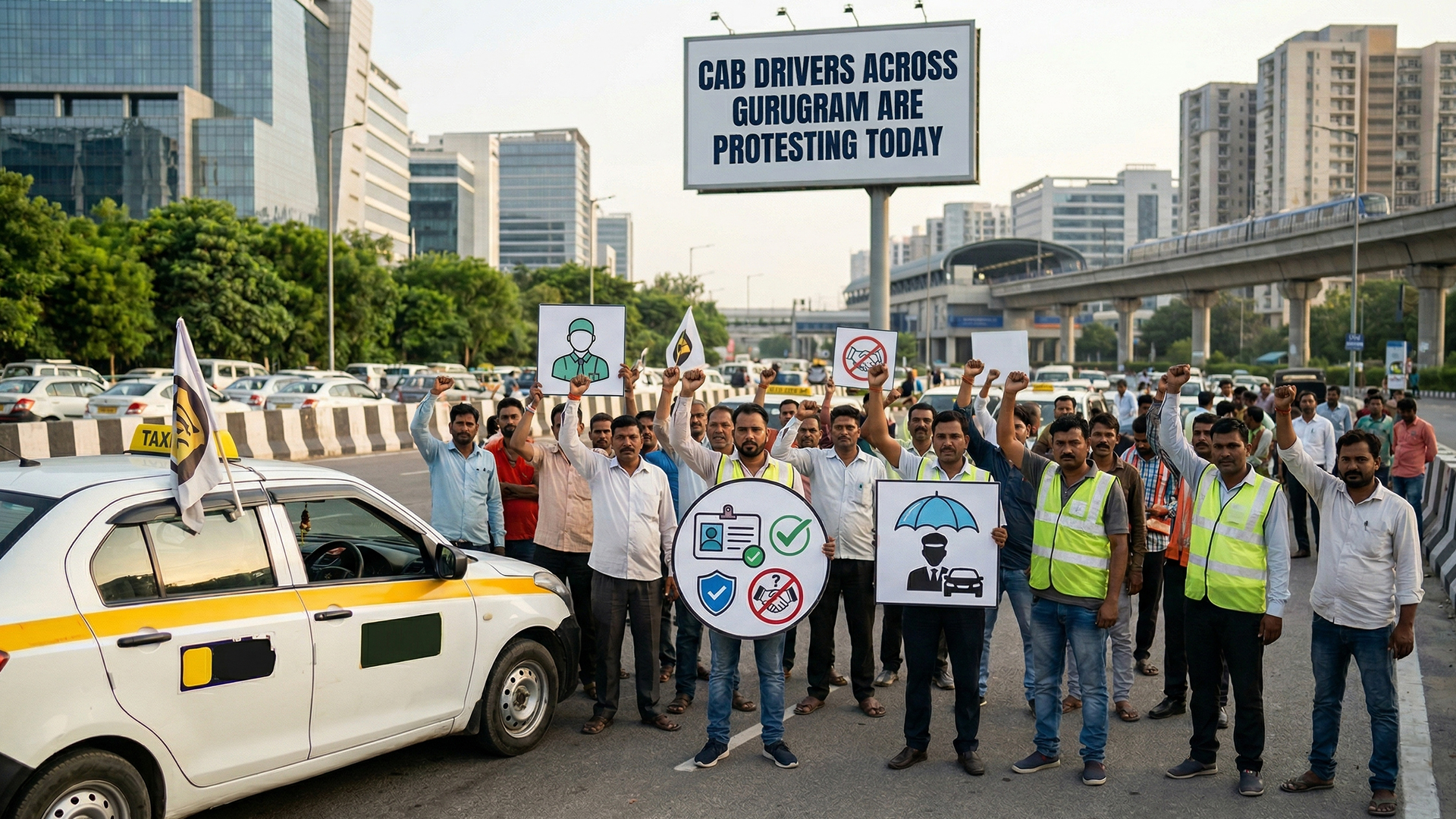
Commuters in Gurugram faced a difficult start to the day on March 23, 2026, as app-based cab drivers went on strike, disrupting transport services across the city. The impact was felt in several busy areas, including DLF Phase, Sohna Road and Golf Course Road, where finding a cab became challenging.

With fewer drivers on the road, many passengers experienced long waiting times and frequent ride cancellations. Office-goers and daily travellers were among the worst affected, as they rely heavily on cab services for their commute.

The protest involves drivers associated with major ride-hailing platforms like Ola, Uber and Rapido. At the centre of their demands is the issue of passenger safety verification. Drivers are calling for mandatory KYC checks for users, arguing that while they must provide detailed identification to work, passengers can book rides without proper verification.

Safety has become a major concern for drivers in recent months. Several have reported incidents of misbehavior, threats and even physical attacks by passengers. A recent case involving the alleged killing of a driver during a robbery attempt has further increased anxiety among the driver community.

In addition to safety concerns, drivers have raised issues about the lack of proper support from cab companies. They claim that complaints against passengers are often not taken seriously, leaving them without adequate protection or resolution.

The strike has brought attention to the challenges faced by drivers in the gig economy. Driver groups say they will continue their protest until stronger safety measures and fair policies are put in place.

Also Read: Telangana presents ₹3.24 lakh cr budget


Iran fires missiles at US‑UK base in Indian Ocean

Strike on Diego Garcia base signals possible expansion of conflict

On March 21, 2026, Iran fired two ballistic missiles toward the Diego Garcia military base in the Indian Ocean, operated jointly by the United States and the United Kingdom, according to multiple reports.

The remote atoll serves as a key strategic hub for Western forces, supporting naval operations, air missions, and reconnaissance activities. The missile attack marks a significant escalation, targeting a location more than 4,000 kilometres from Iran, far beyond its previously known missile range.

Officials cited by the Wall Street Journal reported that neither missile hit the base. One missile reportedly malfunctioned mid‑flight, while the second may have been intercepted by a U.S. Navy warship using an SM‑3 missile system. Full details on the interception’s success are not yet available.

The launch spotlights a possible increase in Iran’s long‑range strike capabilities, potentially expanding its reach to regions far beyond the Gulf. Western military experts have noted that previous Iranian missile actions were mostly limited to nearby areas, including Gulf countries and regional allies of the US and U.K. This attack did not result in casualties or damage,

Neither the White House nor the Pentagon has released an official statement about the incident. British officials have also remained silent on whether forces stationed at Diego Garcia were at immediate risk.

Also Read: Iran’s IRGC spokesperson killed in reported strike