rotating globe
4 Apr 2026


Whale protein offers clues to longer human life

Scientists discover a protein in bowhead whales that helps repair DNA and may inspire anti-aging research

Scientists have discovered that bowhead whales, which can live over 200 years, produce a special protein that helps repair damaged DNA. This protein could give clues about how humans might slow aging and reduce age-related diseases.

Bowhead whales live in Arctic waters and are known for their long lives and very low rates of cancer. Normally, as humans age, DNA in our cells gets damaged, which can lead to aging and diseases like cancer. Researchers found that whales produce a protein called CIRBP (cold-inducible RNA-binding protein) in much larger amounts than humans,  sometimes up to 100 times more.

CIRBP helps detect and fix breaks in DNA. When scientists added the whale version of this protein to human cells in the lab, those cells repaired DNA damage better and were less likely to develop harmful changes. In experiments with fruit flies, boosting CIRBP not only improved DNA repair but also helped them live longer and resist stress, like radiation.

This discovery helps explain a mystery known as Peto’s paradox, which asks why big animals with many cells, like whales, don’t get more cancer. Their strong DNA repair system may protect them from harmful mutations, helping them live so long.

While this research is exciting, scientists caution that aging is complex. No single protein can make humans live much longer on its own. But studying whales’ DNA repair may guide future treatments to slow aging and prevent diseases.

Also Read: Lionel Messi makes history with 900th goal

7 China-bound oil tankers rerouted to India

Changing routes underline volatile global oil trade and India’s growing demand for discounted crude

In a notable shift in global oil movements, seven tankers that were initially headed for China have now been redirected to India, according to recent reports. These vessels, carrying Russian crude, changed their destinations while en route, reflecting evolving trade patterns influenced by market conditions and geopolitical factors.

One of the ships, Aqua Titan, is expected to arrive at the New Mangalore port after altering its course. It had earlier declared a Chinese port as its destination but was later reassigned to an Indian buyer, reportedly a domestic refinery seeking additional supplies.

The rerouting comes at a time when global energy supply chains are facing uncertainty. Ongoing geopolitical tensions, especially in key oil-producing regions, have disrupted established trade routes and tightened availability. This has created opportunities for countries like India to secure additional cargoes, particularly from Russia, often at more competitive prices.

India, which depends on imports for a large share of its crude oil needs, has been steadily increasing its intake of Russian oil in recent years. The diversion of these tankers is seen as part of that broader strategy to ensure stable and cost-effective energy supplies.

Market experts point out that such mid-course changes are not unusual in the oil trade. Shipments are frequently redirected depending on demand, pricing advantages, and logistical considerations. However, the scale of this shift, multiple tankers changing course simultaneously, highlights the current volatility in global markets.

China has been one of the largest buyers of Russian crude, but the recent developments suggest stronger competition among major importers. India’s ability to attract these shipments indicates its increasing influence and flexibility in the international energy landscape.

While the redirected cargoes may help India meet short-term demand, analysts caution that the situation also reflects broader instability in global oil flows. Continued disruptions could impact pricing trends and trade routes in the near future.

Also Read:  DarkSword Spyware puts iPhones at risk


Delhi-NCR gets sudden rain, storm

Cool spell likely to continue as IMD warns of more storms till March 21

Delhi-NCR got an unexpected break from the rising heat as rain, thunderstorms and strong winds swept through the region on March 18. What started as a regular warm day quickly turned cooler by evening, with many residents enjoying the sudden change in weather.

The India Meteorological Department (IMD) has issued a yellow alert, saying this spell is not over yet. Similar conditions, including light rain, thunderstorms and gusty winds, are expected to continue until March 21.

The shift is being caused by an active western disturbance, a weather system that is currently affecting much of North India. Because of this, not just Delhi but nearby states like Haryana, Uttar Pradesh and Rajasthan are also seeing rainfall and stormy conditions.

On Wednesday, several parts of the city recorded light to moderate showers, along with lightning and winds reaching up to 40–50 kmph. The rain brought down temperatures noticeably, giving the city a brief return of winter-like coolness in the middle of March.

However, officials are urging people to stay careful. Strong winds and thunderstorms can lead to minor disruptions such as traffic jams, falling branches or temporary power cuts.

Weather experts say this kind of weather is unusual for this time of year. They link it to changing atmospheric patterns, which may also bring chances of hailstorms or dust storms in some areas.

Also Read: High Courts to notify convicts before amicus curiae


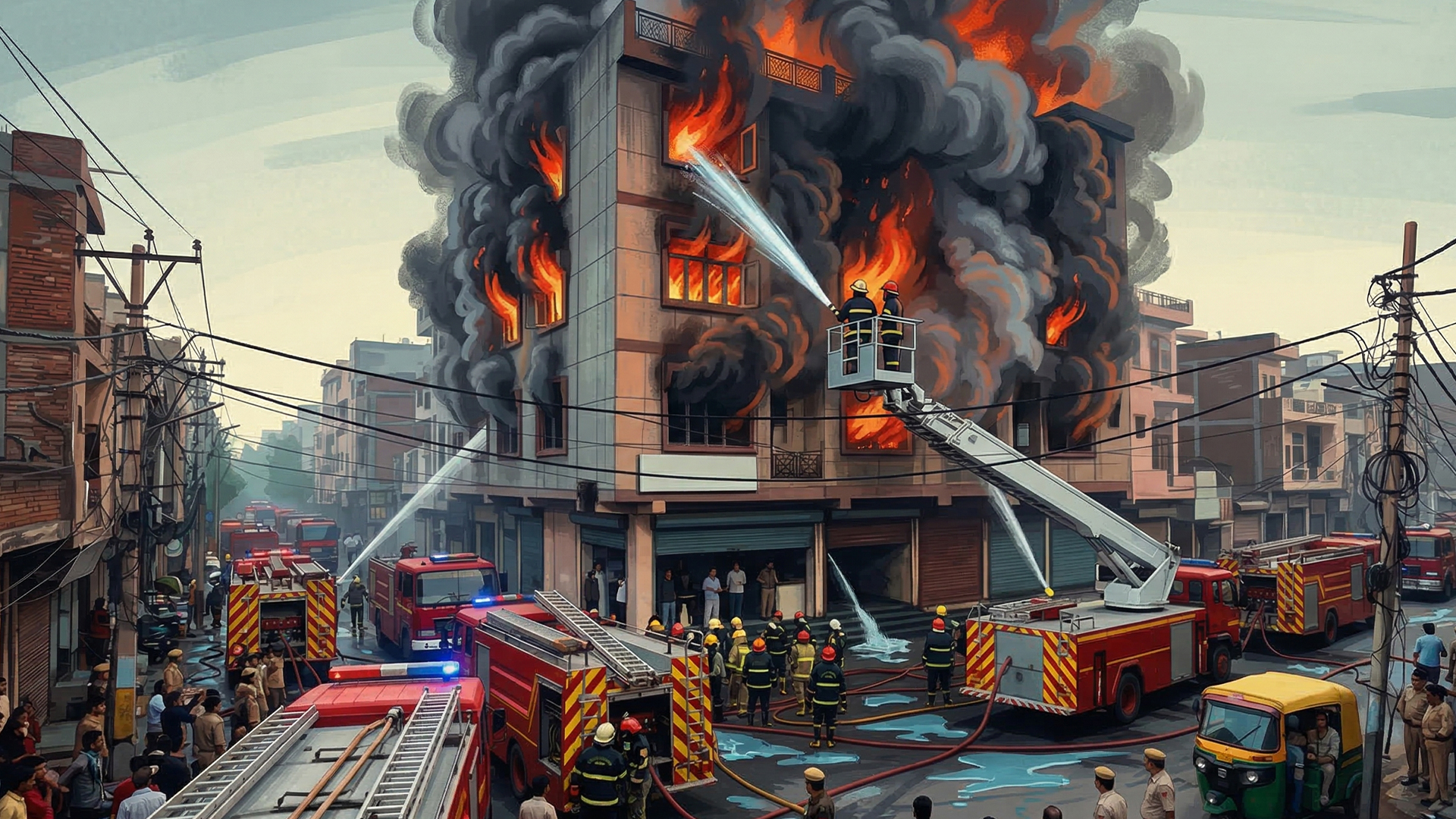
9 family members die in Palam house fire

Three children among victims as blaze engulfs residential building. Inquiry underway

A deadly fire in southwest Delhi’s Palam locality has claimed the lives of nine members of a single family, including three children. The incident occurred in a house near the Palam Metro station, leaving the local community in shock.

According to initial findings, the fire is believed to have started on the ground floor, possibly due to an electrical malfunction. Within a short time, the flames spread to other parts of the building, intensified by combustible materials stored inside. The rapid spread of fire and thick smoke made escape extremely difficult for those inside.

Most of the victims were on the upper floors when the blaze broke out. As smoke filled the building and visibility dropped, they were unable to find a safe way out. Officials said the structure lacked adequate safety measures, such as proper exits or fire-fighting systems, which could have helped prevent the loss of lives.

Fire brigade teams reached the spot soon after the alarm was raised and began efforts to contain the blaze and rescue those trapped. The operation continued for several hours before the fire was brought under control. During the search, bodies were recovered from different sections of the house, suggesting that the occupants had tried to move to safer areas but were overcome by smoke.

Some relatives who were not present at the time survived, but the loss of multiple family members has left them devastated. The victims belonged to the same household, making the incident particularly tragic.

Authorities have initiated an investigation to determine the exact cause of the fire and to check for any lapses in safety compliance. Officials have also indicated that necessary action will be taken if violations are found.

The Delhi government has ordered an inquiry into the incident and is expected to extend support to the affected family.

Also Read: High Courts to notify convicts before amicus curiae

High Courts to notify convicts before amicus curiae

SC directive aims to ensure fair representation in criminal appeals

The Supreme Court has instructed High Courts to inform convicted persons before appointing an amicus curiae, a lawyer assigned by the court, to represent them in criminal appeals. The direction is aimed at strengthening procedural fairness and avoiding future challenges to court decisions.

The order came while hearing a case in which the appellant argued that he had not been informed about the appointment of an amicus curiae to argue his case before the High Court. He contended that, due to this lack of communication, important aspects of his defence may not have been properly presented.

A Bench of the Supreme Court observed that prior notice to the convict would allow better coordination between the accused and the court-appointed lawyer. It emphasised that such communication ensures the amicus curiae receives proper instructions and can present the case more effectively.

To implement this, the Court suggested that notice should be sent to the convict’s last known address, ideally through local police authorities. This would give the convict an opportunity to either brief the appointed lawyer or choose to engage a private counsel. The Court added that if a private lawyer is appointed, the High Court may hear both the privately engaged counsel and the amicus curiae, if necessary.

At the same time, the Supreme Court clarified that proceedings should not be delayed unnecessarily. If the convict cannot be located or fails to respond despite proper notice, the High Court can proceed with the hearing after completing the required steps.

The Court also pointed out that this approach would reduce the chances of convicts later raising objections on technical grounds, which often lead to delays in the justice process, particularly in long-pending criminal appeals.

Although the Supreme Court did not grant relief to the appellant in the present case, it acknowledged that informing the convict beforehand would have been a better practice. The matter has been sent back to the High Court for reconsideration.

Also Read: US flags China, Pakistan as nuclear threats


PM Modi bids farewell to 59 Rajya Sabha MPs

Veterans like Deve Gowda, Kharge, Pawar praised. PM mentioned politics has no full stops

The Rajya Sabha on Wednesday bid farewell to 59 retiring members from 20 states, including nine women MPs, marking the end of their terms between April and July. The event celebrated their contributions to national legislation and public service.

Addressing the House, Prime Minister Narendra Modi said politics has “no full stops,” emphasizing that the experience and wisdom of retiring lawmakers remain valuable for the nation. He praised the Rajya Sabha as an “open university” that enriches members’ understanding of governance and public life.

Modi specially acknowledged veterans such as former Prime Minister H. D. Deve Gowda, Leader of Opposition Mallikarjun Kharge, and Sharad Pawar, highlighting their decades-long contributions. He urged younger lawmakers to learn from their dedication and commitment.

Deputy Chairman Harivansh Narayan Singh, also retiring, was commended for fairness in conducting House proceedings and engaging with youth on civic issues. During the farewell, members shared anecdotes and light-hearted moments, reflecting camaraderie across party lines.

Some retiring MPs, including Pawar and Ramdas Athawale, have already secured re-election, demonstrating that political engagement continues beyond formal tenure. Kharge noted that parliamentary rules and procedures should evolve to foster robust debate and strengthen democracy.

Also Read: Indore fire kills 8 after EV charging blast

Samsung halts Galaxy Z TriFold sales

Tri-fold flagship disappears from market just three months after launch

Samsung Electronics has announced that it will stop selling its most expensive smartphone, the Galaxy Z TriFold, only three months after its launch. The device, Samsung’s first tri-folding phone, was introduced in December 2025 in South Korea and reached the U.S. market in January 2026. It featured a 10-inch flexible display that unfolded like a tablet, pushing the boundaries of smartphone design.

With a premium price tag of $2,899 (around ₹2.65 lakh), the Galaxy Z TriFold was marketed as a showcase of Samsung’s technological innovation rather than a mass-market device. Despite strong interest from early adopters, the phone’s high production costs and limited sales channels made it commercially unviable. Samsung’s website now lists the device as “sold out”, confirming that sales will end immediately in South Korea, while U.S. availability will continue only until remaining inventory is cleared.

Industry analysts say the decision reflects a strategic reassessment. The TriFold was never intended to be a high-volume product. Manufacturing such an advanced foldable at scale proved expensive, and the phone’s niche appeal limited its potential for profit. While some units remain in select Samsung Experience Stores in the U.S., the device is unlikely to be restocked or widely distributed.

For collectors and tech enthusiasts, the TriFold’s brief market presence may make it a rare find. Samsung has not confirmed plans for a successor, suggesting that insights from the TriFold will influence future foldable designs in the Galaxy Z lineup rather than result in an immediate replacement. The company appears to be refocusing on its more mainstream flagship devices, including the recently launched Galaxy S26 Ultra series.

The Galaxy Z TriFold experiment highlights Samsung’s push to innovate in the foldable smartphone segment while balancing cost, production feasibility, and consumer demand.

Also Read: SC allows maternity leave for all adoptive mothers

USS Gerald R. Ford battles 30‑hour fire, heads to Crete

Nearly 600 sailors lose bunks as US supercarrier diverts amid Iran conflict operations

A fire that burned for more than 30 hours aboard the US Navy’s newest aircraft carrier, USS Gerald R. Ford, has forced the ship to divert to Souda Bay, Crete for repairs. The blaze, which began in the ship’s laundry area, spread into nearby living quarters, leaving over 600 sailors without their bunks. Many had to sleep on tables and floors while crew battled the flames.

Two sailors were treated for injuries, and several others suffered from smoke inhalation, though thankfully no lives were lost. Despite the disruption, the carrier remains operational as it heads for port.

The incident comes amid the carrier’s deployment connected to ongoing tensions with Iran, highlighting the challenges of maintaining morale and safety on a warship far from home. Navy officials are investigating the fire, which they say was not caused by enemy action.

The stop in Crete will allow the crew to rest, resupply, and repair damage, preparing the ship to return to its mission in the region. Sailors describe the ordeal as exhausting but are focused on getting the ship back in shape and continuing their duties.

This fire adds to ongoing concerns about the Ford’s extended deployments and the strain they place on both equipment and crew.

Also Read: US strikes Iranian missile sites near Strait of Hormuz

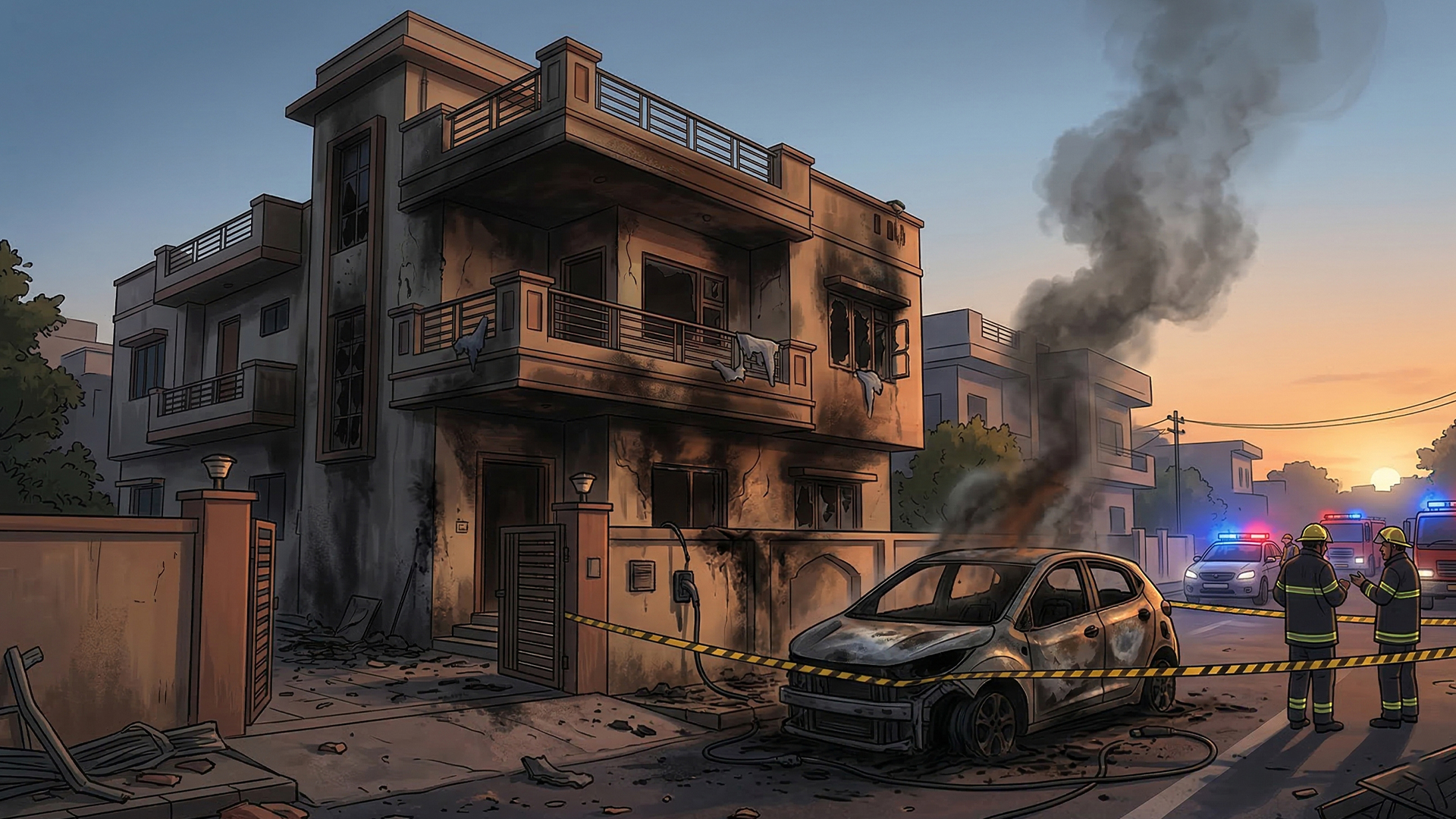
 Indore fire kills 8 after EV charging blast

Explosion at home charging point sparks deadly blaze, trapping family in the middle of gas cylinders and locked doors.

In Indore, a tragic fire early Wednesday morning claimed eight lives after an electric vehicle (EV) charging point exploded outside a three‑storey home in Brijeshwari Annex Colony. The blast occurred between 3:30 am and 4:30 am, igniting the car and quickly spreading to the house.

Authorities said the fire worsened when LPG cylinders inside the home detonated, making rescue efforts extremely challenging. Many victims, including two children and three women, were trapped inside. Emergency teams managed to rescue three people, who were hospitalized, though some later chose to continue treatment elsewhere.

Police Commissioner Santosh Kumar Singh noted that electronic door locks may have slowed escape, complicating firefighter access. Despite rapid response, the combination of electric sparks, gas explosions, and structural hazards turned the house into a deadly trap in minutes.

The incident has raised concerns over home-based EV charging safety and storing flammable materials like LPG cylinders in residential areas.

Also Read: USS Gerald R. Ford battles 30‑hour fire, heads to Crete

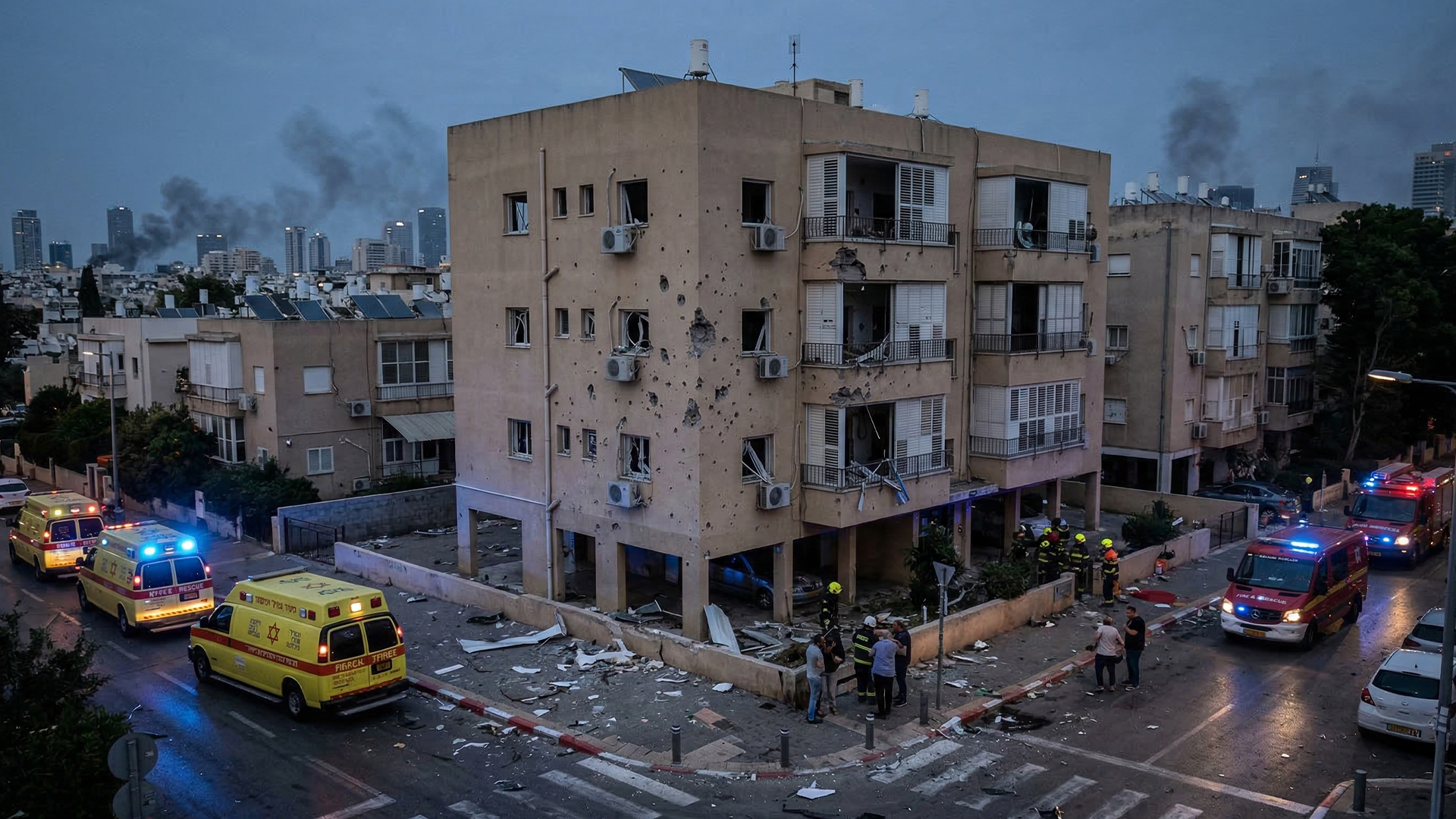
Iran strikes Tel Aviv after security chief’s killing

At least two civilians killed as Tehran retaliates, escalating tensions in the region

Iran launched a missile attack on Tel Aviv on Wednesday night, firing weapons equipped with cluster warheads in retaliation for the killing of its top security official, Ali Larijani, and his son. Larijani, a senior figure in Iran’s Supreme National Security Council, was killed in what Tehran described as an Israeli strike.

The missiles targeted densely populated areas of Israel’s commercial hub. While Israel’s air defence systems intercepted many of them, at least two civilians were killed, and several others were injured. Cluster warheads release multiple smaller bomblets, making them particularly dangerous in urban areas and increasing the risk to civilians.

Iran’s government called the attack “a direct response to an act of assassination” and warned that it would continue to act against Israeli operations. Israel, on its part, framed the initial strike that killed Larijani as part of a broader campaign against Iranian leadership amid the ongoing regional conflict.

Beyond Tel Aviv, there are reports that Iranian missiles and drones also targeted U.S. forces and allied positions in the Gulf, prompting interceptions by air defence systems in countries such as Saudi Arabia, Qatar, and the United Arab Emirates.

The conflict, which escalated in late February 2026 following a joint U.S.–Israeli operation targeting Iranian leadership, has seen repeated cycles of retaliation. Israel has responded with strikes on Iranian positions in Lebanon and elsewhere, causing significant civilian casualties and displacements.

The latest missile strikes have heightened international concerns about the potential for a wider regional war.

Also Read: US strikes Iranian missile sites near Strait of Hormuz