rotating globe
7 Apr 2026


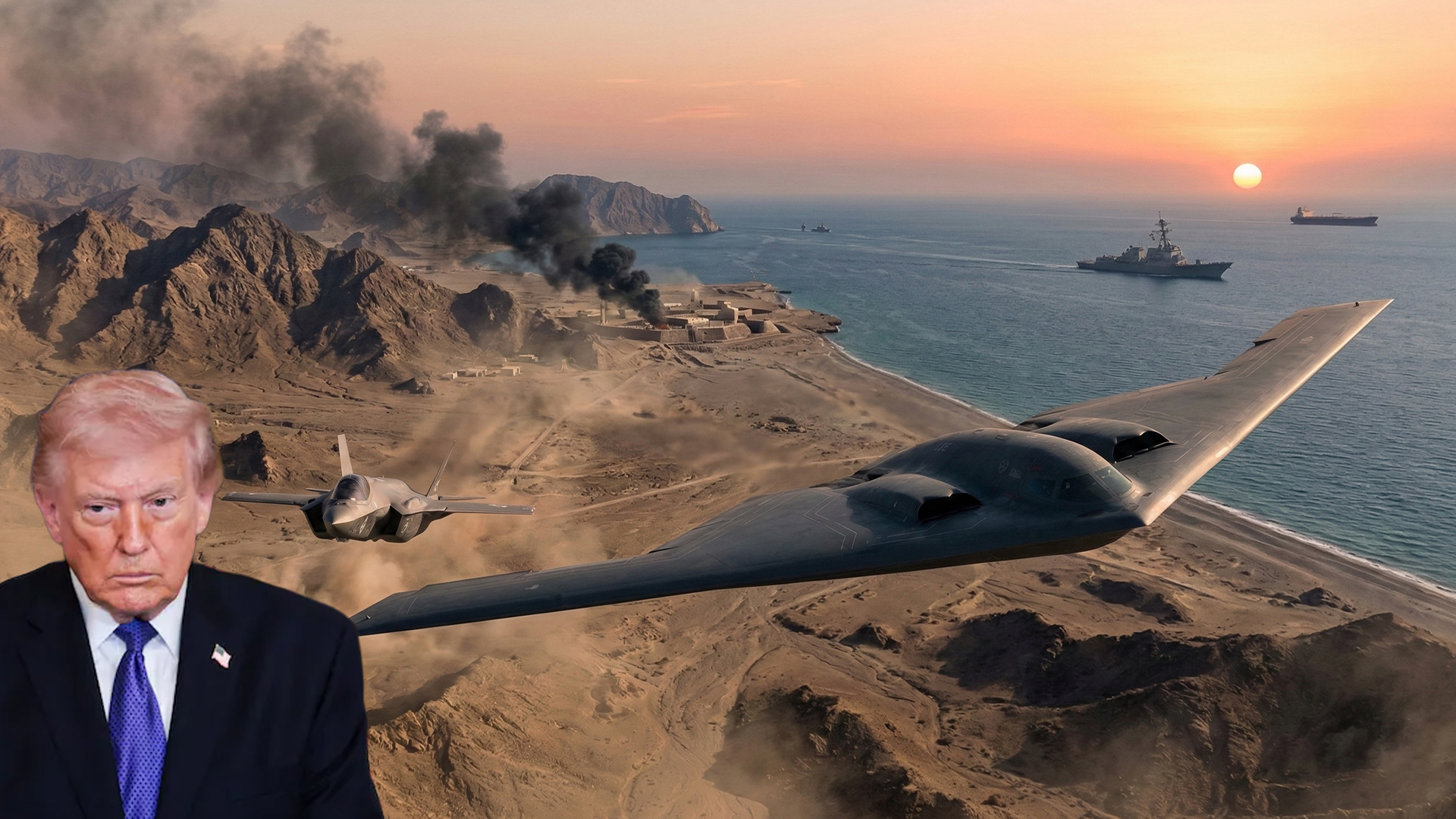
Iran warns US over ground invasion

Foreign minister says any American troop deployment would end in “disaster”

Iran has warned the United States that sending ground troops into the country would lead to serious consequences for American forces. Iranian Foreign Minister Abbas Araghchi said Tehran is prepared for such a situation and believes a US invasion would end badly for Washington.

Speaking about the growing tensions in the region, Araghchi said Iran is not worried about the possibility of a US ground attack. According to him, the country’s military is ready to respond if American troops enter Iranian territory. He said Iran’s forces are waiting and prepared to defend the country, adding that such a move by the US would turn into a “big disaster” for American soldiers.

His warning comes at a time of rising tensions between Iran and the United States, with military actions and threats increasing in the region. The situation has become more serious as the conflict involving Israel and Iran continues to escalate.

Araghchi also dismissed claims that Iran is seeking a ceasefire with the United States. He said Tehran has not asked for negotiations to stop the fighting and believes talks would not be useful under the current circumstances. According to him, past diplomatic efforts often failed because military pressure followed negotiations.

The Iranian minister said the country has significantly strengthened its military capabilities in recent years. He pointed out that Iran has improved its missile systems and defence technology, which he said would help the country respond to any foreign attack.

While warning against a possible invasion, Araghchi said Iran does not necessarily want the conflict to continue. However, he stressed that the country has prepared itself for all possible scenarios and would defend its territory if needed.

Also Read: Trump replaces Homeland Security Chief Noem with Senator Mullin

Trump replaces Homeland Security Chief Noem with Senator Mullin

Kristi Noem moved to new envoy role as Markwayne Mullin tapped to lead DHS

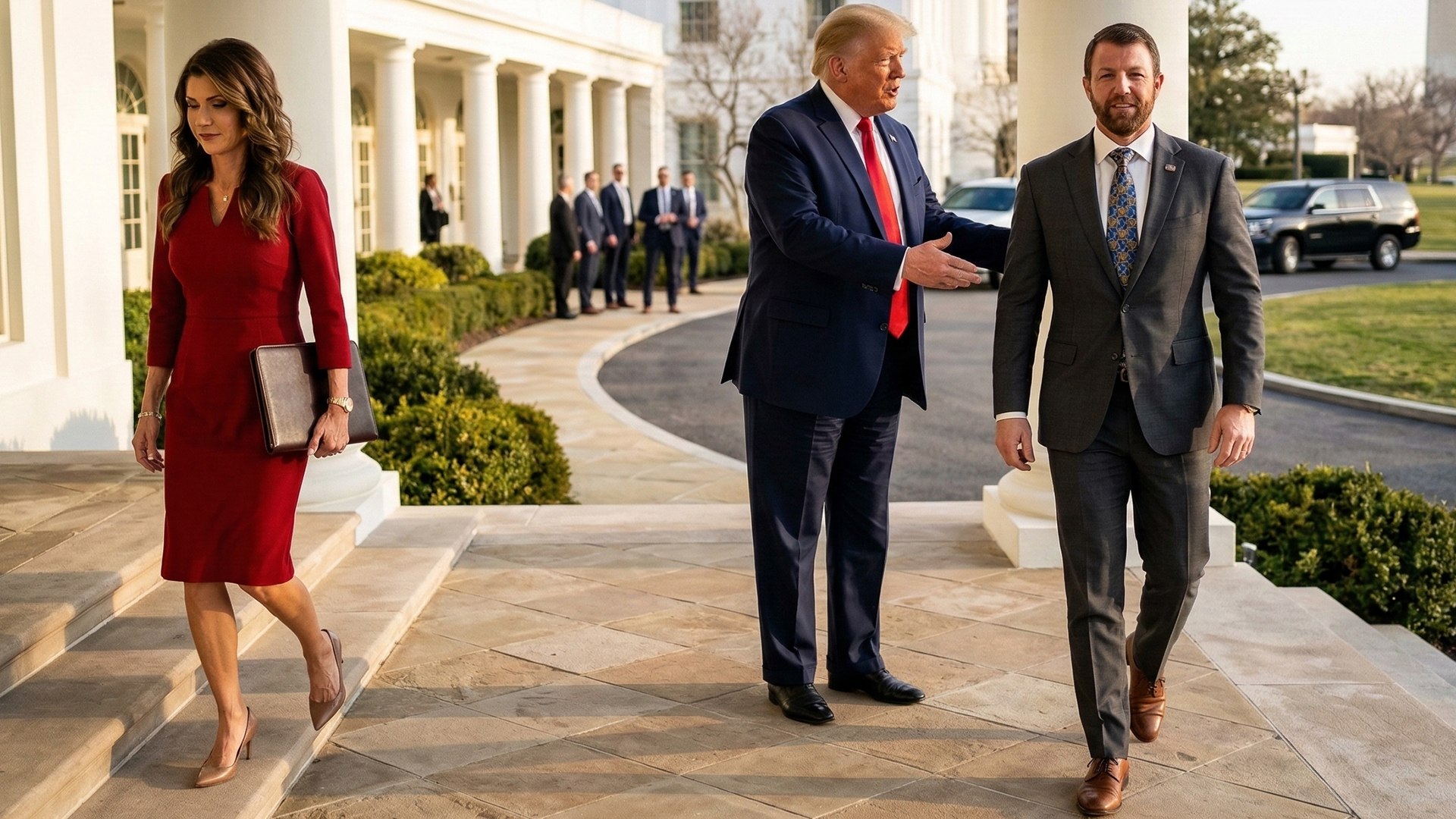
US President Donald Trump has replaced Homeland Security Secretary Kristi Noem and nominated Oklahoma Senator Markwayne Mullin to head the Department of Homeland Security (DHS), marking a key leadership change in his administration.

Trump announced the decision on his social media platform, stating that Mullin would take over the department pending approval from the U.S. Senate. If confirmed, Mullin is expected to assume office later this month.

Noem, who previously served as governor of South Dakota before becoming DHS secretary, will move to a new role as Special Envoy for the “Shield of the Americas”. The initiative focuses on strengthening security cooperation across countries in the Western Hemisphere. Trump thanked her for her work at the department, particularly on border security and immigration enforcement.

The leadership change follows criticism faced by Noem in recent congressional hearings, where lawmakers questioned several decisions related to immigration policies and the management of programmes under the Department of Homeland Security.

Mullin, a Republican senator from Oklahoma and a close ally of Trump, has been a vocal supporter of stricter immigration measures and stronger border controls. Before joining the Senate in 2022, he served multiple terms in the US House of Representatives. Prior to his political career, Mullin ran a family plumbing business in Oklahoma.

Trump said Mullin would help strengthen border security and continue the administration’s efforts to curb illegal immigration, drug trafficking and cross-border crime. His nomination now awaits confirmation by the Senate.

The Department of Homeland Security is one of the largest federal agencies in the United States. It oversees a wide range of responsibilities including border protection, immigration enforcement, cybersecurity and disaster response.

Also Read: Ex-US envoy appointed Delhi Lieutenant Governor

Trump wants a say in Iran’s next leader

US president calls Khamenei’s son a “lightweight

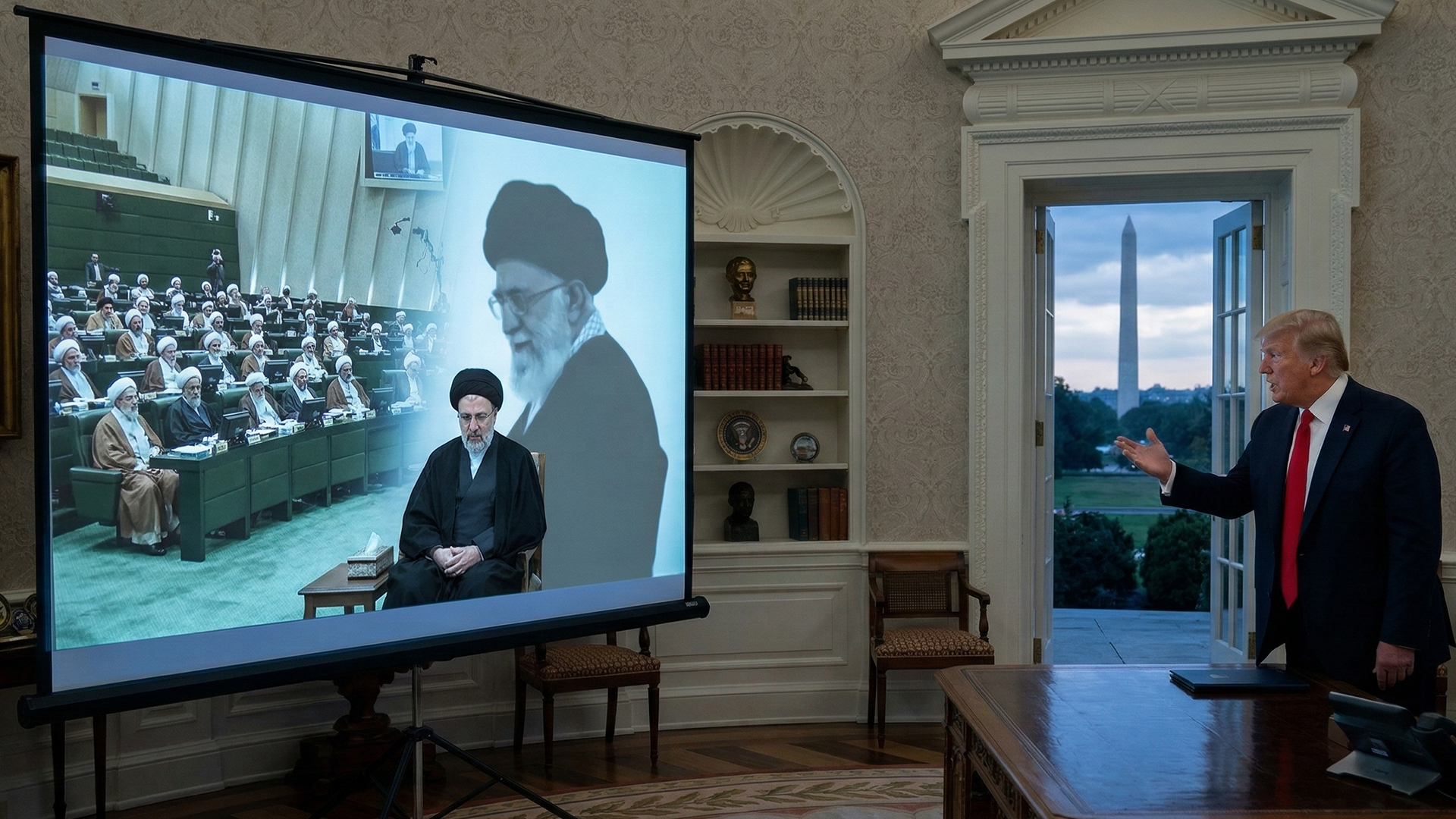
US President Donald Trump has said the United States should have a role in deciding who becomes Iran’s next supreme leader, rejecting the possible succession of Mojtaba Khamenei, the son of Iran’s former leader Ayatollah Ali Khamenei.

Speaking in an interview, Trump described Mojtaba Khamenei as a “lightweight” and said he would not be an appropriate leader for Iran. He added that Washington should be involved in shaping Iran’s future leadership to ensure stability in the region.

The comments come at a time when Iran is facing uncertainty over its leadership following recent developments that have raised questions about who will succeed Ali Khamenei. Mojtaba Khamenei has been widely discussed as a possible successor, though his potential rise has triggered debate in Iran about the possibility of a hereditary transfer of power.

Trump said the United States would prefer a leader in Iran who is willing to reduce tensions and move toward more peaceful relations with the international community. He warned that if a hardline leader similar to the previous leadership comes to power, it could lead to renewed confrontation with Washington.

Iran’s political system normally decides the supreme leader through its internal institutions, particularly the Assembly of Experts, which is responsible for selecting the country’s top authority.

Trump’s remarks have drawn attention globally because Iran traditionally rejects any foreign involvement in its domestic political process. Analysts say such comments could add to existing tensions between Washington and Tehran during a period of heightened instability in the Middle East.

Also Read: RSP leads in 40+ seats in Nepal polls

RSP leads in 40+ seats in Nepal polls

Balen Shah’s party wins a few seats, surges ahead in early vote counting

Nepal’s parliamentary election results are showing a strong early performance by the newly formed Rastriya Swatantra Party (RSP) led by Balendra “Balen” Shah, as vote counting continues across the country.

Initial trends indicate that the RSP has won a few seats and is leading in more than 40 constituencies, putting the party ahead of many established political groups in the early stages of counting. The party’s early success is being seen as a sign of growing public support for new political alternatives in Nepal.

One of the first confirmed victories for the party came from Kathmandu-1, where RSP candidate Ranju Neupane secured a win. Meanwhile, party leader Balen Shah is contesting from Jhapa-5, where early counting showed him leading against former prime minister K.P. Sharma Oli, a senior leader of the Communist Party of Nepal (UML).

The election is considered an important moment in Nepal’s political landscape. It is the first national vote held after major youth-led protests last year that forced political changes and increased demands for transparency, governance reforms and stronger action against corruption.

Polling for the election was held on March 5, with an estimated voter turnout of around 60 percent, reflecting strong participation by citizens across the Himalayan nation.

Nepal’s federal parliament consists of 275 seats, of which 165 members are elected directly from constituencies while 110 seats are filled through proportional representation. Final results are expected to take a few more days as ballots from remote and mountainous areas are still being counted.

Political analysts say the strong showing by the RSP reflects frustration among younger voters with traditional political parties that have dominated Nepal’s politics for decades.

Also Read: US tests Minuteman III missile amid Iran tensions


US tests Minuteman III missile amid Iran tensions

Long‑range ICBM launch signals military readiness as Middle East conflict intensifies

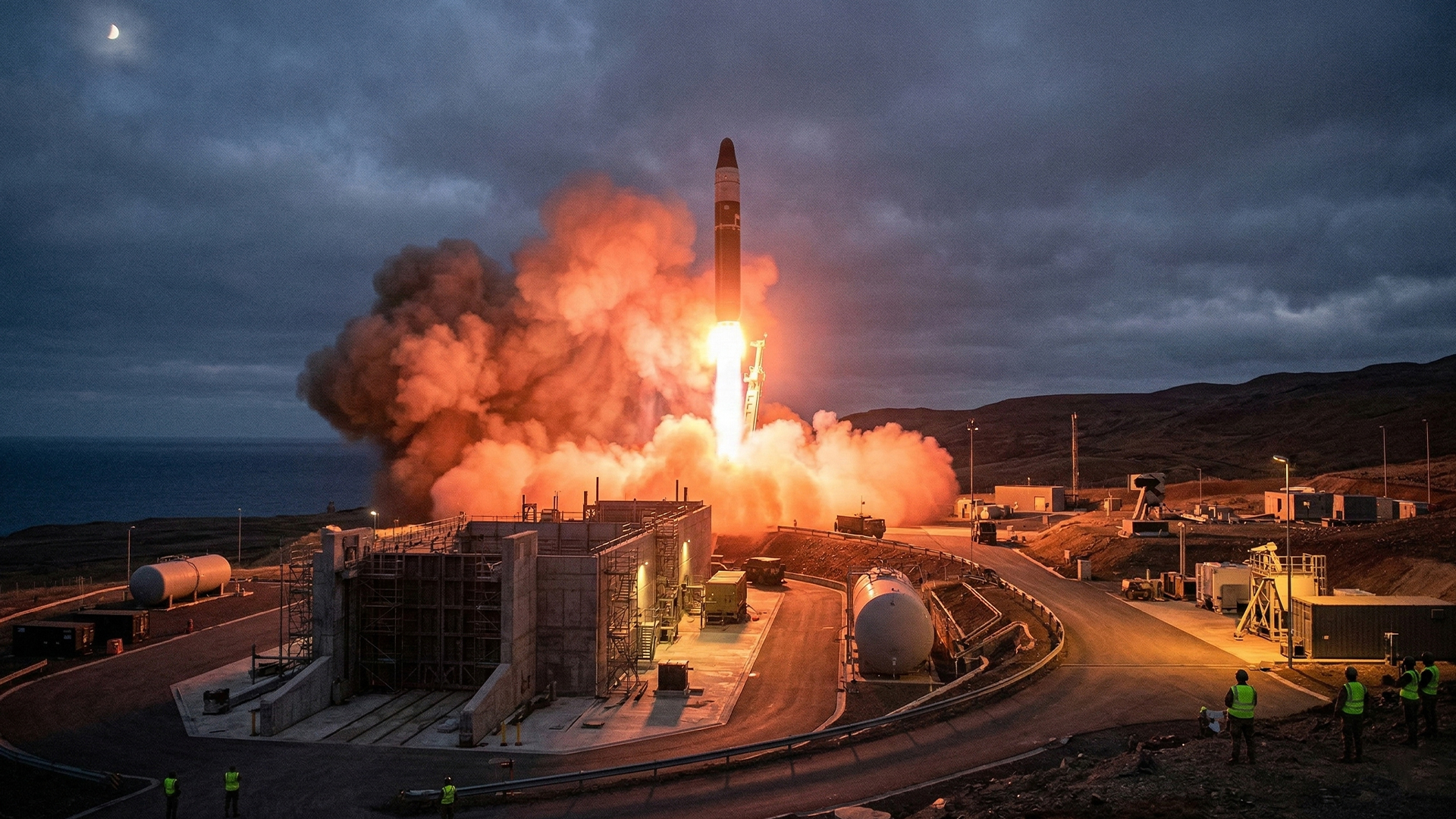
As tensions flare in the Middle East, the United States has conducted a high-profile test of its long-range Minuteman III intercontinental ballistic missile (ICBM), a nuclear-capable weapon, amid the ongoing conflict involving Iran, Israel, and US forces. While officials insist the launch was routine, its timing has drawn global attention.

The missile was launched from Vandenberg Space Force Base in California and safely landed in the Pacific Ocean. US defense authorities described it as a standard readiness check to ensure the accuracy and reliability of America’s strategic nuclear forces. Importantly, no nuclear warheads were involved, and the test had been planned well in advance.

The Minuteman III is a key part of the US nuclear triad, which also includes submarine-launched missiles and strategic bombers. Capable of traveling thousands of miles, it can theoretically strike targets anywhere in the world, making it one of the most powerful deterrent weapons in the American arsenal.

Although the test was routine, analysts say its timing during the Iran conflict serves as a subtle reminder of US military strength and readiness. The ongoing tensions have included missile strikes, air raids, and regional instability, making global observers watch every military move closely.

The Minuteman III has been in service for decades and remains a cornerstone of US defense, even as modernization efforts continue to keep the system ready for the future. The test highlights the delicate balance between routine military preparedness and the perception of power amid international conflicts.

Also Read: Iran warns after US sinks warship near Sri Lanka

Intel reconsiders strategy for 18A plan

Chipmaker reviews plan to allow external clients to use its advanced manufacturing process

Intel is reviewing its strategy for the next-generation 18A semiconductor manufacturing technology, a key process expected to power the company’s future chips.

The review is being led by CEO Lip-Bu Tan, who is reassessing earlier decisions about how the advanced manufacturing technology should be used. The move could potentially open the process to external chip designers rather than reserving it primarily for Intel’s own products.

Speaking at a technology conference in San Francisco, Intel Chief Financial Officer David Zinsner said the company is reconsidering plans announced previously that limited the 18A process mostly to internal chip production.

According to Zinsner, Intel is evaluating whether allowing outside companies to use the 18A technology could strengthen its semiconductor foundry business, which aims to manufacture chips for other firms.

Intel has been working to expand its contract manufacturing operations in recent years as part of a broader strategy to compete with leading chipmakers such as Taiwan Semiconductor Manufacturing Company and Samsung Electronics.

The 18A process is considered one of Intel’s most advanced chip technologies and is expected to play a crucial role in the company’s push to regain leadership in semiconductor manufacturing. The technology includes new transistor designs and power delivery methods aimed at improving chip performance and efficiency.

Zinsner said the company has seen improvements in manufacturing yields for the 18A process. However, production volumes remain limited and the technology is still being scaled for wider use.

Intel has also been promoting its future 14A manufacturing technology, which is expected to follow the 18A process and could attract potential customers for the company’s foundry services.

Tan, who took over as Intel’s chief executive in 2025, has been reshaping the company’s strategy with a focus on advanced manufacturing, artificial intelligence chips and expanding the foundry business.

Also Read: Maharashtra transporters call indefinite strike

Iran warns after US sinks warship near Sri Lanka

Attack on Iranian frigate escalates tensions in Middle East conflict

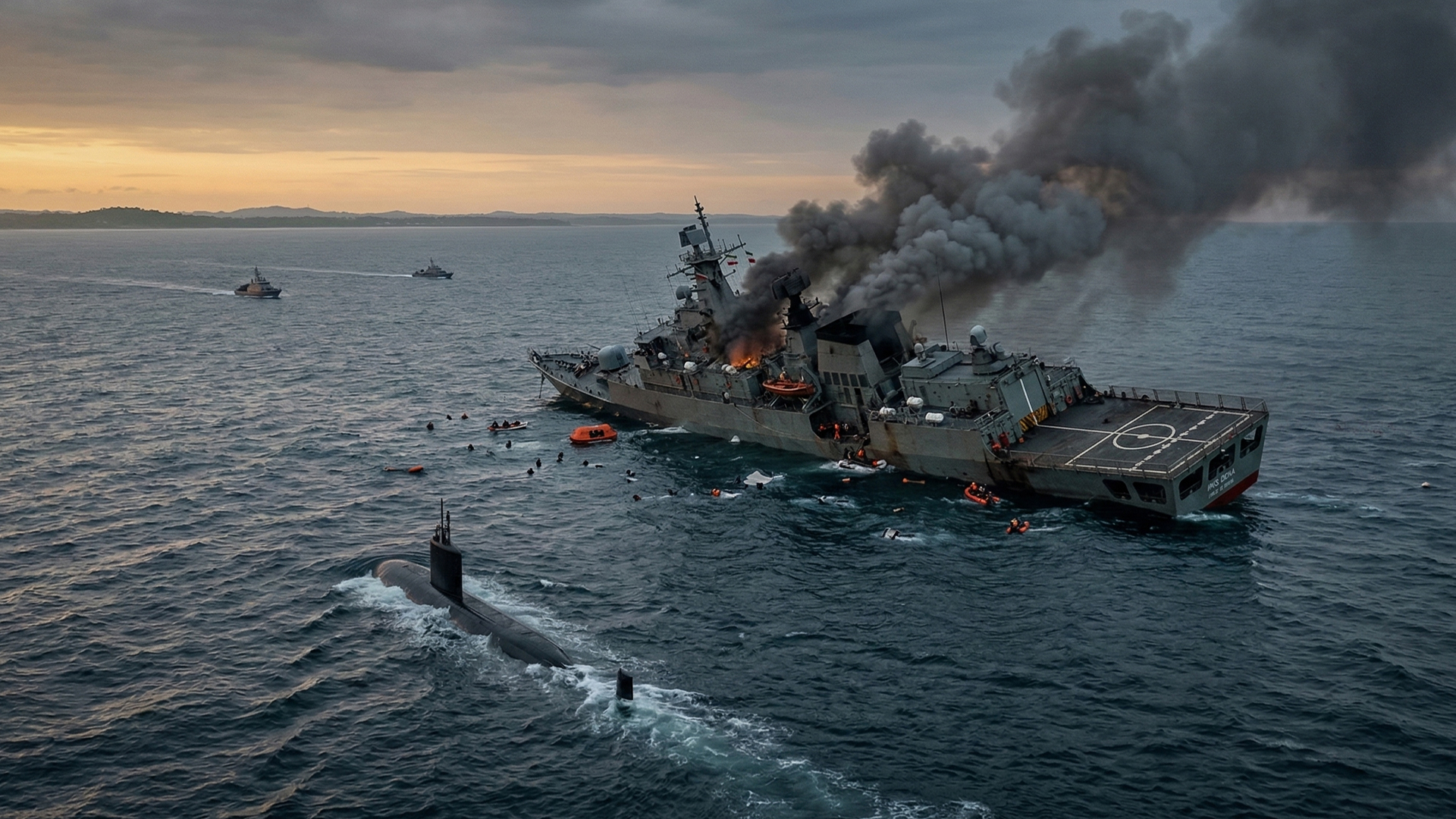
Tensions between Iran and the United States escalated sharply after the U.S. military sank an Iranian naval frigate in the Indian Ocean, prompting strong warnings from Tehran.

On Wednesday, a US submarine fired a torpedo that struck the Iranian frigate IRIS Dena near Sri Lanka, far from the main conflict zones in the Middle East. The attack killed at least 87 sailors and injured several more. Sri Lankan naval teams rescued about 32 survivors from the water, and search efforts continue for those still missing.

Iran’s foreign minister condemned the strike, calling it an “unprovoked attack” on a ship that was returning home after participating in naval exercises in India. He stressed that the vessel was not engaged in any combat and had been a guest of another navy at the time it was hit. Tehran warned that the United States would “bitterly regret” such an action, signaling a potential for further escalation.

The sinking of the IRIS Dena marks a dramatic expansion of the ongoing conflict involving Iran, the United States, and Israel. While US officials described the attack as a tactical move aimed at Iran’s naval capabilities, the use of a submarine to sink a warship in international waters is rare and raises serious questions about the broader reach of the war.

Neighboring countries are watching closely, concerned about security in their waters and airspace, while global leaders express alarm at the implications for regional stability.

For the families of the sailors and communities across Iran, the attack has brought grief and anger, further fueling national outrage over the conflict. Many fear this strike could trigger more retaliatory measures and intensify the ongoing military confrontations.

Also Read: US in talks to arm Kurdish fighters in Iran

US in talks to arm Kurdish fighters in Iran

Plans aim to create internal pressure on Tehran amid regional conflict

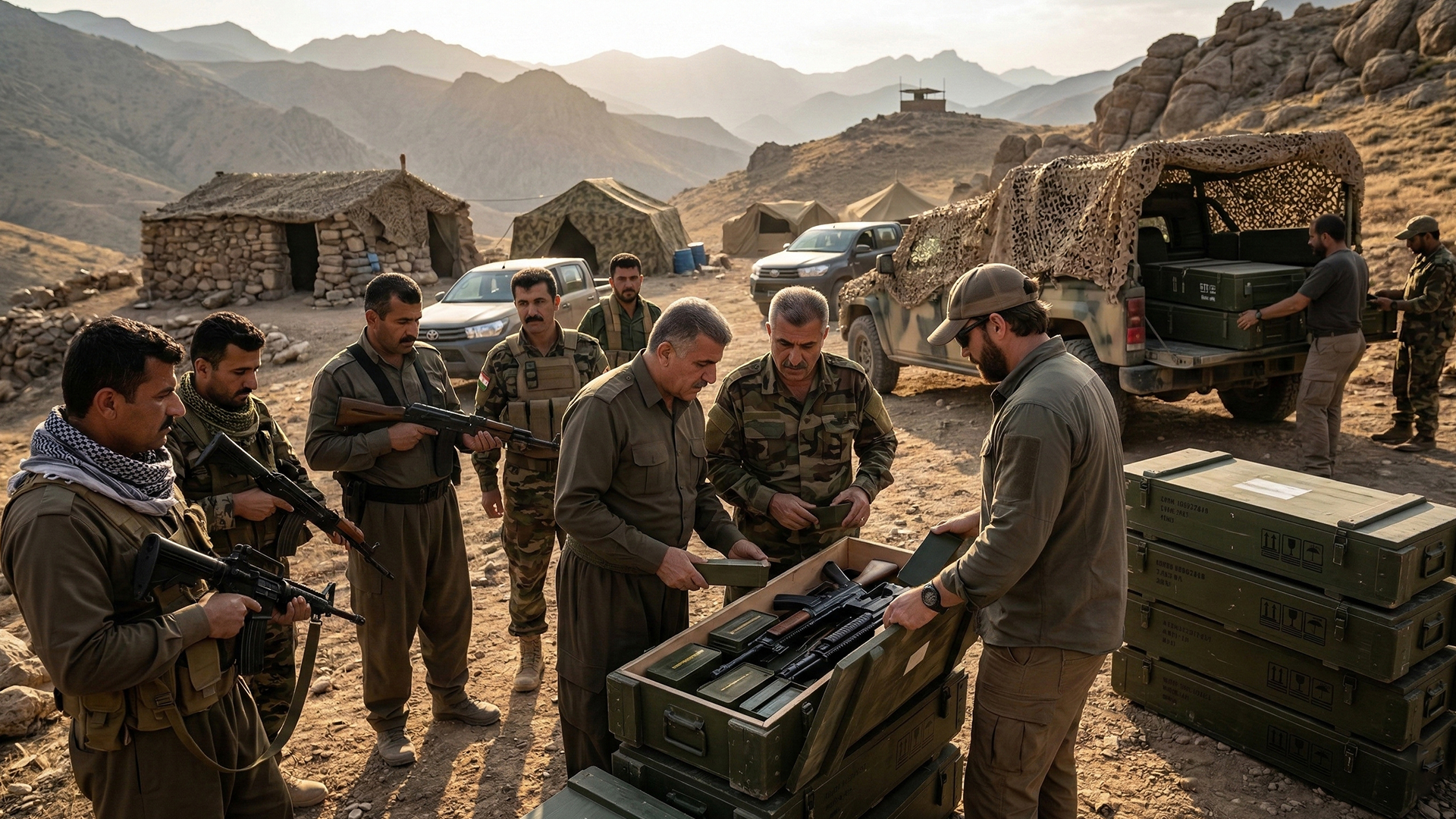
The United States is reportedly exploring plans to support Kurdish opposition groups inside Iran with weapons and resources, in an effort to trigger unrest against Tehran’s government.

Officials say the Central Intelligence Agency has been in discussions with Iranian Kurdish factions along the Iraq–Iran border, including the Democratic Party of Iranian Kurdistan. These groups have several thousand fighters and have historically opposed the Iranian government. The talks come amid the ongoing war between Iran and US–Israeli forces, which has seen airstrikes and missile exchanges in multiple parts of the Middle East.

The strategy under consideration is to encourage Kurdish militias to engage Iranian security forces. By opening a new front inside Iran, the U.S. hopes to stretch Tehran’s military and possibly spark wider unrest that could challenge the government’s authority. While the plan has been discussed at high levels, including reportedly with US  leadership, no formal agreement on providing arms or operational support has been confirmed.

Iran has already shown it views these Kurdish groups as a threat. The Islamic Revolutionary Guard Corps has targeted Kurdish positions near the border with drone strikes, signaling Tehran’s intent to prevent any insurgency from taking hold.

Analysts warn that arming Kurdish militias could have unpredictable consequences. While it may pressure Tehran, it risks escalating the conflict further and destabilising the wider region. There is also concern that neighbouring countries could be drawn into the fighting, creating a broader regional crisis.

At present, the initiative remains in the planning phase, with significant uncertainty over if, when, and how Kurdish forces might act against Iran, and how much support they would receive from the US. The situation underscores the complex and volatile nature of the current Middle East conflict, where multiple fronts and players are contributing to rising tensions.

Also Read: Trump says US holds upper hand in Iran conflict