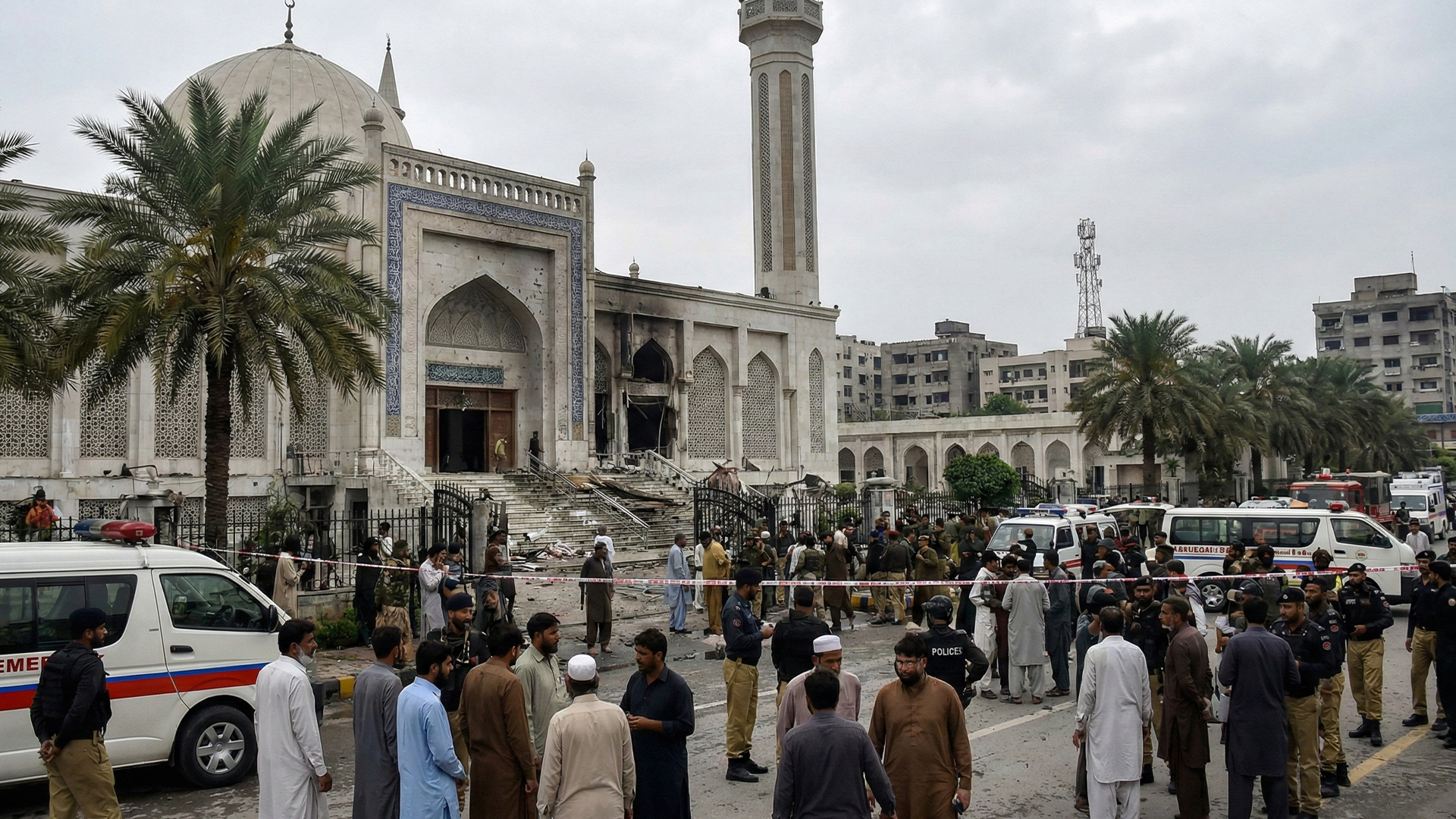
At least 31 people lost their lives and nearly 169 were injured after a suicide bomber targeted a mosque in Islamabad during Friday prayers, leaving families grieving and the city in shock. The attack took place inside a shrine within the mosque complex, where worshippers had gathered in large numbers for prayers.
Eyewitnesses said the explosion tore through the prayer area without warning. Panic spread as people tried to escape, while others rushed to help the injured. Emergency services reached the site quickly, and the wounded were taken to nearby hospitals. Doctors said several victims were in serious condition, and the death toll could rise.
The Islamic State (IS) group later claimed responsibility for the attack, saying the bomber struck while worshippers were inside the mosque. Pakistani leaders condemned the bombing in strong terms, calling it a heartless act of terrorism against innocent people at a place of worship. Security was tightened across Islamabad, especially around mosques and other sensitive locations, as investigations began.
The attack also led to political tensions. Pakistani officials hinted at possible foreign involvement in the bombing. India strongly denied any role, calling the allegations “baseless and pointless.” New Delhi condemned the attack, expressed condolences to the victims’ families, and said Pakistan should focus on dealing with terrorism within its own borders.
The bombing has drawn widespread condemnation from across the region and beyond, with many leaders stressing that violence against civilians and religious spaces cannot be justified.
As families wait outside hospitals and prepare for funerals, the tragedy has once again highlighted the human cost of extremism and the urgent need for stronger steps to protect people gathered in prayer and public spaces.