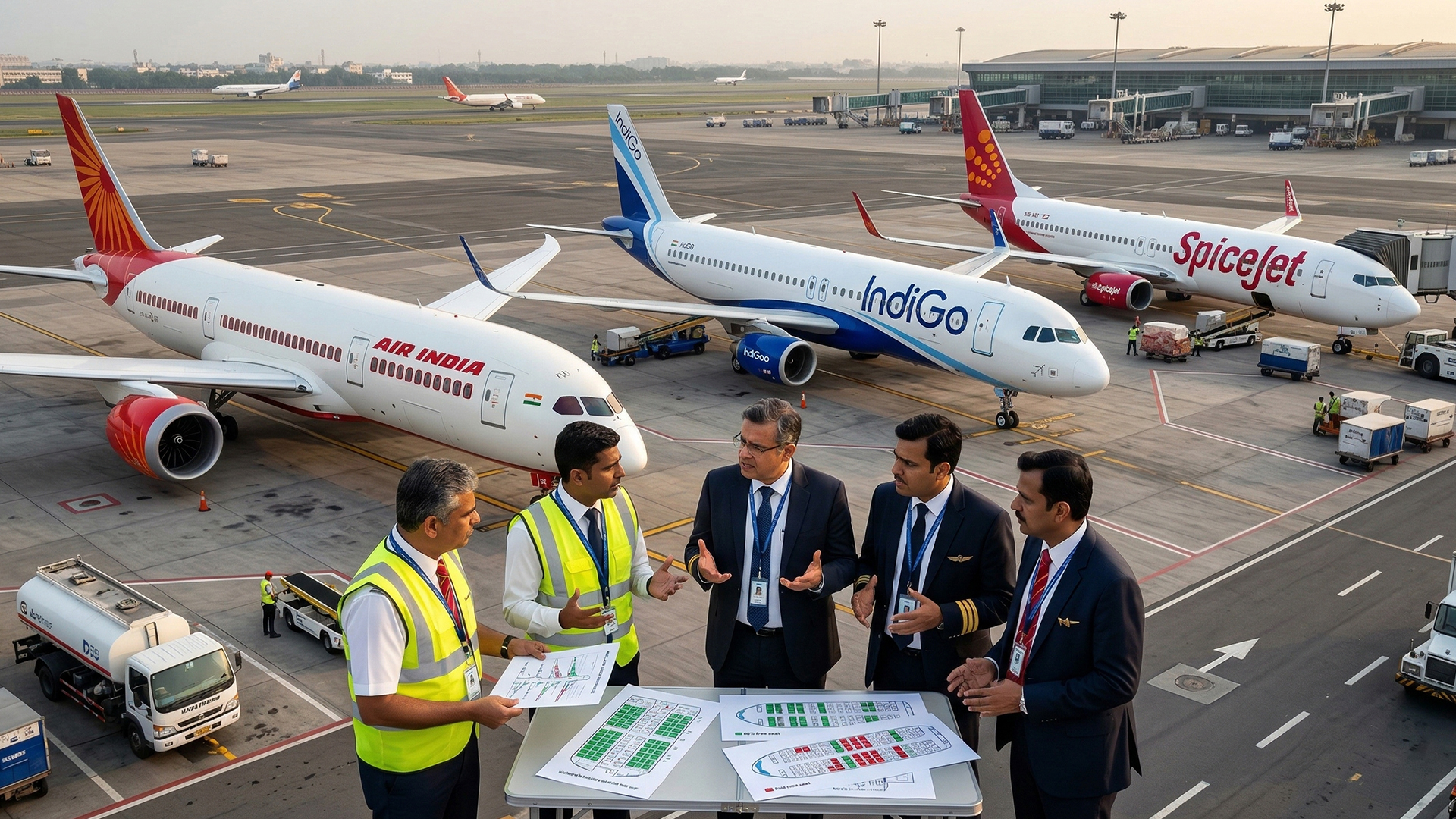
India’s major airlines, Air India, IndiGo, and SpiceJet, have opposed a new government rule requiring them to offer at least 60% of flight seats free of charge for passenger selection, warning it could lead to higher ticket prices.
The Ministry of Civil Aviation (MoCA), through the Directorate General of Civil Aviation (DGCA), issued the directive to make air travel more transparent and passenger-friendly. Under the rule, airlines must allow passengers to select at least 60% of available seats without paying extra fees. The remaining seats may still carry a charge for preferred locations such as window, aisle, or extra-legroom seats.
However, the Federation of Indian Airlines (FIA), representing the three carriers, raised strong objections. They argued that seat selection fees are a vital revenue source for airlines, particularly in a highly competitive market where profit margins are thin. Eliminating or limiting these fees, the FIA said, could force airlines to increase base ticket prices to maintain financial viability.
Traditionally, airlines charge anywhere from ₹200 to ₹2,100 for choosing seats based on comfort or location. The new rule, by making the majority of seats free, would reduce this ancillary revenue, which helps offset rising operational costs like fuel, maintenance, and staff salaries.
Airline representatives also raised concerns about regulatory overreach, stating that commercial decisions on pricing and services should remain with the airlines. They warned that enforcing this mandate could affect how carriers structure fares and service tiers in the future.
Experts say the government’s intention is to protect passengers from hidden charges, but the policy may have the opposite effect. By reducing airlines’ flexibility to earn through ancillary services, base fares may rise, meaning passengers could end up paying more in total.
Also Read: Delhi sees coldest March day in 6 years