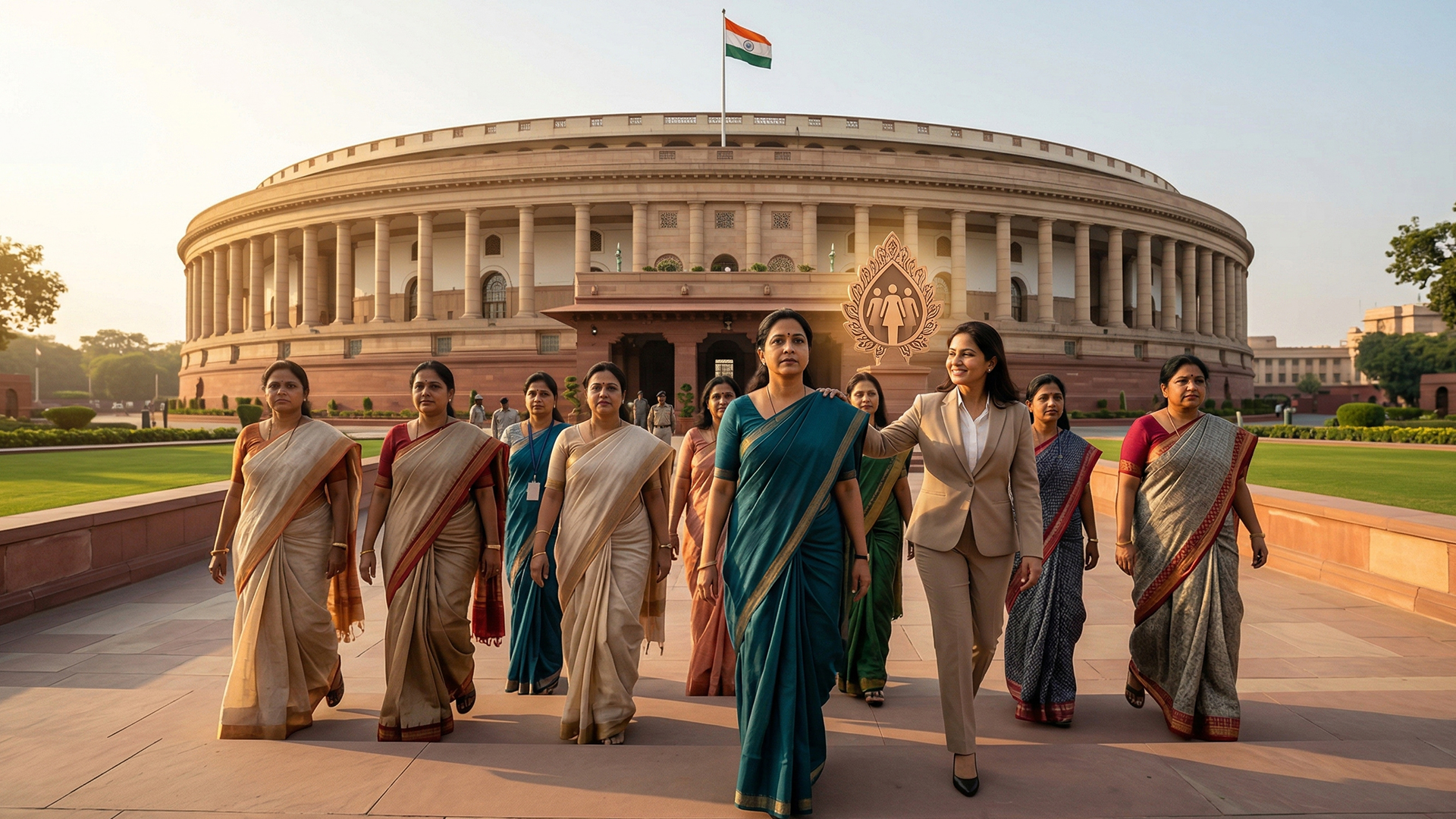
The Union government is exploring a significant overhaul of India’s parliamentary structure to implement 33% reservation for women in the Lok Sabha before the 2029 general elections. The proposal includes increasing the total number of Lok Sabha seats from the current 543 to over 800, with estimates suggesting the strength could go up to around 816.
The expansion is aimed at ensuring that one-third of seats can be reserved for women without affecting sitting Members of Parliament. If implemented, nearly 270 seats could be set aside for women, marking a major step toward improving gender representation in national politics.
The move follows the passage of the Women’s Reservation Act in 2023, which mandates 33% reservation for women in Parliament and state assemblies. However, the law’s implementation was originally linked to the completion of a fresh Census and a delimitation exercise to redraw constituency boundaries. Delays in conducting the Census have slowed progress on the rollout of the quota.
To address this, the Centre is considering delinking the reservation from these processes. One option under discussion is to use existing population data, such as the 2011 Census, to enable earlier implementation. This would allow the government to meet its target of enforcing the quota in time for the 2029 elections.
The plan may require new legislation, including a Delimitation Commission Bill and possible constitutional amendments. The government is expected to seek broader political consensus, as such changes would need support across parties. Consultations with stakeholders have reportedly been stepped up to build agreement on the proposal.
At the same time, the government is mindful of concerns from some states, particularly in the south, about losing representation if seats are redistributed purely based on population growth. Efforts are likely to focus on maintaining a balance in representation while expanding the total number of seats.
If carried out, this would be the first major increase in Lok Sabha strength in decades and could reshape India’s electoral landscape while significantly boosting women’s participation in politics.
Also Read: EC row over BJP seal in Kerala