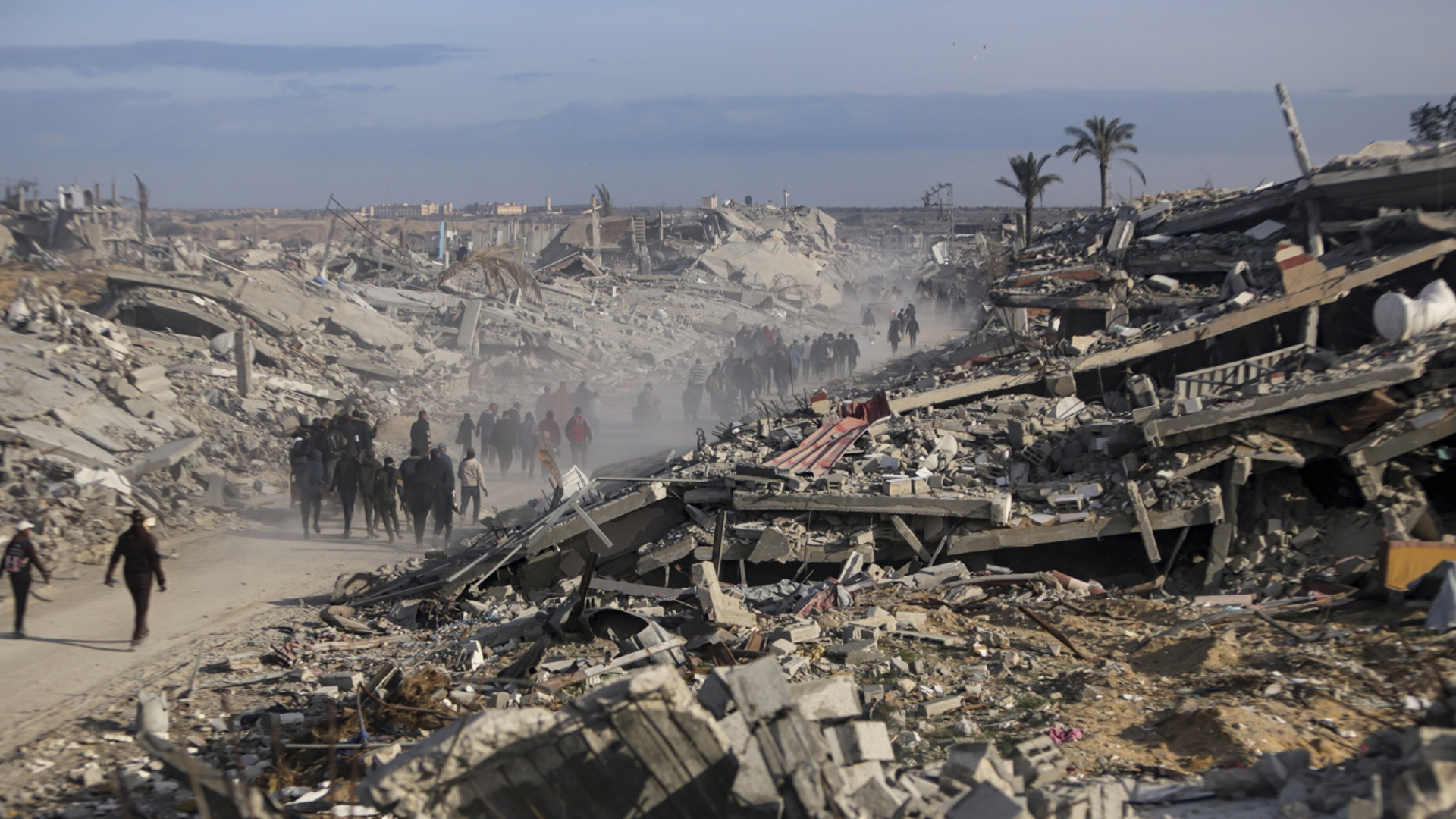
On September 9, 2025, the Israeli military issued an unprecedented full evacuation order for Gaza City, signaling a significant escalation in its ongoing military campaign against Hamas. This directive affects approximately one million residents of the city, urging them to vacate immediately ahead of a planned ground operation aimed at seizing control of the urban center.
Prime Minister Benjamin Netanyahu emphasized the urgency of the situation, stating that Israeli forces were preparing for a “manoeuvre” in Gaza City, which he described as a critical step in dismantling Hamas’s remaining strongholds.
The evacuation order comes after a series of intensified airstrikes targeting high-rise buildings in Gaza City, which Israel claims were used by Hamas for military purposes. Defense Minister Israel Katz reported the demolition of 30 such buildings, while Netanyahu asserted that at least 50 “terror towers” had been destroyed, framing these actions as a prelude to a major ground incursion. The military is directing civilians to move south to the overcrowded humanitarian zone in al-Mawasi, though aid organizations caution that there is insufficient infrastructure to support such a large-scale displacement.
This development has sparked panic among Gaza City’s residents, many of whom are already grappling with the effects of prolonged conflict and a growing humanitarian crisis. Since the war began after Hamas’s attack on Israel on October 7, 2023, over 64,000 Palestinians have been killed, and most of Gaza’s population has been displaced, according to Gaza’s health ministry. The United Nations and various humanitarian organizations have expressed deep concern over the deteriorating conditions, including widespread famine and the destruction of essential infrastructure.
International critics argue that Israel’s plan to demilitarize Gaza and extend security control could exacerbate the humanitarian plight of the 2.2 million people living there. The ongoing conflict has led to severe shortages of food, water, and medical supplies, with health officials reporting that 370 people, including 131 children, have died from malnutrition and starvation caused by acute food shortages. Despite efforts to distribute aid, including over 1,900 trucks supplying food, agencies and foreign officials say more is needed to address the crisis.
The evacuation order and subsequent military actions have complicated ongoing ceasefire negotiations. Qatar has been actively mediating talks in Doha, urging Hamas to accept a U.S.-backed ceasefire-hostage proposal, which Israel has indicated it supports. However, the escalation in military operations raises questions about the feasibility of reaching a peaceful resolution and the potential for further civilian suffering.
As the situation develops, the international community continues to monitor the humanitarian impact of the conflict and the prospects for a lasting ceasefire. The full-scale evacuation of Gaza City marks a pivotal moment in the ongoing war, with significant implications for both the region’s stability and the lives of its residents.
Also Read: India Advises Caution for Nationals in Nepal Amid Deadly Protests