Nepal has plunged into political turmoil after massive protests led by students escalated into violence, forcing Prime Minister K.P. Sharma Oli to resign on Monday. The unrest, initially triggered by the government’s ban on social media, quickly transformed into a nationwide movement against corruption, government apathy, and perceived elite indifference to ordinary citizens’ struggles.
The student-led “Gen Z” protests began as demonstrations against the social media ban but soon attracted broader public participation, including youth groups and civil society actors. Over the weekend, protests spread to multiple cities, culminating in the storming of government buildings, arson attacks, and vandalism. By Monday, at least 19 people had died amid escalating confrontations.
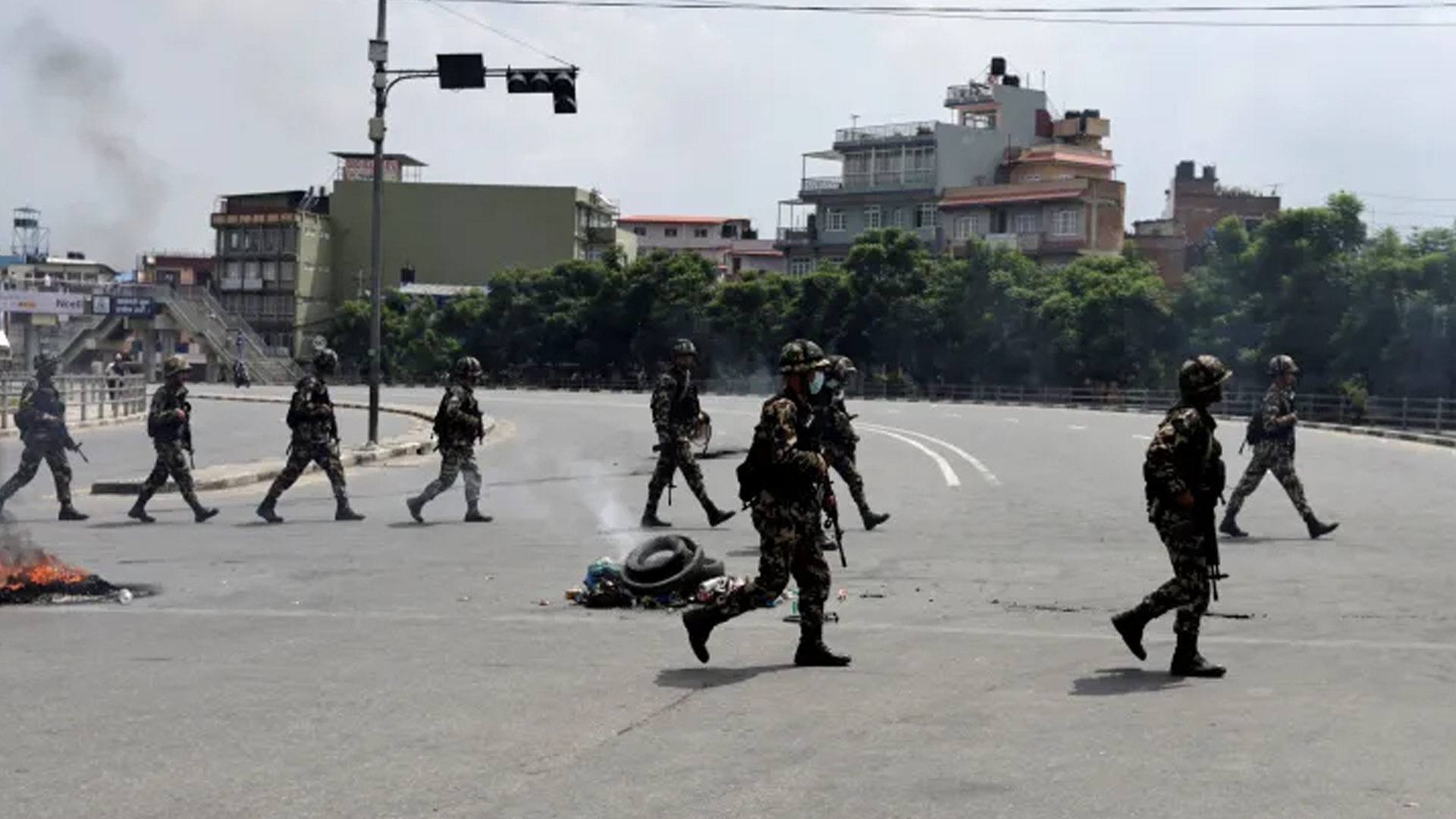
In a dramatic turn of events, the Nepal Army assumed control of security operations from Tuesday night. Soldiers took over key installations, including the Tribhuvan International Airport and the government’s secretariat at Singhdurbar, after protesters attempted to breach them. Army spokesperson Raja Ram Basnet confirmed that troops were deployed to curb further destruction and protect civilians. “We are trying to normalise the situation first. We are committed to protecting life and property,” he said.
The army also took control of Kathmandu’s airport after agitators tried to enter the premises, prompting a partial shutdown of flights. Air India, IndiGo, and Nepal Airlines cancelled several flights between New Delhi and Kathmandu, leaving nearly 700 Indian travelers stranded. Among those affected are tourists from Kerala, with the Union Minister urging the Ministry of External Affairs to ensure their safety. The Uttar Pradesh government issued helpline numbers and set up a control room in Lucknow to assist stranded Indian nationals.
In response to the worsening situation, the Indian government advised its citizens in Nepal to remain indoors and avoid unnecessary travel. Meanwhile, border states like Uttarakhand heightened security. Chief Minister Pushkar Singh Dhami directed authorities to conduct thorough checks along border areas and monitor social media to prevent the spread of misinformation.
On the diplomatic front, Nepali President Ram Chandra Paudel sought to ease tensions through dialogue. He called for calm and urged protest leaders and political stakeholders to engage in negotiations. “In a democracy, the demands raised by citizens can be addressed through dialogue and negotiation,” his statement read. A delegation of protestors is expected to meet with him and army officials later Wednesday.
Despite the curfew and army presence, protests continue in parts of the capital and neighboring cities. The streets of Kathmandu remained deserted early Wednesday, with residents only venturing out to procure essentials. The army warned against exploiting the situation, stating that some groups were inciting further violence to cause chaos.
The situation along the India-Nepal border remains tense. At the Sonauli crossing in Uttar Pradesh’s Maharajganj district, a surge of tourists returning from Nepal was observed as many cut short their trips. One group from Bhopal, comprising 60 senior citizens, reported being stranded after flights were cancelled and airport access was restricted.
The political crisis in Nepal is seen as a major test for the country’s fragile democracy. Analysts point to long-standing governance issues, corruption allegations, and the failure of successive governments to address unemployment and economic stagnation as root causes. With PM Oli’s resignation, the next steps toward political stability remain uncertain. However, the army’s intervention, President Paudel’s call for dialogue, and international attention—including from India—suggest that authorities are keen to prevent further deterioration.
Also Read: India Advises Caution for Nationals in Nepal Amid Deadly Protests