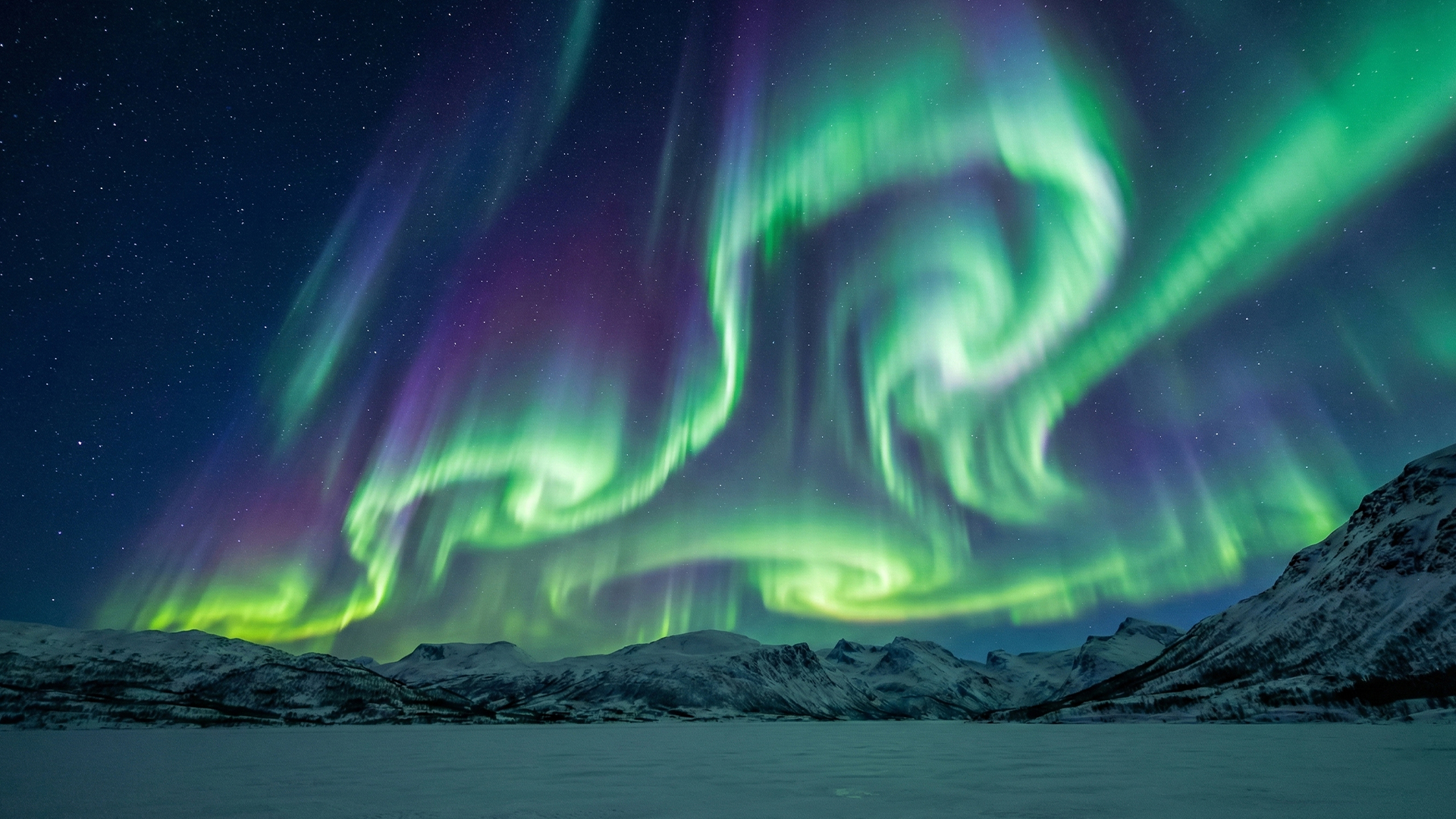
The Northern Lights, with their shimmering greens, purples, and reds, have long mesmerized stargazers. But behind the beauty lies a complex web of electric currents, invisible to the eye and NASA is finally going to map them. In early February 2026, two sounding rockets from Alaska’s Poker Flat Research Range will fly straight through the auroras, collecting data to create a three‑dimensional “CT scan” of these cosmic light shows.
The mission, called GNEISS (Geophysical Non‑Equilibrium Ionospheric System Science), aims to uncover how charged particles from the Sun interact with Earth’s atmosphere to create the auroras’ glowing patterns. The rockets carry advanced sensors that send signals back to Earth, allowing scientists to trace the hidden electric circuits that power the Northern Lights. Understanding these currents is more than just science curiosity, it could help predict space weather events that can disrupt satellites, GPS, and communications.
Experts also say that the auroras are for sure spectacular and pretty, they’re a giant electrical system connecting Earth and space. Our rockets will help us see exactly how this system works.
Meanwhile, a separate study has explained why some auroras form striking, wave-like patterns. Researchers discovered that Alfvén waves, a type of plasma wave moving along Earth’s magnetic field, energize electrons that collide with atmospheric gases, producing the tall, structured arcs often captured in breathtaking photos. These findings show that the auroras’ mesmerizing shapes aren’t random but guided by invisible forces in space.
By combining the rocket scans with plasma studies, scientists are beginning to understand both the beauty and the science of auroras. The research promises not only to satisfy human curiosity but also to improve forecasts for solar storms that can affect Earth’s technology.