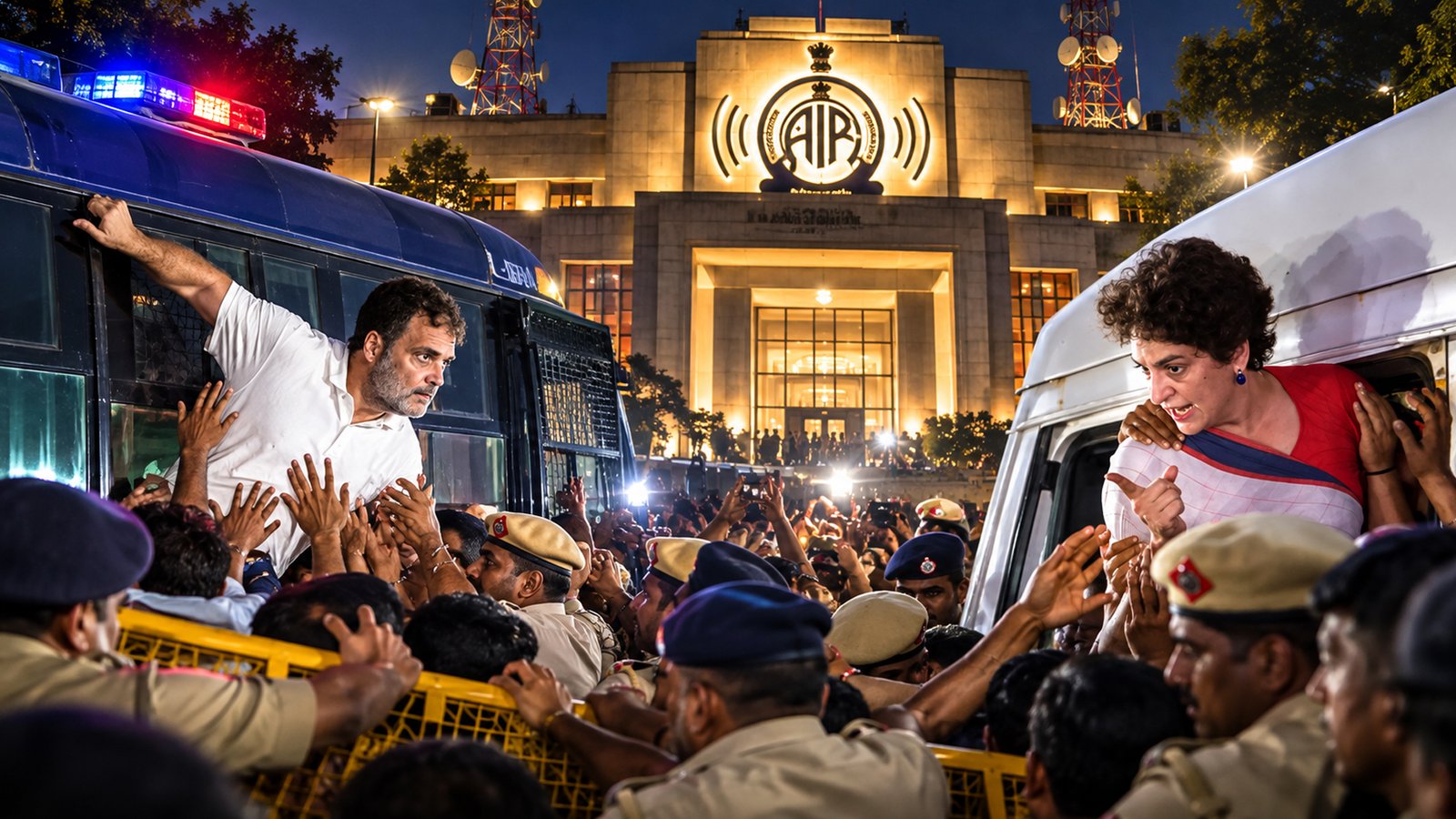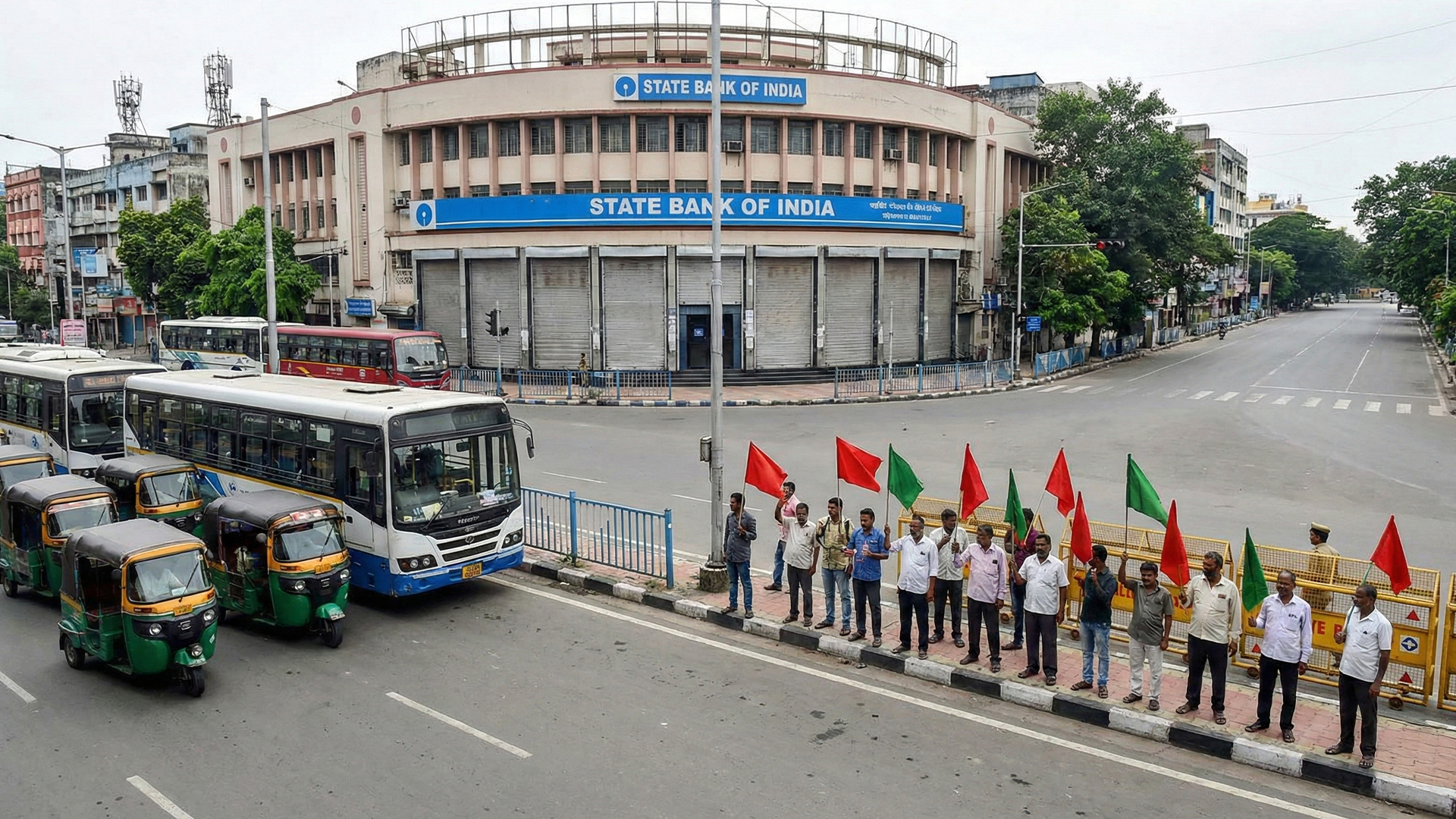
A nationwide Bharat Bandh called by over ten central trade unions, with support from farmer organisations, led to disruptions in banking, transport and commercial activities across several states on Thursday. The strike was organised to protest against new labour codes, rising unemployment, inflation and privatisation of public sector units.
Major trade unions including INTUC, AITUC, CITU, HMS, SEWA, TUCC and others participated in the bandh. The Samyukt Kisan Morcha and allied farmer groups also backed the protest, stating that recent policy changes could weaken worker protections and hurt farmers’ interests.
Banking operations were affected in many regions as employees of public sector banks joined the strike. Though no official holiday was declared by the Reserve Bank of India, several branches functioned with limited staff, leading to delays in counter services and cheque clearances. However, online banking platforms, ATMs and digital transactions continued without disruption.
Public transport services were partially hit in states where workers participated in protests. State-run buses reported disruptions in places such as Kerala and parts of Karnataka. In some cities, road blockades caused traffic congestion. Metro services, railways and flight operations largely remained normal, though minor delays were reported in isolated areas.
Educational institutions functioned differently across states. There was no nationwide closure order. Karnataka authorities stated that schools and colleges would remain open, but attendance was low in some areas due to transport issues. In a few protest-affected districts, private institutions chose to suspend classes as a precaution.
Markets and small businesses in several cities remained shut, particularly in areas witnessing strong participation in the strike. Government offices operated in most regions but reported reduced attendance where employees joined the bandh. Private offices largely remained open.
Essential services, including hospitals, ambulance services, pharmacies, airports, power and water supply, continued to function normally. Security was tightened in several districts to maintain law and order.
Also Read: Bangladesh holds first election after 2024 uprising