A nationwide wave of protests erupted across France on Wednesday under the banner of the “Block Everything” movement, as demonstrators voiced their outrage against President Emmanuel Macron’s government and its controversial austerity measures.
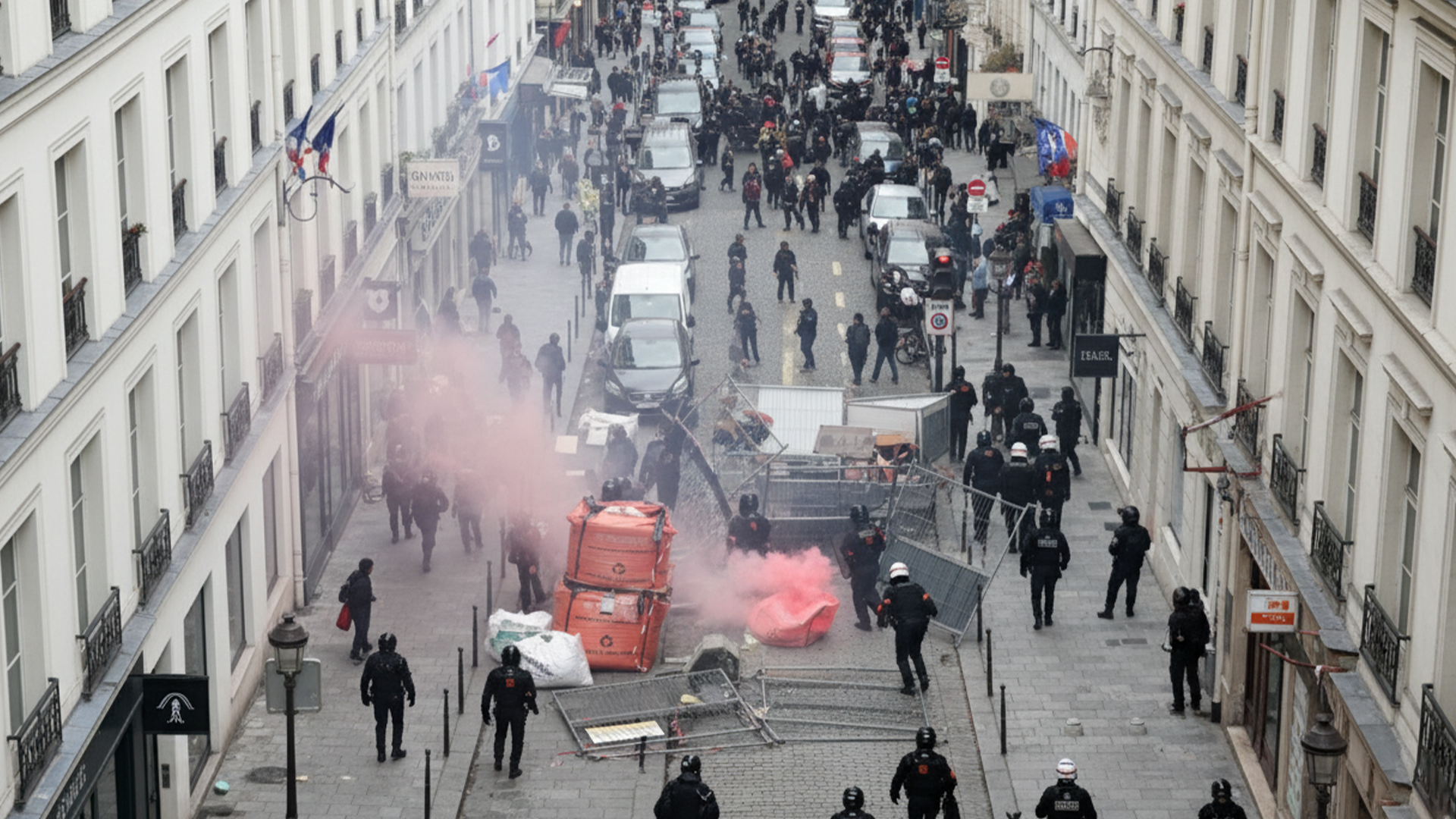
Protesters took to the streets in major cities, including Paris, Nantes, Montpellier, Toulouse, Bordeaux, Marseille, and Lyon, blocking highways, setting up burning barricades, and clashing with police. In Paris alone, riot police used tear gas to disperse crowds, leading to nearly 200 arrests. Across the country, over 300 people were detained as authorities deployed roughly 80,000 security personnel to contain the unrest.
The protests were triggered by Macron’s recent reappointment of Prime Minister Sébastien Lecornu, who replaced his predecessor after opposition to €44 billion in planned budget cuts. What began as a right-wing online movement against these cuts quickly expanded, attracting left-wing groups and forming a broad coalition united in opposition to austerity policies and government dysfunction.
Demonstrators are demanding the cancellation of the planned spending cuts and increased funding for vital public services, such as schools and hospitals. The movement draws parallels to the Yellow Vest protests of 2018-2019, featuring significant participation from young people and students calling for social justice, equality, and political reform.
Despite Interior Minister Bruno Retailleau’s assertion that efforts to “block everything” and shut down the country largely failed due to swift police action, the protests underscore deep divisions within French society over economic policy and governance. The unrest adds to the political challenges facing Macron’s administration as it navigates mounting public discontent.
Also Read: PM Modi Condemns Israeli Airstrikes in Qatar, Emphasizes Respect for Sovereignty