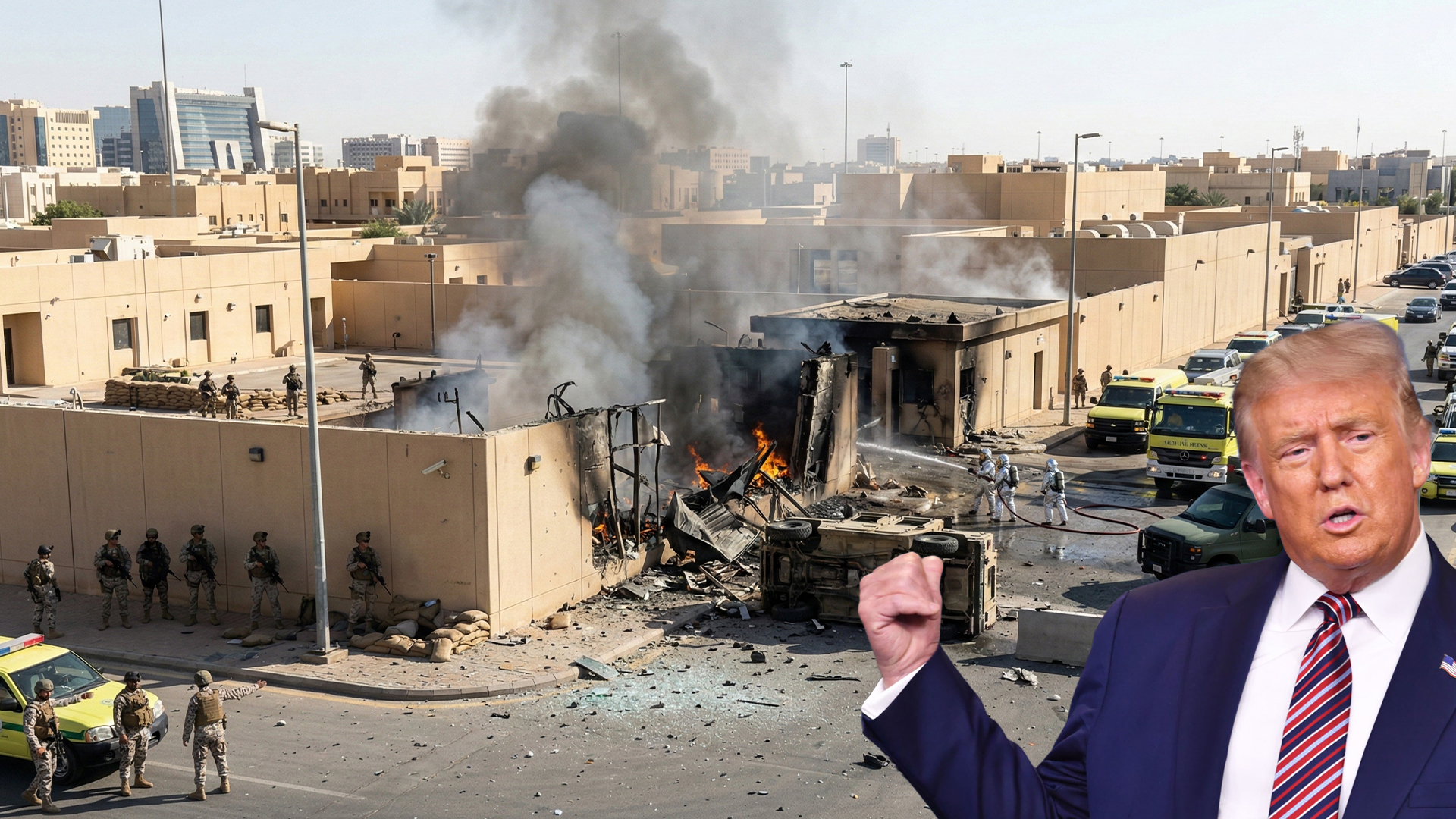
Following a drone attack on the US Embassy in Riyadh, Saudi Arabia, President Donald Trump has indicated that while the United States will respond, deploying ground troops may not be necessary. The attack, attributed to Iran-linked forces, caused minor damage to the embassy complex and prompted warnings for Americans in Saudi Arabia to stay indoors.
The incident comes amid heightened tensions in the Middle East after US and Israeli strikes on Iran’s military targets, which have triggered retaliatory attacks by Tehran, including missile and drone strikes on US bases and allied nations. Several US service members were reportedly killed or injured in related attacks, raising fears of a wider regional escalation.
Trump’s initial statements had not ruled out the use of ground forces in response to Iranian provocations. However, in recent remarks, he emphasized that air strikes and other measures may suffice to ensure the protection of US interests without triggering a large-scale ground war. “You’ll soon find out our response,” Trump said, adding that the military is “fully prepared” to act.
The president’s comments reflect a careful approach, balancing the need to show strength against Iran while avoiding direct troop deployments that could escalate the conflict. Security analysts say the decision not to immediately send ground forces aims to limit US casualties while signaling a firm stance against attacks on American personnel and installations.
Saudi authorities coordinated with US officials to secure the embassy area and increase surveillance of critical sites. The attack also comes amid heightened global concern over civilian and diplomatic safety in conflict zones, with Western nations reviewing security protocols for their missions in the region.
Also Read: Centre alerts states for Iran-Israel unrest