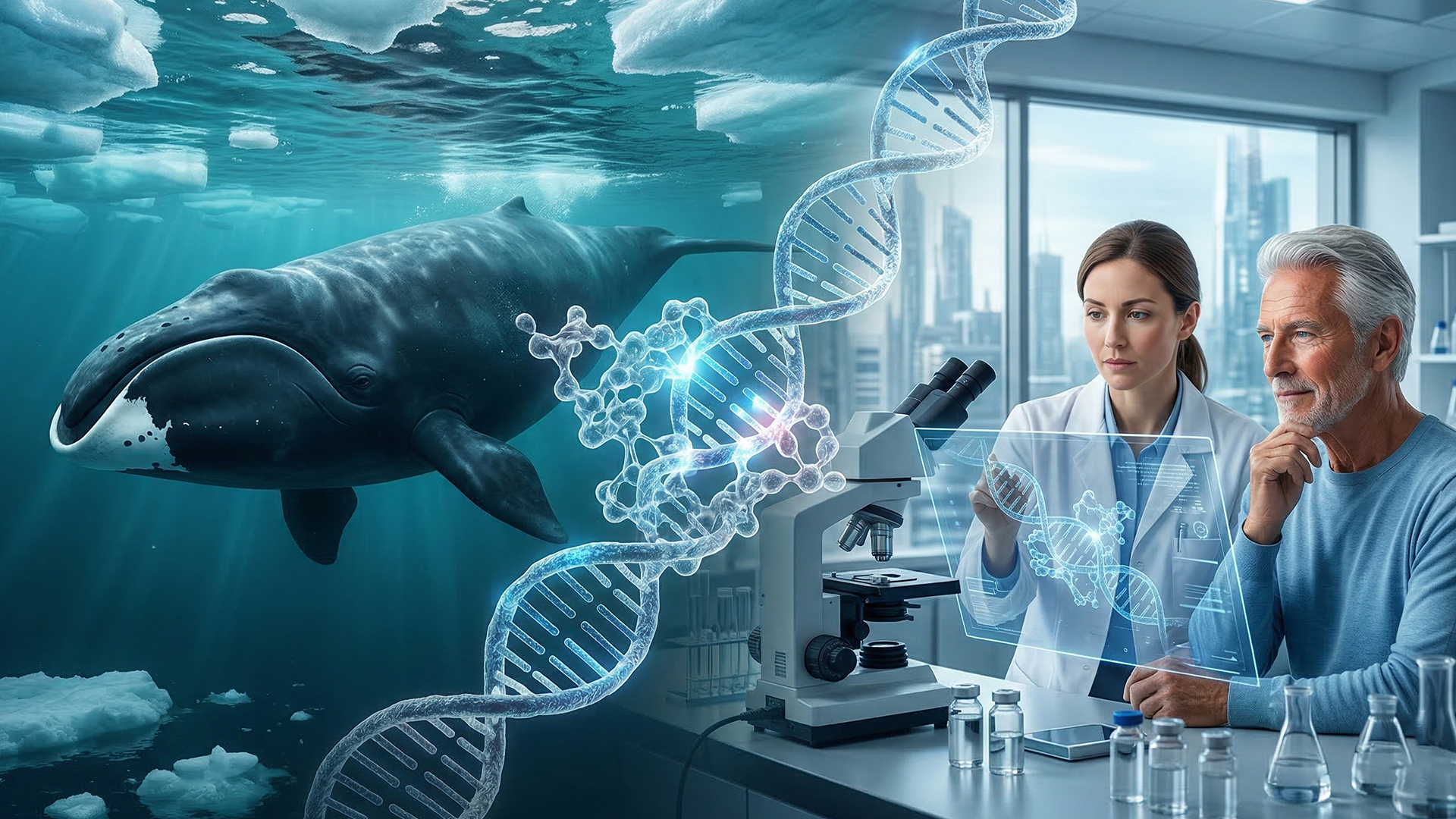
Scientists have discovered that bowhead whales, which can live over 200 years, produce a special protein that helps repair damaged DNA. This protein could give clues about how humans might slow aging and reduce age-related diseases.
Bowhead whales live in Arctic waters and are known for their long lives and very low rates of cancer. Normally, as humans age, DNA in our cells gets damaged, which can lead to aging and diseases like cancer. Researchers found that whales produce a protein called CIRBP (cold-inducible RNA-binding protein) in much larger amounts than humans, sometimes up to 100 times more.
CIRBP helps detect and fix breaks in DNA. When scientists added the whale version of this protein to human cells in the lab, those cells repaired DNA damage better and were less likely to develop harmful changes. In experiments with fruit flies, boosting CIRBP not only improved DNA repair but also helped them live longer and resist stress, like radiation.
This discovery helps explain a mystery known as Peto’s paradox, which asks why big animals with many cells, like whales, don’t get more cancer. Their strong DNA repair system may protect them from harmful mutations, helping them live so long. Research into longevity, genetics and disease prevention continues to reveal how biology may influence human health, with more discoveries covered in our science news and research section.
While this research is exciting, scientists caution that aging is complex. No single protein can make humans live much longer on its own. But studying whales’ DNA repair may guide future treatments to slow aging and prevent diseases.
Also Read: Lionel Messi makes history with 900th goal