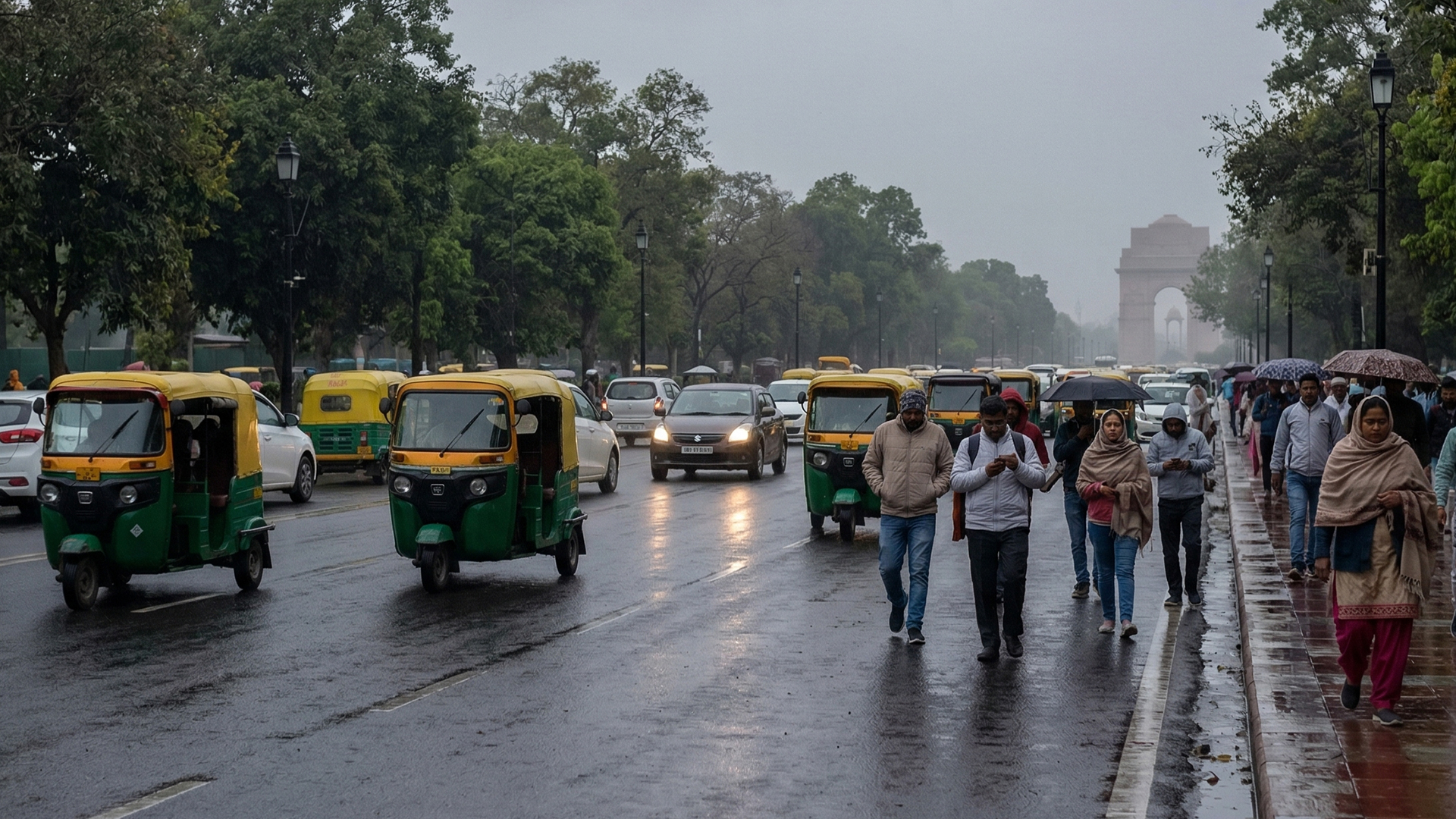
Delhi recorded its coldest March day in six years on Friday, with the maximum temperature dropping to around 21.7 °C, nearly 10 degrees below normal for this time of year. The unusual weather came with rain, strong winds, and early morning fog, giving the city a winter-like feel even as March is typically warm.
Meteorologists said this sudden dip in temperature was caused by an active western disturbance moving across northwest India. The system brought moisture, rainfall, and gusty winds, which helped reduce heat and temporarily cleared pollutants from the air. Residents bundled up to deal with the chill, and visibility was reduced in parts of the city due to fog.
Along with cooler temperatures, Delhi also saw a significant improvement in air quality. The Central Pollution Control Board (CPCB) reported an AQI of 93, placing the city in the “satisfactory” category. This is the best air quality Delhi has had in around five months, marking the first day with such readings since October last year. Rain and strong winds helped wash out accumulated particulate matter, giving citizens a welcome break from prolonged pollution.
For context, an AQI of 51–100 is considered satisfactory, meaning air quality is generally acceptable, though sensitive individuals may still be affected slightly.
Experts say the cooler weather and improved air quality are likely temporary. Forecasts indicate that temperatures will gradually rise toward normal levels over the weekend as the influence of the western disturbance fades. Nevertheless, this sudden shift highlights how quickly weather patterns can change in the national capital.
Residents are advised to enjoy the cooler spell while it lasts and remain prepared for rising temperatures in the coming days.
Also Read: Nashik Godman held in rape, blackmail case