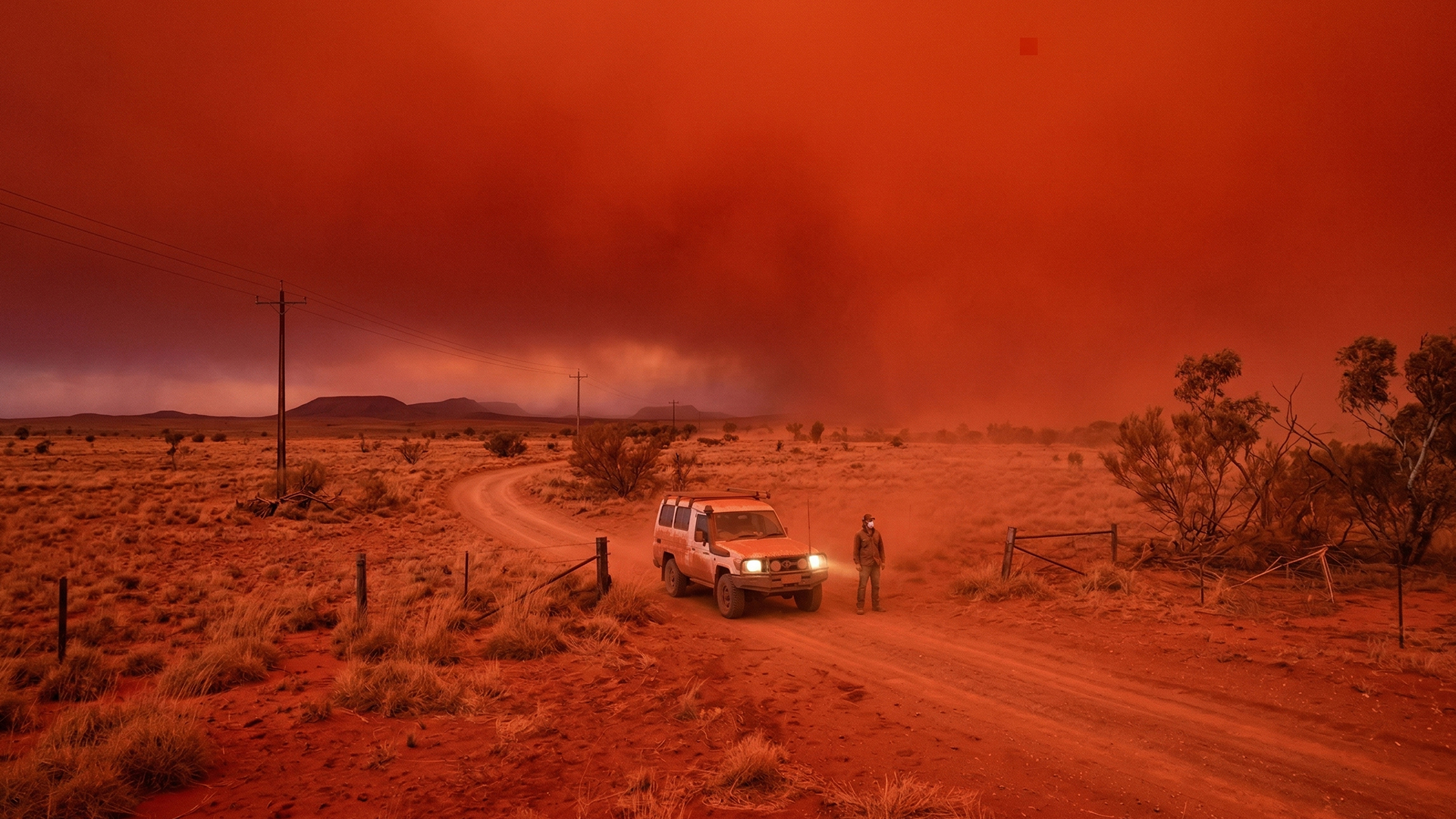
The residents of Western Australia were treated to a rare and dramatic natural display yesterday as the sky turned a deep blood-red just hours before Cyclone Narelle made landfall. Coastal towns such as Shark Bay and Denham reported an eerie crimson glow, with daylight appearing almost like sunset despite it being mid-afternoon. The unusual sky became a striking reminder of the interplay between extreme weather and local geography.
Meteorologists explained that the red color resulted from iron-rich dust from inland regions being lifted into the atmosphere by strong winds ahead of the approaching cyclone. Normally, the sky looks blue because small air molecules scatter sunlight. But when larger dust particles are present, they scatter sunlight differently, letting longer wavelengths, reds and oranges, dominate. This phenomenon, known as Mie scattering, created the vivid crimson skies observed across the region.
The effect was amplified by cloud cover associated with the storm, which diffused sunlight evenly and made the red color more intense. The striking display lasted several hours until the winds and rain from the cyclone cleared the dust, returning the sky to its normal hue.
Cyclone Narelle itself has been unusual for its strength and path. It became only the third recorded cyclone to make landfall on three separate Australian coasts—first Queensland, then the Northern Territory, and finally Western Australia—before moving back over the Indian Ocean and regaining intensity. The cyclone brought heavy rain, strong winds, and localized flooding, underscoring the dangers of such extreme weather events.
While the red sky captured the imagination of locals and social media users worldwide, it also highlighted practical concerns. Dust storms can reduce visibility, affect air quality, and interact with storms in ways that impact safety and the environment.