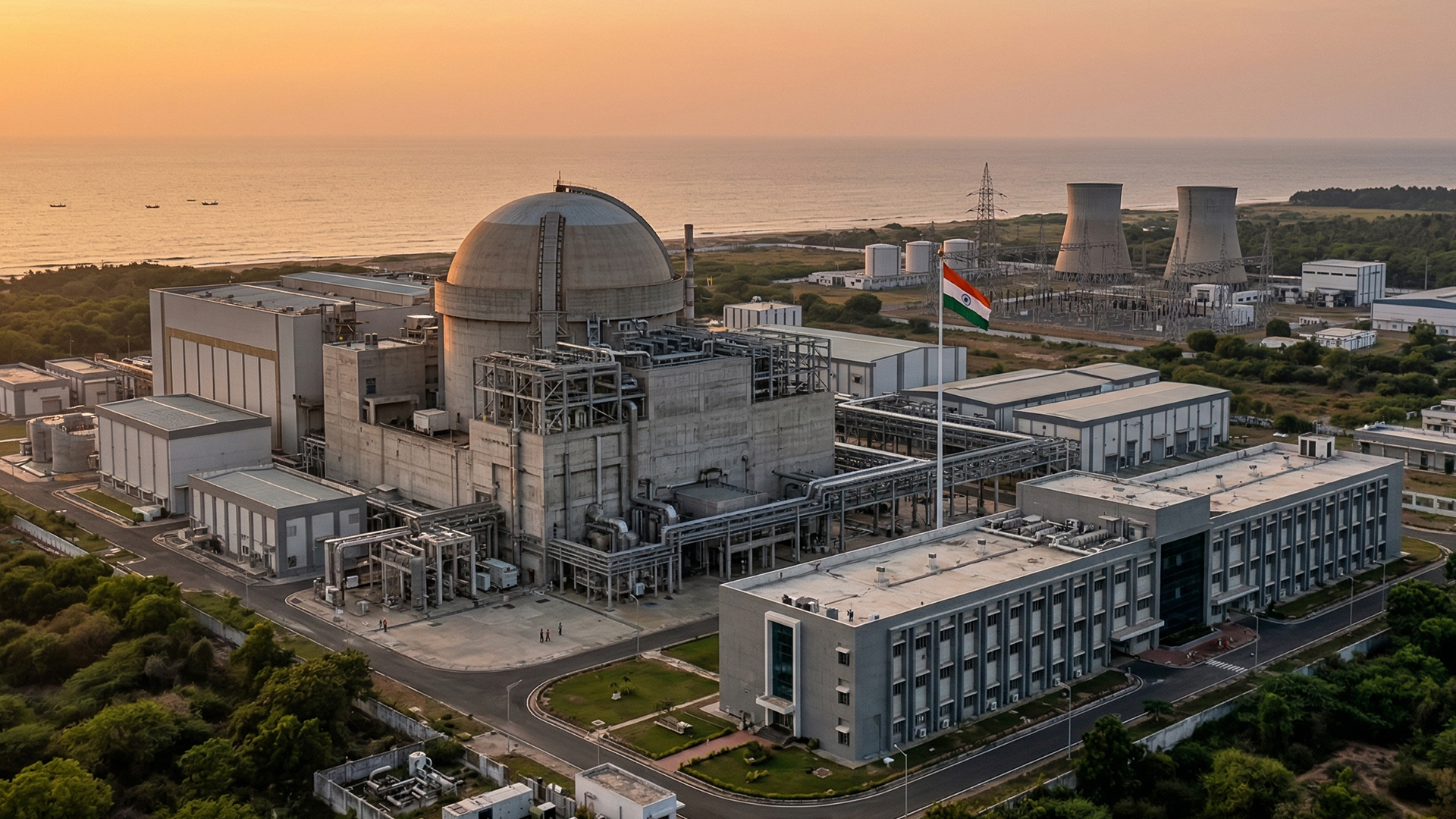
India has reached a major milestone in its nuclear energy journey. The Prototype Fast Breeder Reactor (PFBR) at Kalpakkam, Tamil Nadu, has achieved criticality, meaning it has started a controlled, self-sustaining nuclear chain reaction. This breakthrough, achieved on April 6, 2026, marks a key step toward the reactor’s full operation.
The 500‑megawatt PFBR, designed and built indigenously by BHAVINI with support from the Indira Gandhi Centre for Atomic Research (IGCAR), is unique because it can produce more nuclear fuel than it consumes. Unlike conventional reactors that simply use fuel, this “breeder” technology can convert abundant materials like uranium‑238 into additional fissile fuel, strengthening India’s energy security.
While the reactor is not yet generating electricity for the grid, achieving criticality is a crucial milestone before commercial operation. It also represents India’s entry into the second stage of its three-stage nuclear programme, originally envisioned by physicist Homi J. Bhabha, which aims to eventually harness the country’s vast thorium reserves.
PM Modi hailed the achievement as a “defining step” in India’s civil nuclear programme and congratulated the scientists and engineers who made it possible. The milestone has also drawn international praise, with officials from the International Atomic Energy Agency (IAEA) highlighting its significance for fuel sustainability and clean energy.
Also Read: Bangladesh pushes for Hasina’s return in India talks