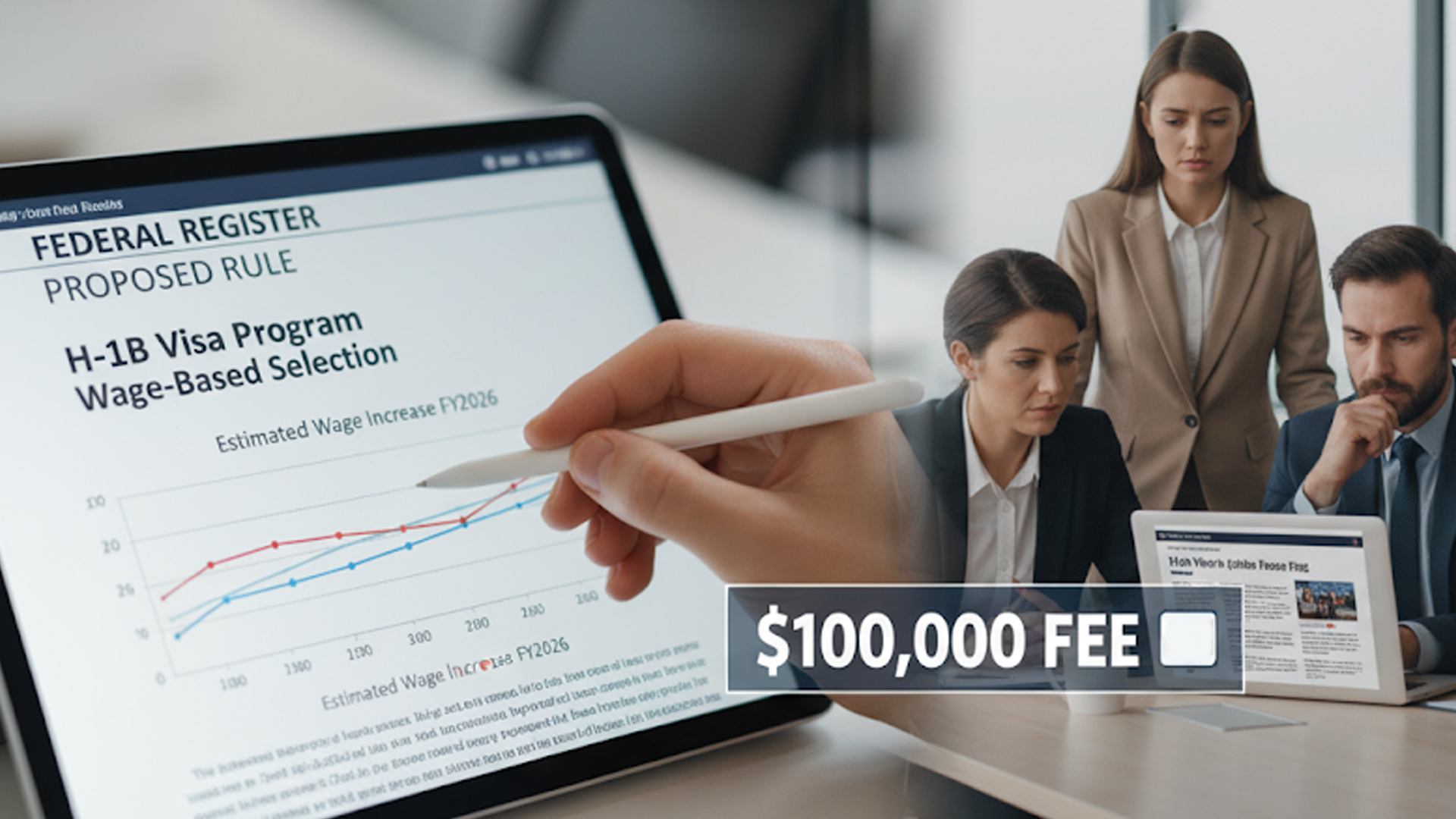
The Trump administration on Tuesday proposed changes to the H-1B visa selection process that would give preference to higher-paid and more highly skilled workers, according to a Federal Register notice. The move comes days after the White House announced a $100,000 fee for new H-1B visas, sparking concern across the U.S. technology and startup sectors.
Under the proposed rules, if applications exceed the statutory cap of 85,000 visas in a given year, petitions from employers offering higher wages would receive priority. The Department of Homeland Security said the change is intended to “better protect Americans from unfair wage competition from foreign workers.” The proposal also introduces wage tiers to determine selection order in the lottery system.
The notice indicates that the new process, if finalized, could apply to the 2026 H-1B lottery, which begins with the registration period in March. DHS estimates that the total wages paid to H-1B workers could increase to $502 million in fiscal year 2026, with further growth expected in subsequent years.
U.S. Citizenship and Immigration Services will allow a 30-day public comment period on the proposal, beginning Wednesday. Officials said the public input will help shape the final regulation, which could take months to implement.
The proposal is likely to affect small businesses that rely on H-1B workers. DHS estimates that about 5,200 small firms may face significant economic impact from the new fee and wage-based selection process. Tech companies and startups have already expressed concern that the combination of the $100,000 fee and wage-focused lottery could exacerbate talent shortages and increase operational costs.
Industry analysts noted that the changes could prompt some firms to shift work overseas rather than paying higher wages in the United States. Indian IT companies, which have traditionally been major H-1B beneficiaries, may accelerate remote operations in India for U.S. clients in response to the proposal.
The move follows a broader immigration crackdown under President Trump, including past efforts to limit citizenship eligibility for children of undocumented immigrants and proposals for mass deportations. The administration has cited protecting U.S. workers and ensuring fair competition as the primary rationale for revising the H-1B system.
Companies affected by the proposed changes are now reviewing their hiring and relocation strategies, while employees holding or seeking H-1B visas are closely monitoring developments. The public comment period and subsequent regulatory review will determine whether the proposal becomes final and how it will affect the technology sector and broader workforce in the United States.