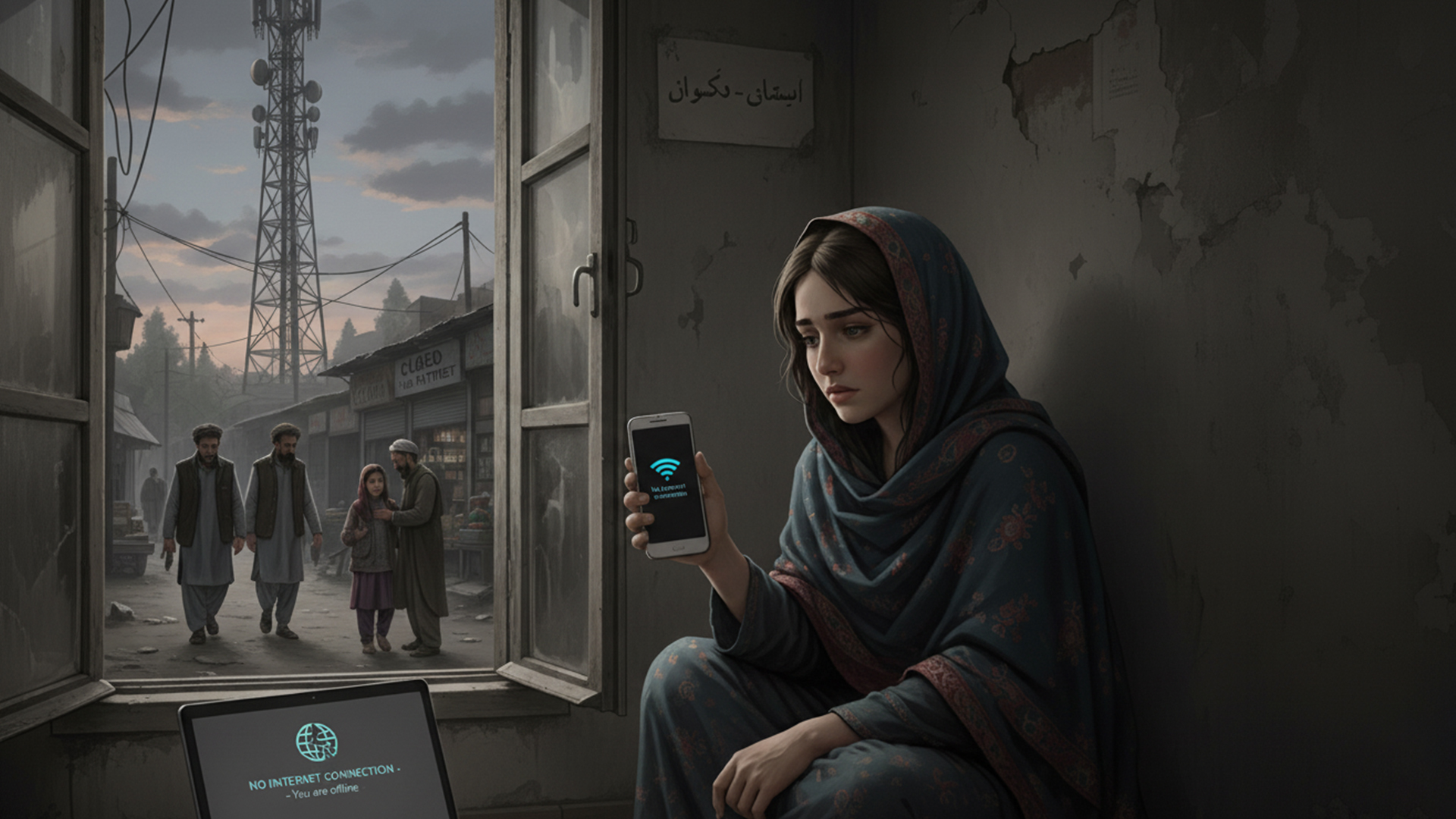
Life in Afghanistan has taken a harsh digital silence as the country dives into one of its most severe internet and mobile communication blackouts since the Taliban’s return to power. What began as scattered restrictions on fiber-optic internet access has escalated to a near-complete shutdown, silencing millions under the pretext of enforcing morality.
According to advocacy groups like NetBlocks, Afghanistan’s connectivity has dropped to nearly 1 percent of normal capacity, cutting off most citizens from the digital world. The blackout unfolded in stages, with the first blow coming when fiber-optic services went dark, followed by the fluctuations in mobile network service. This sweeping digital arrest follows a controversial decree by Taliban Supreme Leader Hibatullah Akhundzada, banning fiber-optic internet to prevent what officials describe as “immorality.”
The crackdown didn’t hit uniformly at first. The early victims of this nationwide internet ban were provinces, including Balkh, Baghlan, Badakhshan, Kunduz, Nangarhar, and Takhar. Soon, the blackout spread across major cities, including Kabul. Despite relying on social media to broadcast their messages globally, the Taliban government has not publicly acknowledged the shutdown.
For ordinary Afghans, the blackout is not just a technical inconvenience; it is a profound wrenching of daily life and freedoms. Imagine when journalists in key regions are cut off from news, leaving no chance for independent reporting. Women and girls, already barred from formal education beyond grade six, have lost their crucial lifeline to online learning. Businesses relying on digital platforms have ground to a halt, leaving entrepreneurs in limbo.
Families are painfully severed from loved ones abroad, and the public’s ability to share news, ideas, and maintain connections within and beyond borders has been stripped away. This blackout starkly highlights the growing isolation and censorship under Taliban rule, dimming hopes for greater openness in the near future.
In the midst of this digital silence, Afghanistan’s voices, especially those of its marginalized citizens, are deafening to the ears as the world watches helplessly. The blackout serves as a stark reminder that for many here, the fight for basic rights and access to the world remains a daily struggle.
Also Read: Nepal Unrest: Travel Bans on Former PM Oli, Senior Officials