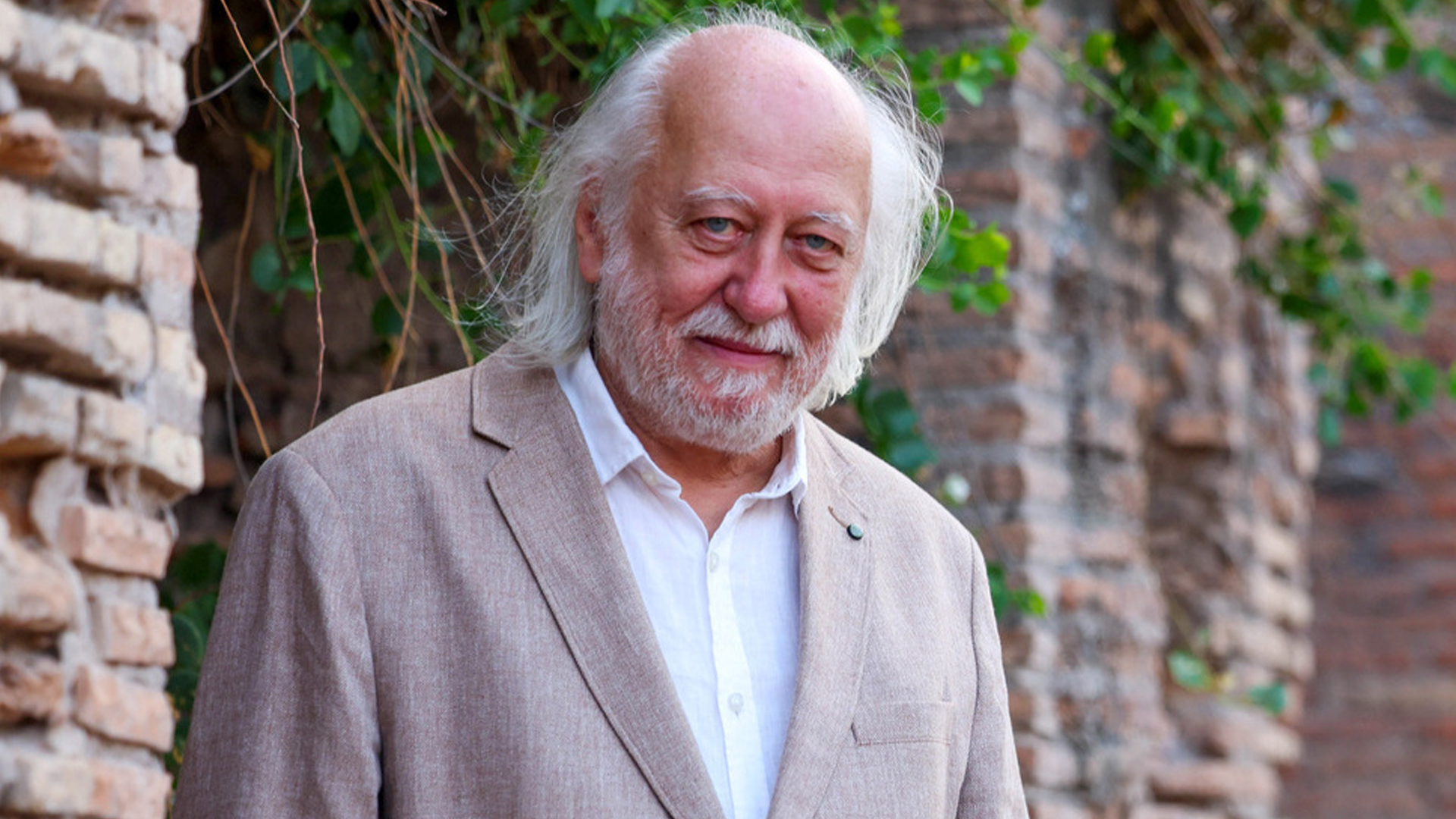
Hungarian novelist László Krasznahorkai has been awarded the 2025 Nobel Prize in Literature, recognizing his haunting and deeply meditative exploration of humanity on the edge of collapse. In a world marked by uncertainty, his work offers an unflinching gaze into despair while revealing how fragile beauty and meaning endure amid ruin.
Announcing the award in Stockholm, the Swedish Academy praised Krasznahorkai’s “compelling and visionary oeuvre” that, amid apocalyptic terror, reaffirms the power of art. This accolade adds to his achievements, including the 2015 Man Booker International Prize and collaborations with Hungarian filmmaker Béla Tarr, known for slow, haunting cinematic masterpieces.
Born in 1954 in Gyula, near Hungary’s border with Romania, Krasznahorkai emerged in the 1980s with Satantango, a novel set in a decaying village trapped in moral and physical rot. The book’s bleak subject was paired with long, flowing sentences that unfold with hypnotic musicality, inviting readers into a fully immersive experience.
He expanded his vision in novels such as The Melancholy of Resistance, War & War, and Baron Wenckheim’s Homecoming, delving into themes of societal collapse, spiritual yearning, and the tension between chaos and grace. His style is uniquely cerebral yet visceral, shaped by Central European thinkers like Kafka and Beckett.
Krasznahorkai’s writing requires readers to slow down. His dense paragraphs focus more on mood than plot, pushing against today’s fast pace. Though often dark and described as apocalyptic, his work is not about giving up. Instead, it demands that we face despair with attention and courage, challenging readers to think deeper.
In recent years, his travels in Asia have infused his work with new spiritual insights, exploring silence and aesthetic devotion. His latest novel, Herscht 07769, set in Germany, continues his investigation into cultural decay and inner resistance.
The late critic Susan Sontag once called him “a master of the apocalypse,” for his sharp, unflinching clarity. His work confronts chaos with visionary storytelling, reminding us that even in the darkest times, literature can provide clarity and solace.
Also Read: Nobel Prize in Chemistry 2025 Awarded to Pioneers of Metal-Organic Frameworks