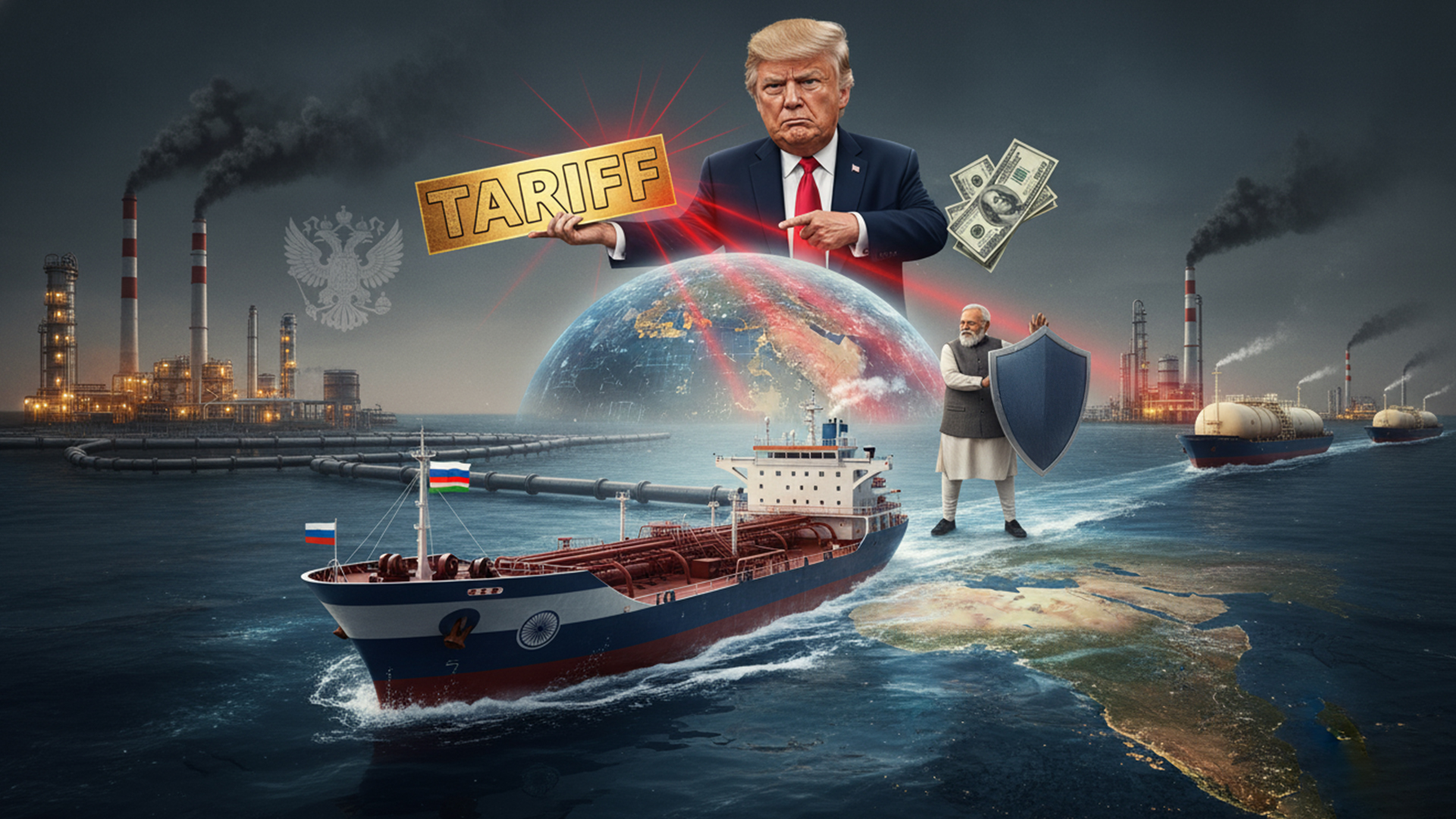
U.S. President Donald Trump on Sunday claimed that Indian Prime Minister Narendra Modi had assured him that India would cease importing Russian oil. Trump warned that if India continued these purchases, it would face “massive” tariffs on its goods. He stated, “But if they want to say that, then they’ll just continue to pay massive tariffs, and they don’t want to do that.”
However, India’s foreign ministry denied any knowledge of such a conversation, stating it was not aware of any telephone discussion between Modi and Trump on that day. The ministry emphasized that India’s primary concern is protecting the interests of its consumers.
The U.S. has imposed a 50% tariff on Indian goods, citing India’s continued imports of Russian crude oil as a key factor. Approximately half of these tariffs are reportedly in response to India’s Russian oil purchases, which the U.S. argues fund Russia’s military efforts in Ukraine.
India has become the largest buyer of seaborne Russian oil, benefiting from discounted prices due to Western sanctions on Russia. The Indian government has maintained that protecting the interests of consumers is its main priority.
A White House official noted that India has halved its Russian oil purchases, but Indian sources have refuted any immediate reduction, citing previously placed orders. Estimates from commodities data firm Kpler suggest India’s Russian oil imports are set to rise about 20% in October to 1.9 million barrels per day.
In response to U.S. pressure, some Indian refiners are actively seeking alternative sources of discounted crude oil. Mangalore Refinery and Petrochemicals Ltd (MRPL), for instance, is exploring options while still hoping to maintain imports from Russia.
MRPL’s Managing Director emphasized the company’s ongoing focus on sourcing the cheapest available crude, including Russian oil, in line with India’s cost-prioritized energy strategy.
Russia has expressed confidence that its energy partnership with India will continue despite the external pressures.
Russian Deputy Prime Minister Alexander Novak highlighted the economic benefits and practicality of Russian energy resources, reaffirming Russia’s view of India as a friendly partner and expecting the two nations to maintain and develop their energy collaboration.
The situation remains fluid, with ongoing trade talks between the U.S. and India. India is considering increasing its imports of U.S. liquefied petroleum gas (LPG) starting in 2026, while reducing purchases from traditional Middle Eastern suppliers. This strategic shift supports India’s broader trade objectives with the U.S., including boosting energy purchases and aiming for $500 billion in bilateral trade by 2030.
As of now, the Indian government has not confirmed any commitment to halt Russian oil imports, and the trade negotiations continue amid these geopolitical tensions.
Also Read: Gujarat’s Jain Community Pools Resources to Buy 186 Luxury Cars