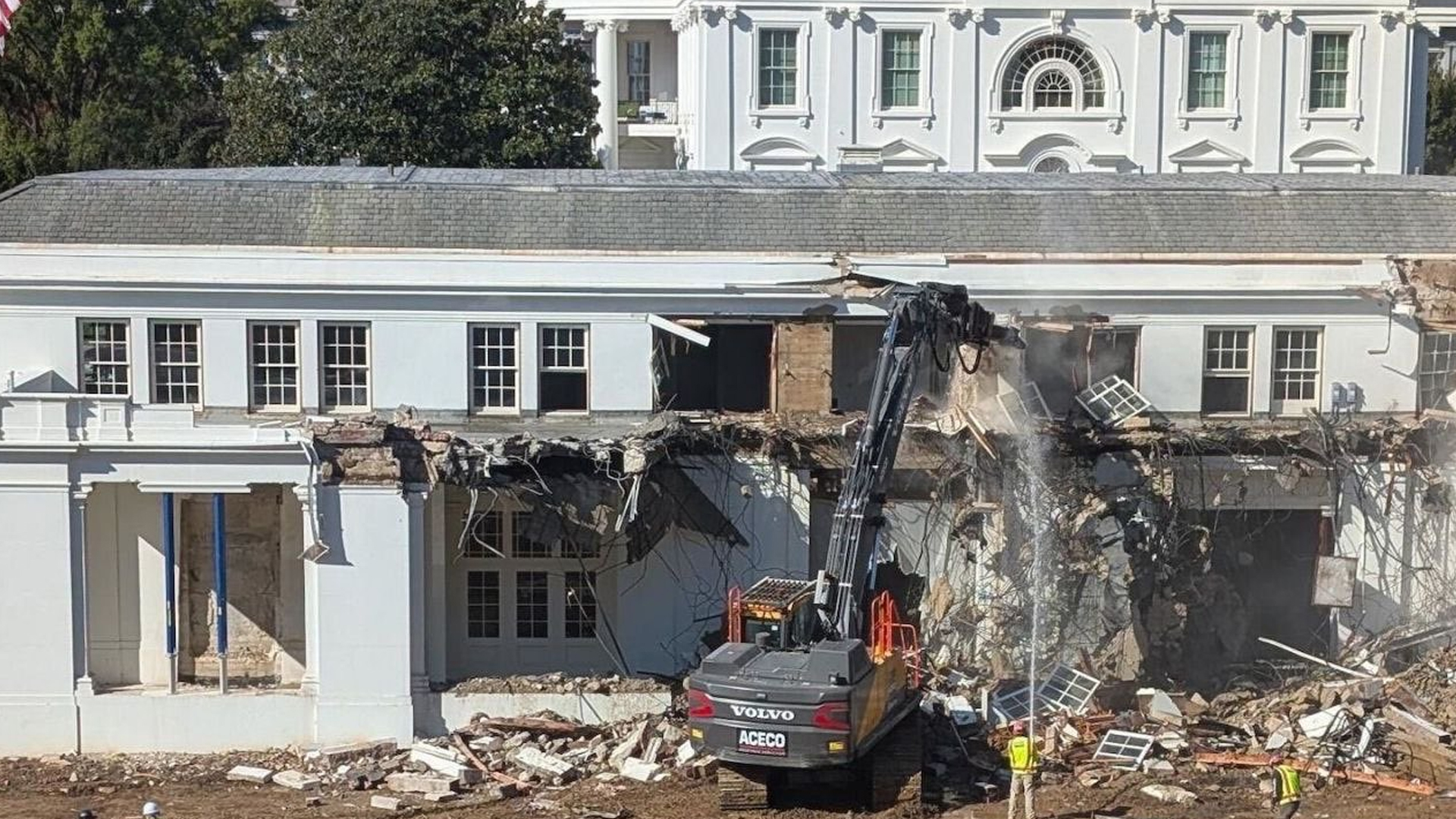
The world is watching as bulldozers move into the White House’s East Wing to make way for former President Donald Trump’s $250 million ballroom, a renovation that has stirred both fascination and controversy. On October 20, demolition crews began dismantling parts of the historic wing, which has housed offices for the first lady and her staff since 1902, to create space for the 90,000-square-foot event hall.
The new ballroom is designed to host up to 999 guests and will feature bulletproof glass, sweeping views of the Washington Monument, and state-of-the-art facilities intended for large-scale diplomatic and ceremonial functions. Trump has emphasized that the project is privately funded, citing donations from major corporations including Amazon, Apple, and Lockheed Martin. However, the identities of many contributors remain undisclosed, prompting questions internationally about transparency and the potential influence of private money on U.S. political spaces.
While Trump and his supporters defend the renovation as a necessary modernization of the White House for official state events, critics have voiced sharp opposition. Democratic lawmakers in the U.S. have described the project as an “utter desecration” of a historic landmark, highlighting the contrast between the lavish construction and pressing social and economic challenges. The project has drawn attention abroad as well, with global media framing it as a flashpoint in debates over governance, historic preservation, and the role of private funding in public institutions.
The ballroom is scheduled for completion before Trump’s term ends in January 2029, ensuring it will be available for official events, high-profile gatherings, and diplomatic functions. International analysts note that while renovations of government sites are not unprecedented, the scale and visibility of this project are exceptional, symbolizing both ambition and controversy.
As construction continues, the East Wing’s transformation raises larger questions about the balance between grandeur and heritage, public accountability, and the optics of private influence in the nation’s most iconic residence. For Americans and observers worldwide alike, the unfolding project is as much a story about politics and prestige as it is about architecture.
Also Read: Shaheen Afridi to Lead Pakistan in ODIs