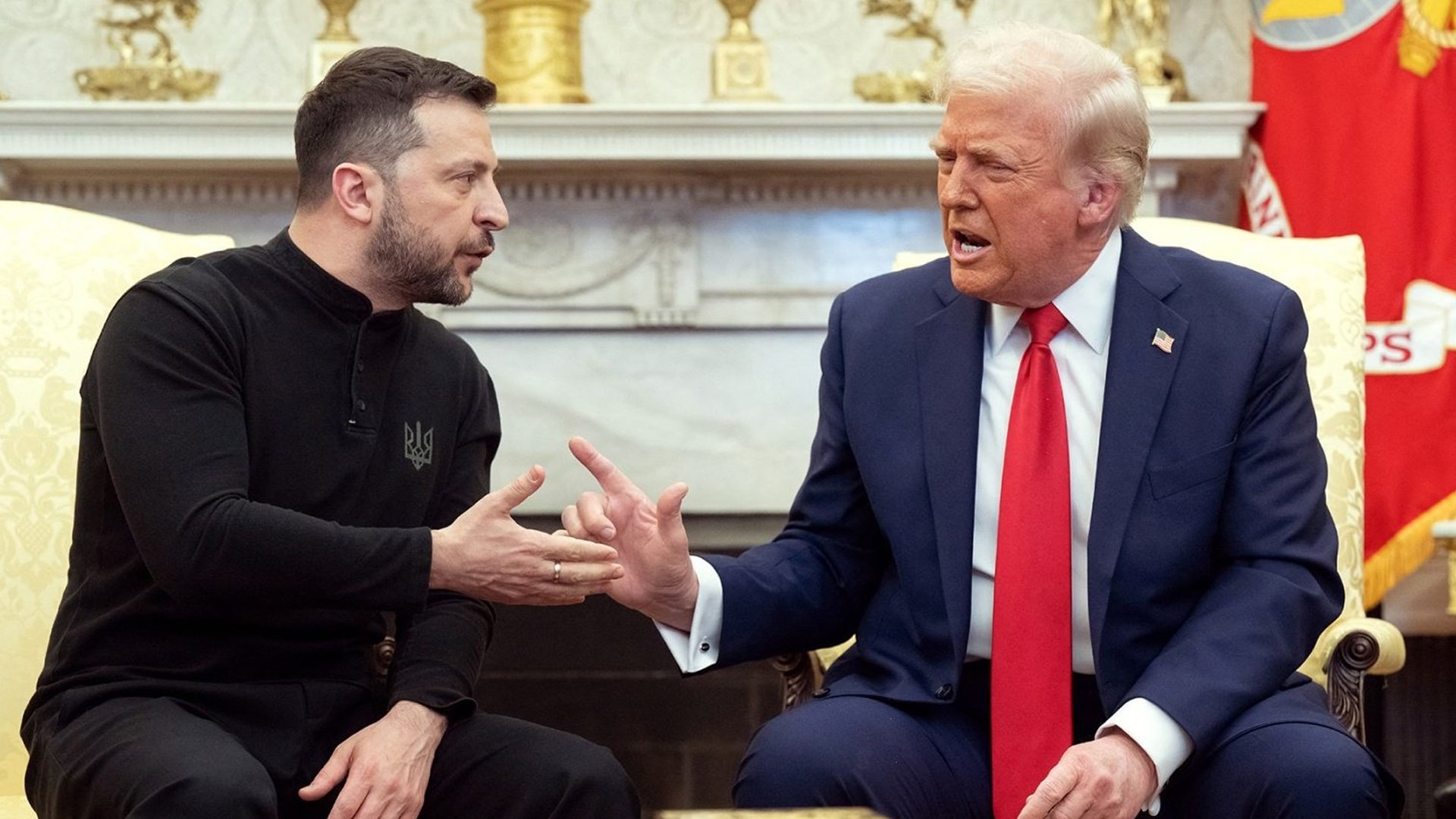
In a late-night post on Truth Social, U.S. President Donald Trump declared that Ukrainian President Volodymyr Zelenskyy could end the war with Russia “almost immediately” if he abandoned Ukraine’s long-standing aspirations of reclaiming Crimea and joining NATO. The message, delivered hours before a White House summit with Zelenskyy and top European leaders, underscored Trump’s willingness to reshape negotiations around concessions Kyiv has repeatedly ruled out.
Trump’s comments have unsettled European diplomats who fear the U.S. administration is pushing Ukraine toward a land-for-peace arrangement. His remarks follow last week’s Trump-Putin summit in Alaska, which many analysts described as a diplomatic win for the Russian leader and a blow to Kyiv’s security prospects.
Zelenskyy arrived in Washington on Sunday night alongside a delegation of European leaders including UK Prime Minister Keir Starmer, French President Emmanuel Macron, German opposition leader Friedrich Merz, and European Council President Donald Tusk. Italian Prime Minister Giorgia Meloni, Finnish President Alexander Stubb, and European Commission President Ursula von der Leyen also joined, signaling a show of transatlantic unity. The leaders are expected to reaffirm support for Ukraine’s territorial integrity, resist any forced concessions, and demand robust security guarantees.
In a collective statement issued ahead of the Oval Office talks, European leaders stressed that Ukraine must receive “ironclad security guarantees” as part of any eventual peace deal, and that Russia cannot be rewarded with territorial gains for its aggression.
The U.S. special envoy for Ukraine, Steve Witkoff, said Moscow had tentatively agreed to allow Western nations to extend security protections to Ukraine similar to NATO’s Article 5 guarantee—though outside the NATO framework. Such a plan would not entail Ukraine’s formal membership in the alliance or deployment of U.S. forces on Ukrainian soil but could provide a collective defense umbrella backed by Washington and its allies.
Zelenskyy has maintained that peace must be durable and consistent with Ukraine’s constitution, which prohibits the ceding of territory. He insisted that negotiations must be grounded on current front lines, not on Russia’s territorial demands, and called for practical protections “on land, in the air, and at sea” with strong European involvement.
The White House summit comes at a critical moment. Trump has abandoned his earlier demand for a ceasefire as a precondition for talks, now favoring direct negotiations between Kyiv and Moscow. Meanwhile, Russian forces have stepped up attacks on Ukrainian cities, including deadly drone strikes in Kharkiv, in what many see as an attempt to increase pressure ahead of the talks.
For Zelenskyy, the meeting represents a high-stakes balancing act: resisting U.S. pressure for concessions while securing meaningful guarantees of Western support. For Europe, it is a test of whether transatlantic unity can hold in the face of Trump’s unorthodox diplomacy. The outcome of Monday’s discussions may shape not only Ukraine’s future but also the stability of the wider European security order.
Also Read: Thousands Rally in Tel Aviv Demanding End to Gaza War and Hostage Release