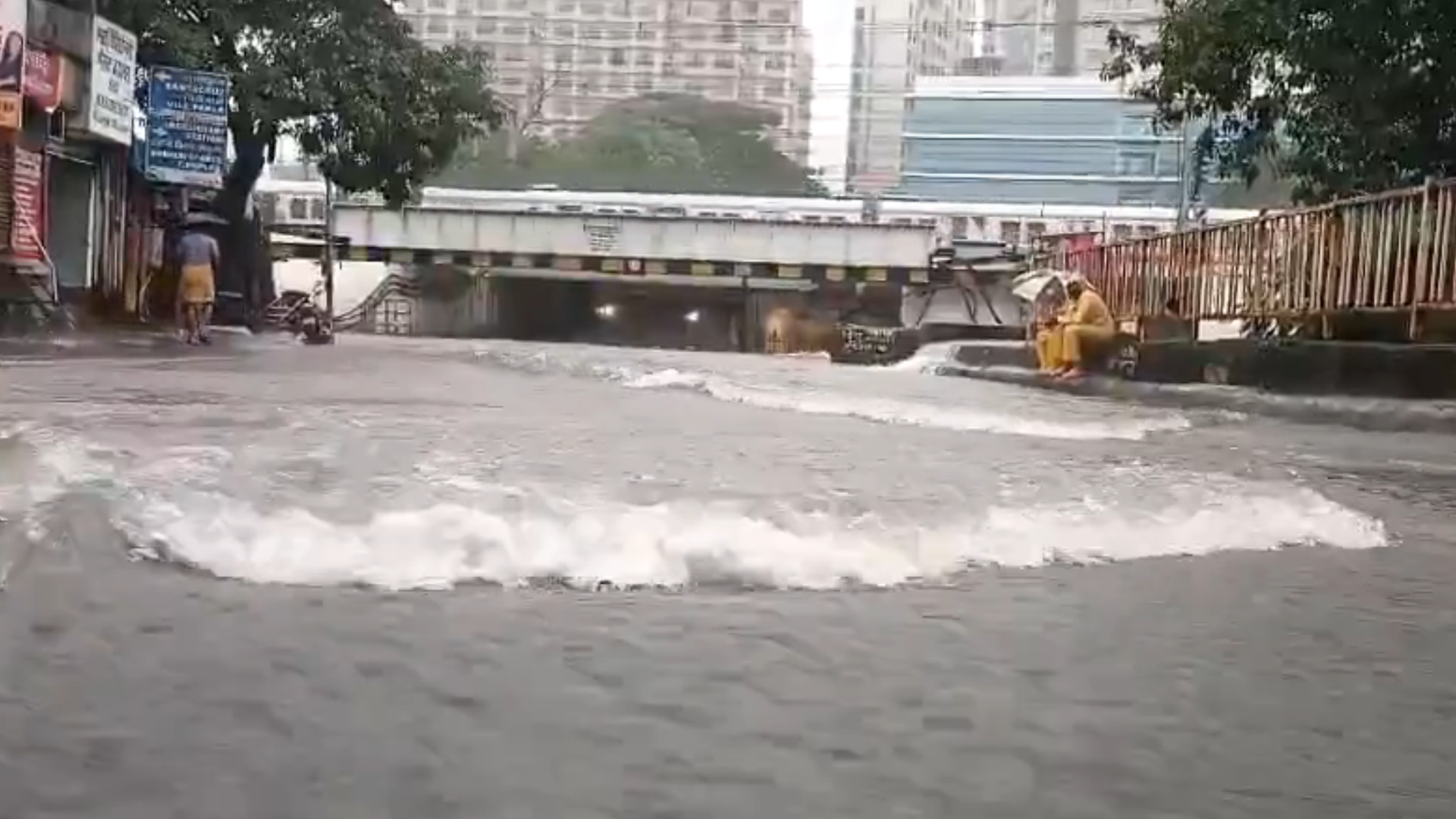
Mumbai is reeling under a brutal monsoon assault, as torrential rains inundated low-lying areas, brought traffic to a standstill, delayed trains and flights, and forced the shutdown of schools, colleges, and government offices.
Citywide Shutdown and Safety Measures
The Brihanmumbai Municipal Corporation declared a holiday for all government and semi-government offices, urging private firms to allow work-from-home arrangements. Educational institutions, including senior colleges across the Konkan region, were also shut to ensure student safety. These decisions came after the India Meteorological Department (IMD) issued a “red alert” for Mumbai and surrounding districts, warning of “very heavy to extremely heavy” rainfall and gusty winds up to 55-65 kmph.
Mumbai Police and other civic authorities advised residents to stay indoors, avoid unnecessary travel, and steer clear of coastal areas during high tide.
Rainfall and Waterlogging Impact
In a 24-hour period ending at 8 AM, Mumbai’s island city, eastern and western suburbs recorded rainfalls averaging 186.43 mm, 208.78 mm, and 238.19 mm respectively. Notable downpour included Vikhroli at approximately 195 mm, Santacruz around 238 mm, Byculla 241 mm, Juhu 222 mm, and Bandra 211 mm. Massive waterlogging was reported across areas such as Borivali, Andheri, Sion, Dadar, Gandhi Market, Parel, and Matunga—hampering both pedestrian and vehicular movement.
Transport Chaos: Trains, Flights, Roads
Despite the deluge, Western Railway reassured commuters that local train services would continue, tweeting, “We won’t stop, we won’t pause.” Still, delays were common, especially on central and harbour lines, and stations like Sion to Kurla and Mankhurd were impacted. Some low-lying tracks experienced minor submersion, though operations remained functional.
On the roads, traffic crawled due to submerged streets. BEST buses were rerouted at various points to avoid the worst-hit segments. Meanwhile, flight operations took a major hit: numerous flights were delayed, with about 11 go-arounds recorded and five flights diverted. IndiGo, SpiceJet, and Akasa issued travel advisories urging passengers to check flight statuses.
Nature’s Wrath: High Tides and Dangerous River Levels
Mumbai’s coastal geography compounded the crisis. High tide peaks at 3.75 metres at 9:16 AM and 3.14 metres at 8:53 PM risked worsening flooding. The Mithi River, overflowed dangerously, prompting evacuation efforts in Kurla West’s Kranti Nagar, where residents were relocated to safer ground.
Regional Fallout and Casualties
The monsoon’s wrath extended beyond Mumbai. Maharashtra as a whole suffered significant impacts, with reports indicating at least six deaths across the state, notably from incidents like wall collapses and electrocution. This marked one of the deadliest episodes of the season so far.
Historical Perspective and City Resilience
Mumbai’s vulnerability to flooding is well-known. The 2005 deluge saw over 900 mm of rainfall in a single day, catastrophic infrastructure failures, and widespread paralysis. The city’s drain-choked urban fabric, low-lying terrain, and dense habitation magnify the consequences of heavy monsoon spells. Yet today’s weather, although severe, hasn’t matched that historic catastrophe.
Outlook: Cautious Vigilance Continues
Authorities are maintaining high alert across Mumbai. IMD’s forecast indicates the rains may persist over the coming hours, and strong winds continue to veneer the threat of further disruptions. Disaster response teams are on standby, coordinating drainage efforts, rescue operations, and infrastructure checks.
Also Read: INDIA Bloc Mulls Impeachment Motion Against Chief Election Commissioner Amid Voter Roll Row