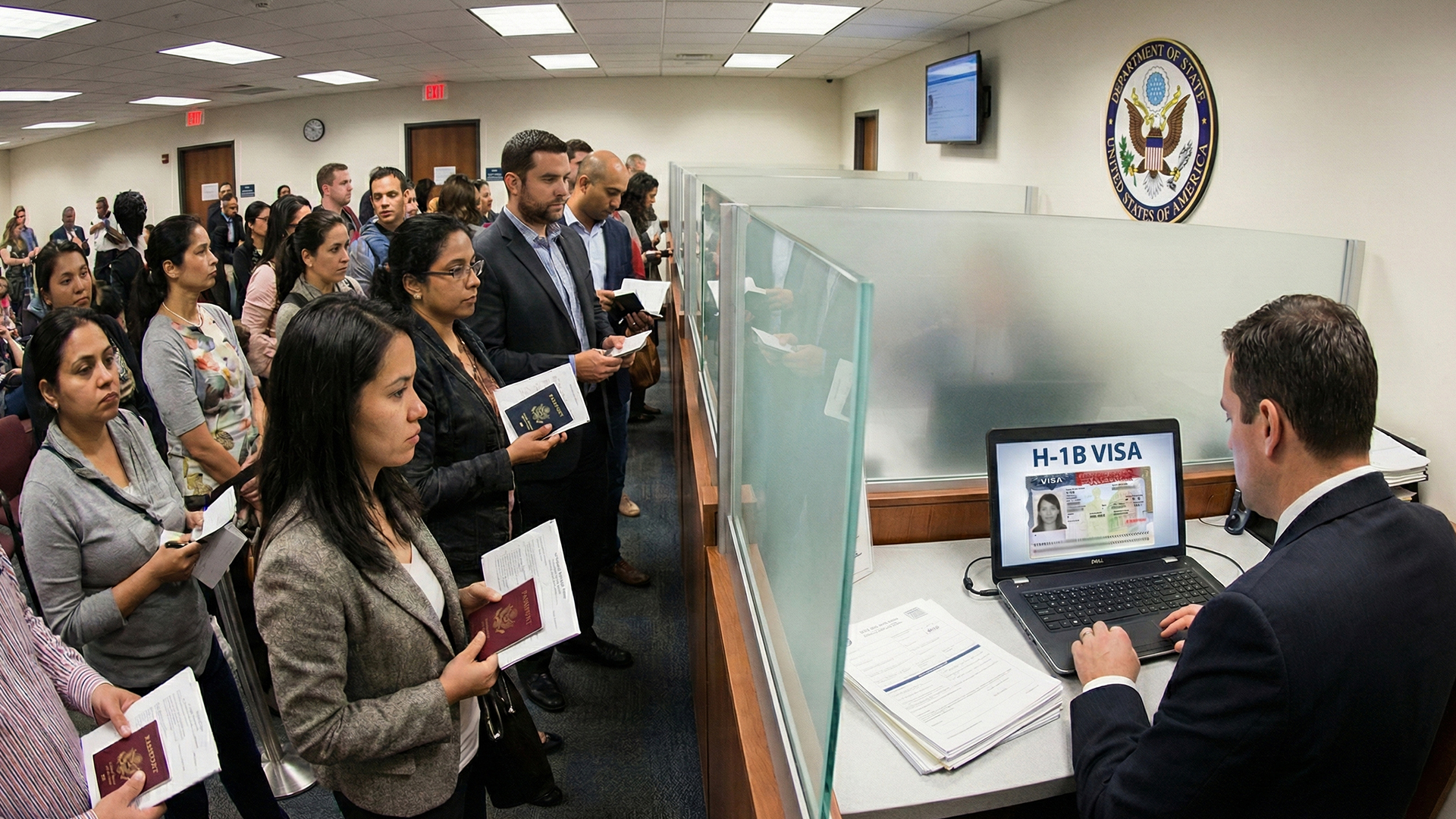
The United States has introduced much stricter vetting rules for H-1B visa applicants, expanding scrutiny to their social-media activity, employment history, and any past involvement in content moderation or work linked to misinformation and censorship. The new guidelines, issued by the US State Department, will take effect globally from December 15 and apply not only to H-1B professionals but also to their dependents who apply for or renew H-4 visas.
Under the revised procedure, applicants must keep their social-media profiles public. Consular officers will review online posts, comments, affiliations, and professional roles, alongside traditional background checks. The order specifically directs officers to check if the applicant, or their family member, has ever participated in content moderation, misinformation review, fact-checking, or enforcement activities that the US government may interpret as restricting protected free speech.
The State Department has also stated that anyone found to have “censored or attempted to censor protected expression in the United States” could be held ineligible for the visa. This clause has widened concern among professionals working in social-media companies, trust-and-safety teams, online safety divisions, and similar digital operations, many of whom apply for H-1B visas.
The H-1B visa is a key pathway for high-skilled foreign workers, especially Indians, to work in US technology and research firms. With many Indian IT professionals employed in digital-platform compliance, AI content filtering, and moderation technologies, the expanded vetting is expected to directly impact a significant segment of applicants. Industry observers believe the move may lead to longer processing times, more documentation requests, and a rise in rejections for applicants flagged under the new criteria.
The latest announcement follows a broader tightening of the US immigration system, which includes fee hikes and deeper background checks on work-related roles. For now, applicants are advised to ensure that their digital presence aligns with the new transparency requirements and that their employment history is accurately presented across platforms, including LinkedIn.
Also Read: Blocking skilled immigration will backfire, says Jaishankar