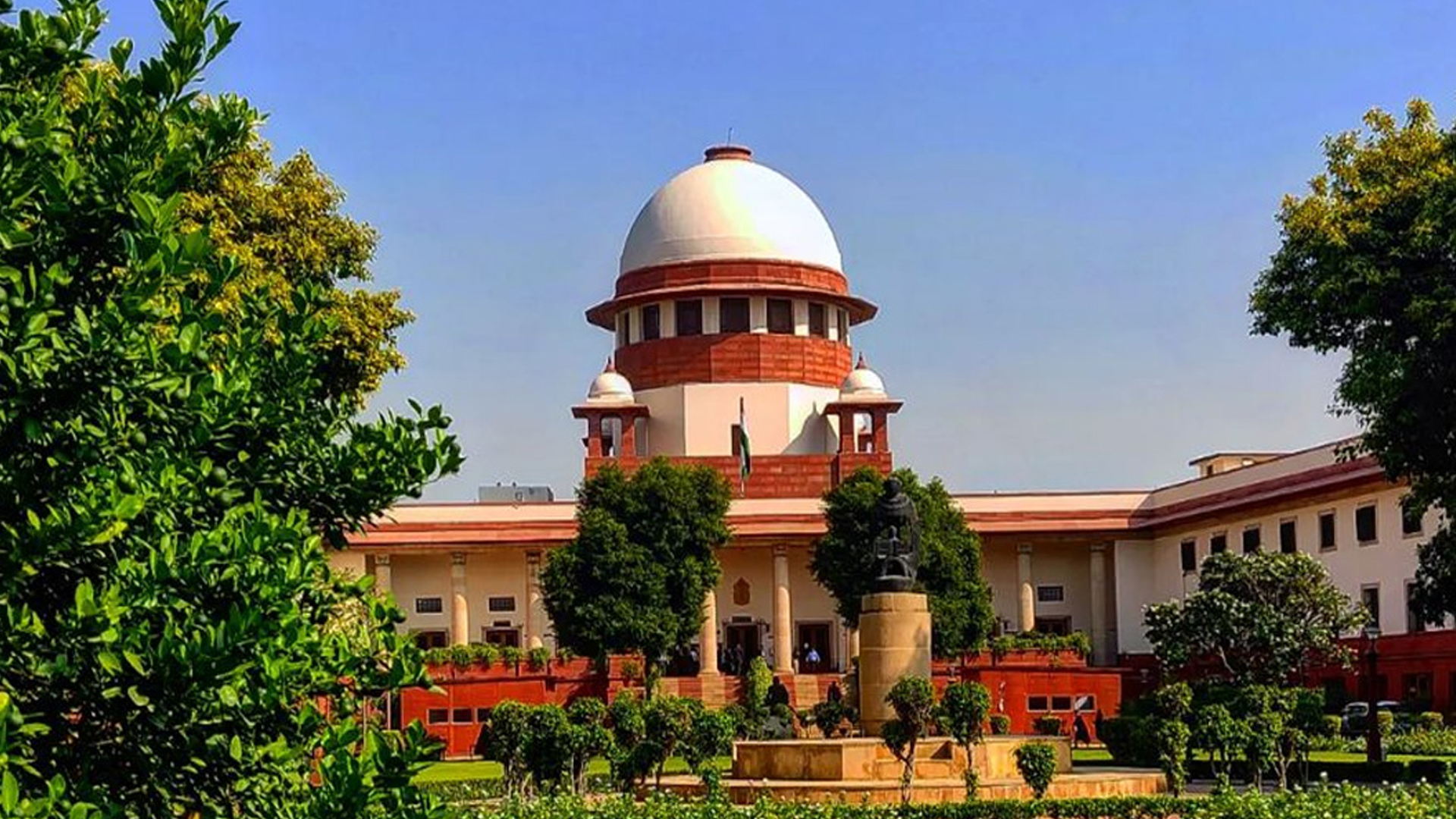
New Delhi: In a significant ruling, the Supreme Court of India held that a death sentence can be challenged under Article 32 of the Constitution if there has been a breach of procedural safeguards mandated by law, particularly those laid down in its landmark 2022 judgment in Manoj v. State of Madhya Pradesh.
A three-judge bench comprising Justices Vikram Nath, Sanjay Karol, and Sandeep Mehta declared that even if the conviction and sentence have attained finality, the sentencing process can still be revisited if it is shown that the constitutional rights of the accused, especially under Articles 14 and 21, have been violated due to non-compliance with procedural safeguards.
Background of the Dupare Case
Vasanta Sampat Dupare was sentenced to death for the 2008 rape and murder of a four-year-old girl in Nagpur. His conviction was upheld by the trial court, the Bombay High Court (Nagpur bench), and the Supreme Court in 2014. After his review, curative, and mercy petitions were all rejected, Dupare filed a fresh plea under Article 32.
He argued that his sentencing had ignored key safeguards laid out in the Manoj judgment, like considering mitigating factors, psychological evaluations, and ensuring a fair, individualized process before imposing the death penalty.
Key Observations by the Court
The Supreme Court held that procedural lapses in the sentencing phase of a death penalty case could form valid grounds for constitutional scrutiny under Article 32. It noted that, “It is not the conviction but only the sentencing part that can be reopened under Article 32, where it is shown that due procedure was not followed.”
However, the Court cautioned against opening the floodgates to routine challenges to death sentences under Article 32. Such petitions would only be entertained in cases where there is a clear and demonstrable violation of procedural safeguards that go to the root of fairness and dignity guaranteed by the Constitution.
Impact on the Dupare Case
While the conviction of Dupare remains upheld, the Supreme Court set aside the death sentence because procedural safeguards were not adequately followed. The case has now been referred to the Chief Justice of India for re-listing before an appropriate bench to conduct a fresh hearing on the sentence alone, in line with Manoj guidelines.
Significance of the Ruling
This judgment reinforces the importance of individualized sentencing in capital cases, which the Court first emphasized in Manoj v. State of MP (2022). That ruling mandated that trial and appellate courts must thoroughly examine the convict’s background, psychological health, and mitigating circumstances before awarding the death penalty.
The present ruling affirms that these safeguards are not mere formalities but constitutional imperatives, and their violation can justify judicial review even at the final stage.
Also Read: Trump Nominates Sergio Gor as US Ambassador to India: All You Need to Know