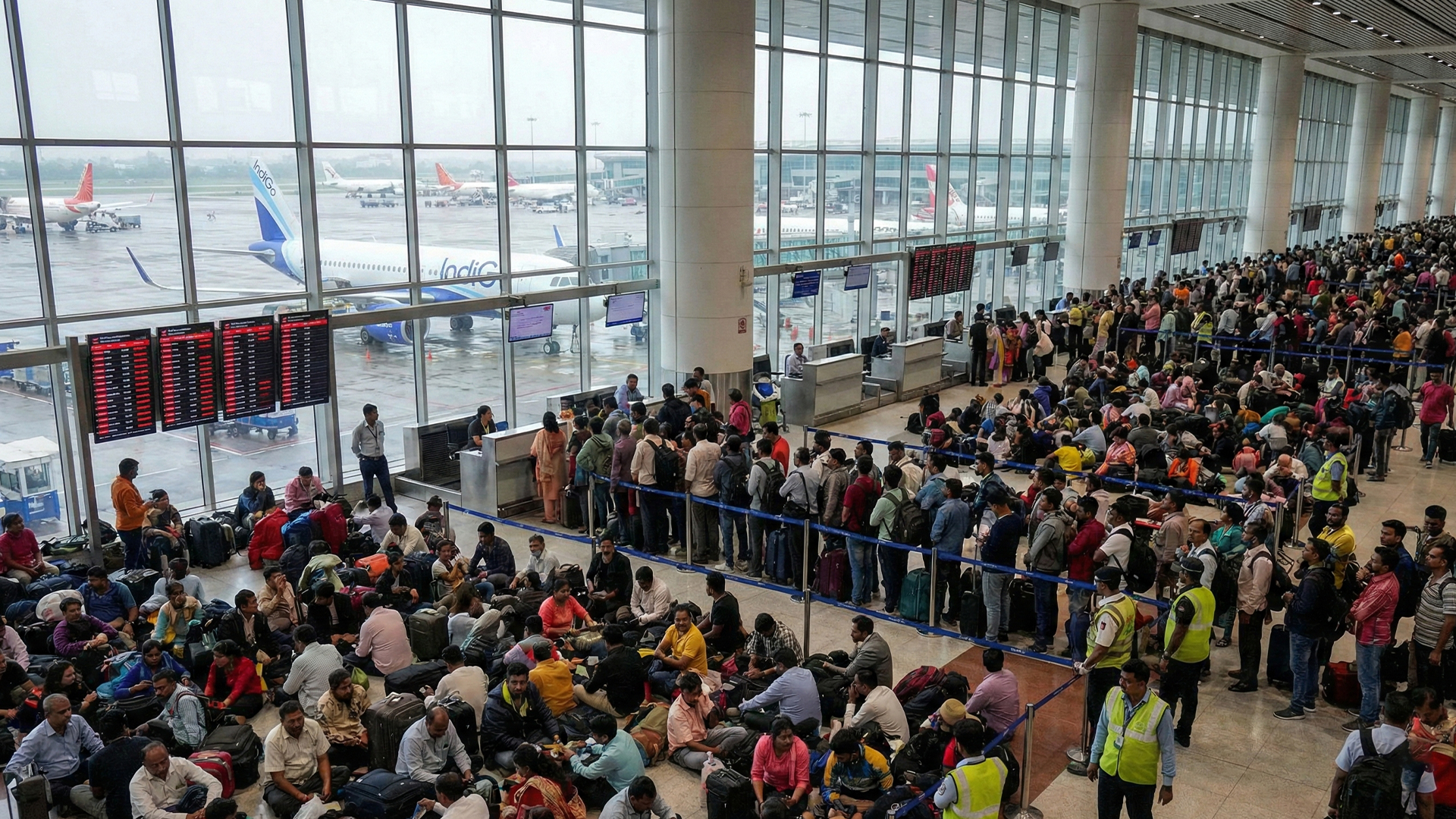
IndiGo cancelled over 550 domestic and international flights on December 4, marking the third consecutive day of major operational disruptions. Thousands of passengers were left stranded at airports across India, with Delhi, Mumbai, Bengaluru, Hyderabad, Kolkata, Chennai, and Goa bearing the brunt of cancellations.
Delhi was the hardest hit with 172 flights called off, followed by Mumbai (118), Bengaluru (100), Hyderabad (75), Kolkata (35), Chennai (26), and Goa (11). The airline issued a public apology, acknowledging the chaos and assuring passengers that efforts were underway to stabilise operations.
The disruptions were triggered primarily by newly implemented flight‑duty and rest regulations, which limit night landings and mandate longer rest periods for pilots. IndiGo’s crew planning did not fully align with these rules, leaving many flights without legally available crew. Technical glitches, winter-season weather, and airport congestion further exacerbated the situation.
In response, IndiGo submitted a mitigation plan to aviation authorities, including increased crew recruitment, enhanced training, revised rostering, and strict safety-compliance measures. The airline also requested temporary relief from certain pilot rest provisions to ease short-term operational strain.
Despite these measures, some flight cancellations and delays are expected to continue over the next few days. IndiGo has projected a phased restoration of services, with full and stable operations expected only by February 10, 2026. Passengers have been advised to check flight statuses before traveling.
While safety regulations are essential, the IndiGo disruption underscores how sudden changes can create widespread operational strain, affecting travelers nationwide.
Also Read: RBI reduces repo rate to 5.25% for growth