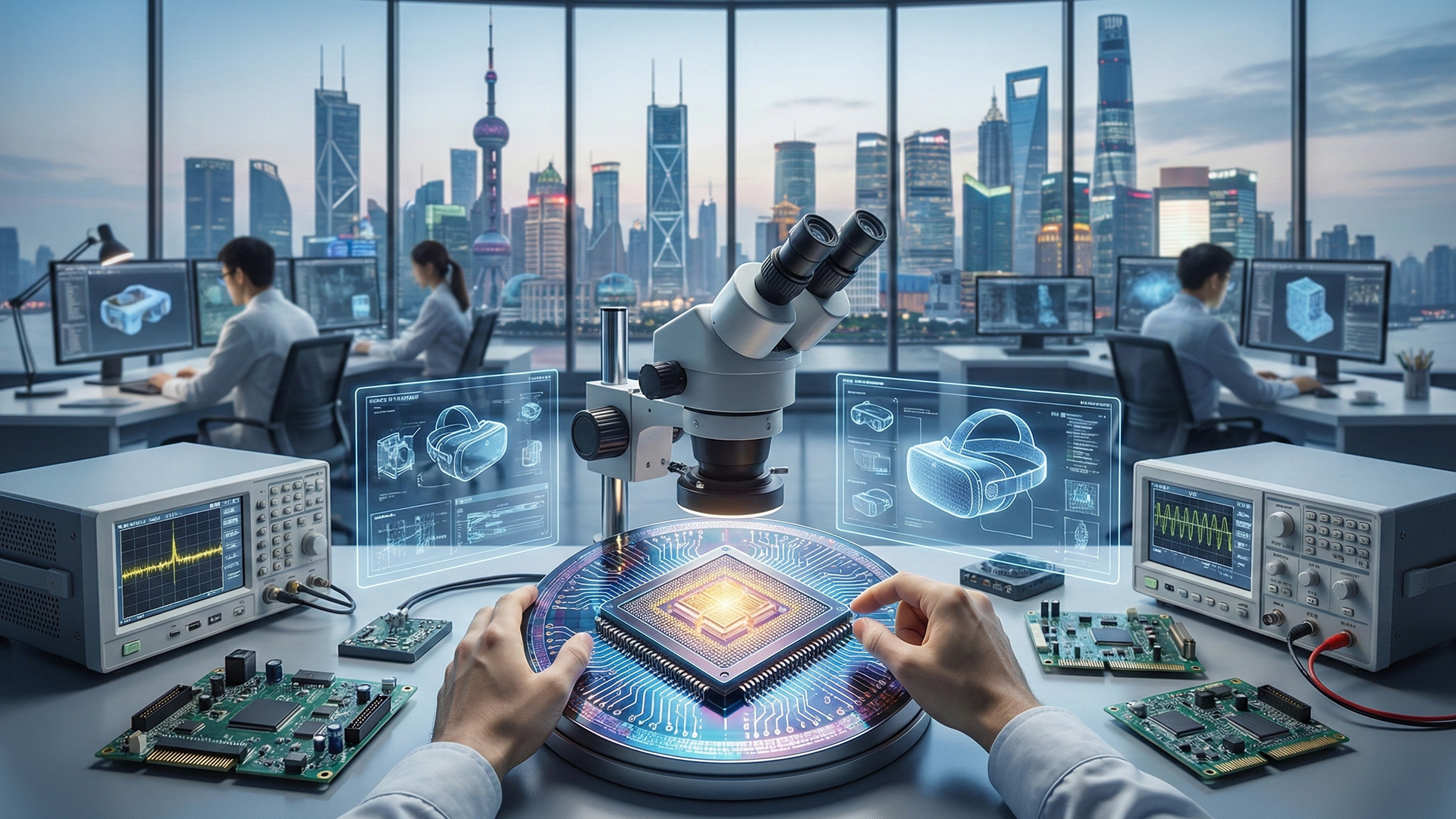
Wang Chaohao, a former Apple engineer, is back with a bold idea. After working on Apple’s Vision Pro, he now leads a Chinese startup, GravityXR, and has developed a new XR chip called G-X100. This tiny 5-nanometre chip could power the next generation of AR, VR, and mixed-reality headsets and potentially rival Apple’s premium devices.
What makes the G-X100 special is its speed. It has a photon-to-photon latency of just 9 milliseconds, meaning the device reacts almost instantly to your movements. In simple terms, that could make virtual worlds feel smoother, more responsive, and far less likely to cause motion sickness. Most high-end XR headsets today have latency of 10–12 milliseconds.
The chip is designed to work in lightweight AI glasses as well as more powerful XR headsets. It supports spatial computing, the technology that allows devices to “see” the real world and blend digital objects seamlessly into it. With built-in graphics processing, AI acceleration, and real-time sensing, the G-X100 promises to make mixed-reality experiences more natural and immersive.
This launch is also part of a bigger trend. China is aiming to build its own XR technology and reduce reliance on foreign hardware. GravityXR has already drawn investors, tech firms, and hardware manufacturers. With their support, the company plans to supply its chip to XR device makers worldwide.
If it lives up to the hype, the G-X100 could help create headsets that are lighter, faster, and more comfortable to wear. It could also make advanced XR experiences more affordable.
Wang and his team, have brought about mixed reality feel closer to real life. With the G-X100, the future of XR could be faster, smarter, and more human.
Also Read: Trump receives FIFA Peace Prize at World Cup draw