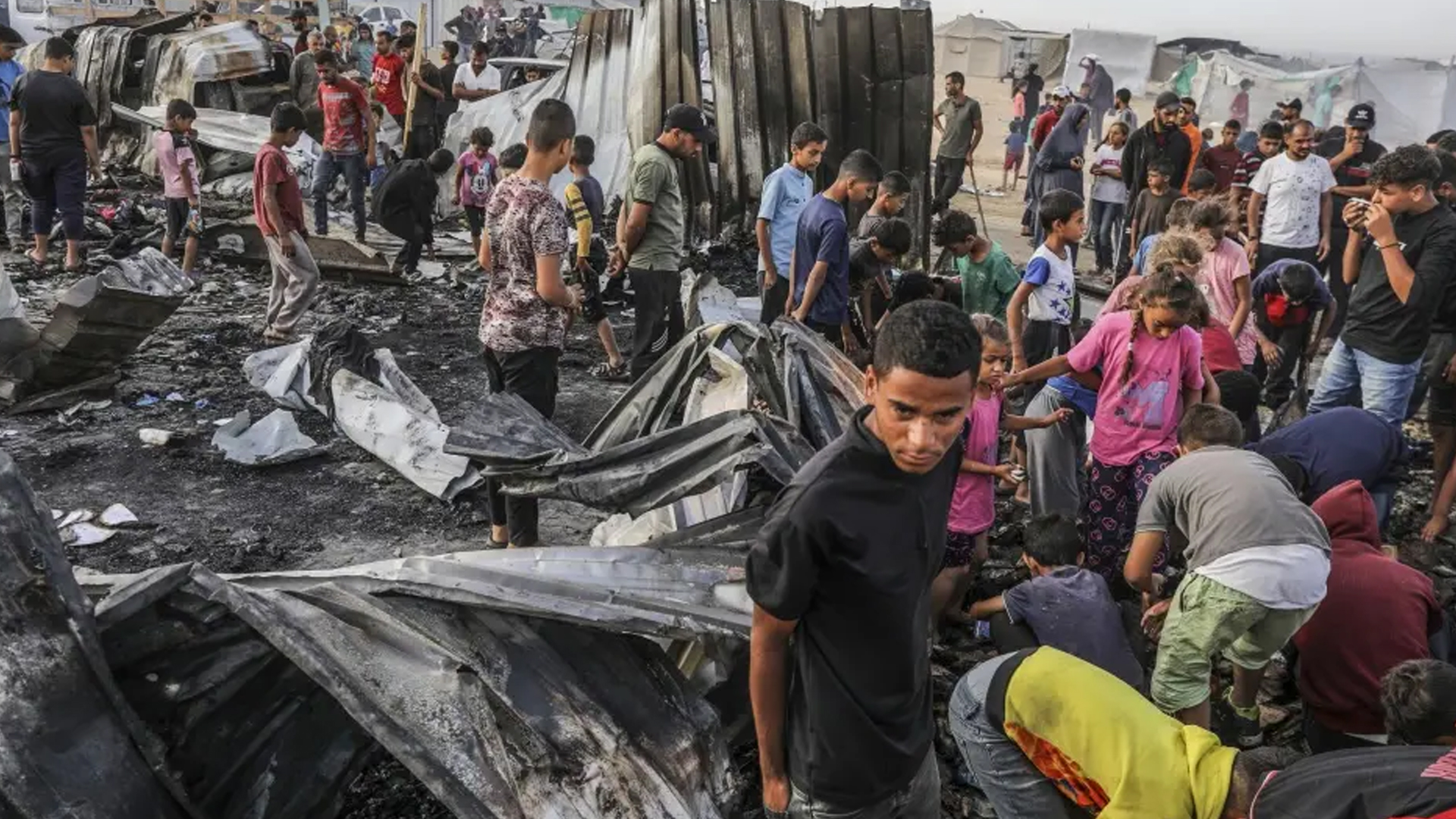
At least 20 people, including five journalists, were killed on Monday when Israeli forces struck Nasser Hospital in southern Gaza, according to health officials and multiple international news agencies. The first bombing hit the top floor of the hospital, killing Reuters journalist Hussam al-Masri and others. Minutes later, a second strike hit the same location as rescuers and journalists rushed to aid the wounded, a tactic widely referred to as a “double tap” attack.
Video footage broadcast by AlGhad TV captured the devastating moments. Civil defense workers in bright orange vests and journalists were seen shielding themselves seconds before the second explosion, which left bodies of first responders and reporters lying amid rubble and dust. The Associated Press, Reuters, and Al Jazeera confirmed the deaths of Mariam Abu Dagga of AP, Mohammed Salam of Al Jazeera, photojournalist Moaz Abu Taha, and Ahmad Abu Aziz of Quds Feed, while Reuters photographer Hatem Khaled was wounded.
The strike has sparked international condemnation. UK Foreign Secretary David Lammy called for an immediate ceasefire, tweeting that civilians, healthcare workers, and journalists must be protected. French President Emmanuel Macron described the attack as “intolerable,” while US President Donald Trump expressed concern, telling reporters, “I’m not happy about it.” Israeli Prime Minister Benjamin Netanyahu described the incident as a “tragic mishap” and expressed regret, though Israel has historically justified strikes on hospitals and journalists by alleging connections to Hamas, claims widely disputed by journalistic organizations.
The Committee to Protect Journalists (CPJ) condemned the attack, emphasizing that 193 Palestinian journalists have been killed since the outbreak of the conflict on October 7, 2023—more than the total killed globally in the previous three years. Sara Qudah, CPJ regional director, stated, “These unlawful killings must end now. The perpetrators must no longer be allowed to act with impunity.”
Journalists killed in Monday’s strikes were recognized for their dedication to reporting in hazardous conditions. Mariam Abu Dagga, 33, freelanced for AP and other outlets, covering the dire conditions in Nasser Hospital where doctors struggled to treat children suffering from starvation and conflict-related injuries. She reportedly instructed friends not to cry at her funeral, emphasizing the importance of preserving her legacy for her 13-year-old son, Ghaith.
Ahmad Abu Aziz, based at Nasser Hospital, had previously reported on the trauma of working in Gaza, including the destruction of his own home. Mohammed Salam of Al Jazeera and Moaz Abu Taha also contributed to frontline reporting under extreme risk, highlighting the humanitarian crisis in the region.
Israeli military officials stated that the chief-of-staff had ordered a preliminary investigation, claiming that Israel does not intentionally target journalists and expressed regret for injuries to uninvolved personnel. However, past inquiries into alleged misconduct in Gaza have largely gone unresolved. A recent report found that 88% of Israeli investigations into war crime allegations in Gaza were closed or left unresolved. The investigation into the killing of Palestinian-American journalist Shireen Abu Akleh in 2022 remains incomplete.
The attack comes amid Israel’s near-total restrictions on international media coverage of the conflict, forcing Palestinian journalists to report under extreme danger, with limited access to food, medical care, and protective resources.
Also Read: India Holds Firm Against US Pressure Amid Soaring Tariffs on Indian Goods