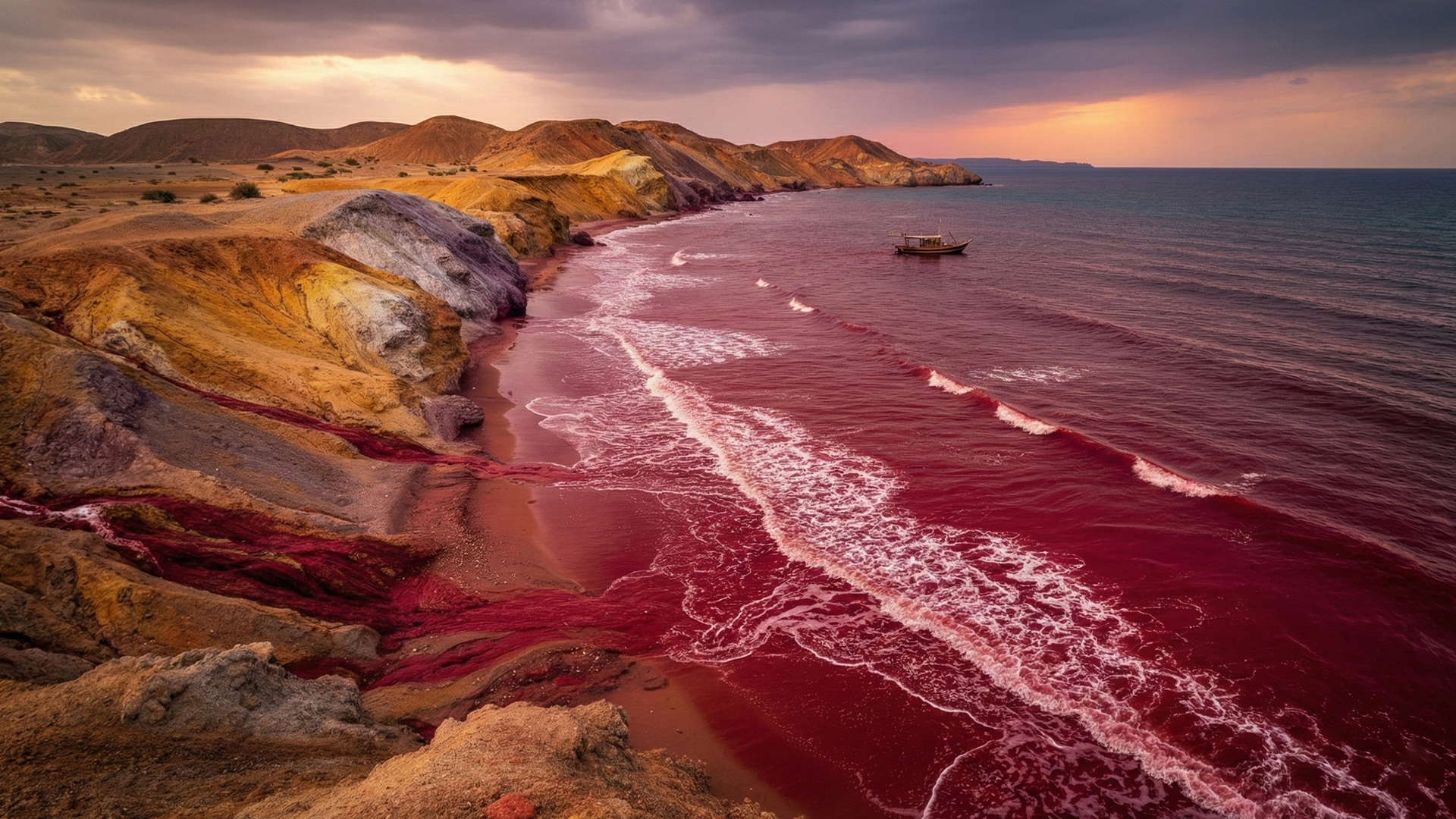
After a bout of heavy rain, Hormuz Island, a small gem in southern Iran’s Persian Gulf, has become the centre of attention for its stunning blood‑red beaches. The sudden change, captured in countless photographs and videos, has left both locals and online viewers mesmerised. But the dramatic sight is completely natural and harmless, rooted in the island’s unique geology.
Known as the “Rainbow Island”, Hormuz is famed for its strikingly colourful landscapes, with cliffs and soils in shades of yellow, green, black, and white. The red hues that now dominate the coast come from iron‑rich soil and rocks, especially minerals like hematite, the same mineral that gives Mars its reddish surface. When heavy rains hit the island, water runoff carries tiny particles of this iron-rich soil into streams and onto the beaches, where it mixes with shallow coastal waters. The result is a brilliant crimson sheen, turning the shoreline into what looks like a natural painting.
Scientists emphasise that this phenomenon is temporary. As the sediment eventually settles or washes away, the beaches will return to their usual colours. The red waters are not toxic and pose no risk to humans or marine life.
The spectacle is a vivid reminder of how nature can surprise us, blending geological features with weather patterns to create moments of wonder. Photographers and tourists are already flocking to the island to capture the fleeting phenomenon, while scientists view it as a fascinating example of sediment and mineral dynamics in coastal environments.
For the residents of Hormuz, these dramatic beaches are a regular, if unpredictable, feature of island life, but for the rest of the world, the “blood‑red” coast is a rare glimpse of nature’s palette at work. The island’s iron‑rich soil, colourful cliffs, and now its crimson waters combine to make Hormuz a living canvas, where rainfall briefly turns ordinary landscapes into something truly extraordinary.
Also Read: Avatar: Fire and Ash to premiere worldwide