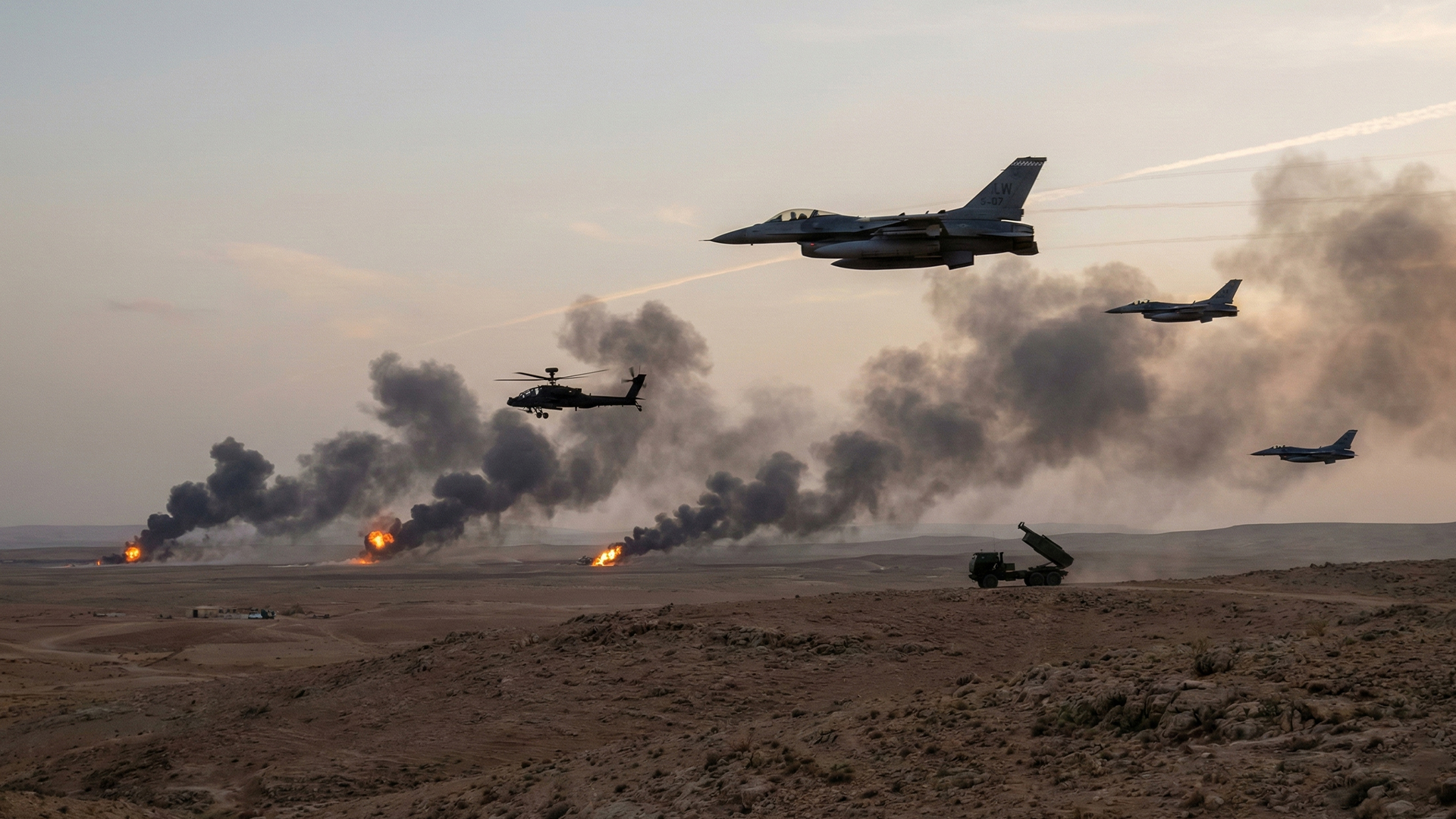
On 19 December 2025, the United States launched a large-scale military operation against Islamic State (ISIS) targets in central Syria, hitting more than 70 sites in a decisive response to a recent deadly ambush. The campaign, named Operation Hawkeye Strike, involved fighter jets, attack helicopters, rocket systems, and precision-guided munitions to target ISIS fighters, weapon caches, and infrastructure.
The strikes came after a 13 December attack near Palmyra, where a gunman believed to be linked to ISIS ambushed a U.S.-Syrian convoy. The attack killed two U.S. Army soldiers from the Iowa National Guard and a US civilian interpreter, and left several others wounded. The incident sparked swift action from U.S. forces, with President Donald Trump describing the response as “very serious retaliation,” while Defense Secretary Pete Hegseth called it “a declaration of vengeance” against those threatening American personnel.
According to US Central Command (CENTCOM), the strikes were carefully planned and executed in coordination with local partners, focusing on dismantling ISIS operational capabilities. The operation included air and ground support and targeted militants’ command centers, storage facilities, and communication hubs. CENTCOM said that over 100 precision-guided weapons were used to minimize civilian harm while maximizing impact on ISIS forces.
The Syrian government also supported the operation, emphasizing its commitment to prevent ISIS from regaining territory and safe havens. The strikes underline the ongoing cooperation between US forces and Syrian authorities to combat terrorism in the region.
Approximately 1,000 US troops remain deployed in Syria, maintaining security and monitoring ISIS activity. Officials said the operation is part of a broader effort to prevent the resurgence of ISIS while protecting US personnel and allies.
Also Read: India–China trade gap widens to $106 billion