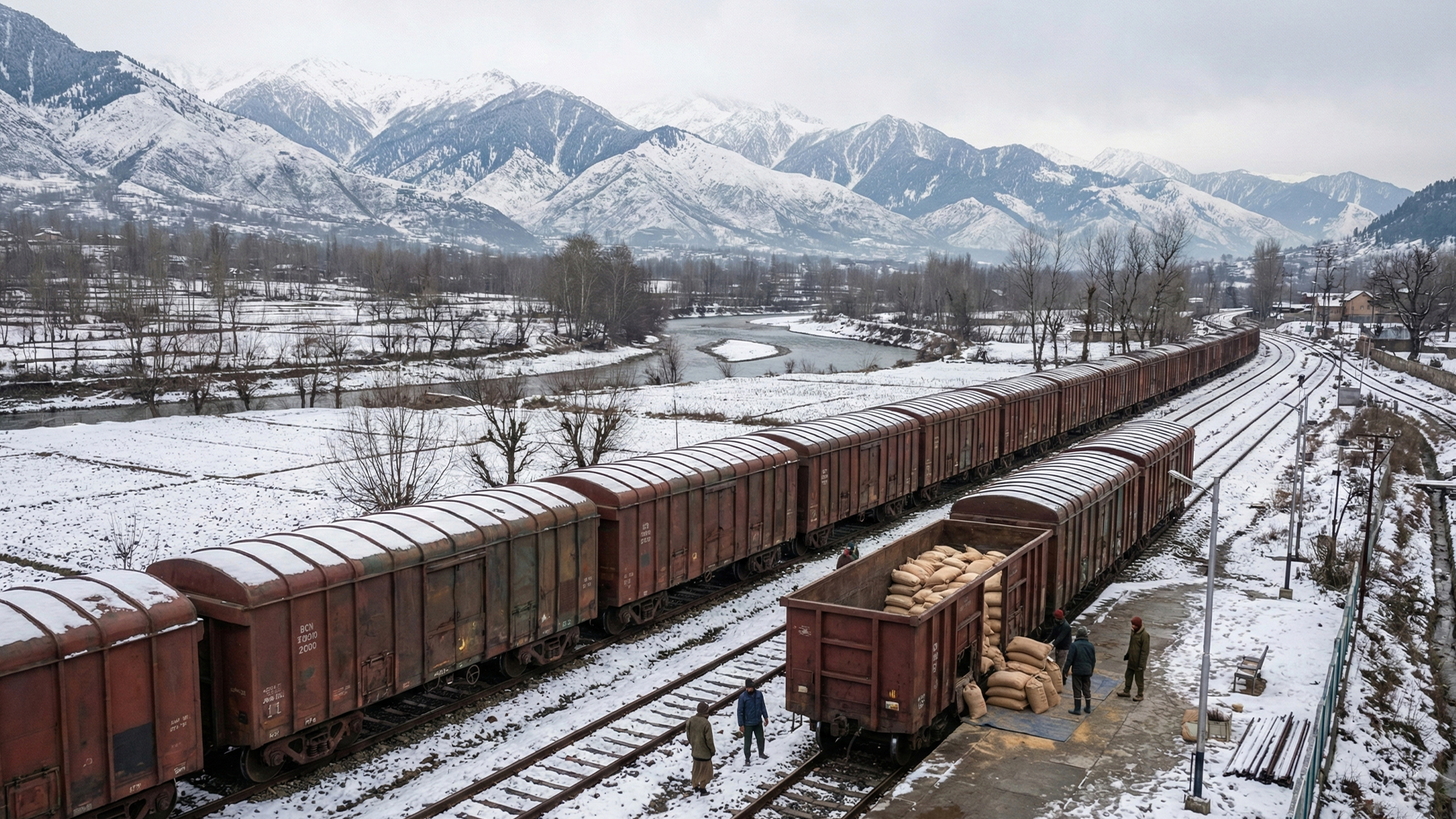
For the first time, foodgrains meant for public distribution in the Kashmir Valley have been transported directly by rail, signalling a major improvement in the region’s logistics and supply system. A Food Corporation of India (FCI) freight train carrying around 1,384 tonnes of rice arrived at the Anantnag Goods Terminal in south Kashmir, opening a new chapter in the movement of essential commodities to the Valley.
The foodgrains were moved in 21 covered railway wagons from Ajitwal railway station in Punjab’s Firozpur division. This marks the first direct rail delivery of bulk foodgrains to Kashmir and is expected to significantly improve the efficiency and reliability of supply chains in the region.
Until now, the Kashmir Valley depended largely on road transport through the Jammu–Srinagar National Highway for foodgrain supplies. This route is frequently affected by landslides, snowfall, and adverse weather conditions, often causing delays and shortages. Officials said the use of rail transport will help overcome these challenges by providing a more dependable and all-weather option for moving essential goods.
Lieutenant Governor Manoj Sinha called the arrival of the freight train a landmark achievement and said it would strengthen food security in Jammu and Kashmir. He noted that improved rail connectivity would support timely delivery of essential items and reduce pressure on road infrastructure.
Railway and FCI officials said transporting foodgrains by rail will also bring down logistics costs and improve planning. Rail movement allows for larger volumes to be transported in a single trip, making it more efficient than road transport, especially for bulk commodities like rice and wheat.
The Anantnag Goods Terminal, inaugurated earlier this year, has been developed to handle freight traffic for the Valley. With facilities to manage different types of cargo, the terminal is expected to play a key role in expanding commercial and supply-related rail operations in the region.
Officials said more such foodgrain freight trains are expected in the coming months. Regular rail services are likely to ensure smoother distribution under public welfare schemes and strengthen the overall supply network in the Kashmir Valley.
Also Read: UAE approves gene therapy for SMA patients