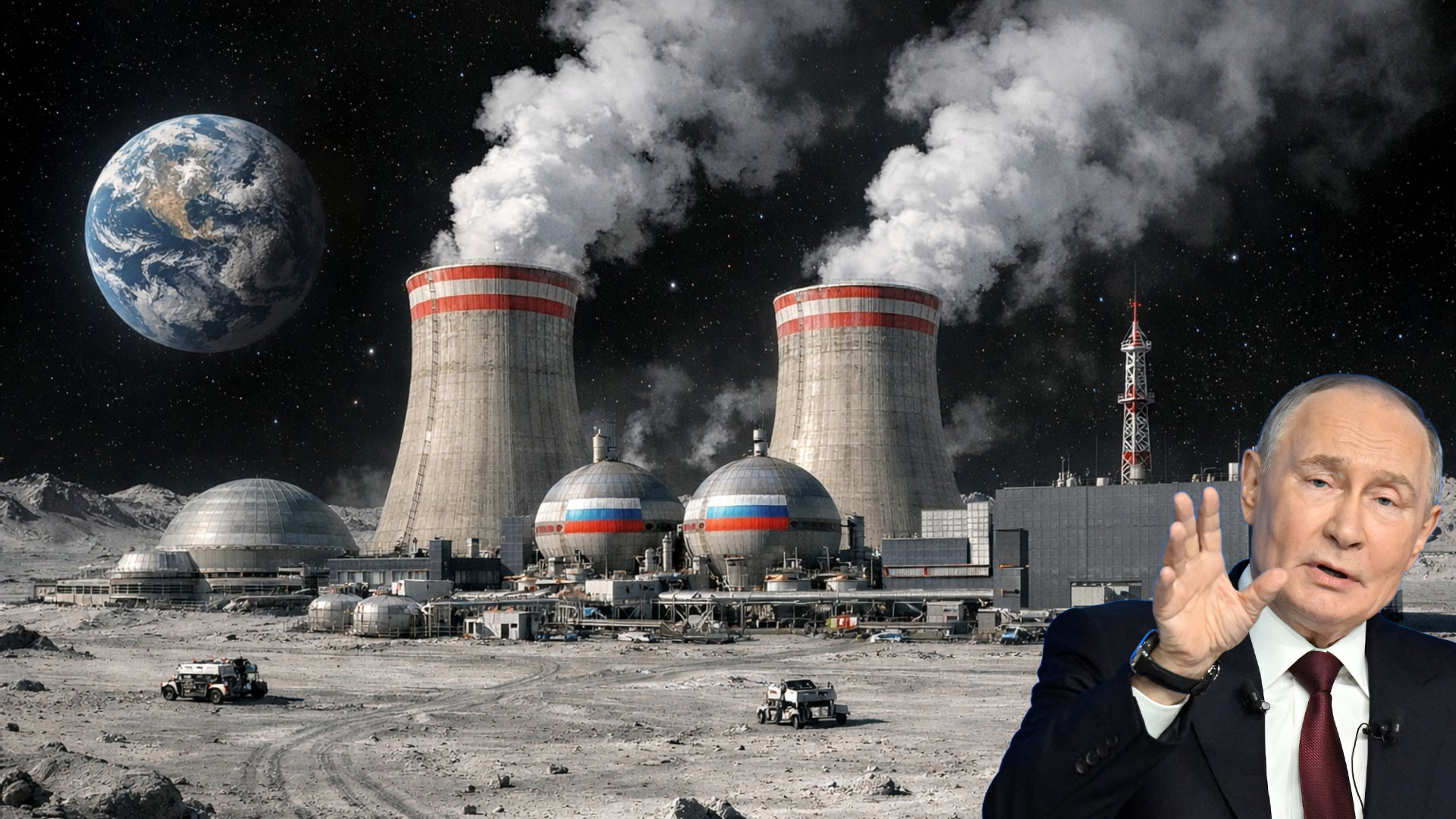
Russia is aiming for the Moon like never before. The country has announced plans to build a nuclear-powered energy station on the lunar surface by 2036, marking a bold step in its long-term space ambitions. The project, led by state space corporation Roscosmos, will be developed in partnership with the Lavochkin Association over the next decade.
The lunar power plant is expected to provide a stable energy supply for rovers, scientific instruments, and facilities of the planned International Lunar Research Station (ILRS), a joint Russia-China initiative. While Roscosmos hasn’t officially confirmed nuclear technology, Russia’s leading nuclear agencies are involved, suggesting nuclear power will drive the station. This energy source is seen as crucial for continuous operations, especially during the Moon’s two-week-long nights, when solar panels would be useless.
Roscosmos chief Dmitry Bakanov described the project as a shift from short-term missions to a sustainable lunar presence. “This will pave the way for science, exploration, and eventually human settlements on the Moon,” he said. The plan also positions Russia alongside other space powers racing to establish reliable energy on the lunar surface. NASA, for example, plans its own lunar nuclear reactor by 2030.
The move comes after setbacks in recent Russian lunar missions, including the 2023 Luna‑25 landing failure. Despite these challenges, Moscow is determined to secure a foothold on the Moon and strengthen its role in international space cooperation.
Over the next decade, the project will involve spacecraft development, rigorous testing, and setting up the necessary infrastructure on the Moon. Experts believe a functional nuclear power plant will be a game-changer, enabling longer, more ambitious missions and providing a blueprint for humanity’s future beyond Earth.
Also Read: Tarique Rahman returns to Bangladesh after 17 years