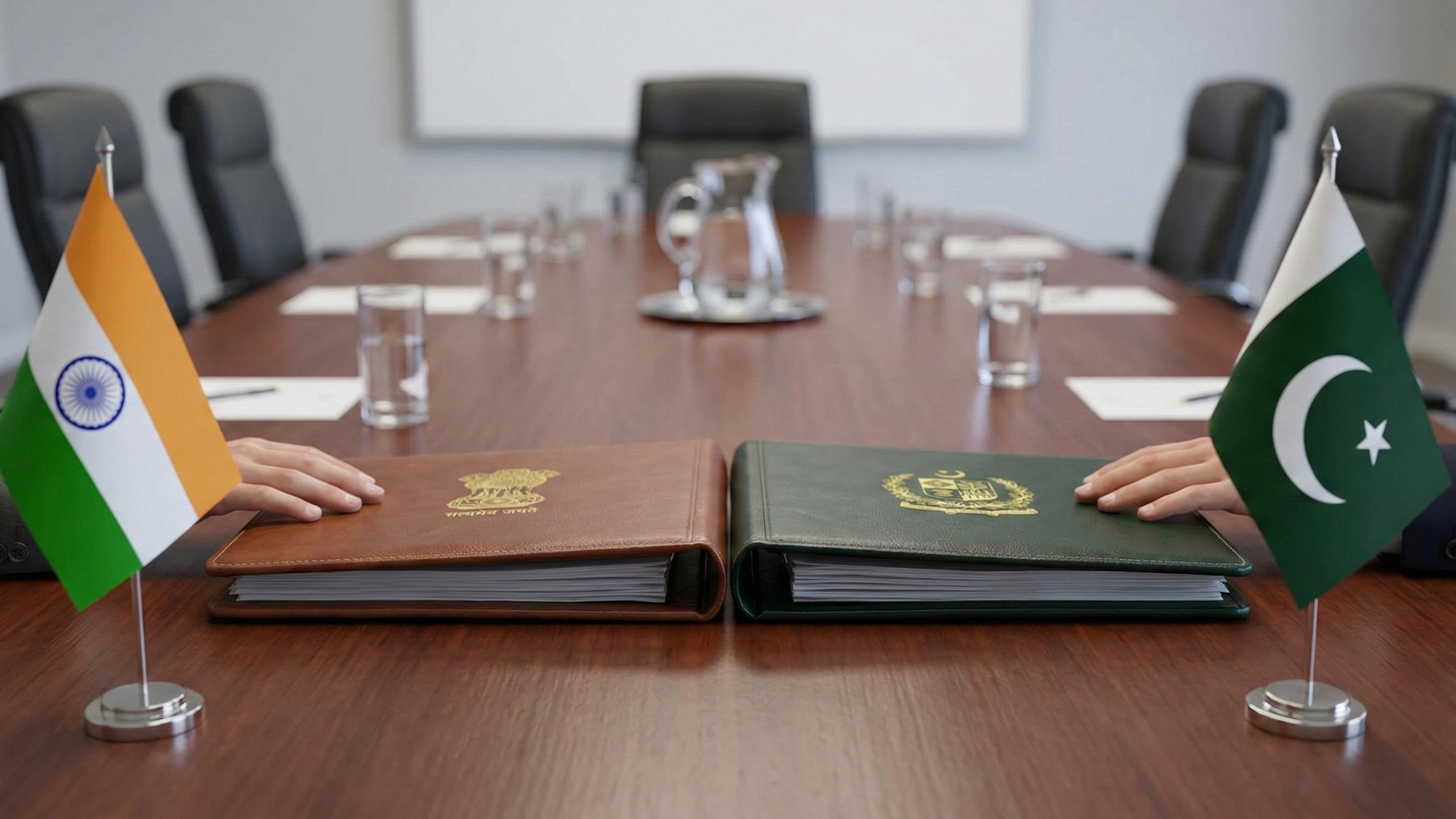
On January 1, 2026, India and Pakistan carried out their yearly exchange of important information, sharing lists of nuclear facilities and civilian prisoners held in each other’s countries. This routine practice is part of long-standing agreements aimed at keeping transparency and avoiding conflicts between the two nuclear-armed neighbours.
Under the Agreement on the Prohibition of Attack against Nuclear Installations and Facilities from 1988, both countries share details of nuclear sites that are protected from attacks during any conflict. This year’s exchange marks the 35th year of this practice, showing a rare continuity in cooperation despite overall tense relations.
At the same time, both nations shared lists of civilian prisoners and fishermen detained in each other’s territories, under the Consular Access Agreement of 2008. India shared information on 391 civilian prisoners and 33 fishermen believed to be Pakistani nationals. Pakistan provided details on 58 civilian prisoners and 199 fishermen believed to be Indian.
The Indian government renewed its request for the early release of these civilians and fishermen, including returning their boats. India also urged Pakistan to provide consular access to 35 prisoners and fishermen whose access is still pending. India continues to seek information about missing Indian defence personnel reportedly held in Pakistan.
Officials highlighted that past exchanges have led to the release and repatriation of thousands of fishermen and dozens of civilian prisoners, showing that both countries can cooperate on humanitarian matters even when overall relations are strained.
This exchange comes after tensions rose following a brief military confrontation in May 2025. High-level talks are rare, though officials met briefly during the list exchange.
In domestic news, India’s labour experts have raised concerns about new draft rules under the Code on Wages. The draft leaves daily work hours to be decided by central and state governments, without specifying an eight-hour workday. Experts warn this could lead to longer workdays, especially for daily wage and gig workers, and reduce protection against overwork.
Also Read: Draft labour rules out, work‑hour clarity lacking