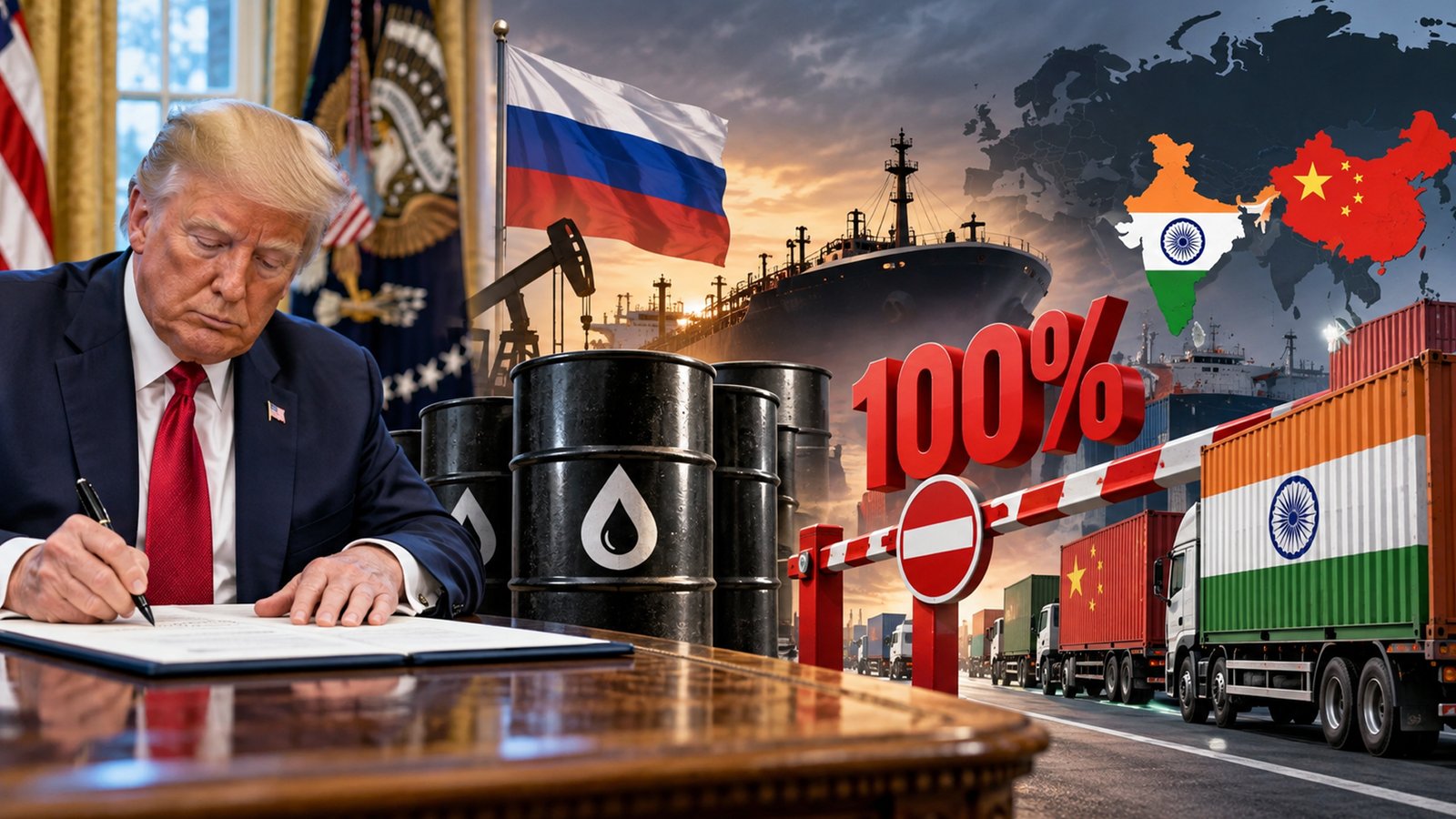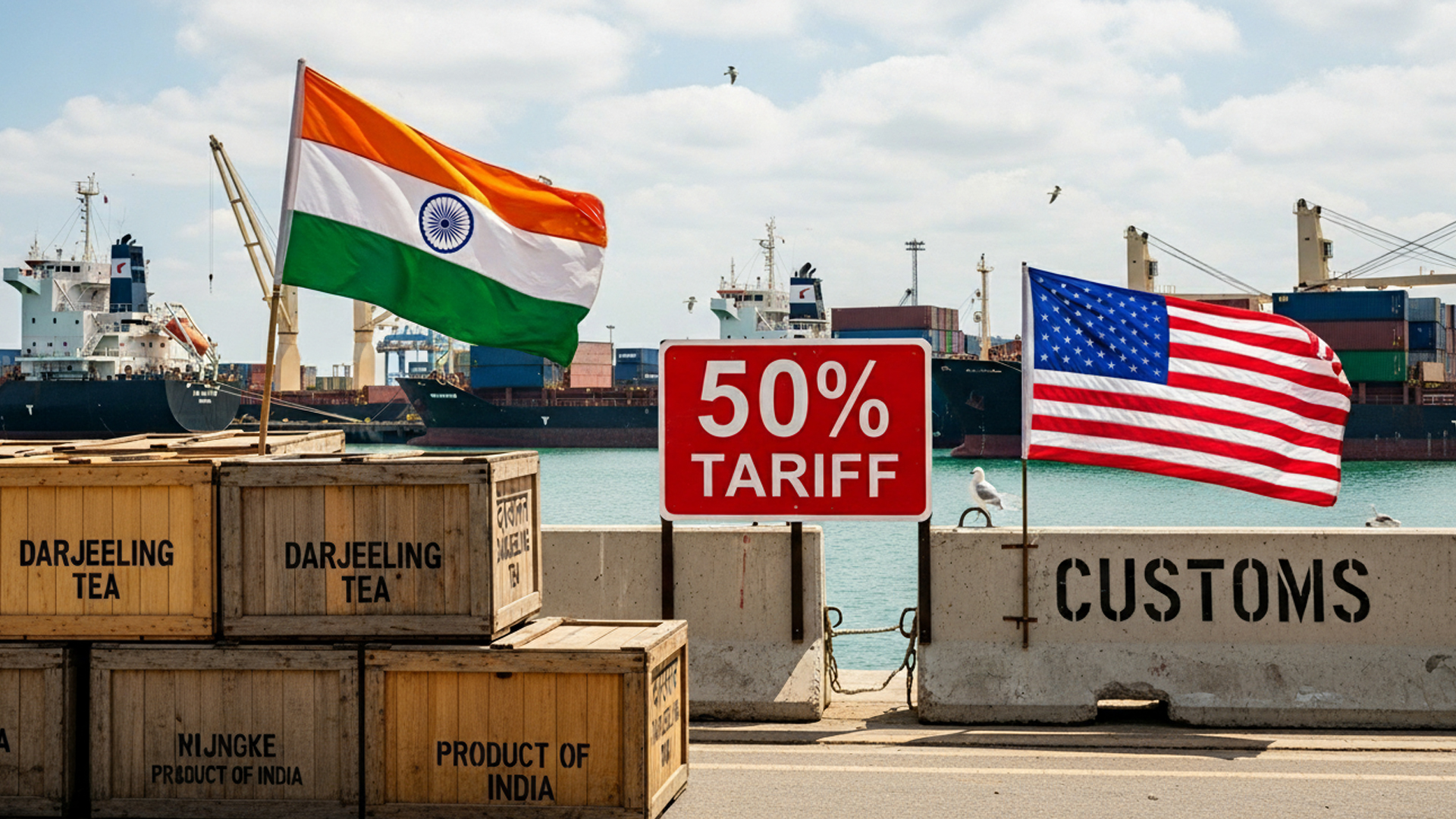
New Delhi: India’s tea industry, already grappling with domestic challenges, faces a significant setback as the United States imposes a 50% tariff on Indian goods, threatening one of its key export markets.
The U.S. is a significant destination for Indian tea, which shipped 17 million kg there in 2024. Between January and May 2025 alone, India exported 6.26 million kg to the American market.
The recent imposition of a 50% tariff on Indian goods is likely to impact Indian tea exports to the U.S. Any increase in cost cannot be absorbed by the supply chain, given that producers are already operating on very thin margins, the Indian Tea Association (ITA) said.
India, Sri Lanka, Argentina, and Malawi are the main suppliers of black tea to the U.S., where demand for Assam and Darjeeling varieties remains strong. This brand equity could help cushion some of the impact, but producers warn that price hikes will strain competitiveness.
The ITA noted that India exports to 21 key countries, accounting for 88% of total shipments. This global spread, coupled with the enduring appeal of Assam and Darjeeling teas, provides opportunities to diversify and expand into fresh markets.
Back home, however, a grim reality is unfolding. Assam and West Bengal’s tea sectors are reeling from plummeting auction prices, driven by oversupply and muted demand. Auction data from North India’s three key centres—Kolkata, Guwahati, and Siliguri—showed steep declines from mid-July to mid-August (Sale 28–33/34), with average prices down by Rs.32 to Rs.74.
Between April and July 2025, North India’s average auction price fell nearly 6%, with unsold stocks touching 36% at Guwahati and 26% at Kolkata. Rising output has compounded the crisis: Assam’s production grew 4.6% year-on-year, and West Bengal’s surged 27%. Large estates, however, reported only modest gains or even declines due to erratic weather and pest infestations.
The resulting oversupply in auctions has exerted additional pressure on already declining prices, the ITA warned.
Industry bodies are urging the government to introduce a Minimum Sustainable Price (MSP) for made tea, fast-track approvals for pest-control chemicals, impose a minimum import price to block cheap inflows, and revise export incentives, including the RoDTEP rate. A Parliamentary Standing Committee on Commerce has backed many of these recommendations, stressing the need for import restrictions, fair competition, and a holistic review of the sector.
The pressure is further aggravated by low-cost imports, which jumped 57% to 19.6 million kg between January and June 2025, with Kenya emerging as a major supplier. On exports, North India saw an 8.7% rise in volume and 22% in value during January–May 2025, while South India’s exports declined 15%.
The ITA cautioned that without swift government intervention, the livelihoods of millions, the sustainability of the sector, and India’s position in the global tea market will all be at risk.
Also Read: Record Prize Pool Announced for ICC Women’s Cricket World Cup 2025